Showing posts with label pricing. Show all posts

California's Cap-and-Trade Program is Alive and Well

This is the eighth installment in a series of posts on California's climate leadership. These posts address a wide range of related topics including economic benefits and renewable energy.

With unprecedented bipartisan support, California lawmakers have voted to extend the state's cap-and-trade program. This carbon pricing program is key to meeting California's ambitious carbon reduction targets. The plan puts a statewide cap on greenhouse gas emissions and allows companies to buy and sell pollution credits.

The Golden State has been a cap-and-trade leader for years and it has a current market value of $8 billion. Negotiations are ongoing to include Mexico in the joint market. Two Canadian provinces are part of California's carbon pricing scheme. Quebec is already part of the deal and Ontario is linking with the market this year.  B.C. already has a successful carbon pricing plan and even the oil producing province of Alberta has signed on to a carbon pricing initiative.  The Regional Greenhouse Gas Initiative, (RGGI) is composed of nine north east states (Connecticut, Delaware, Maine, Maryland, Massachusetts, New Hampshire, New York, Rhode Island, and Vermont). The agreement caps and reduce CO2 emissions from fossil-fuel power plants that generate 25MW of power or more.

Using markets to combat pollution has proven effective. The argument for pricing carbon is compelling indeed some have argued that it may be the best way to reduce emissions. The president of the World Bank advocates putting a price on carbon and such pricing schemes are already widespread in countries around the world including Europe, China, Japan, South Korea, and Canada

California has passed a raft of increasingly stringent emissions reduction legislation. Although detractors have tried to suggest the state's cap-and-trade program is in serious trouble, the evidence shows that California's carbon trading scheme is a success story. As reported by Greenbiz, the most recent data (July 2017) indicates that California is only 3 percent away from its 2020 goal of reducing emissions to 1990 levels as required by AB 32.  The article also makes the point that these reductions have been, "easier and cheaper than expected."

What is even more striking is that these emissions reductions have occurred alongside laudable economic growth.  This is further evidence of the decoupling emissions and growth.

At the 13 previous California Air Resources Board’s (CARB) auctions, allowances have sold out at or above the floor price. However, at the last two auctions, demand was not strong enough for CARB to sell allowances at the price floor ($12.73 per ton).

This is because companies are not buying permits. Companies are not buying permits because they do not have to. As explained in the Greenbiz article, "they already held enough to account for their current emissions, or they expect to be able to make emission reduction for less than the cost of an additional permit."

Contrary to the assertion of detractors this does not prove that the scheme is failing, it may however suggest that California's climate and energy policies (ie performance standards) are working. 

Despite some legal risks associated with court challenges the future of carbon trading looks bright in California. Gov. Brown has vowed to extend the program beyond 2020 and CARB has released a proposal extending the program to 2050. CARB’s new proposed regulation offers a stronger mechanism to correct for situations where supply exceeds demand. It does this by diverting unsold allowances to a reserve which provides downward pressure on allowances prices should cost pressures begin to emerge.

As reviewed in the Greenbiz article, "CARB’s cap-and-trade design has been fundamentally sound from the start, and only continues improving." For more information on California's cap-and-trade plan click here.

Related
US States Show Carbon Pricing Works
Low Oil Prices and Climate Action (carbon pricing and subsidies)
Why a Carbon Tax May be the Best Way to Reduce CO2 (Video)
Put a Price on Carbon
RGGI States' Third Consecutive Year of GHG Declines
Carbon Pricing and Emissions Trading a Global Review
US Cap-and-Trade: What and Why
US Cap-and-Trade: Positioning Your Business

Obama Proposes Oil Tax and Clean Energy Infrastructure Investments

President Obama has recently proposed an oil tax and a clean energy infrastructure investment plan that would create a “more integrated, sophisticated and sustainable transportation sector." The proposal is part of a budget request that calls for annual spending of $32 billion and it will be paid for with a $10 a barrel oil tax. The ten year 320 billion is designed to finance a 21st century clean energy infrastructure in the US. This includes annual spending of $20 billion for national transportation initiatives, $10 billion in for cities and states and $2.4 billion for green vehicle research.


The President's proposal is in addition to his successful push to raise fuel-efficiency standards for cars and trucks, green energy subsidies and the clean power plan that will reign in carbon pollution from power plants. He has also succeeded in pushing through a global climate deal in Paris.

This proposal would reduce emissions from the transportation sector which is responsible for almost a third of US carbon emissions. Transportation sector investments include among other things, high speed rail. There are also investments in what is known as the Transportation Income Generating Economic Recovery (TIGER) stimulus program. TIGER awards grants for transportation projects with "measurable economic and environmental benefits.” Another $10 billion a year would go to local, regional and state governments to invest in green infrastructure and more livable cities. The Climate Smart Fund would reward states that make greener choices with existing federal dollars, as well as competitive grant programs to promote region-wide planning, more livable cities, and infrastructure projects with greater resilience to climate impacts.

In addition to the tax on oil and clean infrastructure investments, the Obama administration is also creating private sector incentives for low carbon technologies. Together these cleantech investments will not only enable the US to transition away from fossil fuels they will create jobs and grow the economy.

Despite the fact that Obama's plan would supply jobs, drive the economy and advance climate action, Republicans can be counted on to kill the proposal. While environmental groups lauded the fact that Obama is standing up to big oil and putting a price on carbon pollution. Conservatives,well known for their opposition to climate action, say that they are concerned that gas prices could increase by as much as 25 cents a gallon.

"President Obama's proposed $10 per barrel tax on oil is dead on arrival in the House," Majority Whip Steve Scales (R-La.) said in a statement. "The House will kill this absurd proposal."

The oil industry, which has seen declining profits is also pushing back against the plan spinning the proposal as a jobs killing tax grab that will hurt consumers.

"The White House thinks Americans are not paying enough for gasoline, so they have proposed a new tax that could raise the cost of gasoline by 25 cents a gallon, harm consumers that are enjoying low energy prices, destroy American jobs and reverse America’s emergence as a global energy leader," American Petroleum Institute President Jack Gerard said in a statement.

The White House does not deny that the President's clean transportation proposal would increase fossil-fuel prices, however they said that this would create "a clear incentive for private-sector innovation to reduce our reliance on oil and invest in clean-energy technologies that will power our future."

There is little chance that Republicans will turn on their petrochemical puppet master. However, a future administration and legislators with more common sense will eventually get behind the initiative.

Related Posts
Low Oil Prices and Climate Action (carbon pricing and subsidies)
Market Based Approaches to Combating Climate Change
China Carbon Pricing and US Climate Cooperation
 Market Based Green Growth
 US States Show Carbon Pricing Works
 Corporate Actions Buoy US Carbon Pricing
 A Compelling Argument for Carbon Pricing
 We Can Reduce Emissions and Tackle Climate Change
Curbing Fossil Fuels - Carbon Pricing and an End to Subsidies (WEF Summaries)
The Prospects for Putting a Price on Carbon
RGGI States' Third Consecutive Year of GHG Declines
The Merits of Carbon Pricing in B.C.
Video - Why a Carbon Tax May be the Best Way to Reduce CO2
All I Want is a Price on Carbon
Hansen on How the GOP Could Support a Carbon Tax
World Bank President Advocates Putting a Price on Carbon
California's Cap-and-Trade Leadership
South Korea Passes Cap-and-Trade Legislation
Mexico Passes Climate Change Law
US Cap-and-Trade: What and Why
US Cap-and-Trade: Obstacles and Solutions

Diminishing Profits Signal the Beginning of the End of Oil

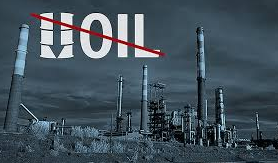
Oil is dying. Low oil prices are erasing profits and setting into motion a death spiral from which fossil fuels will not recover. Big Oil is cutting costs, and scaling back production, this results in smaller returns and diminished investor confidence. The addition of carbon pricing schemes and the elimination of subsidies will ultimately inflate prices and reduce demand.
____________________________

The profits of the big oil companies keep falling along with the price of a barrel of crude. In 2015, the profits of oil behemoths like Shell, Chevron, Exxon Mobil and BP tumbled. Together, these big four saw profits decline by an average of 65 percent last year. These falling margins have a cascade of impacts that are hastening the demise of dirty energy.

Shell

At the beginning of 2014, Royal Dutch Shell’s quarterly earnings for the end of 2013 fell by almost half (48%). This was the third consecutive quarter of disappointing earnings. This was in part due to Shell’s failed multibillion dollar Alaskan drilling program. The situation has continued to deteriorate for the oil giant as Shell’s profits fell by 56 percent in the fourth quarter of 2015. Over the course of the entire year, Shell’s earnings fell by 80 percent compared to 2014. To make matters worse, Standard & Poor's downgraded Shell’s long term credit rating in February and further downgrades have been intimated.

Chevron

In 2015, Chevron saw its profits decline by 40 percent compared to 2014 and the company reported losses in the fourth quarter of last year. Chevron lost $588 million in the last quarter of 2015; during the same period in 2014 the company made a profit of $3.5 billion. This is the first time the company has reported quarterly losses since 2002.

Exxon Mobil

Exxon Mobil saw its quarterly profits decline by 58 percent at the end of 2015 and the company’s profits are down by half compared to the year before. Its exploration and production business lost $538 million in the U.S.

BP

British Petroleum said that its profits fell by 91 percent last year. They recorded a $3.3 billion loss in the fourth quarter of last year and $6.48 billion in losses for the year. Like Shell, the company also kicked off the new year with a long term credit downgrade from Standard & Poor’s.

Macro realities

There is no end in sight to low oil prices and falling share prices. We have not seen a commodity collapse of this magnitude in decades. However, unlike preceding oil crashes, environmental pressures and economic trends make the longer term financial forecast look bleak for fossil fuels.

Oil production continues to outpace demand and more supply is on the way now that the sanctions against Iran have been lifted. The situation is about to get even worse as storage space is nearing capacity.

While many are waiting for oil prices to rebound they may be disappointed. Driven by climate concerns and the declining price of both renewables and energy storage, we are seeing unprecedented interest in non-fossil fuel based energy production from all quarters.

In the longer term, the outcome at COP21 lends credence to the belief that fossil fuels will be subject to a host of headwinds. The fossil fuel industry is also having to deal with a rapidly expanding number of legal challenges, negative public perceptions and disruptions due to protests.

Death spiral

In addition to market pressure associated with low oil prices, producers realize that to bring oil prices up you have to decrease supply (i.e. reduce production). However, decreased production will further diminish returns and this will scare off investors.

Low oil prices have already shut down hundreds of extraction operations. Oil prices are currently about half of what they need to be to make the tar sands and shale oil viable. The exodus had begun even before oil prices fell to their current lows. At the beginning of last year, Shell announced that it was among a number of oil companies that are shelving their tar sands operations. Many are predicting that at least half of all shale oil producers will perish this year. It is not only energy intensive forms of fossil fuels that are at risk, as explained by Jesse Thompson, an economist at the Federal Reserve Bank in Dallas, “at this price range, nothing is safe.”

Big oil is responding to low oil prices and declining profits by slashing capital spending and operating expenses. For example, Exxon has said that it will cut spending by one quarter this year compared to last and BP is expected to cut spending by almost $3.6 billion this year. This translates to less production and exploration. Less exploration means lower reserves and lower reserves sends a powerful message about the future of the industry.

The linkage between lower oil prices and decreased production have set in motion a causal chain of events that does not bode well for the fossil fuel industry. As explained in a New York Times article:

"To assure their futures, oil companies need to add to their reserves to replace production, but with plunging prices, companies are delaying or canceling projects and struggling to add to their reserves."

Reduced earnings are translating to cuts in production. For Shell that means delaying a liquefied natural gas facility in Canada and a deep water oil and gas development in Nigeria.

The combination of less production and low oil prices translates to lower profits which puts downward pressure on the dividends that they can pay out to investors. This in turn, curtails investor interest. While big oil is trying to reassure investors by saying that they will continue to pay big dividends, the situation is untenable.

Maintaining investor interest will be challenging for BP and others, as explained by Biraj Borkhataria, an analyst at RBC Capital Markets in London. He is quoted as saying:

"2016 is likely to be a year of transition for BP with limited ability" to cover its dividend unless oil prices rose substantially.

Michael Hewson, an analyst at CMC Markets puts it this way:

"But with average oil prices still trading at multi-year lows so far this year the question now needs to be asked in how long can BP sustain the dividend at current levels, without an imminent pick up in oil prices."

When investor confidence evaporates, the fate of the fossil fuel industry is sealed.

The position of big oil goes from bad to worse when we factor carbon pricing and an end to subsidies. This will raise the cost of fossil fuels and reduce demand.

Although it will take decades it is clear that we can kill what Bill McKibben has called the immortal zombie of fossil fuels.

Source: Global Warming is Real

Related Articles
Falling oil Prices Make Fossil Fuels a High Risk Investment
Oil is a Bad Investment
Financial Losses Associated with Fossil Fuels
Low Oil Prices Offer an Opportunity to Combat Climate Change
The Upside to Low Oil Prices
Climate Pros and Cons of Low Oil Prices
Falling Oil Prices and a Global Climate Agreement
Cheap Oil Will Not Stop Renewables
Why Oil Prices Matter for Renewable Energy
An Upside to Low Oil Prices?
Video - Why Oil Prices Will Keep Falling

Oil is a Bad Investment

Iinvestors can no longer avoid the realization that their fossil fuel holdings are fraught with risks. While there are many factors at play, the 18 month slide and low price forecasts combine to make the point that investing in oil makes no economic sense.

In the short term China's slowing growth and the glut of oil are driving down the price. The situation will be exacerbated by the lifting of sanctions allowing Iran to sell its oil. High production and lower than expected demand mean that oil prices will continue to fall well into 2016.

Oil has fallen a long way, it has lost 80 percent of its value compared to its high in January 2014 when it was more than $110 a barrel (bbl). When oil slipped below $60/bbl a number of intensive drilling operations from the Arctic to the Canadian tar sands and American shale oil ceased to be profitable. These price declines reduced production but not enough to stop oil's plummeting trajectory.

At the end of 2015 the price oil plunged below $40/bbl. As the new year dawned oil prices continued to slide, they even briefly slipped below $30/bbl. US oil prices fell to $26.55/bbl on January 20th. We have not seen oil prices this low in 14 years and we have not seen an 18th month long slide in more than 60 years. 

According to the Financial Forecast Center the outlook for the next six months suggest that oil will continue to decline, falling to around $25/bbl by the start of the summer.

Although the market will eventually balance out supply and demand, the longer term outlook is still challenging for oil prices. The eia predicts that oil prices could fall to as low as $20/bbl in 2017. The Telegraph reports that some are predicting that oil could go as low as $10/bbl.

Looking even further out the situation for oil may become even more difficult. The COP21 deal sent a powerful message to the markets. The era of oil is coming to an end and as we gear up for the implementation date of the deal in 2020 there will be unprecedented downward pressure on oil prices.

Related Articles
Diminishing Profits Signal the Beginning of the End of Oil
Falling oil Prices Make Fossil Fuels a High Risk Investment
Financial Losses Associated with Fossil Fuels
Low Oil Prices Offer an Opportunity to Combat Climate Change
The Upside to Low Oil Prices
Climate Pros and Cons of Low Oil Prices

Financial Losses Associated with Fossil Fuels

The losses associated with fossil fuels are staggering and it is not just oil producing states and companies that are feeling the heat. Pension funds going long on oil are getting killed as they hope that prices will rebound.

With oil prices around $50 per barrel, the IEA estimates that OPEC states have lost half a trillion dollars a year in revenues since the oil price fell from over $100 a barrel in 2011-2014 to current levels. The declining price of oil is also creating volatility in the stock market and significantly impacting the petro-economies of both Russia and Canada.

As reported by the Star, a new study from the Canadian Centre for Policy Alternatives indicates that fossil fuel holdings in Ontario's five largest pension funds lost a total of $2.4 billion. Here is their review of the amount of money lost due to falling oil and coal prices from June to December 2014:
  • Ontario Teachers’ Pension Plan: $1.77 billion
  • Ontario Municipal Employees Retirement System: $192 million
  • Healthcare of Ontario Pension Plan: $53 million
  • Ontario Pension Plan: $154 million
  • Ontario Public Service Employees Union Pension Trust: $188 million
California pension funds have been decimated by the declining price of fossil fuels. This has caused the state to pass legislation forbidding big pension funds from investing in coal. Others institutions are getting out of fossil fuels altogether. A recent report from consultancy Arabella Advisors found that 430 institutions, including the Canadian Medical Association, have committed to phasing out their fossil-fuel investments.

A Corporate Knights Capital report estimated that the CPPIB has lost $7 billion (US) in value since 2012 due to the decline in the values of carbon intensive industries. Bill & Melinda Gates Foundation Trust Endowment have lost $1.9 billion, and the University of Toronto pension and endowment fund lost $419 million.

More than 100 institutional investors representing $8 trillion in assets have signed the one-year-old Montreal Carbon Pledge. Those that took the pledge have committed to “measure, disclose and reduce portfolio carbon footprints.” Signatories include Addenda Capital, The Co-operators and the United Church.

“If they’re putting money into fossil-fuel stocks, it should be incumbent on managers and trustees to justify why they’re doing that,” said Marc Lee, a senior economist with Policy Alternatives.  

Related
Diminishing Profits Signal the Beginning of the End of Oil
Falling oil Prices Make Fossil Fuels a High Risk Investment
Oil is a Bad Investment
Low Oil Prices Offer an Opportunity to Combat Climate Change
The Upside to Low Oil Prices
Climate Pros and Cons of Low Oil Prices
Falling Oil Prices and a Global Climate Agreement
Cheap Oil Will Not Stop Renewables
Why Oil Prices Matter for Renewable Energy
An Upside to Low Oil Prices?
Video - Why Oil Prices Will Keep Falling

Low Oil Prices Offer an Opportunity to Combat Climate Change

The plunge in the price of oil makes this an ideal time to deploy market disincentives that can cut emissions and combat climate change. We know that if we are to stave off the worst impacts of climate change we must substantially reduce our emissions. As the leading cause of climate change fossil fuels are the most obvious focal point.

All but the willfully ignorant understand that the economic costs of inaction far outweigh the costs of engagement. We have seen a number of studies which suggest the longer we wait the more it will cost.

Scientists tell us that we are running out of time and we must address climate change as soon as possible. That is part of the reason why we must deploy market levers. They can quickly and efficiently augur the changes we need. A two tiered approach involving a carbon pricing scheme and the removal of subsidies would pull back the curtain and expose some of the hidden costs associated with fossil fuels. Together these two initiatives would correct the false impression that fossil fuels are cheap.

President Obama has said that carbon pricing allows the market to do the "heavy lifting." In 2013, Rajendra Pachauri, chairman of the UN Intergovernmental Panel on Climate Change spoke about the utility of carbon pricing calling it , "an extremely effective instrument." He went on to say, "it’s only through the market that we might be able to get a large enough and a rapid enough response."

A number of studiesincluding one from UCL conclusively demonstrate that if we are to have a shot of curtailing climate change we must keep most of the known fossil fuel reserves in the ground. The UCL study's co-author Paul Ekins explained that falling oil prices present an ideal time to remove subsidies and implement a carbon tax. 

While further innovation should be rewarded, we already possess the technological wherewithal to wean ourselves away from fossil fuels. The application of the two market levers outlined would generate billions of dollars that could be used to provide greater support for energy efficiency and renewables. This would would not only combat climate change it would improve people's health in the process. It will also create a host of economic spin-offs including jobs and reduced healthcare costs.

Now is the time to impose carbon pricing schemes and eliminate fossil fuel subsidies. The plunging price of oil coupled with advances in clean energy provide a golden opportunity for politicians to rationalize their energy policies.

Related
Diminishing Profits Signal the Beginning of the End of Oil
Falling oil Prices Make Fossil Fuels a High Risk Investment
Oil is a Bad Investment
Financial Losses Associated with Fossil Fuels
The Upside to Low Oil Prices
Climate Pros and Cons of Low Oil Prices
Falling Oil Prices and a Global Climate Agreement
Cheap Oil Will Not Stop Renewables
Why Oil Prices Matter for Renewable Energy
An Upside to Low Oil Prices?
Video - Why Oil Prices Will Keep Falling

The Merits of Carbon Pricing in B.C.

Although the ruling Conservative federal government has fought any mention of a national carbon tax, individual provinces like British Columbia (B.C.) are moving forward with their own initiatives.

B.C. enacted a carbon tax in 2008 that covers about 70 percent of fossil-fuel consumption. B.C.’s carbon tax is currently pegged at $30 a ton. It has helped the province’s per-capita emissions decline almost 10 percent from 2008 to 2010. B.C.'s carbon tax has also played an instrumental role in convincing the US states to embrace carbon pricing. B.C. forged an agreement with Washington, Oregon and California to create the Pacific Coast Action Plan on Climate and Energy. Their plan is to prioritize clean energy and innovation through a strong economic incentive provided by a carbon tax or form thereof. These jurisdictions collectively represent 53 million people, and an economic region with a combined GDP of $2.8-trillion — making it the world's fifth-largest economy.

B.C.'s carbon tax is revenue neutral, which means the money generated by the tax funds personal and business tax cuts. Under the scheme gas cost an addition 6 cents per liter and families pay an average of $386 per household per year. Since 2008, the carbon tax has raised a total of $3.7 billion.

"What we've been able to show, and what we can show to a greater extent going forward with our jurisdictions, is that this can be good for business and good for the economy," B.C.'s Environment Minister Mary Polak said.

In 2013 Québec also introduced a cap-and-trade system as part of its membership in the Western Climate Initiative (WCI).

“The intuition behind carbon pricing is straightforward: we should tax things that we do not want, and making it more expensive will reduce pollution,” Marc Lee, senior economist at the Ottawa-based Canadian Centre for Policy Alternatives in Vancouver, said in a Jan. 13 report. “A carbon tax provides greater certainty around the price of GHG emissions, but poses a great deal of uncertainty around actual emission reductions.”

For oil-sands producers, carbon pricing may be the answer to reduce risk associated with carbon regulation and access to markets, said John Stephenson, a Toronto-based fund manager.

“What business hates is a lack of clarity,” Stephenson, who helps manage $2.7-billion at First Asset Investment Management Inc., said. “Even a bad tax would be better than discussions that are endless.”

A large and growing number of respected organizations are calling for a carbon tax, this includes the International Energy Agency, the United Nations, and the US Congressional Budget Office. The fact that B.C.'s economy is outperforming most of Canada speaks to the fact that you do not have to choose between a healthy environment and a strong economy.

By re-electing the Liberals twice since 2008, B.C. further demonstrates that a carbon tax can be politically viable.

© 2014, Richard Matthews. All rights reserved.

Related Posts
Video - Why a Carbon Tax May be the Best Way to Reduce CO2
All I Want for Christmas is a Price on Carbon
24 Hours of Reality: The Cost of Carbon Online Event
Hansen on How the GOP Could Support a Carbon Tax
Video - German Climate Scientist Argues the Merits of a Carbon Tax in Australia
European Parliament Revives Cap-and-Trade
World Bank President Advocates Putting a Price on Carbon
Carbon Pricing and Emissions Trading a Global Review
RGGI is Increasing Renewables while Reducing GHGs and Spurring Economic Growth
The Success of RGGI Carbon Trading Shows Cap-and-Trade Works
Video - What are the benefits of a carbon price?
Video - How does carbon pricing work?
Video - A Price on Carbon in 5 Easy Steps
Video - The Cost of Carbon
California's Cap-and-Trade Leadership
California is Leading the US with a Cap-and-Trade
South Korea Passes Cap-and-Trade Legislation
US Cap-and-Trade Implications for Business
US Cap-and-Trade: What and Why
Small Business Can Save US Cap-and-Trade
US Cap-and-Trade: Obstacles and Solutions
Cap-and-Trade Legislation Faces Opposition
Helping Small Business Accept US Cap-and-Trade
US Cap-and-Trade: Positioning Your Business
The Kochs' Americans for Prosperity Actively Undermines Cap-and-Trade

Webinar - California Cap and Trade Program: Everything Businesses Need to Know

The one hour complimentary webinar on California's Cap and Trade Program will take place on Wednesday, June 4, 2014 at 2pm EDT. It will provide an in-depth look at how California's carbon market works and show you what you need to know to craft a cogent compliance strategy.

As part of California’s Assembly Bill 32, the California cap-and-trade program seeks to reduce greenhouse gas emissions to 1990 levels. By placing a hard cap on emissions and setting up a market based mechanism, California has placed a price on carbon emissions covered by the program.

Companies covered by the cap-and-trade program must purchase California Carbon Allowances (CCAs) to cover their emissions of carbon dioxide equivalent (CO2e). Companies can also use offset credits as a lower cost alternative to CCAs for compliance.

In this webinar, ICIS carbon market analysts will give you an introduction into the carbon market and give you the insight you need to create your market strategy.

Whether you have a compliance obligation or are just interested in learning more about the landmark California cap-and-trade program please join us to get our view of carbon markets.

There will be time for questions.

Expert Panel

Jan Frommeyer, Director of Market Analysis, ICIS

Jan is Director of Market Analysis at ICIS, a global price, news and analytics provider in the Reed Elsevier Group. He is managing data, analytics and modelling of emissions trading markets with a focus on Europe, Australia and California. He joined ICIS following the acquisition of Tschach Solutions in June 2013.

Jan co-founded and managed Tschach Solutions together with Ingo Tschach since its inception in May 2010. He was responsible for political analysis and price modelling based on a behaviour-driven market model approach. Tschach Solutions provides carbon market data, forecasts and analysis for trade-active carbon market professionals in global offset markets and the EU ETS like major utilities, banks, industrials and also regulators.

Jonathan C. Ornelas, Director of U.S. Emissions Markets, ICIS

Jonathan is the Director of U.S. Emissions Markets for ICIS, a news and analytics provider part of the Reed Elsevier Group. Before joining ICIS, Jonathan had over 8 years of experience in the U.S. energy industry working for Sempra Energy and Noble Americas Energy Solutions. He brings experience from both the power and gas markets and focused on operations and analytics ranging from load and price forecasting, portfolio optimization, to regulatory affairs.

To register for this webinar click here.

Related Posts
California's Cap-and-Trade Leadership
California is Leading the US with a Cap-and-Trade
Why it is so Important to put a Price on Carbon
Hansen on How the GOP Could Support a Carbon Tax
European Parliament Revives Cap-and-Trade
World Bank President Advocates Putting a Price on Carbon
Carbon Pricing and Emissions Trading a Global Review
RGGI is Increasing Renewables while Reducing GHGs and Spurring Economic Growth
The Success of RGGI Carbon Trading Shows Cap-and-Trade Works
24 Hours of Reality: The Cost of Carbon Online Event
Climate Change Caucus in Washington Breeds Hope for Legislation on Emissions Reduction Perhaps Even Cap and Trade
South Korea Passes Cap-and-Trade Legislation
US Cap-and-Trade Implications for Business
US Cap-and-Trade: What and Why
Small Business Can Save US Cap-and-Trade
US Cap-and-Trade: Obstacles and Solutions
Cap-and-Trade Legislation Faces Opposition
Helping Small Business Accept US Cap-and-Trade
US Cap-and-Trade: Positioning Your Business
The Kochs' Americans for Prosperity Actively Undermines Cap-and-Trade
Video - Why a Carbon Tax May be the Best Way to Reduce CO2
Video - What are the benefits of a carbon price?
Video - How does carbon pricing work?
Video - A Price on Carbon in 5 Easy Steps
Video - The Cost of Carbon
Video - German Climate Scientist Argues the Merits of a Carbon Tax in Australia

Video - Why a Carbon Tax May be the Best Way to Reduce CO2


In this video Judd Legam, editor of ThinkProgress explains how a carbon tax works. This effort is of great importance in light of the current concentration of carbon dioxide in the earth's atmosphere which now exceeds 400 parts per million which is causing big changes in global temperatures, which means big changes in climate: more droughts, more wildfires, more extreme weather, more crop failure, and all of the other effects of global warming. According to Legam, the simplest solution is a carbon tax.

Related Posts
All I Want for Christmas is a Price on Carbon
24 Hours of Reality: The Cost of Carbon Online Event
Hansen on How the GOP Could Support a Carbon Tax
Video - German Climate Scientist Argues the Merits of a Carbon Tax in Australia
European Parliament Revives Cap-and-Trade
World Bank President Advocates Putting a Price on Carbon
Carbon Pricing and Emissions Trading a Global Review
RGGI is Increasing Renewables while Reducing GHGs and Spurring Economic Growth
The Success of RGGI Carbon Trading Shows Cap-and-Trade Works
Video - What are the benefits of a carbon price?
Video - How does carbon pricing work?
Video - A Price on Carbon in 5 Easy Steps
Video - The Cost of Carbon
Climate Change Caucus in Washington Breeds Hope for Cap and Trade
California's Cap-and-Trade Leadership
California is Leading the US with a Cap-and-Trade
South Korea Passes Cap-and-Trade Legislation
US Cap-and-Trade Implications for Business
US Cap-and-Trade: What and Why
Small Business Can Save US Cap-and-Trade
US Cap-and-Trade: Obstacles and Solutions
Cap-and-Trade Legislation Faces Opposition
Helping Small Business Accept US Cap-and-Trade
US Cap-and-Trade: Positioning Your Business
The Kochs' Americans for Prosperity Actively Undermines Cap-and-Trade

RGGI States' Third Consecutive Year of GHG Declines

For the third consecutive year greenhouse gas emissions have fallen in the US states that are part of the Regional Greenhouse Gas Initiative (RGGI). These nine states (Connecticut, Delaware, Maine, Maryland, Massachusetts, New Hampshire, New York, Rhode Island and Vermont) recorded a six percent decline in greenhouse gas emissions in 2013.

While some of this reduction is attributable to mild temperatures and the greater use of natural gas for power generation, it is also evidence that carbon trading initiatives are good for the planet.

Carbon emissions declined to 86 million short tons from 92 million tons in 2012. Electricity use was also down in four of the nine member states.

The nine states have capped emissions at 91 million tons for 2014 which represents a 45 percent reduction from the original cap. This will encourage more trading.

The five year old program has not been without its share of problems. The paramount issue has been an excess of carbon permits due the vast quantities of domestically produced natural gas, improved energy efficiency and a slow economy.

© 2014, Richard Matthews. All rights reserved.

Related Posts
The Merits of Carbon Pricing in B.C.
Video - Why a Carbon Tax May be the Best Way to Reduce CO2All I Want for Christmas is a Price on Carbon
24 Hours of Reality: The Cost of Carbon Online Event
Hansen on How the GOP Could Support a Carbon Tax
Video - German Climate Scientist Argues the Merits of a Carbon Tax in Australia
European Parliament Revives Cap-and-Trade
World Bank President Advocates Putting a Price on Carbon
Carbon Pricing and Emissions Trading a Global Review
RGGI is Increasing Renewables while Reducing GHGs and Spurring Economic Growth
The Success of RGGI Carbon Trading Shows Cap-and-Trade Works
Video - What are the benefits of a carbon price?
Video - How does carbon pricing work?
Video - A Price on Carbon in 5 Easy Steps
Video - The Cost of Carbon
Climate Change Caucus in Washington Breeds Hope for Legislation on Emissions Reduction Perhaps Even Cap and Trade
California's Cap-and-Trade Leadership
California is Leading the US with a Cap-and-Trade
South Korea Passes Cap-and-Trade Legislation
US Cap-and-Trade Implications for Business
US Cap-and-Trade: What and Why
Small Business Can Save US Cap-and-Trade
US Cap-and-Trade: Obstacles and Solutions
Cap-and-Trade Legislation Faces Opposition
Helping Small Business Accept US Cap-and-Trade
US Cap-and-Trade: Positioning Your Business
Green Capitalism
The Kochs' Americans for Prosperity Actively Undermines Cap-and-Trade

All I Want for Christmas is a Price on Carbon

As 2013 winds down, there are promising signs that we may actually see a price on carbon in the U.S. In 2010, the cap-and-trade bill was killed in the Senate by the fossil fuel industry’s ubiquitous misinformation campaigns. However, a confluence of events have renewed hopes that we may yet see carbon pricing legislation that could significantly reduce U.S. carbon emissions.

Why we need a carbon tax


Paying for carbon pollution is the best way to put free markets to work to reign in global warming causing emissions. There is a virtual consensus among economists who say that putting a price on carbon is the most effective way to fight global warming. The case for carbon pricing is strong, this point has been repeatedly made by the World Bank and a number of economists including a team from the London School of Economics.

According to most analyses, carbon pricing is the most powerful regulatory mechanism we have to bring down emissions without wreaking havoc on the economy. Putting a price on C02 will allow market forces to drive down demand for carbon rich industries like fossil fuels and help to buoy cleaner low carbon technologies like renewable energy.

On a very pragmatic level, carbon pricing could enable the U.S. to achieve the pledges it has made at UN climate talks. This includes carbon emissions cuts of 17 percent below 2005 levels by 2020, and 80 percent by 2050.

Corporate juggernauts are onboard for putting a price on carbon


One of the reasons to be hopeful comes from a Carbon Disclosure Project (CDP) report which indicates that at least 29 big American corporations are actively preparing for a carbon tax. The companies in the CDP report include powerhouses like American Electric Power, ConAgra Foods, Delta Air Lines, Duke Energy, DuPont, Google, General Electric, Microsoft, Walmart, Walt Disney and Wells Fargo.

What is most surprising is that this list also includes five major oil companies (BP, Chevron, ConocoPhillips, ExxonMobil, and Shell). While they can hardly be called champions of a low carbon economy, they are, if nothing else, economic realists. They see the writing on the wall, and their actions are a strong indication that they see some form of carbon tax as inevitable.

Make no mistake about it, fossil fuel companies are not embracing the common good, they are acting in their own best interest. Preparing for the expense of a carbon tax is simply good business and for many, it represents a great opportunity. To illustrate the point, ExxonMobil, America’s wealthiest corporation supports a carbon tax because it has a vested interest. As the nation’s biggest producer of natural gas, it would profit from carbon pricing. Such a scheme would inflate the costs to the coal and crude oil industries far more than natural gas.

Republicans may be left out in the cold


Support for a carbon tax from corporate interests including fossil fuel companies could be a real problem for the GOP’s political future. Republican climate denial is a salient reason for the failure of cap-and-trade legislation in 2010. The GOP’s resistance to a science based assessment of climate change was underscored during the 2012 presidential elections and they continue to beat the climate denial drum to this day. As recently as Wednesday December 11, their ignorance was on display for all America to see. On this day, Republicans in the House of Representatives held sham hearings that called upon climate change denying scientists to reinforce their subterfuge.

Traditionally, corporate interests are the single most important support base for Republicans. However, as the companies responsible for global warming prepare to accept a price on carbon the GOP has reason to be concerned that they may be left out in the cold. 

The Koch brothers may be the only friends in the oil industry that the GOP has left. Koch industries is still onside with climate denial and they continue to pressure Republicans to stay onboard the denial train. In 2012, all of the GOP’s presidential candidates had ties to the owners of Koch industries and they continue to use their front groups to oppose science and resist any form of carbon pricing.

However, Koch has repeatedly been exposed as the nation’s biggest purveyor of misinformation. Koch industries is a pariah even to the dirty and destructive fossil fuel industry. Republicans who embrace Koch may undermine their own election hopes and further tarnish the GOP’s already badly battered brand.

According to the latest research, Americans, including supporters of the Republican party, embrace the veracity of climate change and want government to do something about it. A Stanford University study showed that all states, even traditionally Republican states, acknowledge global warming and would like government to find ways to reduce climate change causing emissions. Recent election and ballot initiatives may also signal a change in American attitudes.

Republicans have effectively painted themselves into a corner. Changing public and corporate attitudes are stranding GOP policy positions. If Republican support is eroded they may not have enough political representation to thwart progress and this could in turn pave the way for carbon pricing.

Carbon trading in place and calls for emissions reduction from U.S. state governments


Carbon trading is increasing around the world with emissions trading schemes now operating in 35 countries, 13 states, provinces and cities. Europe already has the world’s biggest emissions market and China is launching its own schemes. In North America, new additions to the Regional Greenhouse Gas Initiative (RGGI) and the Western Climate Initiative (WCI) doubled carbon trading in 2012. There are now 48 schemes internationally and when added to the 7 in China, a total of 880 million people, representing about 20 percent of global emissions will be part of some form of carbon pricing.

As reported by Reuters on December 16, fifteen U.S. states (California, Colorado, Connecticut, Delaware, Illinois, Maine, Maryland, Massachusetts, Minnesota, New Hampshire, New York, Oregon, Rhode Island and Washington) are asking the Environmental Protection Agency (EPA) to adopt their carbon-cutting policies.

As part of President Barack Obama’s climate change strategy announced in June, the EPA has been directed to develop federal emissions standards for existing power plants. Now a coalition of states have told the EPA that they would like to see a “system-wide” approach to cutting emissions rather than working on individual power plants.

The Clean Air Act has stipulated that states must develop their own plans to meet EPA standards. States have been asked to provide feedback ahead of a planned June 2014 proposal which is scheduled to be finalized a year later. States that are part of carbon pricing schemes want to make sure that the EPA gives them credit for being early adopters.

Benefits of price on carbon far outweigh cost


The most frequently cited argument against carbon pricing and carbon taxes is the cost. According to the Potsdam Institute for Climate Impact Research, the introduction of a carbon tax could cause fossil fuel companies to lose between $9 trillion an $12 trillion in profits by the end of the century. That is because a carbon tax would drive up costs and decrease demand, as the demand was reduced the prices would fall.

However, the Potsdam Research indicates that the cost to fossil fuel companies would be more than compensated for by carbon taxes (or carbon auction revenues). Their analysis reveals that such taxes would generate revenues equaling $21 trillion to $32 trillion by the end of the century. That translates to a net economic benefit of around $20 trillion, in addition to potentially staving off the worse impacts of climate change and providing citizens with cleaner air and water. The profits from carbon taxes could be used for green-energy projects and climate adaptation efforts.

There was a time in the recent past when putting a price on carbon was dismissed as a utopian dream, however, the overwhelming logic is becoming increasingly undeniable, even in the most unlikely places.
The introduction of a carbon tax is unlikely to occur without a political fight, but the weight of the evidence will inevitably triumph over ignorance.

Source: Global Warming is Real

© 2013, Richard Matthews. All rights reserved.

Related Posts
24 Hours of Reality: The Cost of Carbon Online Event
Hansen on How the GOP Could Support a Carbon Tax
Video - German Climate Scientist Argues the Merits of a Carbon Tax in Australia
European Parliament Revives Cap-and-Trade
World Bank President Advocates Putting a Price on Carbon
Carbon Pricing and Emissions Trading a Global Review
RGGI is Increasing Renewables while Reducing GHGs and Spurring Economic Growth
The Success of RGGI Carbon Trading Shows Cap-and-Trade Works
Video - What are the benefits of a carbon price?
Video - How does carbon pricing work?
Video - A Price on Carbon in 5 Easy Steps
Video - The Cost of Carbon
California's Cap-and-Trade Leadership
California is Leading the US with a Cap-and-Trade
South Korea Passes Cap-and-Trade Legislation
US Cap-and-Trade Implications for Business
US Cap-and-Trade: What and Why
Small Business Can Save US Cap-and-Trade
US Cap-and-Trade: Obstacles and Solutions
Cap-and-Trade Legislation Faces Opposition
Helping Small Business Accept US Cap-and-Trade
US Cap-and-Trade: Positioning Your Business
The Kochs' Americans for Prosperity Actively Undermines Cap-and-Trade
24 Hours of Reality: The Cost of Carbon Online Event

The event known as "24 Hours of Reality: The Cost of Carbon!" is an online event that is taking place on October 22 and 23. (see bottom of the page for North American showtimes). In 2012 over 16 million people around the world tuned in. This year organizers expect to break that record.

Al Gore, the founder and Chairman of the Climate Reality Project, is staging this event to help raise awareness about the fact that we are already paying for climate change.

During this year's 24 Hours of Reality, the Climate Reality Project will highlight the costs of carbon pollution from our taxes to our health care bills. The day will also address how putting a price on carbon is the best way we can deal with the climate crisis.

As explained by Gore, "We can’t keep paying for polluters’ choices. To solve the climate crisis we know we have to put a price on carbon."

Watch 24 Hours of Reality: The Cost of Carbon and find out how we can make this solution a reality. In addition to watching, invite your friends to watch as well.

The North America segment will look at how carbon pollution and climate change have had a severe impact on our ways of life and livelihoods.

Showtimes: 10/22: 2pm, 10/22: 8pm, 10/23: 2am, 10/23: 8am (EDT)

To watch the video click here.

© 2013, Richard Matthews. All rights reserved.

Related Posts
Hansen on How the GOP Could Support a Carbon Tax
Video - German Climate Scientist Argues the Merits of a Carbon Tax in Australia
European Parliament Revives Cap-and-Trade
World Bank President Advocates Putting a Price on Carbon
Carbon Pricing and Emissions Trading a Global Review
RGGI is Increasing Renewables while Reducing GHGs and Spurring Economic Growth
The Success of RGGI Carbon Trading Shows Cap-and-Trade Works
Video - What are the benefits of a carbon price?
Video - How does carbon pricing work?
Video - A Price on Carbon in 5 Easy Steps
Video - The Cost of Carbon
Climate Change Caucus in Washington Breeds Hope for Legislation on Emissions Reduction Perhaps Even Cap and Trade
California's Cap-and-Trade Leadership
California is Leading the US with a Cap-and-Trade
South Korea Passes Cap-and-Trade Legislation
US Cap-and-Trade Implications for Business
US Cap-and-Trade: What and Why
Small Business Can Save US Cap-and-Trade
US Cap-and-Trade: Obstacles and Solutions
Cap-and-Trade Legislation Faces Opposition
Helping Small Business Accept US Cap-and-Trade
US Cap-and-Trade: Positioning Your Business
Green Capitalism
The Kochs' Americans for Prosperity Actively Undermines Cap-and-Trade

Why Oil Prices Matter for Renewable Energy

The long-term prospects of solar, wind and other clean sources of energy are tied to the cost of fossil fuels. The artificially low price of oil makes it harder for renewable sources of energy to compete. Subsidies drive down the price of petrochemicals, but the true costs are not reflected in crude oil prices.

Investors are also driving up prices. Not too long ago oil was a commodity that traded principally on the actual or the anticipated forces of supply and demand. However, new strategies are increasingly driving investments in petrochemicals which are designed to cash in on the economic recovery. (The simple logic being that coming out of recession the demand for oil will increase as the economy improves.)

Increased supply will also put downward pressure on oil prices in 2013. Although this increased production will be offset by increased consumption, particularly in the developing world.

The faster that renewables can be price competitive with oil the sooner we can leverage the markets to wean ourselves off of dirty sources of energy.

© 2013, Richard Matthews. All rights reserved.

Related Articles
The Cost of Carbon
Responsibility for the Costs of the Gulf Oil Spill
Offshore Oil is an Avoidable Tragedy
Two More Reasons to Move Beyond Fossil Fuels
The Costs of Offshore Drilling

Scientists Want Carbon Taxes to Address Climate Change

NASA scientist Jim Hansen calls for a carbon tax as he describes climate change inaction as the moral equivalent of supporting slavery. Hansen argues that current generations are morally responsible to protect the Earth for their children and grandchildren. He is calling for a global carbon tax and sees inaction on climate change as an "injustice of one generation to others". Preceding generations may have been able to plead ignorance but we no longer have that luxury.

As reviewed in a Guardian article, Hansen's latest scientific paper, which he co-authored with 17 other experts, urgently calls for an immediate 6% annual cut in CO2 emissions, and substantial growth in global forest cover. Hansen and his colleagues warn that failing to cut CO2 emissions by 6% now will mean that by 2022, the annual cuts would need to reach a more drastic level of 15% a year.

The paper argues that taxing fossil fuels successively more year on year is the fastest way of forcing radical emissions reductions, as well as fostering investment in low cost energy and technologies.

Under Hansen et al's carbon tax proposal, fossil fuels would not be subject to control from politicians who are always trying to curry favor and are easily influenced by the old energy industry.

© 2012, Richard Matthews. All rights reserved.

Related Posts
The Religious Psychology of the Green Movement
Religious Leaders Join the Protest Against the Keystone XL Pipeline
Bill McKibben: Global Warming's Terrifying New Math
South Korea Passes Cap-and-Trade Legislation
The Success of RGGI Carbon Trading Shows Cap-and-Trade Works
California is Leading the US with a Cap-and-Trade
US Cap-and-Trade Implications for Business
US Cap-and-Trade: What and Why
Small Business Can Save US Cap-and-Trade
US Cap-and-Trade: Obstacles and Solutions
Cap-and-Trade Legislation Faces Opposition
Helping Small Business Accept US Cap-and-Trade
US Cap-and-Trade: Positioning Your Business
Green Capitalism
The Kochs' Americans for Prosperity Actively Undermines Cap-and-Trade