Showing posts with label UNFCCC. Show all posts

Event - COP 22 and IRENA Renewable Energy Side Events

COP 22 will take place November 7-18, 2016 in Marrakech, Morocco. The United Nations Framework Convention on Climate Change (UNFCCC), established in 1994, aims to stabilize the concentration of greenhouse gases in the atmosphere at a level that prevents "dangerous anthropogenic interference with the climate system".

The Framework’s Conference of Parties (COP) was created and put in place in order to structure the efforts of the Parties to the Convention as they address climate change. The COP meets annually to review and assess the implementation of the UNFCCC and any other legal instruments the body adopts with the goal of reducing greenhouse gas emissions and fighting climate change.

At this year’s COP, COP22, IRENA will host several side events related to advancing the deployment of renewable energy. Details of the side events can be found on the renewable energy track website.

Related
Paris Climate Agreement Comes into Force
President Obama Outmaneuvers Deniers to Protect the Paris Climate Deal
US China and Others to Ratify Paris Climate Agreement
Optimistic Predictions for Climate Action in the Wake of the COP21 Deal
COP21 Agreement is a Momentous Leap Forward
COP21 is an Unprecedented Turning Point
COP21 Deal Signals the End of Fossil Fuels and the Beginning of an Era of Unprecedented Growth for Renewables
Market Reaction to COP21 Deal: Fossil Fuels Crash while Renewables Soar
Unpacking the COP21 Paris Climate Agreement (Infographic)
The COP21 Climate Deal and the Crucial Role of Obama's Leadership (Video)
Republican's Failed Attempts to Undermine the COP21 Climate Agreement
COP21 and Stranded Fossil Fuel Assets
COP21 History and Guides
Everything You Need to Know About COP21 (Video)

Paris Climate Agreement Comes into Force

The world's first global initiative to reign in climate change has come into effect. On October 5, 2016, less than a year after the Paris Climate Agreement was signed at COP21, a critical threshold was passed. With the ratification of more than 62 countries, the pact will formally enter into force on November 4, 2016.

Many thought we would not be able to secure a deal in Paris at the end of last year. Then detractors doubted that enough countries would ratify it. The naysayers have been proven wrong.

This historic agreement is designed to combat climate change through drastic emissions reduction pledges known as the INDCs. To bring this carbon cutting global agreement into force 55 countries representing 55 percent of global emissions had to formally join.  The US, China and the EU have all signed onto the deal.

President Obama welcomed this historic step in our global efforts to combat climate change saying:

"If we follow through on the commitments this agreement embodies, history will judge it as a turning point for our planet." The President also said that the deal will contribute to a wave of opportunties. "[The pact will] unleash high-tech low carbon investment and innovation at a scale we have never seen before. So this gives us the best possible shot to save the one planet we've got."

See the President's full remarks in the video below:


Related
President Obama Outmaneuvers Deniers to Protect the Paris Climate Deal
US China and Others to Ratify Paris Climate Agreement
Optimistic Predictions for Climate Action in the Wake of the COP21 Deal
COP21 Agreement is a Momentous Leap Forward
COP21 is an Unprecedented Turning Point
COP21 Deal Signals the End of Fossil Fuels and the Beginning of an Era of Unprecedented Growth for Renewables
Market Reaction to COP21 Deal: Fossil Fuels Crash while Renewables Soar
Subsidies and Renewable Energy Post COP21 (Infographic)
Unpacking the COP21 Paris Climate Agreement (Infographic)
The COP21 Climate Deal and the Crucial Role of Obama's Leadership (Video)
Republican's Failed Attempts to Undermine the COP21 Climate Agreement

US China and Others to Sign the Paris Climate Agreement on Earth Day Suggesting an Early Start to Implementation

The US and China, the world's leading carbon emitters have agreed to sign the historic Paris Climate Agreement at a signing ceremony on Earth Day. The signing of the agreement on Friday April 22nd at UN headquarters is more than just a symbolic gesture.

Of the 196 countries on-board at COP21 in Paris last December, as many as 155 other nations, including India, are expected to sign the agreement on Earth Day.

The signing by the US and China is crucial as they account for 38 percent of global emissions. This sends a powerful message that will be heard around the world. This is but the latest cooperative climate statement by these two nations.  In November, 2014 the US and China launched their joint efforts to limit carbon emissions and then they followed this up with more climate cooperation in September, 2015.

To make the agreement operational 55 percent or 55 countries will need to sign the agreement.This would mean that the agreement would come into effect far sooner than the 2020 target date floated prior to COP21. The final Paris agreement does not make mention of the 2020 implementation date. Early implementation will increase the political pressure to increase carbon reduction targets in 2018.

More ambitious targets are necessary given that current INDCs will increase global temperatures to 2.7C (the upper threshold limit set in the Paris agreement is between 1.5C and 2C). We need to see emissions peak by 2020 if we are to be able to keep temperatures from breaching 2C of warming above pre-industrial times.

As reported by the Guardian, Eliza Northrop, an analyst at the World Resources Institute, said there was growing momentum behind an early approval of the agreement.
"It’s likely it could come into effect in 2017. It could even happen this year," she said.
Related
Optimistic Predictions for Climate Action in the Wake of the COP21 Deal
COP21 Agreement is a Momentous Leap Forward
COP21 is an Unprecedented Turning Point
COP21 Deal Signals the End of Fossil Fuels and the Beginning of an Era of Unprecedented Growth for Renewables
Market Reaction to COP21 Deal: Fossil Fuels Crash while Renewables Soar
Subsidies and Renewable Energy Post COP21 (Infographic)
Unpacking the COP21 Paris Climate Agreement (Infographic)
The COP21 Climate Deal and the Crucial Role of Obama's Leadership (Video)
Canadian Leadership at COP21
COP21 and Stranded Fossil Fuel Assets
COP21 History and Guides

Market Reaction to COP21 Deal: Fossil Fuels Crash while Renewables Soar

As predicted renewable energy stocks soared while fossil fuel holding have continued their slide after the announcement of the COP21 agreement. At the Paris climate summit a total of 195 countries effectively agreed to end fossil fuels and transition to renewable energy. This worsens an already grim forecast for fossil fuels and improves the prospects for even more growth in renewables. While clean energy is the clear winner fossil fuels are the clear loser post Paris. Due to the deal that was struck at COP21, the fossil fuel industry is facing a $33 trillion hit to its expected revenues over the next 20 years.

While it has long been known that fossil fuels are the leading cause of both pollution and climate change, it is now unavoidably obvious that petrochemicals are also a bad investment. Conversely renewable energy is both good for the environment and a tremendous investment opportunity.

The oil industry and by extension the banks have reason to be nervous. Wall Street is feeling the pinch from low oil prices and firms that finance oil have ongoing concerns about impending defaults associated with the poor outlook for fossil fuels.

As reported by CNN Money long before the Paris conference, banks that finance the fossil fuel industry were already hurting. Bank of America reported $46 billion in commercial credit exposure to the energy industry up from $41.5 billion in 2014. After the COP21 deal the financial outlook for fossil fuels worsened considerably. The worries associated with these debts were also exacerbated by the positive outcome at COP21.

"[Banks] are going to lose money on the loans they've made. That's pretty evident -- whether oil prices go to $30 or $80 a barrel," said Dick Bove, an analysts who covers banks at Rafferty Capital.

Banks like JPMorgan Chase (JPM) are having to put money aside to deal with the impending wave of defaults. Wells Fargo (WFC) mentioned the "deterioration in the energy sector" and Bank of America (BAC) said that it is preparing to deal with troubled commercial loans in its oil and gas portfolio.

Oil represents around 3 percent of big banks' total loans and if they start calling in credit it will be the death knell for a number of oil companies.

There could be an increase in bankruptcies "if the financial sector gets scared or handcuffed," said Riccardo Bertocco, a partner at Bain & Co. who specializes in oil and gas.

While fossil fuels are tanking renewable energy companies are seeing big upticks due to the Paris deal. When the markets opened on Monday December 14th after the signing of the COP21 agreement on Saturday December 12th, fossil fuel stocks tumbled while renewable energy soared. The Paris deal reiterated the reality that the era of fossil fuels is rapidly being replaced by renewables.

According to Reuters, “The MAC Global Solar Energy Index was up 4.5 percent. The iShares Global Clean Energy exchange-traded fund, which allows investors to trade a basket of renewable energy stocks, rose 1.4 percent. The U.S. Oil & Gas Index fell 1 percent before reversing losses, and was up 0.2 percent as oil edged higher after plumbing the lowest levels in about seven years."

Shares of companies that produce coal also took a hit. For example Peabody Energy Corp. plummeted 12.6 percent. Investors are understandably worried about stranded assets post COP21. 

Portfolio manager Thiemo Lang of Zurich’s RobecoSAM told Reuters the Paris agreement “will help boost the mid- to long-term fundamentals in renewable energy generation, especially solar, while making any further investments in fossil fuels increasingly vulnerable.”

Wind and other forms of renewable energy are expected to keep climbing as are electric cars, battery makers and efficiency focused products and services. 

"Without question, solar is positioned to make the single biggest contribution of any industry to carbon reduction goals – more than wind, more than efficiency, more than any other technology on the horizon," SunPower Corp Chief Executive Officer Tom Werner said.

Shares of SunPower increased by 8.7 percent, while First Solar Inc gained 5 percent.

"So for those companies, renewable energy policies and goals created around the world create a lot of opportunities, regardless of the landscape in the US," said Alex Klein of IHS in Cambridge, Massachusetts.

As reported by RenewEconomy, oilEnergy analysts from the UK-based investment bank Barclays said the COP21 agreement will "result in a boost to renewable energy, and will cause a rethink from investors about new investments in fossil fuel sources."

They quote lead analyst Mark Lewis who says "the implications for the fossil fuel industry are profound, and will likely cause it to suffer a loss in revenue of around $US33 trillion out to 2040 over business as usual." The push towards decarbonization will cause the oil sector to lose $22 trillion, the gas sector is expected to lose $6.1 trillion and the coal sectors will lose $5.7 trillion. These loses will come mostly from fossil fuel investments that will not move forward.

The Paris deal will increase concerns about the risks of fossil fuels and investors are expected to exercise greater caution. To illustrate this point the Bank of England has announced that it will avoid over-investment in what appear to be stranded fossil fuel assets.

‘The upshot of the Paris Agreement will be a tightening of climate policy over time that should speed up the deployment of renewable and other zero and low-carbon energy sources and thereby accelerate the transition to a low-carbon global energy system that is already underway in any case,” Lewis says in the report.

“The message from our analysis for fossil-fuel companies is that they will need to be increasingly cautious regarding future investments in high-cost, high-carbon projects, as these are the ones most vulnerable to future stranding under any future policy tightening of the carbon constraint.

“Moreover, given the sheer size of the numbers we are talking about here, it would not require a policy outcome in future climate negotiations to be fully in line with a 2°C world for the appropriate investment profile for fossil-fuel companies to change significantly.”

Indeed, Lewis says the COP21 deal will “significantly lower fossil-fuel investments and much higher clean-energy investments” than the trajectory the world is on at the moment.

“With the Paris Agreement now committing the Parties to a more ambitious long-term temperature objective than ever before, and to five-year reviews of their INDCs (country pledges) as a way of getting on track to meet that long-term objective, the ground has been laid for an ongoing tightening of climate policies globally over the next few decades.”

Lewis pointed to the decision by The Financial Stability Board creation of a Task Force for Climate-Related Financial Disclosure (TCFD) to be chaired by the former mayor of New York City, Michael Bloomberg. The task force will help to create a consistent global reporting standard for companies on the climate-related risks they are exposed to, and give financiers s the information they need to allocate capital as efficiently as possible.

“We think this will lead to increased pressure on companies to monitor and disclose their carbon risks, and to greater awareness of and attention to the carbon intensity of different companies on the part of investors.”

The deal not only signals an end to fossil fuels it heralds the beginning of a brave new expedited phase of renewable energy growth.

“We know where we’re going now,” Bill McKibben said. “No one can doubt that the fossil fuel age has finally begun to wane and that the sun is now shining on, well, solar."

The oversupply and reduced demand that we saw in 2015 will keep oil prices low in 2016. A revised analysis from JPMorgan Chase (JPM) indicates that "oil prices will remain low for longer."

The glut of coal and declining demand in places like China will make coal even less attractive to investors. A more stringent regulatory environment will put significant downward pressure on all fossil fuel stocks. Cheap, clean renewables will replace dirty and expensive forms of energy and we will see more investment and new technologies will come online which will drive prices down even further.

The goal of the Paris agreement is to keep temperatures from increasing more than 1.5 degrees Celsius. Sewn into the deal is an agreement to review national emissions reduction pledges every five years. So we can expect that the current level of emissions reductions promises will be followed up by even more drastic reductions so that the world can keep temperatures from exceeding 1.5 C.

To help keep temperatures within these limits it is expected that fossil fuel subsidies will come under increasing scrutiny in the aftermath of the Paris conference. The combination of existing emissions reductions, improved commitments, regulation, the elimination of subsidies, and carbon pricing will continue to exert even more downward pressure on fossil fuels.

The demise of fossil fuels will accelerate the ascendancy of renewable energy.  Investors can no longer ignore the risks associated with fossil fuels or the opportunities associated with investing in renewable energy.

Related
COP21 Agreement is a Momentous Leap Forward
COP21 is an Unprecedented Turning Point
COP21 Deal Signals the End of Fossil Fuels and the Beginning of an Era of Unprecedented Growth for Renewables
Subsidies and Renewable Energy Post COP21 (Infographic)
Unpacking the COP21 Paris Climate Agreement (Infographic)
The COP21 Climate Deal and the Crucial Role of Obama's Leadership (Video)
Republican's Failed Attempts to Undermine the COP21 Climate Agreement
How the Paris Terror Attacks are related to Climate Change and why a COP21 Deal is More Important than Ever
Breaking: We Have a Final Draft Climate Agreement at COP21 
Environment and Climate in the Republican Spending Bill: Oil Exports in Exchange for Clean Energy, Air, Water, and Green Climate Funding
As We Near the End of COP21 People are Demanding Climate Action
Optimism at COP21 Despite Disagreements on the Meaning of Differentiated Responsibilities
Being Hopeful About the COP21 Climate Deal (Video)
Canadian Leadership at COP21
COP21 Compact of States and Regions Pledges Emissions Reductions Equivalent to China's Annual Output
Be Part of History: Help Make COP21 a Success
A Guide to COP21 and Clean Energy Solutions from 24 Hours of Reality and Live Earth (Video)
Al Gore Says COP21 Will be a Turning Point in Global Policy (Video)
COP21 and Stranded Fossil Fuel Assets
COP21 History and Guides
COP21 Starts With Pledges of Action from World Leaders
President Obama's Address at the Opening Session of COP21
Everything You Need to Know About COP21 (Video)
Tell World Leaders that we Want Bold Climate Action at COP21 (Video)
COP21: March4Me (Video)
Canadian PM and Provinces Unified for COP21
Summary of the Final Round of Climate Talks Before COP21
Saudi Arabia is on the COP21 Naughty List
COP21 Naughty List: Republicans Presidential Contenders

Saudi Arabia is on the COP21 Naughty List

Saudi Arabia continued to block climate action at the Paris climate talks. The COP21 negotiations were marked by opposition from oil-producing states like Russia and Venezuela, but no country was more focused on trying to scuttle the talks than Saudi Arabia. By resisting carbon caps, periodic reviews, the 1.5C target, and full decarbonization by 2050, Saudi Arabia was accused of trying to "sabotage" the climate deal. Saudi Arabia has 18 percent of the world petroleum reserves is the the earth's tenth largest polluter. The nation has been the world's largest producer of crude oil until it was overtaken by the US in 2015. Saudi Arabia's economy is heavily dependent on fossil fuels and it uses its oil wealth to power its electricity grid.

"They are seeing the writing on the wall," environmental activist Wael Hmaidan told the Guardian, adding, "The world is changing and it’s making them very nervous. Anything that would increase ambition or fast forward this energy transition that is already taking place is something that they try to block," Hmaidan said.

Not only did the kingdom take a hard line opposing a positive outcome at the Paris talks they tried to forge a block of resistance by throwing their weight around with other Arab countries. "We feel Saudi Arabia is playing a bully role in undermining the position of other Arab countries," Hmaidan said.

In the Spring of 2015 Ali al-Naimi, Saudi minister of petroleum and mineral resources accepted that the world is moving away from fossil fuels and seemed to signal that his country accepted the shift.

"In Saudi Arabia, we recognize that eventually, one of these days, we are not going to need fossil fuels. I don’t know when, in 2040, 2050 or thereafter," he said.

Before COP21 Saudi Arabia seemed to soften its position when it released a plan to combat climate change. However, their proposal was criticized for being opaque.

"It is unacceptable for developing countries, like my own, to be asked to participate in this so-called ratchet mechanism," the Saudis were reported to have told the session.

Due almost entirely to oil revenues Saudi Arabia is the 15th largest economy in the world, however, they tried to play the poverty card and resisted the Green Climate Fund suggesting that only industrialized countries should have to contribute. They even had the audacity to suggest that if tiny island nations were to receive compensation for climate change the Saudi kingdom should also be compensated for loss of oil revenues and the acquisition of green energy technologies. In response to periodic reviews, one Saudi delegate was quoted as saying, "We developing countries don’t have the capacity to do this every five years. We are too poor, we have too many other priorities. It’s unacceptable."

At the end of the day Saudi Arabia failed to derail the talks and they were forced to go along with the rest of the world and sign the final climate agreement.

Related
COP21 Naughty List: Republicans Presidential Contenders
COP21 Deal Signals the End of Fossil Fuels and the beginning of an Era of Unprecedented Growth for Renewables
Market Reaction to COP21 Deal: Fossil Fuels Crash while Renewables Soar
Subsidies and Renewable Energy Post COP21 (Infographic)
COP21 Agreement is a Momentous Leap Forward
COP21 is an Unprecedented Turning Point
Unpacking the COP21 Paris Climate Agreement (Infographic)
The COP21 Climate Deal and the Crucial Role of Obama's Leadership (Video)
Republican's Failed Attempts to Undermine the COP21 Climate Agreement
How the Paris Terror Attacks are related to Climate Change and why a COP21 Deal is More Important than Ever
Breaking: We Have a Final Draft Climate Agreement at COP21 
Environment and Climate in the Republican Spending Bill: Oil Exports in Exchange for Clean Energy, Air, Water, and Green Climate Funding
As We Near the End of COP21 People are Demanding Climate Action
Optimism at COP21 Despite Disagreements on the Meaning of Differentiated Responsibilities
Being Hopeful About the COP21 Climate Deal (Video)
Canadian Leadership at COP21
COP21 Compact of States and Regions Pledges Emissions Reductions Equivalent to China's Annual Output
Be Part of History: Help Make COP21 a Success
A Guide to COP21 and Clean Energy Solutions from 24 Hours of Reality and Live Earth (Video)
Al Gore Says COP21 Will be a Turning Point in Global Policy (Video)
COP21 and Stranded Fossil Fuel Assets
COP21 History and Guides
COP21 Starts With Pledges of Action from World Leaders
President Obama's Address at the Opening Session of COP21
Everything You Need to Know About COP21 (Video)
Tell World Leaders that we Want Bold Climate Action at COP21 (Video)
COP21: March4Me (Video)
Canadian PM and Provinces Unified for COP21
Summary of the Final Round of Climate Talks Before COP21

COP21 Naughty List: Republicans Presidential Contenders

Republicans vying for the presidential nomination have all opposed the COP21 climate accord. Republicans have a well earned reputation for denying the veracity of climate change and opposing anything with a "clean" prefix (energy air and water). The GOP did all it could to undermine the COP21 climate agreement.

Republicans advanced two motions to kill the clean power plan. However, President Obama swiftly pocket vetoed the motions. The Republican's anti-science climate stance would be comical if it did not come with such grave implications for US climate action.

"The American Republican party is the only major party that I can think of in the advanced world that effectively denies climate change," President Obama said. "It’s an outlier."

Because of the key role that President Obama played in securing a COP21 climate deal, he has been the target of Republican ridicule. In fairness the GOP has hated Obama since he was first elected president.

As reported by Politico, Republican presidential candidates derided the President's support for a positive outcome at COP21. During a town hall in Iowa, Texas Sen. Ted Cruz said Obama “apparently thinks having an SUV in your driveway is more dangerous than a bunch of terrorists trying to blow up the world.”

Carly Fiorina, the former CEO of Hewlett-Packard, called Obama and Democratic presidential contender Hilary Clinton delusional at a forum in South Carolina.

“Hillary Clinton and President Obama are both delusional when they say that our most pressing national security issues is climate change,” Fiorina said. “It is not. It is ISIS.”

On Twitter Former Arkansas governor Mike Huckabee chided Obama for his science driven climate knowledge:

“Obama is clueless. We need a commander-in-chief NOT a meteorologist-in-chief.”

Another Huckabee quote later that same day read:

“Not a joke: @POTUS thinks two-stroke engines & sunburns are a greater threat to  America than Islamic terrorism. #ParisClimateConference”

Not to be outdone New Jersey Gov. Chris Christie criticized the president for his support of COP21 at a New Hampshire business roundtable.

"I'm struck to watch the president today overseas, and he said that climate change is the imperative for our nation,” Christie said. “I have to tell you that when I think back on the Obama administration years from now, the one phrase that I think is going to stick with me the most to describe this administration, including this former secretary of state who now wants a promotion, is 'often wrong but never in doubt.'

In response to a question from Fox "News" host Greta Van Susteren, Florida Senator Marco Rubio said:

"What he is saying is that it's the greatest threat facing future generations and that I don't agree with," Rubio said. "I think the greatest threat facing future generations domestically is $19 trillion debt for which there is no answer in place. And a national security apparatus in this country that continues to deteriorate at a time when the world is growing more dangerous."

Donald Trump is the seemingly unhinged Republican contender who continues to lead the pack. He questioned the legitimacy of climate change on Breitbart News Daily radio Tuesday saying: "We do have weather that changes you have storms and you have tornadoes and you have hurricanes and you had them always.”

Bush may be the most mild-mannered of the GOP Candidates for president,  but even Bush tried to score points by belttling Obama's trip to COP21. As reported by the New York Times, Bush claimed that unlike almost every head of state he would not have gone to the Paris conference.

“I’m not sure I would have gone  the climate summit if I was president today,’’ Bush said.“So I’d be uncertain whether I would attend a meeting like that where it seems the movement is toward policies that will hurt our economy."

At a town-hall event Mr. Bush disputed the scientific evidence proving the role of human behavior in global warming. Bush Says he wants to protect the economy even though the devastating economic impacts from climate change have been widely documented. This includes the Risky Business Report produced by Republicans like Hank Paulson. Using the same broken logic Bush opposes the president’s Clean Power Plan even though there will be billions worth of economic benefits.

While Bush does not support mitigation efforts he does support the role of governments in helping communities to adapt to climate change.

“The climate has been changing forever, and it will always change and man will always contribute to it,” Mr. Christie said on MSNBC’s “Morning Joe.” It’s not a crisis.”

 Speaking of the Paris climate agreement and Republican threats to undo it if they win the White House, secretary of state John Kerry said, "This has to happen...I believe this will continue because I just personally cannot believe that any person who doesn't understand the science and isn't prepared to do for the next generation what we did here today and follow through on it cannot and will not be elected president of the United States.

Related
Saudi Arabia is on the COP21 Naughty List
COP21 Deal Signals the End of Fossil Fuels and the beginning of an Era of Unprecedented Growth for Renewables
Market Reaction to COP21 Deal: Fossil Fuels Crash while Renewables Soar
Subsidies and Renewable Energy Post COP21 (Infographic)
COP21 Agreement is a Momentous Leap Forward
COP21 is an Unprecedented Turning Point
Unpacking the COP21 Paris Climate Agreement (Infographic)
The COP21 Climate Deal and the Crucial Role of Obama's Leadership (Video)
Republican's Failed Attempts to Undermine the COP21 Climate Agreement
How the Paris Terror Attacks are related to Climate Change and why a COP21 Deal is More Important than Ever
Breaking: We Have a Final Draft Climate Agreement at COP21 
Environment and Climate in the Republican Spending Bill: Oil Exports in Exchange for Clean Energy, Air, Water, and Green Climate Funding
As We Near the End of COP21 People are Demanding Climate Action
Optimism at COP21 Despite Disagreements on the Meaning of Differentiated Responsibilities
Being Hopeful About the COP21 Climate Deal (Video)
Canadian Leadership at COP21
COP21 Compact of States and Regions Pledges Emissions Reductions Equivalent to China's Annual Output
Be Part of History: Help Make COP21 a Success
A Guide to COP21 and Clean Energy Solutions from 24 Hours of Reality and Live Earth (Video)
Al Gore Says COP21 Will be a Turning Point in Global Policy (Video)
COP21 and Stranded Fossil Fuel Assets
COP21 History and Guides
COP21 Starts With Pledges of Action from World Leaders
President Obama's Address at the Opening Session of COP21
Everything You Need to Know About COP21 (Video)
Tell World Leaders that we Want Bold Climate Action at COP21 (Video)
COP21: March4Me (Video)
Canadian PM and Provinces Unified for COP21
Summary of the Final Round of Climate Talks Before COP21

The COP21 Climate Deal and the Crucial Role of Obama's Leadership (Video)

Under the leadership of President Barack Obama the US played a salient role in securing an agreement at the recent COP21 climate talks in Paris. History will record that the US President was a pivotal figure who helping to craft a positive outcome at the Paris negotiations.

Obama described the COP21 agreement as "a turning point for the world," and all but the most cynical can agree that the deal is a momentous leap forward.

After decades of discussion and negotiations every nation on earth has come together to sign an historic deal that unites the world in the fight against climate change. This is an historic agreement that heralds the start of our journey towards a low carbon future.

The US President launched COP21 with a powerful speech. However, Obama's support for climate action began long before the start of the climate talks at the end of November. In recent years he has transformed the US into an international leader in the fight against climate change.

His climate efforts date back to 2009 when he made sizable investments in renewable energy. The incentives included in the Recovery and Reinvestment Act helped to dramatically lower the costs of clean energy. More recently he has launched some new initiatives in support of renewables.

In his second term, the President is making climate action the centerpiece of his policy agenda. The scope of his ambition became clear in his historic Georgetown speech in which he laid the foundation for his climate action plan.

He has raised fuel efficiency standards for US cars and trucks. In response to Republican obstructionism, the President is also using his executive authority and executive orders to execute his climate plan. The crowning jewel of his climate accomplishments is the EPA's Clean Power Plan. Through the Department of Energy he has launched efficiency guidelines, including newly added standards, that will reduce emissions by 3 gigatons.  

In addition to acting domestically the President has brokered climate deals with a number of countries including, China, India, Brazil, and Mexico.

US implications of US efforts extend well beyond Paris. The agreement will have positive repercussions that will be felt for generations. US actions have helped to usher in the dawn of the low carbon economy their efforts will also unleash a wave of renewable energy investment.

As President Obama said after the deal was signed:
"Today, the American people can be proud - because this historic agreement is a tribute to American leadership...In short, this agreement will mean less of the carbon pollution that threatens our planet and more of the jobs and economic growth driven by low-carbon investments."

Here is a video of President Obama's post Paris address acknowledging the signing of the COP21 climate agreement:


Related
COP21 Agreement is a Momentous Leap Forward
COP21 is an Unprecedented Turning Point
The Final Draft Climate Agreement at COP21
Republican's Failed Attempts to Undermine the COP21 Climate Agreement
Environment and Climate in the Republican Spending Bill: Oil Exports in Exchange for Clean Energy, Air, Water, and Green Climate Funding
As We Near the End of COP21 People are Demanding Climate Action
Unpacking the COP21 Paris Climate Agreement (Infographic)
Optimism at COP21 Despite Disagreements on the Meaning of Differentiated Responsibilities
Being Hopeful About the COP21 Climate Deal (Video)
Canadian Leadership at COP21
COP21 Compact of States and Regions Pledges Emissions Reductions Equivalent to China's Annual Output
A Guide to COP21 and Clean Energy Solutions from 24 Hours of Reality and Live Earth (Video)
Al Gore Says COP21 Will be a Turning Point in Global Policy (Video)
COP21 and Stranded Fossil Fuel Assets
COP21 History and Guides
COP21 Starts With Pledges of Action from World Leaders
Everything You Need to Know About COP21 (Video)
How the Paris Terror Attacks are related to Climate Change and why a COP21 Deal is More Important than Ever

Republican's Failed Attempts to Undermine the COP21 Climate Agreement

Republicans in Congress did what they could to scuttle a climate deal at COP21. Just as Republicans are expert in sewing doubt about the scientific veracity of climate change they tried to cast doubt on US support for a climate agreement at COP21. Republican committee chairs held hearings and they tried to undermine the work of government scientific agencies.

Republicans also used their control over the purse strings to try to stop the US from contributing to the Green Climate Fund. They even threatened to shut down government by refusing to pass a spending bill.

Just ahead of the start of the Paris climate talks at the end of November, Sens. John Barrasso (R-Wyo.) and Jim Inhofe (R-Okla.), the chair of the Senate environment and public works committee, sent a letter to President Obama to make it clear to the world that Congress hasn't approved green climate funding.

"The money is the linchpin," Barrasso said before the deal was signed. "The money is the linchpin that has to get a number of countries engaged in a kind of pay to play approach, and we want to make sure they know they are not going to get paid."

Republicans also tabled legislation designed to compromise US efforts in Paris. One such bill had the support of Sen. Bob Corker (R-Tenn.), chairman of the Senate Foreign Relations Committee, which is responsible for the State Department spending bill.

However the green climate fund is a priority issue for the President and many Democrats in Congress. In a deal announced on Wednesday December 16th Republican's traded their opposition to the Green Climate Fund for the lifting of a ban on oil exports.

House and Senate Republicans planned to go to the COP21 talks in Paris to tell other countries that Congress does not share the President's views on climate action. Rep. Ed Whitfield (R-Ky.) was supposed to have led the House delegation. Renowned climate denier Sen. James Inhofe (R-Okla.) released a white paper outlining ways Congress could undermine a deal, and he sent some aides to Paris.

Republicans like Whitfield were at work trying to compromise a Paris agreement even before the start of the summit on November 30. One of a series of efforts to compromise the official US position at the talks came late November when Republicans Congress voted to block EPA's Clean Power Plan. The vote was split along party lines with only four Democrats joining and all but two Republicans in support. This was an attempt by the GOP to show the world that a Republican president will not follow through on President Obama's Paris commitments.

"We want the world to know that there is disagreement with the president on this issue," Whitfield said.

Even before the ink on the climate deal was signed Republicans went on attack led by Republican senate majority leader Mitch McConnell.

"The president is making promises he can’t keep, writing checks he can’t cash, and stepping over the middle class to take credit for an ‘agreement’ that is subject to being shredded in 13 months," McConnell said.

Despite the rhetoric from Republicans it will not be as easy for them to overturn the climate agreement even if through some miracle they manage to win the next presidential election.

"The rest of the world is going to expect the U.S. to live up to its commitment [made at the Paris meeting], no matter who is in the White House," said Henrik Selin, professor of international relations at the Pardee School of Global Studies at Boston University. "If you have a president who comes in and starts rolling back the Obama initiatives, you're going to have international leaders being very unhappy about this – and they are not just countries, they are trading partners. This is not just a domestic issue, it's also very much a foreign policy issue."

While Republicans did not manage to undermine a climate deal in Paris they did succeed in making emissions reductions legally non-binding. A legally binding treaty would have required the support of the Senate. However, other elements of the deal are legally binding including the procedures that ensure transparency and periodic reviews.

As reported in Politico, Republican presidential candidates dismissed President Obama’s address at COP21. The New York Times reports that Governor Jeb Bush would have skipped the climate conference altogether if he were president.

Once again Republicans are hopelessly out of touch with the American people. According to a New York Times/CBS poll conducted in November, 66 percent of Americans said that they believed the US should join an international treaty requiring America to reduce emissions in an effort to fight global warming.


The Poll indicates that Americans are in favor regulating business activity and capping power plant emissions. A total of 50 percent of Americans want the government to restrict drilling, logging and mining on public lands. Although most respondents indicated that they do not want to pay more for electricity or gas, most Americans said that in situations where a sacrifice must be made, protecting the environment was more important than stimulating the economy (54 percent to 34 percent).

A number of prominent people including Jane Goodall and Pope Francis called out Republicans for their efforts to undermine a climate deal

In a speech to the African UN headquarters, the Pope leveled a criticism that was squarely aimed at Republican Presidential contenders and lawmakers. Francis said, "It would be sad, and dare I say even catastrophic, were special interests to prevail over the common good and lead to manipulating information in order to protect their own plans and interests."

Republicans continue to put the interests of the fossil fuel industry ahead of the interests of the American people. As the party that opposes the EPA's efforts to provide Americans with clean air and water their efforts to undermine COP21 should not surprise anyone. The Obama administration deserves credit for doing a masterful job of making the Paris agreement impervious to the GOP. So, try as they may the Republicans could not kill the deal reached at COP21. However they did manage to draw even more attention to their contempt for climate action.

Their actions around COP21 reveal that they are disconnected from the will of Americans, out of step with attitudes of world leaders, and out of touch with the reality of climate change.

Related
COP21 Agreement is a Momentous Leap Forward
COP21 is an Unprecedented Turning Point
Unpacking the COP21 Paris Climate Agreement (Infographic)
The COP21 Climate Deal and the Crucial Role of Obama's Leadership (Video)
How the Paris Terror Attacks are related to Climate Change and why a COP21 Deal is More Important than Ever
Breaking: We Have a Final Draft Climate Agreement at COP21 
As We Near the End of COP21 People are Demanding Climate Action
Optimism at COP21 Despite Disagreements on the Meaning of Differentiated Responsibilities
Being Hopeful About the COP21 Climate Deal (Video)
Canadian Leadership at COP21
COP21 Compact of States and Regions Pledges Emissions Reductions Equivalent to China's Annual Output
A Guide to COP21 and Clean Energy Solutions from 24 Hours of Reality and Live Earth (Video)
Al Gore Says COP21 Will be a Turning Point in Global Policy (Video)
COP21 and Stranded Fossil Fuel Assets
COP21 History and Guides
COP21 Starts With Pledges of Action from World Leaders
President Obama's Address at the Opening Session of COP21
Everything You Need to Know About COP21 (Video)
Summary of the Final Round of Climate Talks Before COP21

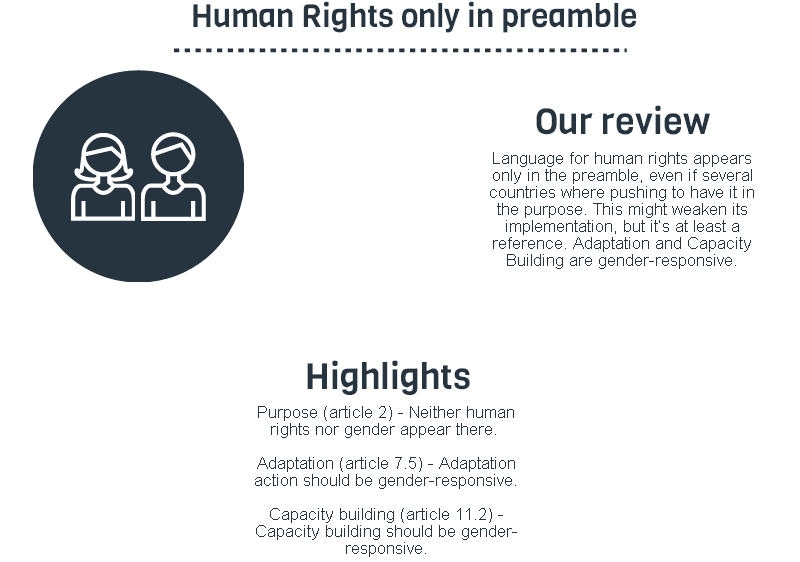
Unpacking the COP21 Paris Climate Agreement (Infographic)

There is a lot of information in the 31 page climate agreement reached at COP21 in Paris. Here is an infographic from Climate Tracker that helps to unpack some of the more salient items in the historic deal. The highlights of the key topics include temperature increase limits, human rights, ambition mechanism, implementation and adaptation, finance, transparency and accountability,  mitigation, loss damage, and reviews.


Related
COP21 Agreement is a Momentous Leap Forward
COP21 is an Unprecedented Turning Point
The COP21 Climate Deal and the Crucial Role of Obama's Leadership (Video)
Republican's Failed Attempts to Undermine the COP21 Climate Agreement
How the Paris Terror Attacks are related to Climate Change and why a COP21 Deal is More Important than Ever
Breaking: We Have a Final Draft Climate Agreement at COP21 
Environment and Climate in the Republican Spending Bill: Oil Exports in Exchange for Clean Energy, Air, Water, and Green Climate Funding
As We Near the End of COP21 People are Demanding Climate Action
Optimism at COP21 Despite Disagreements on the Meaning of Differentiated Responsibilities
Being Hopeful About the COP21 Climate Deal (Video)
Canadian Leadership at COP21
COP21 Compact of States and Regions Pledges Emissions Reductions Equivalent to China's Annual Output
A Guide to COP21 and Clean Energy Solutions from 24 Hours of Reality and Live Earth (Video)
Al Gore Says COP21 Will be a Turning Point in Global Policy (Video)
COP21 and Stranded Fossil Fuel Assets
COP21 History and Guides
COP21 Starts With Pledges of Action from World Leaders
President Obama's Address at the Opening Session of COP21
Everything You Need to Know About COP21 (Video)
Summary of the Final Round of Climate Talks Before COP21

The COP21 Agreement is a Momentous Leap Forward

The agreement signed in Paris is the most significant achievement in the history of climate action.. The world has come together to agree on a  31-page deal that lays a solid foundation for serious climate action. The signing of the Paris accord signals the start of globally coordinated efforts to reign-in climate change. History will record that the deal was signed at the 21st Session of the Conference of the Parties to the United Nations Framework Convention on Climate Change (COP21) on December 12, 2015.

Imperfect deal

There are a number of imperfections in the Paris agreement, not the least of which is the fact that the submitted INDCs will not prevent the earth from warming more than the internationally agreed upon 2 degree Celsius upper threshold limit. The agreed upon levels of mitigation financing including damage and loss for vulnerable nations is inadequate. 

There really was no choice, as UN general-secretary Ban Ki moon said, perfection is the enemy of this climate agreement. We had to compromise to get the deal done.

Some are disappointed that the agreement reiterates the 2 degree Celsius (3.6 degrees Fahrenheit) upper threshold rather than focusing exclusively on achieving the 1.5 degree Celsius limit that was supported by many nations including the US, Canada, China and the EU. The text says we must stay well below 2C and strive to keep global temperatures from rising more than 1.5 degrees Celsius.

It would also have been desirable to make emissions reduction legally binding. However due to Republican obstructionism in the Senate, these targets will not be binding under international law. However, other aspects of the deal will be legally binding.

Hope

While the agreement is less than perfect, it is nonetheless a historic achievement that gives us reason to believe that the world may finally tackle the climate crisis. More than ever before, the Paris agreement shows that we can muster the will to act together on climate change.

It is naive to have expected that COP21 on its own could have produced a final agreement that would have definitively ended climate change. The deal demanded compromises, nonetheless, we have taken a massive step forward.

Failure to produce an agreement would have squandered the momentum of COP21. The outcome is an objective reflection of how far we have come. It will also galvanize support to further the process.

The Paris deal should not be cast as a baby step forward, it is a gargantuan leap that buoys our hope that we can prevail.

Critics

Despite this great achievement, the deal has attracted the attention of a number of critics.

As explained by US President Barack Obama long before the deal was signed, cynicism is the enemy of climate action. "One of the enemies we will be fighting at this conference is cynicism – the presumption that we can't do anything about climate change," he said.

Even before the ink was dry, the cynics were crawling out of the woodwork to deride the agreement. One online rag even called it "an epic fail on a planetary scale."

Klein's carping

Modern day Marxist revolutionary Naomi Klein is a COP21 cynic on steroids. She did not wait for the deal to be signed to launch into a tirade. As we were on the cusp of signing the most important climate deal in history, she railed against it and amplified her calls to overthrow the capitalist system.

"The deal that will be unveiled in less than a week, likely to much fanfare and self-congratulation from politicians, echoed by an overly deferential press, will not be enough to keep us safe. In fact, it will be extraordinarily dangerous," Klein said

The only thing that is extraordinarily dangerous is Klein's contrarian whining. As a leading voice of the revolutionary narrative, Klein is dangerous because pessimistic rants undermine environmental advocacy.

Hansen's curmudgeonly views

James Hansen is a great man, he has been a stalwart champion of climate action and for this we should all be grateful. He has a better grasp of the science than almost anyone so we should listen when he sounds the alarm about such things as the inadequacy of the 2C upper threshold limit. However, the former Nasa scientist holds curmudgeonly views on COP21.

"It’s a fraud really, a fake," Hansen said. "It’s just bullshit for them to say: ‘We’ll have a 2C warming target and then try to do a little better every five years.’ It’s just worthless words. There is no action, just promises. As long as fossil fuels appear to be the cheapest fuels out there, they will be continued to be burned."

His take may be born out of his passionate convictions, but it is patently untrue and ultimately destructive to popular support for the climate movement. Although it may not be his intention, his comments provide fodder for those who seek to derail political action.

In the past he has quite rightly launched scathing attacks against leading Republicans, but his attacks now include President Obama who has done more to advance climate action in the US than any American ever has. Hansen is undeniably one of the world's leading climate scientists and a powerful activist, however, his failure to understand the political and psychological realities at play in the war against climate change harms the broader cause.

Historic achievement

Rather than criticize, we should take a brief moment to appreciate the scale of this unprecedented accomplishment. Millions signed petitions and on the weekend before the talks, hundreds of thousands took to the streets to call for an ambitious deal. People wanted an agreement and world leaders delivered.

The COP21 deal has achieved the goal of setting verifiable commitments to reduce greenhouse gas emissions and it has established rules for how countries monitor and report their emissions and reductions. In short, we have an international agreement that was signed by 196 countries that will limit the global temperature and hold governments to account.

Even before the talks began thousands of companies, cities, regions and investors committed to significant emission reductions. Getting so many to agree is a virtually impossible task. As UN secretary-general Ban Ki-moon said at the outset of the talks, "It will not be easy to get everyone to sign-on and many challenges must be overcome."

Despite these challenges and even a terrorist attack, a deal was forged.  Not only did the Paris agreement meet expectations, it exceeded them.

Signal to markets

One of the most important dimensions of this deal is the message that it sends to the private sector. The end of the old energy economy is now in sight and the low carbon economy is here to stay. Businesses will need to prepare for a raft of government regulation and those companies that have already invested in sustainability stand to reap lucrative dividends. 

As reported by the Guardian, Jennifer Morgan, of the environmental think tank the World Resources Institute, said the long term goal was "transformational" and "sends signals into the heart of the markets".

The Paris deal will expedite the demise of the fossil fuel industry and invigorate investment in renewable energy. This is a clarion call and both large and small investors will need to review their portfolios. This seismic shift was confirmed by the International Investors Group on Climate Change, a network managing €13 trillion of assets. They said they expect to see movement away from fossil fuels and and towards renewable energy. 

More cuts to come

The Paris deal is only the beginning. “It’s not the end of the fight over liability, it’s put the polluters on notice and that fight will continue in other fora,” said former US Vice President Al Gore.

The new agreement includes provisions to ratchet up national ambitions over time.  “Paris has to be a catalyst. It’s in no way, shape, or form a final chapter.” said Derek Walker, associate vice president of global climate at the Environmental Defense Fund.

As reported by the Guardian, a White House official said, "We can’t go home and say ’we saved the planet, check.’ This issue will continue to be a top priority for the President and the White House coming out of Paris heading into next year and for remaining time that he is in office because there is more work to do."

After most world leaders left Paris, president Obama stayed behind and worked towards legally binding periodic reviews of each country's emissions reduction targets. As part of the final COP21 deal, nations have committed themselves to reviewing their national emissions reduction pledges every five years. This prompted Miguel Arias Cañete, the EU’s climate commissioner to say that we can build on this historic deal.

This Paris agreement specifically asks governments to periodically strengthen their emissions reduction pledges in order to meet and exceed the goal of keeping temperatures below the 2C upper threshold limit.

Zero emissions

The agreement is both a first step and the turning point for our efforts to curtail and ultimately eliminate greenhouse gas emissions.

"This means bringing down greenhouse gas emissions to net zero within a few decades," said John Schellnhuber, director of the Potsdam Institute for Climate Impact Research, and a climate adviser to the Vatican.

The deal should be scrutinized, but let's take a moment to appreciate that we are about to take the first bold steps towards a carbon free future.

Source: Global Warming is Real

Related
COP21 is an Unprecedented Turning Point
Unpacking the COP21 Paris Climate Agreement (Infographic)
The COP21 Climate Deal and the Crucial Role of Obama's Leadership (Video)
Republican's Failed Attempts to Undermine the COP21 Climate Agreement
Paris Terror Attacks Climate Change and COP21
Breaking: We Have a Final Draft Climate Agreement at COP21 
As We Near the End of COP21 People are Demanding Climate Action
Optimism at COP21 Despite Disagreements on the Meaning of Differentiated Responsibilities
Being Hopeful About the COP21 Climate Deal (Video)
Canadian Leadership at COP21
COP21 Compact of States and Regions Pledges Emissions Reductions Equivalent to China's Annual Output
A Guide to COP21 and Clean Energy Solutions from 24 Hours of Reality and Live Earth (Video)
Al Gore Says COP21 Will be a Turning Point in Global Policy (Video)
COP21 and Stranded Fossil Fuel Assets
COP21 History and Guides
COP21 Starts With Pledges of Action from World Leaders
President Obama's Address at the Opening Session of COP21
Everything You Need to Know About COP21 (Video)
Summary of the Final Round of Climate Talks Before COP21