Showing posts with label disease. Show all posts

Coronavirus Augurs Hope for Climate Action

The coronavirus will augur change and while it is far too early to say with any certainty, it may very well drive the kind of radical transformation that we need to address the climate crisis. People are coming together to face this modern day plague. We are seeing a return to multilateralism and perhaps even a reversal of the trend towards increasing polarization. In the first few weeks of the pandemic we also began to see a reduction in climate change causing emissions.

To be clear we have little reason to celebrate at present. Health care systems are being overwhelmed and people are sick and dying. To make matters worse this pandemic is unfolding against the backdrop of the Trump administration's tragic mishandling of the crisis and a global economic meltdown. The stock markets are experiencing unprecedented volatility and U.S. job losses have spiked to a record 3.3 million making recession a virtual certainty.

However, amidst the pain and suffering we are seeing glimmers of hope. The pandemic has encouraged people to once again appreciate the value of expertise and the importance of science. We can expect renewed interest in fact-based decision making and this may arrest anti-science politics in the U.S.

The global pandemic gives us an opportunity to reconsider the myopia of our propensity to avoid long term thinking and planning. It is not unreasonable to assume that global efforts to combat the coronavirus will contribute to renewed interest in climate action. We have been repeatedly warned that we must act to avert this crisis. It stands to reason that we may see an increase in support for efforts to avert the most serious global threat humanity has ever faced.

In recent weeks we have stood together to fight this pandemic, there is no reason why we cannot do the same to engage the climate crisis. COVID-19 could be the shock we need to finally get serious about combating climate change.

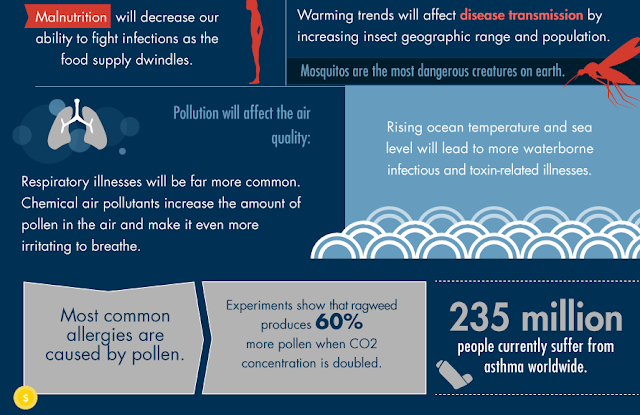
We are on the cusp of a climate catastrophe and we must act quickly if we are to avoid surpassing upper threshold temperature limits from which we may not be able to recover. Climate change is the cause of a wide range of diseases and other health concerns. Acting on climate change is about staving off a catastrophe that represents an existential threat to life on earth.

Managing the economic consequences of this pandemic will require a rethink of some basic economic values. Unprecedented times call for unprecedented measures. We need a coordinated global response that will take us into the next century and it should be obvious that business as usual won't do. If we reconsider the de-regulatory mayhem that resulted in the financial meltdown of 2008 and the insanity of deregulation under the Trump administration, we may be able to change our perilous course.

As we are forced to deal with recession we will have to carefully consider the kind of economic stimulus we will apply. It is reasonable to assume that governments will heed the economic case for climate action. The economic benefits of climate action combined with the disincentive of economic collapse if we fail to act, make a compelling case that will be hard to ignore.

Any serious climate action starts with a reappraisal of our energy landscape. Even before the pandemic hit the oil and gas industry was on life support. We need to acknowledge that the dirty energy industry is being abandoned by investors, banks and insurance companies. Rather than trying to prop-up a dying industry governments need to prepare for the way for the kinds of energy that can safely power our future. Clean energy is vital to our future as it will both grow the economy and provide millions of good jobs. The auto industry will be hit hard by the economic downturn, however, with the appropriate government support this could be an opportunity to transition away from the combustion engine. We need to come to terms with the reality that the benefits of climate action far outweigh the costs.

Resistance to the economic reality comes from politicians that are beholden to the old energy industry. However, this pandemic may signal the end of the fossil fuel powered politics of both Trump and the Republican party. After decades of deceiving the American public, the American electorate could bring the GOP's corruption to an end.

Our times challenge some longstanding principles that are at the core of western civilization and the virus may cause more people to question our market driven economy. We need government support to keep the economy from completely collapsing and government stimulus packages should include efforts to retool the economy to prepare for the world of tomorrow. This should include massive investments in clean energy like wind and solar energy. It must also include carbon removal technologies like direct air capture (DAC) and carbon capture and sequestration or (CCS). These so called negative emissions technologies may be our last hope of reigning in climate change.

We need to see an end to business as usual and this pandemic might very well be the catalyst for the kind of change we need to see. This may include structural changes to our economy. .We are already seeing behavioral changes as less people travel and more people are working from home. If nothing else the reaction to COVID-19 shows us that rapid global change is possible.

Climate activist Greta Thunberg denounced governments for taking urgent action against the coronavirus outbreak but failing to treat global warming as an emergency. "It is shameful that for so long the climate and environmental emergency has been ignored. We are still in a crisis that has never once been treated like a crisis," Thunberg said.

Her logic is sound and if reason prevails COVID-19 could bring about an unprecedented paradigm shift. However, there are some dark days ahead. This pandemic is far from over, and many more will suffer from the disease and the economic aftershocks. As Naomi Klein points out such shocks augur change, sometimes they are for the better and sometimes for the worse. We need to anticipate the very real possibility that if we let it, COVID-19 and its aftershocks could drain money and political will from climate action. We must not allow restrictive capital markets to prevent the flow of financing for clean technologies. We must also be ever mindful of authoritarian efforts to use the crisis to undermine democracy. Let us hope that this dark period will be a womb and not a tomb.

Related
Coronavirus Stock Losses in 2 days Equal to the Cost of Climate Adaptation for the Next 10 Years
Emissions Reduction from the Coronavirus is Being Undermined by Government Subsidies Trump's Handling of the Coronavirus is a lot like his Climate Strategy
Coronavirus Related Stock Losses in 2 days Equal to the Cost of Climate Adaptation
Coronavirus Reduces China's Emissions by 25 Percent

Video - Food By the Numbers: Feeding our Hungry Planet

Showing Support for Family Farmers and Sustainable Agriculture

Family farmers are extremely valuable yet they are under siege and need our support. World Food Day 2014 shines a spotlight on the world's 500 million family farmers. Food and Agriculture Organization of the United Nations (FAO) reports that based on data from 93 countries, family farmers account for an average of 80 percent of all holdings, and are the main producers of food that is consumed locally. Family farmers are also sustainable farmers. Sadly family farmers are disappearing at an alarming rate. Family farms that used to be an important source of rural jobs.

As explained in a foodtank article

"The world cannot do without the family farmer," says Amy McMillen, Partnerships and Outreach Coordinator for FAO. "It’s because of the family farmer that we eat a variety of healthy foods every day. And yet, family farmers still make up the majority of poor and hungry people in the world. We must do more to incentivize, celebrate and exponentially improve the lives of family farmers to ensure all people have access to fresh, healthy food."

While family farms are critical to food security and sustainable agriculture, they are having an increasingly hard time making ends meet. More need to be done to support them with tools and resources that address the cost of land, labor costs, government regulations and policies, climate change and the inherent risk of farming, as well as the disproportionate amount of work required given the financial returns.

As explained by Nabeeha M. Kazi, President & CEO of Humanitas Global and Chair of the Community for Zero Hunger, we must work to preserve family farmers.

"We do not want the universe of family farmers to shrink, and we must have policies, programs and resources to enable family farmers to stay on the farm if they desire to do so and perform at their potential," says Kazi.

We must help farmers to develop tools for designing sustainable agricultural systems based on the diversity and stability of local ecosystems. We all have a vested interest in supporting the family farmer. We simply cannot afford to lose family farmers if we are to address issues of food security and engage sustainable agricultural practices.

© 2014, Richard Matthews. All rights reserved.

Related
World Food Day 2014: Assessing US Agricultural Risks and Focusing on Family Farms
Infographic - Biodiversity for Family Farming
Video - Food by the Numbers: Feeding our Hungry Planet
The Think Eat Save Student Challenge
Food and Agricultural Sectors are at Risk from Climate Change
Food Waste is an Unfortunate Thanksgiving Tradition
Infographics: Population, Food, Agriculture, Water, GHGs and Solutions (World Resources Institute)
Insects are a Sustainable Food Choice
Organic Produce and Sustainable Seafoods
Population Growth and Global Food Production
Food Production and Climate Change
Breaking the Cycle of Famine
Food Production and UN Millennium Development Goals
Blog Action Day 2011: Food
The F Word: Famine is the Real Obscenity
Genetic Engineering: The Dark Side of Climate Ready Crops
In India Childhood Malnutrition is Compounded by Deadly Corruption
Video - Sustainable Meat: Trailer from the Documentary "American Meat"

Infographic - Biodiversity for Family Farming

World Food Day 2014: Assessing US Agricultural Risks and Focusing on Family Farms

October 16th is the Food and Agriculture Organization of the United Nations’ designated World Food Day. This event was first celebrated thirty three years ago. The theme for 2014 is Family Farming: “Feeding the world, caring for the earth”, drawing global attention to the importance of smallholder farmers. Family farms are key to improving food security and better management of natural resources. As explained by the CGIAR Consortium, "Family farming plays a significant role in reducing poverty and hunger, by providing the household and communities with nutrition rich food and livelihoods."

The resource demands from agriculture are considerable and we will never be able to reign in climate change and transition to a green economy without addressing the issue of food.

The future of agriculture will be challenging. As explained in the Risky Business report, alarming losses are predicted for America's agricultural industry. These concerns represent a salient economic concern for the US and the world.

According to the report climate change may diminish agricultural yields by as much as 73 percent in some states. Some of the most productive agricultural lands will be ravaged by extreme heat, prolonged spring downpours, and widespread and extended drought.

The effect of climate change on agricultural productivity will have staggering economic impacts. One of the areas expected to suffer agriculture declines due to climate change is the Upper Midwest. This area contains more than 520,000 farms which produced nearly $136 billion worth of crops in 2012. More than half (65 percent) of nation's corn and soybeans come from this area.

If we fail to act places like Missouri and Illinois will see average yield losses up to 73 percent by the end of the century. The report also indicates that we can anticipate short-term average yield losses up to 15 percent in the next 5 to 25 years. The Midwest region faces yield declines of up to 19 percent by mid-century and 63 percent by the end of the century.

Family farms can readily adapt to changing weather conditions through agricultural practices such as crop switching and double or triple cropping. Other cropping practices that may help include no-till, cover crops, and riparian and wetland buffers.

We must begin building agricultural resilience to climate change by improving soil health, water quality and protective habitat.

Economic incentives from emerging environmental markets and the greening of the commodity supply chain also provide new opportunities for producers to earn revenue while conserving vulnerable natural resources.

© 2014, Richard Matthews. All rights reserved.

Related
Showing Support for Family Farmers and Sustainable Agriculture
Infographic - Biodiversity for Family Farming
Video - Food by the Numbers: Feeding our Hungry Planet
The Think Eat Save Student Challenge
Food and Agricultural Sectors are at Risk from Climate Change
Food Waste is an Unfortunate Thanksgiving Tradition
Infographics: Population, Food, Agriculture, Water, GHGs and Solutions (World Resources Institute)
Insects are a Sustainable Food Choice
Organic Produce and Sustainable Seafoods
Population Growth and Global Food Production
Food Production and Climate Change
Breaking the Cycle of Famine
Food Production and UN Millennium Development Goals
Blog Action Day 2011: Food
The F Word: Famine is the Real Obscenity
Genetic Engineering: The Dark Side of Climate Ready Crops
In India Childhood Malnutrition is Compounded by Deadly Corruption
Video - Sustainable Meat: Trailer from the Documentary "American Meat"

Event - Responsible Business Forum on Food and Agriculture 2014

The Responsible Business Forum on Food and Agriculture, will take place on July 14th & 15th, 2014, at the Shangri-La Hotel in Makati, Manila. Feeding a global population of 9 billion by 2050 will require transformational changes to our farming and agricultural systems, already under pressure from climate change and water scarcity. This year’s Responsible Business Forum on Food and Agriculture is being held in partnership with WWF.

The forum will explore innovative and collaborative approaches to improving agricultural productivity and environmental sustainability across the following commodity value chains; corn, coffee and cocoa, fisheries and aquaculture, palm oil, , rice and sugar.

Global leaders will gather from business, government and NGOs to make recommendations for increasing agricultural productivity, whilst improving rural livelihoods and reducing environmental impacts. Agricultural commodities addressed will include – rice; poultry; fisheries & aquaculture; palm oil; coffee & cocoa and sugar. Working groups will produce recommendations on sustainable land use, equitable opportunity for small-holder farmers, increasing productivity and improving rural livelihoods.

For more information or to register click here.

Related
World Food Day 2014: Assessing US Agricultural Risks and Focusing on Family Farms
Showing Support for Family Farmers and Sustainable Agriculture
Infographic - Biodiversity for Family Farming
Video - Food by the Numbers: Feeding our Hungry Planet
The Think Eat Save Student Challenge
Food and Agricultural Sectors are at Risk from Climate Change
Food Waste is an Unfortunate Thanksgiving Tradition
Infographics: Population, Food, Agriculture, Water, GHGs and Solutions (World Resources Institute)
Insects are a Sustainable Food Choice
Organic Produce and Sustainable Seafoods
Population Growth and Global Food Production
Food Production and Climate Change
Breaking the Cycle of Famine
Food Production and UN Millennium Development Goals
Blog Action Day 2011: Food
The F Word: Famine is the Real Obscenity
Genetic Engineering: The Dark Side of Climate Ready Crops
In India Childhood Malnutrition is Compounded by Deadly Corruption
Video - Sustainable Meat: Trailer from the Documentary "American Meat"