Showing posts with label President Obama. Show all posts

Obama Signs Executive Order to Reduce GHGs in the Federal Government and Across their Supply Chain

President Obama is leading by example and significantly reducing the federal government's greenhouse gas emissions. In the first week of November the President signed an executive order that cuts emissions and weaves sustainability into the fabric of the federal government.

The move will cut government greenhouse gas (GHG) emissions by 40 percent and avert 26 million metric tons of GHG emissions by 2025. The White House claims that this will save tax payers up to $18 billion in energy costs and increase the share of federal energy derived from renewables by at least 25 percent.

The new EO also calls for emissions reduction in the federal government's $445 billion supply chain. The sustainability record of the government's major suppliers is already publicly available. The Federal Supplier Greenhouse Gas Management Scorecard documents the emissions of companies in the governments supply chain.

Federal vehicles will reduce their GHGs by 30 percent and federal buildings will improve their energy efficiency by 2.5 percent a year and water intensity in federal buildings will improve by 2 percent a year

For more information about the Executive Order click here.

Related Articles
President Obama's Green Executive Orders
Executive Order 13514: Federal Leadership in Environmental, Energy, and Economic Performance
Executive Order 13626: Accelerating Investment in Industrial Energy Efficiency
Executive Order 13423: Strengthening Federal Environmental, Energy, and Transportation Management
Obama Makes Good on Executive Order to Reduce the Federal Government's GHGs
President Obama's Executive Orders in His First Year (2008)

President Obama's Green Executive Orders

President Obama has vowed that in the absence of congressional action, he will use his executive privileges to combat climate change. Some who are seeking a pretext to discredit the President have suggested that he is ruling by executive orders (EOs). However, President Obama has signed fewer EOs in his first four years in office than most of his predecessors. Executive orders are issued by the President of the United States to manage the operations of the Federal Government.

In his 2013 State of the Union address, President Obama indicated that while he wants to work with Congress, he is prepared to use other means at his disposal:

“The good news is, we can make meaningful progress on this issue while driving strong economic growth. I urge this Congress to pursue a bipartisan, market-based solution to climate change, like the one John McCain and Joe Lieberman worked on together a few years ago. But if Congress won’t act soon to protect future generations, I will. I will direct my Cabinet to come up with executive actions we can take, now and in the future, to reduce pollution, prepare our communities for the consequences of climate change, and speed the transition to more sustainable sources of energy.”

President Obama is far from the first President to use EO’s to address environmental considerations. Most recently, his Republican predecessor, George W Bush signed EO 13423, “Strengthening Federal Environmental, Energy, and Transportation Management,” on January 24, 2007 and it was codified into law by the 2009 Omnibus Appropriations Act, which was signed by President Obama on February 17, 2009.EO 13423 consolidates and strengthens the sustainable practices of the following EOs dating back to 1998.
  • 13101 of September 14, 1998
  • 13123 of June 3, 1999
  • 13134 of August 12, 1999
  • 13148 of April 21, 2000
  • 13149 of April 21, 2000
EO 13423 directs federal agencies to establish absolute goals for carbon-cuts, to reduce fossil fuel consumption in federal vehicles by 30 percent, to implement a net-zero-energy requirement for federal buildings and to add sustainability requirements to federal contracts.

As explained by the Office of the Federal Environmental Executive, EO 13423 requires federal agencies to lead by example in advancing the nation’s energy security and environmental performance by increasing energy efficiency, reducing greenhouse gases, increasing renewable energy, improving building performance, enhancing water conservation, preventing pollution, conserving petroleum, using more alternative fuels, expanding purchases of environmentally sound goods and services, and more stringent environmental standards for electronics.

On Monday 26 January 2009, President Obama introduced his executive orders as follows, “I want to be clear from the beginning of this administration that we have made our choice: America will not be held hostage to dwindling resources, hostile regimes and a warming planet. Today I’m announcing the first steps on our journey toward energy independence, as we develop new energy, set new fuel efficiency standards and address greenhouse gas emissions.”

EO 13514, “Federal Leadership in Environmental, Energy, and Economic Performance,” was signed by the President on October 5, 2009. EO 13514 introduces new greenhouse gas (GHG) emissions management requirements, requiring each Federal Agency to submit a 2020 greenhouse gas (GHG) pollution reduction target from its estimated 2008 baseline by January 4, 2010. It also expands water reduction requirements for federal agencies, and addresses waste diversion, local planning, sustainable buildings, environmental management, and electronics stewardship.

President Obama signed EO is 13514 on Federal Sustainability on October 5, 2009, it requires each Federal Agency to submit a 2020 greenhouse gas (GHG) pollution reduction target using a 2008 baseline. President Obama has pledged to reduce the Federal government’s GHG emissions by 28 percent over the next decade.

According to a press release from Whitehouse.gov, “Actions taken under this Executive Order will spur clean energy investments that create new private-sector jobs, drive long-term savings, build local market capacity, and foster innovation and entrepreneurship in clean energy industries.”
Other green executive orders include:
  • EO 13543 establishes a National Commission on the BP Deepwater Horizon Oil Spill and Offshore Drilling.
  • EO 13546 addresses the use and security of biological select agents and toxins.
  • EO 13547 protects, maintains and supports the oceans, coasts, and the Great Lakes.
  • EO 13626 addresses Gulf Coast ecosystem restoration.
  • EO 13554 establishes the Gulf Coast Ecosystem Restoration Task Force.
  • EO 13624 accelerates Investment in Industrial Energy Efficiency.
This lst EO, signed in August, 2012, is designed to promote American manufacturing by helping to facilitate investments in energy efficiency at industrial facilities.

Section 1. Policy. Accelerate and expand investments that reduce energy use through more efficient manufacturing processes and facilities and the expanded use of combined heat and power (CHP).
Sec. 2. Encouraging Investment in Industrial Efficiency. Coordinate policies between a variety of departments to encourage investment in industrial efficiency in order to reduce costs for industrial users, improve U.S. competitiveness, create jobs, and reduce harmful air pollution.
(a) A national goal of deploying 40 gigawatts of new, cost-effective industrial CHP in the United States by the end of 2020;
(b) Public workshops, to develop and encourage the use of best practice State policies and investment models that address the multiple barriers to investment in industrial energy efficiency and CHP;
(c) Encourage investment in industrial energy efficiency and CHP, such as by providing assistance to States, providing incentives, employing output-based approaches as compliance options, seeking to expand participation in and create additional tools, reducing energy intensity by 25 percent over 10 years, support and encourage efforts to accelerate investment in industrial energy efficiency and CHP, providing general guidance, technical analysis and information, and financial analysis, improving the usefulness of Federal data collection and analysis, and assisting States in developing and implementing State-specific best practice policies.

The President’s use of EO (13514) to establish Federal Leadership in Environmental Energy is amongst those actions that have been singled out for criticism by conservatives.

One headline referred to Obama as an “imperial president” and suggested that he is abusing his powers. Some went so far as to say that his green energy EO was unconstitutional. However, these types of attacks are little more than political theatre. Executive Orders are a routine part of presidential powers and contrary to what his detractors have alleged, President Obama has used his executive privileges very sparingly.

According to data derived from the Federal Registry, president Obama has issued less EOs than all of his predecessors.

Historically, the average number of EOs per president is 610, which is more than four times the number of EOs signed by President Obama.

In the context of the current political environment, green EOs are one of the President’s most potent weapons. However, there are limits to their utility. No matter what the President does, the U.S. must also pass climate legislation and this requires the support of the American people and Congress.

Source: Global Warming is Real

Related Articles
Executive Order 13514: Federal Leadership in Environmental, Energy, and Economic Performance
Executive Order 13626: Accelerating Investment in Industrial Energy Efficiency
Executive Order 13423: Strengthening Federal Environmental, Energy, and Transportation Management
Obama Makes Good on Executive Order to Reduce the Federal Government's GHGs
President Obama's Executive Orders in His First Year (2008)

President Obama's Clean Energy Trust Fund

President Barack Obama wants to create a $2 billion clean-energy research fund with fees paid by oil and gas producers to help lower US dependence on oil. The President has urged Congress to support the $2 billion fund which would fuel cutting edge clean energy research projects, While the trust will focus on transportation, it will support research into a variety of fuels and technologies.

President Obama has already deployed billions of dollars for major cutting-edge clean tech research projects, so the $2 billion over ten years is not an astronomical figure. However, it does suggest that the President is serious about weaning the nation off fossil fuels and transitioning to cleaner alternatives.

One of the more interesting aspects of the trust is the fact that it will be funded by oil and gas profits through a designated tax that applies only to their operations on public lands.

Speaking at the Argonne National Laboratory in Lemont, Illinois, Obama said the US risks falling behind countries that are increasing their support for reducing energy usage and finding cleaner alternatives to fossil fuels.

“We can’t afford to miss these opportunities while the rest of the world races forward...Few areas hold more promise for creating good jobs and growing our economy than how we use American energy,” Obama said.

It is not certain that this funding mechanism will be embraced by obstructionist Republicans. Nonetheless, there is a precedent for GOP support as this kind of funding approach was supported by Republicans four years ago. In 2009, to counter the Democrats climate-change legislation, John Boehner introduced an energy bill that would have directed money from oil and gas lease sales to pay for clean-energy programs.

If Republicans can put the national interest ahead of their partisan preoccupations, this trust will help wean America off fossil fuels, reduce GHGs and enhance US competitiveness in the global energy sector.

© 2013, Richard Matthews. All rights reserved.

Related Articles
Obama Resurrecting Nixon to Advance Environmental Policy
Will Obama's Actions Match his Words?
Green Excerpts of President Obama's 2013 State of the Union Address
President Obama's 2013 Inaugural Address: "We Will Respond to the Threat of Climate Change"
Green Inauguration of President Obama: "Faith in America's Future"
Hopes for Environmental Action in President Obama's Second Term
President Obama's Victory Speech: "The Best is Yet to Come"
Taking Stock of President Obama's Environmental Efforts in His First Term

Executive Order 13626: Accelerating Investment in Industrial Energy Efficiency

This EO was signed by President Obama in August, 2012, it is designed to promote American manufacturing by helping to facilitate investments in energy efficiency at industrial facilities.

Section 1. Policy. Accelerate and expand investments that reduce energy use through more efficient manufacturing processes and facilities and the expanded use of combined heat and power (CHP).

Section 2. Encouraging Investment in Industrial Efficiency. Coordinate policies between a variety of departments to encourage investment in industrial efficiency in order to reduce costs for industrial users, improve US competitiveness, create jobs, and reduce harmful air pollution.

(a) A national goal of deploying 40 gigawatts of new, cost-effective industrial CHP in the United States by the end of 2020;

(b) Public workshops, to develop and encourage the use of best practice State policies and investment models that address the multiple barriers to investment in industrial energy efficiency and CHP;

(c) Encourage investment in industrial energy efficiency and CHP, such as by providing assistance to States, providing incentives, employing output-based approaches as compliance options, seeking to expand participation in and create additional tools, reducing energy intensity by 25 percent over 10 years, support and encourage efforts to accelerate investment in industrial energy efficiency and CHP, providing general guidance, technical analysis and information, and financial analysis, improving the usefulness of Federal data collection and analysis, and assisting States in developing and implementing State-specific best practice policies.


Related Articles
President Obama's Green Executive Orders
Executive Order 13514: Federal Leadership in Environmental, Energy, and Economic Performance
Executive Order 13626: Accelerating Investment in Industrial Energy Efficiency
Executive Order 13423: Strengthening Federal Environmental, Energy, and Transportation Management
Obama Makes Good on Executive Order to Reduce the Federal Government's GHGs
President Obama's Executive Orders in His First Year (2008)

Executive Order 13423: Strengthening Federal Environmental, Energy, and Transportation Management

President Obama signed Executive Order (EO) 13423 on February 17, 2009. EO 13423 consolidates and strengthens the sustainable practices of the following preceeding EOs dating back to 1998.

13101 of September 14, 1998
13123 of June 3, 1999
13134 of August 12, 1999
13148 of April 21, 2000
13149 of April 21, 2000

EO 13423 directs federal agencies to establish absolute goals for carbon-cuts, to reduce fossil fuel consumption in federal vehicles by 30 percent, to implement a net-zero-energy requirement for federal buildings and to add sustainability requirements to federal contracts.

As stated by the Office of the Federal Environmental Executive, EO 13423 requires federal agencies to lead by example in advancing the nation’s energy security and environmental performance by increasing energy efficiency, reducing greenhouse gases, increasing renewable energy, improving building performance, enhancing water conservation, preventing pollutin, Energy Efficiency: Reduce energy intensity 30 percent by 2015, compared to an FY 2003 baseline.

Greenhouse Gases: Reduce greenhouse gas emissions through reduction of energy intensity 30 percent by 2015, compared to an FY 2003 baseline.

Renewable Power: At least 50 percent of current renewable energy purchases must come from new renewable sources (in service after January 1, 1999).

Building Performance: Construct or renovate buildings in accordance with sustainability strategies, including resource conservation, reduction, and use; siting; and indoor environmental quality.

Water Conservation: Reduce water consumption intensity 16 percent by 2015, compared to an FY 2007 baseline.

Vehicles: Increase purchase of alternative fuel, hybrid, and plug-in hybrid vehicles when commercially available. Petroleum Conservation: Reduce petroleum consumption in fleet vehicles by 2 percent annually through 2015, compared to an FY 2005 baseline.

Alternative Fuel: Increase use of alternative fuel consumption by at least 10 percent annually, compared to an FY 2005 baseline.

Pollution Prevention: Reduce use of chemicals and toxic materials and purchase lower risk chemicals and toxic materials.

Procurement: Expand purchases of environmentally sound goods and services, including biobased products. Electronics Management: Annually, 95 percent of electronic products purchased must meet Electronic Product

Environmental Assessment Tool standards where applicable; enable Energy Star® features on 100 percent of computers and monitors; and reuse, donate, sell, or recycle 100 percent of electronic products using environmentally sound management practices.

Related Articles
President Obama's Green Executive Orders
Executive Order 13514: Federal Leadership in Environmental, Energy, and Economic Performance
Executive Order 13626: Accelerating Investment in Industrial Energy Efficiency
Obama Makes Good on Executive Order to Reduce the Federal Government's GHGs
President Obama's Executive Orders in His First Year (2008)

Executive Order 13514: Federal Leadership in Environmental, Energy, and Economic Performance

Executive Order (EO) 13514, “Federal Leadership in Environmental, Energy, and Economic Performance,” was signed on October 5, 2009. EO 13514 introduces new greenhouse gas (GHG) emissions management requirements, requiring each Federal Agency to submit a 2020 GHG pollution reduction target from its estimated 2008 baseline by January 4, 2010. It also expands water reduction requirements for federal agencies, and addresses waste diversion, local planning, sustainable buildings, environmental management, and electronics stewardship.

According to a press release from Whitehouse.gov, "Actions taken under this Executive Order will spur clean energy investments that create new private-sector jobs, drive long-term savings, build local market capacity, and foster innovation and entrepreneurship in clean energy industries."

EO 13514 enhances EO 13423, which requires agencies to reduce energy and water intensity and achieve other sustainability goals. All the provisions of EO 13423 remain in effect. EO 13514 requires federal agencies to achieve the following goals:

Establish reduction targets for Agency wide Scope 1, Scope 2, and Scope 3 GHG emissions to be achieved by fiscal year (FY) 2020, relative to an FY 2008 baseline. Develop and report annual comprehensive inventories of Scope 1, Scope 2, and Scope 3 GHG emissions.

Ensure that all new construction and major renovations meet the Guiding Principles for High-Performance Sustainable Buildings, and that 15 percent of existing buildings meet them by FY 2015. Starting in FY 2020, design federal buildings to achieve "zero net energy" by FY 2030.
  • Reduce potable water consumption intensity 26 percent by FY 2020, compared to an FY 2007 baseline. (This extends the water consumption intensity reduction requirement of EO 13423 by five years.) Reduce industrial, landscaping, and agricultural water use 20 percent by FY 2020, compared to an FY 2010 baseline.
  • Develop a "Strategic Sustainability Performance Plan" that commits the Agency to identify specific goals for achieving this executive order and to evaluate Agency climate change risks and vulnerabilities in order to manage the effects of climate change on the Agency’s operations and mission.
  • EPA is required to issue guidance on the implementation of Section 438 of the Energy Independence and Security Act of 2007 (EISA), which it issued on December 4, 2009.
  • Participate in regional transportation planning, increase selection of local energy use, and plan new facility locations near existing town centers.
  • Reduce fleet consumption of petroleum fuels by 2 percent annually through FY 2020 from an FY 2005 baseline.
  • Achieve a 50 percent solid waste diversion rate by FY 2015. Reduce paper use, increase composting, and decrease chemical use.
  • Ensure 95 percent of new contract actions (task and delivery orders) are energy- and water-efficient, biobased, environmentally preferable, generally non-toxic, and contain recycled content.
  • Procure products that are Electronic Product Environmental Assessment Tool (EPEAT)-registered, ENERGY STAR® labeled, or Federal Energy Management Program (FEMP)-designated equipment.
  • Continue to employ environmental management systems at all organizational levels.

President Obama's 2013 Inaugural Address: "We Will Respond to the Threat of Climate Change"

President Obama marked the start of his second term with a bold inaugural speech at the Capitol. With renewed determination the President reached beyond the partisan divide and showed true leadership. Speaking directly to the American people the President clearly stated that the United States will engage climate change.

Here are excerpts of the President's remarks:


For more than two hundred years, we have...made ourselves anew, and vowed to move forward together.

Together, we discovered that a free market only thrives when there are rules to ensure competition and fair play.

Together, we resolved that a great nation must care for the vulnerable, and protect its people from life’s worst hazards and misfortune.

But we have always understood that when times change, so must we; that fidelity to our founding principles requires new responses to new challenges...Now, more than ever, we must do these things together, as one nation, and one people.

This generation of Americans has been tested by crises that steeled our resolve and proved our resilience. A decade of war is now ending. An economic recovery has begun. America’s possibilities are limitless, for we possess all the qualities that this world without boundaries demands: youth and drive; diversity and openness; an endless capacity for risk and a gift for reinvention. My fellow Americans, we are made for this moment, and we will seize it – so long as we seize it together.

We understand that outworn programs are inadequate to the needs of our time...But while the means will change, our purpose endures: a nation that rewards the effort and determination of every single American. That is what this moment requires. That is what will give real meaning to our creed.

But we reject the belief that America must choose between caring for the generation that built this country and investing in the generation that will build its future.

We, the people, still believe that our obligations as Americans are not just to ourselves, but to all posterity. We will respond to the threat of climate change, knowing that the failure to do so would betray our children and future generations. Some may still deny the overwhelming judgment of science, but none can avoid the devastating impact of raging fires, and crippling drought, and more powerful storms. The path towards sustainable energy sources will be long and sometimes difficult. But America cannot resist this transition; we must lead it. We cannot cede to other nations the technology that will power new jobs and new industries – we must claim its promise. That is how we will maintain our economic vitality and our national treasure – our forests and waterways; our croplands and snowcapped peaks. That is how we will preserve our planet, commanded to our care by God. That’s what will lend meaning to the creed our fathers once declared.

Progress does not compel us to settle centuries-long debates about the role of government for all time – but it does require us to act in our time.

For now decisions are upon us, and we cannot afford delay. We cannot mistake absolutism for principle, or substitute spectacle for politics, or treat name-calling as reasoned debate. We must act, knowing that our work will be imperfect. We must act, knowing that today’s victories will be only partial, and that it will be up to those who stand here in four years, and forty years, and four hundred years hence to advance the timeless spirit once conferred to us in a spare Philadelphia hall.

My fellow Americans, the oath I have sworn before you today, like the one recited by others who serve in this Capitol, was an oath to God and country, not party or faction – and we must faithfully execute that pledge during the duration of our service.

They are the words of citizens, and they represent our greatest hope.

You and I, as citizens, have the power to set this country’s course.

You and I, as citizens, have the obligation to shape the debates of our time – not only with the votes we cast, but with the voices we lift in defense of our most ancient values and enduring ideals.

Let each of us now embrace, with solemn duty and awesome joy, what is our lasting birthright. With common effort and common purpose, with passion and dedication, let us answer the call of history, and carry into an uncertain future that precious light of freedom.

Thank you, God Bless you, and may He forever bless these United States of America.

Related Articles
Green Inauguration of President Obama: "Faith in America's Future"
Hopes for Environmental Action in President Obama's Second Term
President Obama's Victory Speech: "The Best is Yet to Come"
Taking Stock of President Obama's Environmental Efforts
Obama Addresses Solutions to Climate Change Long Before Becoming President (Video)
President Obama Spells out his Climate Change Agenda Before Taking Office (Video)
President Obama Addresses Climate Change at the UN (Video)
Why President Obama was Unable to do More on the Environment in his first term (Video)
President Obama's Efforts on the Environment and Education
The Obama Administration Has Grown Renewable Energy
Obama's Energy Efficiency Executive Order for Industry
Obama Administration's New Vehicle Standards
Obama Striving to Put an End to Oil Subsidies
Obama's National Goal of One Million EVs by 2020
Obama's Jobs Plan Emphasizes green employment
Obama 2013 Budget Seeks to Make Renewable Tax Credits Permanent
Clean Energy Excerpts of President Obama's 2012 State of the Union Speech
President Obama's 2013 Environmental Budget
Excerpts of President Obama's American Jobs Act
Energy Efficiency Partnerships: Obama's American Jobs Act
President Obama's American Jobs Act (Video)
Environmental Politics: Obama Versus the GOP
Highlights of Obama's 2011 State of the Union Address
Excerpts of President Obama's 2010 State of the Union Address
Obama Renews His Commitments to Clean Energy and Efficiency
Excerpts from President Obama's 2010 State of the Union Address

Green Inauguration of President Obama: "Faith in America's Future"

The public Presidential inauguration ceremony took place on Monday, January 21, and event organizers paid unprecedented attention to environmental sustainability. The official Inauguration Day was January 20th. However, as that date falls on a Sunday in 2013, the public swearing-in ceremony was held on Monday, January 21, 2013, at 11:30 a.m. ET, with the official event taking place at 11:55 a.m.

This year's official theme is "Faith in America's Future." One of the unique touches that define the unique quality of President Obama's inauguration are the efforts to make the event more environmentally sustainable.

The green elements of this year's inauguration include extensive recycling. According to the event's organizers there was no need for trash cans at the event. The festivities include a week of balls and galas honoring President Obama and Vice President Biden.

Inauguration events throughout Washington endeavored to be more green. Pritchard Sports and Entertainment Group, working with the inauguration’s event organizer, C3 Events, managed waste throughout Washington, DC. Waste was sorted, recycled and composted. This included everything from food scraps at cocktail parties to the waste generated by horses who travel along the parade route on Pennsylvania Avenue.

The DC municipal government also built a stand for local leaders and 90 percent of the materials used will be recycled.

2013 Green Inaugural Ball

On January 20th, more than 1,200 guests celebrated the inauguration of Barack Obama and Joseph Biden and America’s green economy at the 2013 Green Inaugural Ball. The National Wildlife Federation hosted the 2013 Green Inaugural Ball at the venue known as the the Newseum.

This event brought together the broad environmental, conservation and clean tech community to celebrate the past four years and look forward to the future. The Green Ball brings together top leaders from the environmental, conservation, clean tech, renewable energy communities and business groups who advocate clean energy, efficiency, green technologies, the protection of America's natural heritage and green jobs.

This event is a celebration of the past four years of accomplishment on the environment, energy, and clean technology and a look forward to another four years of progress.

Green Elements of the Event
  • Compostable serving materials or reusable items such as glass and flatware
  • Catering recycled frying oil for use as biofuels,
  • Expired light bulbs were broken down in a Lampinator to separate mercury from glass and metals
  • All food scraps were composted to make soil that will be used by DC residents and urban farms.
© 2013, Richard Matthews. All rights reserved.

Related Articles
President Obama's 2013 Inaugural Address: "We Will Respond to the Threat of Climate Change"
Hopes for Environmental Action in President Obama's Second Term
President Obama's Victory Speech: "The Best is Yet to Come"
Why President Obama was Unable to do More on the Environment in his first term (Video)
Taking Stock of President Obama's Environmental Efforts
Obama Addresses Solutions to Climate Change Long Before Becoming President (Video)
President Obama Spells out his Climate Change Agenda Before Taking Office (Video)
President Obama Addresses Climate Change at the UN (Video)
President Obama's Efforts on the Environment and Education
The Obama Administration Has Grown Renewable Energy
Obama's Energy Efficiency Executive Order for Industry
Obama Administration's New Vehicle Standards
Obama Striving to Put an End to Oil Subsidies
Obama's National Goal of One Million EVs by 2020
Obama's Jobs Plan Emphasizes green employment
Obama 2013 Budget Seeks to Make Renewable Tax Credits Permanent
Clean Energy Excerpts of President Obama's 2012 State of the Union Speech
President Obama's 2013 Environmental Budget
Excerpts of President Obama's American Jobs Act
Energy Efficiency Partnerships: Obama's American Jobs Act
President Obama's American Jobs Act (Video)
Environmental Politics: Obama Versus the GOP
Highlights of Obama's 2011 State of the Union Address
Excerpts of President Obama's 2010 State of the Union Address
Obama Renews His Commitments to Clean Energy and Efficiency
Excerpts from President Obama's 2010 State of the Union Address

Obama Versus Romney on Energy

Here is an excerpt from a September 28, 2012 Climate Progress article titled "Obama Versus Romney: Everything You Need to Know About Where the Candidates Stand on Energy Policy." The article was written by Daniel J. Weiss and and Jackie Weidman

The United States is in the midst of significant changes in our energy outlook. We are producing and burning more natural gas for electricity, while reducing coal use. Domestic oil production is at a 15-year high while oil imports are at a 15-year low. Renewable electricity doubled over the past four years, while worldwide carbon pollution and the impacts of climate change grow. The next president will face these and other serious challenges posed by a changing energy world.

President Barack Obama’s first term featured the adoption of essential toxic and carbon pollution reduction measures to protect public health. In addition, he modernized fuel-economy standards for the first time in two decades, which also helped the auto industry; invested in energy efficiency and renewable electricity; and created tens of thousands of jobs.

Gov. Mitt Romney’s energy agenda couldn’t be more different. He would undo new safeguards from mercury, carcinogens, soot, and smog from industrial sources. He opposes the improved fuel-economy standards, and would continue and expand tax breaks for big oil companies, while openly disparaging clean energy and investments in wind power.

In short, there are stark differences between the two presidential candidates that must be discussed on October 3 so Americans have a clear view of the energy path each candidate would lead us down.

Below is a more detailed direct comparison of their positions on the most visible energy challenges facing the nation. Following this chart is documentation on the candidates’ positions:

Oil and gas production

Obama:

Oil imports lowest since 1997; dropped by 15 percent during term to 42 percent; vowed to cut current oil imports in half by 2020. [[Energy Information Administration, 6/12] Domestic oil production is the highest in 15 years. The United States has more drilling rigs at work than the rest of the world combined. [Center for American Progress Action Fund,9/13/12; Energy Information Administration, 9/11/12] Crude oil production from federal lands and waters was higher in 2009, 2010 and 2011 than in any of the last three years of the Bush administration. [EIA, 3/14/12] Raised worker and environmental safety standards for drilling in the Gulf of Mexico following the Deepwater Horizon oil disaster, strengthening well design, testing, control equipment, and workplace safety. The Gulf Coast region was not hurt economically by a temporary moratorium, which has the same unemployment as two years ago and had rising personal income in 2011. [White House, 3/30/12, NOLA, 4/15/12]

Romney

Would open the Florida portion of the Gulf of Mexico, the Atlantic and Pacific Outer Continental Shelves, public lands, and the Arctic National Wildlife Refuge to new drilling. Would accelerate drilling permits, short circuiting health and environmental reviews. [MittRomney.com, 2011] Defense Department concerned about Florida and Virginia drilling expansion since it could interfere with military training. [Panama City News Herald, 4/4/12] Called the temporary moratorium on drilling in the Gulf following the Deepwater Horizon disaster “illegal.” [CBS News, 3/9/12] See “Public lands protection”

Big Oil tax breaks

Obama:

Calls on Congress to end $4 billion in oil tax breaks and to invest in clean energy instead. [White House, 3/28/2012] Pledged to cut subsidies for oil, coal, and natural gas internationally, along with G20 nations. [Economist,10/1/09]

Romney:

Romney supports the House Republican budget, authored by his running mate, Rep. Paul Ryan (R-WI), which preserves $40 billion in tax breaks for the oil and gas industry over a decade. [CAP, 3/20/12] Romney’s economic plan would give the big five oil companies–BP, Chevron, ConocoPhillips, ExxonMobil, and Shell–an additional $2.3 billion annual tax cut on top of existing tax breaks they currently receive. [CAPAF, 7/26/12] Romney’s plan cuts the corporate tax rate from 35 percent to 25 percent, but does not make specific mention of oil and gas loopholes which let oil companies pay much lower effective federal rates. [MittRomney.com, 2012] Asked directly in an interview about whether he is for or against subsidizing Big Oil, Romney responded: “I’m not sure precisely what big tax breaks we’re talking about.” [Fox News, 4/3/2012]

Clean energy

Obama:

Federal government invested billions of dollars in renewable energy projects, creating tens of thousands of jobs; doubled generation of (non-hydropower) renewable electricity to 6 percent. [EIA, 7/1/12] Supports extension of the production tax credit for wind generated electricity. [White House, 5/22/12] “Governor Romney calls [renewable sources of energy] ‘imaginary.’ Congressman Ryan calls them a ‘fad.’ I think they’re the future. I think they’re worth fighting for.” [Climate Progress, 8/28/12] “I will not walk away from the promise of clean energy. I will not cede the wind or solar or battery industry to China or Germany because we refuse to make the same commitment here.” [State of the Union, 1/24/12] Transforming the Pentagon energy use by reducing the military’s dependence on fossil fuels that cost the Pentagon up to $20 billion annually. [National Journal, 4/11/12]

Romney:

Opposes the extension of the production tax credit for wind energy, which could cost 37,000 jobs in the industry. [Des Moines Register, 7/30/12] “In place of real energy, Obama has focused on an imaginary world where government-subsidized windmills and solar panels could power the economy. This vision has failed.” [Columbus Dispatch op-ed, 8/8/12] “You can’t drive a car with a windmill on it.” [ThinkProgress, 3/6/2012] Endorses the House passed budget authored by Ryan, which gives a 60 percent funding increase to coal, oil, and natural gas, while it decreases funding for research on vehicle batteries and solar projects, and loans to companies to retool to build fuel-efficient cars. [Politico, 4/17/12]

Reduce oil use and imports with efficient vehicles

Obama:

New modern standards require cars and light trucks to achieve an average 54.5 miles per gallon by 2025. This, combined with the first round of standards, will save 3.1 million barrels of oil per day in 2030. This is equivalent to the amount of oil we currently import from the Persian Gulf, Colombia, and Venezuela combined. [CAP, 8/28/12] Invested in fuel-efficient vehicle and advanced battery research and development to spur job growth and increase international competitiveness; increased affordability and reliability of electric vehicles. [CAP, 8/28/12] Proposed a “race to the top” for communities to seek federal investment in public electric vehicle recharging infrastructure. [White House, 3/30/11]

Romney:

“Gov. Romney opposes the extreme standards that President Obama has imposed, which will limit the choices available to American families,” said campaign spokeswoman Andrea Saul. [LA Times, 8/28/12] Disparaged the first plug-in hybrid electric Chevrolet Volt as “an idea whose time has not come,” and said, “I’m not sure America was ready for the Chevy Volt.” [Michigan Live, 12/23/11, MSNBC 4/5/12]. EPA says the Volt gets at least 94 miles per gallon. Advocates ending the federal loan program helping companies develop and produce efficient cars. [Orange County Register, 10/24/11] Supports House passed budget authored by Ryan that would slash investment in alternatives to gasoline powered cars. [House Budget Committee, FY 2013]

Gasoline prices

Obama:

Commodity Futures Trading Commission should increase market oversight of Wall Street speculators who have driven up oil prices;, increase penalties for illegal activity. Dodd-Frank Wall Street Reform and Consumer Protection Act includes rules to limit commodities speculation by Wall Street speculators that do not affect commercial end users. [CNN, 4/17/12; Media Matters, 4/18/12] Favors investments in alternatives to gasoline, including electric vehicles and public transportation. [CAP, 8/28/12; American Public Transportation Association, 2/13/12]

Romney

Would repeal Dodd Frank and opposes reining in Wall Street speculators, calling Obama’s move “gimmickry.” [MittRomney.com, 4/17/12] Supports House passed budget authored by Ryan that would cut Commodity Futures Trading Commission funding by nearly $40 million; cuts would hinder the CFTC’s ability to police the oil and other markets that the Commission oversees.. [House Budget Committee FY 2013; White House, 4/17/12]

Green jobs

Obama:

Historic level of investment in green jobs sector now with 3.1 million Americans employed according the Bureau of Labor Statistics. [AP, 3/22/12] Romney:

Repeatedly called green jobs “fake,” such as calling them “illusory” in an op-ed on his energy plan. [Orange County Register, 10/24/11] “[Obama] keeps talking about green jobs, where are they?” [OC Register, 10/24/11; League of Conservation Voters, 9/15/11] The Economic Policy Institute estimates that there were nearly 1 million clean energy jobs created or saved by the Recovery Act. [BlueGreen Alliance, 2/17/11]

Public lands protection

Obama:

Approved 17 major solar energy installation projects on public lands that are generating 6,000 megawatts of power; will expedite permitting process to increase development in Western states. [Department of Energy, 7/24/12] Announced he would “allow the development of clean energy on enough public land to power 3 million homes.” [White House, 1/24/12] Signed a sweeping public lands bill in 2009 that designated 2 million acres of wilderness and created three national parks. [AP, 3/31/09] Used the 1906 Antiquities Act to create three national monuments – Fort Monroe, Virginia; Fort Ord, California; and Chimney Rock, Colorado. These monuments will bring tourists and economic development to these places.. [ClimateProgress, 9/20/12] 

Romney:

Romney’s energy plan would give states the authority to allow drilling in National Park Service units and other public lands within state borders. The New York Times noted that “states, as a rule, tend to be interested mainly in resource development.” [NYT, 8/18/12] The Romney plan significantly increases the likelihood that drilling could take place in 30 National Park units, including the Flight 93 Memorial and Everglades National Park. [Center for American Progress, 9/12/12] Romney said “I haven’t studied […] what the purpose is of” public lands. But he finds it unacceptable when conservation is “designed to satisfy, let’s say, the most extreme environmentalists, from keeping a population from developing their coal, their gold, their other resources for the benefit of the state.” [McClatchy, 2/16/12] Fully embraced the House passed budget, authored by Ryan, which would sell off 3.3 millions of acres of national parks and public lands. [ThinkProgress, 3/21/12]

Climate Change

Obama:

“My plan will continue to reduce the carbon pollution that is heating our planet – because climate change is not a hoax. More droughts and floods and wildfires are not a joke. They’re a threat to our children’s future.” [Climate Progress, 9/6/12] Finalized the first ever carbon pollution reduction rules for motor vehicles, which will cut carbon pollution from vehicles built between 2012 and 2025. The standards will slash billions of tons of carbon pollution. [White House, 8/3/2012] Proposed the first carbon pollution reduction for new coal-fired power plants. [NPR, 3/27/12] State Department is leading a group of countries in a program that cuts global warming pollutants like soot, methane, and hydrofluorocarbons. [NYT, 2/16/2012]

Romney:

Romney made fun of President Obama’s commitment to fighting global warming at the Republican National Convention when he said “I’m not in this race to slow the rise of the oceans or to heal the planet.” [Climate Progress, 9/19/12] “There remains a lack of scientific consensus on the issue — on the extent of the warming, the extent of the human contribution, and the severity of the risk — and I believe we must support continued debate and investigation within the scientific community.” [NYT,9/5/2012] “I oppose steps like a carbon tax or a cap-and-trade system.” [Science Debate.org, 9/4/12] Says the Clean Air Act doesn’t apply to carbon emissions: “My view is that the EPA in getting into carbon and regulating carbon has gone beyond the original intent of that legislation, and I would not take it there.” Would overturn Supreme Court decision by blocking EPA from setting carbon pollution reduction standards.[Politico, 7/18/11; MittRomney.com, 2012]

Protect public health from mercury, toxic air pollution

Obama:

Finalized historic standard that limits harmful mercury and air toxic pollution from coal-fired power plants. Proposed rules to reduce mercury and toxic air pollution from industrial boilers, incinerators, and cement manufacturing. Together, these initiatives will result in $187 billion in annual health benefits and would prevent 21,600 premature deaths, 199,000 cases of asthma, and 12,540 hospitalizations annually. [CAPAF, 9/18/12] Proposed Cross-state air pollution rule that would save up to 34,000 lives, and $280 billion in economic benefits, annually; rule was struck down in 2-1 federal appeals court decision, but EPA could appeal. [CAPAF, 9/18/12]

Romney

Would promptly issue an executive order that “directs all agencies to immediately initiate the elimination of Obama-era regulations that unduly burden the economy or job creation.” [MittRomney.com, 2011] “Aggressively” develop all our coal sources. “Coal is America’s most abundant energy source. We have reserves that—at current rates of uses—will last for the next 200 years of electricity production in an industry that directly employs perhaps 200,000 workers.” [MittRomney.com, 2011] Against new EPA regulations of harmful mercury and air pollutants from coal: “I think the EPA has gotten completely out of control for a very simple reason. It is a tool in the hands of the president to crush the private enterprise system, to crush our ability to have energy, whether it’s oil, gas, coal, nuclear.” [The Hill, 12/5/11] Romney’s campaign spokesperson falsely claimed that the mercury pollution-reduction standard “costs more than $1,500 for every one dollar reduction in mercury pollution.” The EPA projects “that for every dollar spent to reduce pollution, Americans get $3 to $9 in health benefits in return.” [Climate Progress, 8/21/12]

Keystone XL pipeline

Obama:

Delayed decision to permit construction of Keystone XL pipeline in November 2011 until a new route was identified and evaluated. The original proposed pathway crossed Nebraska’s Sandhills, the recharge zone for the Ogallala Aquifer that supplies water for nearly one-quarter of American agriculture. Nebraska’s Republican governor Dave Heineman also opposed this route. President Obama noted that the original route could “affect the health and safety of the American people as well as the environment.” [White House, 11/10/11; NRDC, 7/11/11; Nebraska Government, 8/11/11] Congress forced President Obama to decide whether to approve or deny the Keystone XL in January 2012 before a new route was selected. He denied it because a new route had not been identified or analyzed. The president said that “the rushed and arbitrary deadline insisted on by congressional Republicans prevented a full assessment of the pipeline’s impact, especially the health and safety of the American people, as well as our environment.” [White House, 1/18/12] Approved the Cushing, Oklahoma to Gulf of Mexico leg of Keystone XL in March to address the over stock of oil in Cushing due to lack of transportation capacity; promised to ensure that construction and operation will proceed in an environmentally sensible way. [CAP,5/5/2012] Obama will decide whether to approve TransCanada’s new proposed northern pipeline route in 2013, after the Nebraska state government and the State Department assess the environmental impacts of the new route. [U.S. Department of State, 5/4/2012]

Romney:

“If I’m President, we’ll build it if I have to build it myself.” [Huffington Post, 5/4/12] Used his first TV ad of the general election to say he would approve Keystone XL on “day one” if elected. [The Hill, 5/18/12] Daniel J. Weiss is a Senior Fellow with the Center for American Progress; Jackie Weidman is a Special Assistant for energy policy at the Center for American Progress.

Source: Climate Progress

Related Articles
The Obama Administration Has Grown Renewable Energy
American Voters Want More Renewable Energy
The Green Elements of the First 2012 Presidential Debate
Obama's Energy Efficiency Executive Order for Industry
Obama Administration's New Vehicle Standards
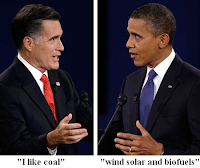
Romney's Coal Fired Campaign Versus Obama's Wind Power
Obama Striving to Put an End to Oil Subsidies
Obama's National Goal of One Million EVs by 2020
Obama's Jobs Plan Emphasizes green employment
Obama 2013 Budget Seeks to Make Renewable Tax Credits Permanent
Clean Energy Excerpts of President Obama's 2012 State of the Union Speech
President Obama's 2013 Budget
President Obama's 2013 Environmental Budget
Excerpts of President Obama's American Jobs Act
Energy Efficiency Partnerships: Obama's American Jobs Act
President Obama's American Jobs Act (Video)
Environmental Politics: Obama Versus the GOP
Highlights of Obama's 2011 State of the Union Address
Excerpts of President Obama's 2010 State of the Union Address
Obama Renews His Commitments to Clean Energy and Efficiency
Excerpts from President Obama's 2010 State of the Union Address
President Obama's "HomeStar" Program
Alternative Energy Investments Under Obama
Mitt Romney's Love Affair with Fossil Fuels
Romney's Coal Fired Campaign Versus Obama's Wind Power
What Romney's Energy Policy looks Like on the Ground (Video) 
Mitt Romeny: The Legacy He Will Leave for our Children
Romney Increasingly Uncertain about the Climate Change
Climate Denying Republicans Delay their Convention Due to Extreme Weather
GOP VP Candidate Paul Ryan's Unsustainable Voting Record on Energy and the Environment
Environmental Politics: Obama Versus the Republicans
The Ignorant Anti-Environmental Views of the Republicans
The Koch Brother's Ties to GOP Presidential Candidates
Republicans Vow to Continue Push for Keystone XL
Video: Conservatives Against Republican Denialism
Video: The Republican War on Climate Science
Video: Republicans Anti-Scientific Stance
Republican Obstructionism on the Debt Crisis and Implications for the Environment
Republican Cuts Target Green Jobs
Republican Gubernatorial Gains and Redistricting
Republican's Fail in their Bid to Defund the EPA
Defend Clean Air and Oppose the TRAIN Act
Republican Assault on the Environment
EDF Campaign Opposing US Anti-Environment Bill
Environmental Implications of the Credit Ceiling Agreement
Chu Video: The Worst Anti-Environmental Bill of her Career
Connolly Video: Climate Disasters And GOP Denial
Blumenauer Video: 'The Jihad Against Climate Change Continues'
Republican Obstructionism on the Debt Ceiling Risks Global Environmental Collapse
Republicans Undermining Climate Legislation
Supreme Court Decision Undermines Climate Change Legislation
Protecting the Planet from Corporate Influence
Green Stimulus Spending and Republican Opposition
What is Wrong with the Right
The Business of Climate Change Deception

The Obama Administration Has Grown Renewable Energy

Electrical generation from renewable energy sources such as wind, solar and geothermal has grown dramatically under the Obama administration says Ken Bossong, Executive Director of the SUN DAY Campaign. Bossong cites two new government studies that show a near doubling of non-hydro renewable energy sources contributing to US electrical generation since president Obama took office.

The latest issue of the Electric Power Monthly from the Energy Information Administration (EIA) analyzes data through June 2012. The report shows that from January 1 to June 30, 2012 non-hydro renewable energy sources (geothermal, biomass, solar, and wind) provided 5.76 percent of net electrical generation, an increase of 10.97 percent for the same period last year. Utility scale solar increased 97.2 percent from one year ago, wind generation grew 16.3 percent and geothermal by 0.2 percent. Biomass declined by 0.8 percent.

Source: Global Warming is Real

Related Articles 
American Voters Want More Renewable Energy
The Promise of Renewable Energy in the US
Renewable Energy Is Our Only Hope
President Clinton on What the American Public Needs to Know about Renewable Energy
China and the Growth of Global Wind Power
Renewable Energy in 2012: The Global Economic and Environmental Climate
How the West can Capitalize on the Growth of Chinese Cleantech in 2012
Outlook for the Chinese Solar Industry in 2012
India is the World Leader in Cleantech Investment Growth
The EU Debt Crisis did Not Curb the Growth of Renewables in 2011
UK Renewable Energy 2011 Overview
UK Wind Energy
Cuts to UK Solar FiTs Could Prove Deadly
Cuts to UK Wind Power ROCs & FiTs
The Implications of the Expiration of US Renewable Energy Subsidies
Obama 2013 Budget Seeks to Make Renewable Tax Credits Permanent
US Wind Energy Market Review and Forecasts for 2012
US Solar Energy Review and 2012 Forecasts
Geothermal Energy Market Review and Forecasts for 2012
British Government to Lead the Green Economy
Market Forces and the UK's Green Deal
UK Government Investments in Efficiency and Renewable Energy
Corporate Sustainability is Driving Green Businesses in the UK
UK Renewable Energy 2011 Overview
Cuts to UK Wind Power ROCs & FiTs
UK Wind Energy
Cuts to UK Solar FiTs Could Prove Deadly
Scottish Wind Energy Can Power Europe
The Growth of London's Green Economy
The EU Debt Crisis did Not Curb the Growth of Renewables in 2011
Sustainability and the European Super Grid

Al Gore Fears a Romney Presidency and Credits Obama

In a sit-down interview with TakePart, former Vice President Al Gore says he “would fear for the future of our environmental policy” if Mitt Romney were elected President in November.

Gore’s comments were taped in San Francisco on Tuesday, August 21, two days before the presumptive GOP presidential nominee unveiled his energy plan, which many environmentalists were quick to criticize, arguing that it would double down on America’s dependence on dirty fossil fuels like oil and gas. The former Massachusetts governor did not mention climate change once in his speech.

Gore was in the Bay Area to give an updated version of his An Inconvenient Truth slideshow presentation to more than 1,000 environmental activists in San Francisco. The Nobel Laureate’s hour-long presentation was part of a three-day Climate Reality Leadership training conference organized by The Climate Reality Project.

Gore also weighed in on President Obama’s environmental record, praising him for the passage of the green stimulus and for the biggest increase ever in auto mileage standards.

To see the video interview click here.

Related Posts
Mitt Romney Funded by Big Oil (Video)
Mitt Romney's Love Affair with Big Oil
GOP VP Candidate Paul Ryan's Unsustainable Voting Record on Energy and the Environment
Romney's Coal Fired Campaign Versus Obama's Wind Power
Mitt Romeny: The Legacy He Will Leave for our Children
Romney Increasingly Uncertain about the Climate Change
Environmental Politics: Obama Versus the Republicans
The Ignorant Anti-Environmental Views of the Republicans
The Koch Brother's Ties to GOP Presidential Candidates
Republicans Vow to Continue Push for Keystone XL
Video: Conservatives Against Republican Denialism
Video: The Republican War on Climate Science
Video: Republicans Anti-Scientific Stance
Republican Obstructionism on the Debt Crisis and Implications for the Environment
Republican Cuts Target Green Jobs
Republican Gubernatorial Gains and Redistricting
Republican's Fail in their Bid to Defund the EPA
Defend Clean Air and Oppose the TRAIN Act
Republican Assault on the Environment
EDF Campaign Opposing US Anti-Environment Bill
Environmental Implications of the Credit Ceiling Agreement
Chu Video: The Worst Anti-Environmental Bill of her Career
Connolly Video: Climate Disasters And GOP Denial
Blumenauer Video: 'The Jihad Against Climate Change Continues'
Republican Obstructionism on the Debt Ceiling Risks Global Environmental Collapse
Republicans Undermining Climate Legislation
Supreme Court Decision Undermines Climate Change Legislation
Protecting the Planet from Corporate Influence
Green Stimulus Spending and Republican Opposition
What is Wrong with the Right
The Business of Climate Change Deception

Highlights of Obama's 2011 State of the Union Address: Clean Energy, Electric Vehicles and Eliminating Oil Subsidies

President Barack Obama's State of the Union address focused on innovation, education and infrastructure. He also mentioned eliminating oil subsidies, as well as government investment in clean energy and electric vehicles (EVs).

Here are the environmental highlights of the speech:

“The future is ours to win but we cant get there by standing still....We need to out-innovate, out-educate, and out-build the rest of the world, we need to make America the best place for doing business....that is how we win the future."

Infrastructure was a priority in the address, the President proposed “redoubling" infrastructure investments including high speed rail and high speed internet.

From an environmental point of view, the defining moment of the speech came when he said with emphasis, we will invest “especially in clean energy technology." He then showcased a solar start-up that reinvented itself. He continued saying, “Already, we're seeing the promise of renewable energy."

“Now, clean energy breakthroughs will only translate into clean energy jobs if businesses know there will be a market for what they're selling. So tonight, I challenge you to join me in setting a new goal: By 2035, 80 percent of America's electricity will come from clean energy sources," the President said.

He also indicated that he wants to see US leadership in EVs, so that America can be, “the first country to have one million electric vehicles on the road by 2015."

Perhaps most importantly, to help find ways of paying for the governments green investments, he wants to eliminate oil subsidies.

Related Posts
Green Stimulus Investments and Job Creation
Government Investment Green Jobs and Economic Recovery
Hot Green Jobs for 2011 and Beyond
Video: Green Jobs
Democrats the Environment and Green Jobs
Oakland's Green Jobs and Energy Initiatives
Clean Tech Job Trends 2010 Report: Growth and Global Competition
Clean Tech Job Trends 2010 Report: Manufacturing Issues
Good Jobs, Green Jobs National Conference
Dream Green Job Workshop
Sustainable Brands Conference 2011
Leading the Green Job Market with a Sustainable MBA
How to Land a Green Job
A Green Jobs Bill Will Have to Wait
The Green Job Market

Video Inside the White House: The State of the Union Address 2011


This video offers some of the backstory behind President Obama's upcoming State of the Union Address. As President Obama prepares his second official State of the Union address he knows that he will face a far more Republican Congress than his first. He also knows that he will have to zero in on the legislative priorities that will ultimately set the course for the remainder of his first term. See the Highlights of Obama's 2011 State of the Union Address: Clean Energy, Electric Vehicles and Eliminating Oil Subsidies.