Showing posts with label climate crisis. Show all posts

Video - India's Use of Solar in Rural Villages


Solar lanterns are popping up in rural villages all over northern India. This An ADB-assisted project helps communities to study, do chores and lead more productive lives at night. Solar lanterns complement solar energy which is now present in many of India's rural areas. Indian Prime Minister Narendra Modi has the ambitious goal of bringing electricity to the 400,000,000 Indians who do not currently have access to it. By 2019, says Narendra Taneja — Modi's energy spokesperson — every household will be able to run at least two light bulbs, a television and also cook with a solar cooker.

Related Articles
National Laws and a Global Climate Agreement
Denmark's Climate Change Bill
Obama's End Run Around the Senate to Secure a Climate Deal
Finland's New Legislation will Reduce Emissions by 80%
Why France is a Global Climate Leader
The Sustainability Yearbook 2013 Leading Countries
Global CO2 Emissions Data for 2011 from the CDIAC
10 Countries for Green Investments
10 Leading Wind Energy Countries
Carbon Rankings from the Environmental Investment Organization
Video: Top 10 Greenest Countries

Video - Iran's Renewable Energy Revolution


This 2012 video shows that Iran was already exploring cleaner energy two years ago. Iran may be an oil producing state that is at odds with the West over its desire to exploit its nuclear options, but the country is also investing in renewable energy and solar power in particular. In May 2014, Iran approved the allocation of €500 million from national development fund for renewable energy projects. Iran is diversifying its energy portfolio a necessity.and this includes growing amounts of investment in solar and wind. As reported in Cleantechnica earlier this year, Iranian Energy Minister Hamid Chitchian announced plans to increase Iran's solar and wind portfolio by 5,000 MW by 2018. This is an ambitious undertaking when you consider that Iran is currently producing only 200 megawatts for photovoltaic solar.

The Iranian government has allocated $60m this year to develop photovoltaic solar projects compared to just $12m last year. Large scale solar projects have been implemented under President Hassan Rouhani. One such project is located in the arid hills of rural Iran. The Taleghan Renewable Energy Site, 160 kilometres northwest of Tehran, has photovoltaic solar panels and parabolic trough collectors that concentrate the sunlight for energy conversion into electricity.

Iran is ideally suited to solar energy as it gets an average of 300 days of sunshine a year. Solar is also a great way to power rural Iran The government is offering subsidies for on-site (distributed) solar panel installation to ordinary families. Solar panels have been installed at some 1,000 locations across Iran, including the on rooftops of mosques, schools and government buildings.

Related Articles
National Laws and a Global Climate Agreement
Denmark's Climate Change Bill
Obama's End Run Around the Senate to Secure a Climate Deal
Finland's New Legislation will Reduce Emissions by 80%
Why France is a Global Climate Leader
The Sustainability Yearbook 2013 Leading Countries
Global CO2 Emissions Data for 2011 from the CDIAC
10 Countries for Green Investments
10 Leading Wind Energy Countries
Carbon Rankings from the Environmental Investment Organization
Video: Top 10 Greenest Countries

National Laws and a Global Climate Agreement

National laws are an important precursor to a UN climate agreement. Countries around the world are passing legislation ahead of the UN climate meeting in Paris scheduled for the end of 2015. These laws are essential for an international agreement. While some nations are passing comprehensive greenhouse gas (GHG) legislation others have passed sector-specific laws to tackle emissions.

A GLOBE International and CDKN Study found that there was a correlation between strong climate change legislation and high ambition at international climate talks. The study found that a total of almost 500 national climate change laws have been passed in 66 countries, according to the 2014 GLOBE Climate Legislation Study. All developed and major economies are expected to deliver emission reduction targets to the UN by the end of March 2015.

The US Environmental Protection Agency has announced plans to cut carbon from the power sector by 30 percent. However, passing climate and energy legislation in the US is impossible for the foreseeable future. Consequently the Obama administration has come up with a clever approach for a national climate strategy that unlike a treaty does not require the approval of the Senate.

One European nation that is emerging as a climate leader is France. The county has proposed a bill that will radically reduce greenhouse gases a total of 75 percent by 2050.

No nation has shown more climate leadership than Finland. On June 6 Finland approved a proposal for a National Climate Act that would reduce greenhouse gas emissions a total of 80 percent by 2050.

The UK government was the first to pass emissions reduction legislation in 2008 and they recently reiterated their plans to cut GHGs under its climate change act. Earlier this summer Denmark ratified a plan that will reduce emissions by 40 percent by 2020.

The EU will meet in October to finalize their climate and energy framework to 2030. Part of this initiative is an EU wide Emissions Trading Scheme that focuses on European energy and industry.

Senior Chinese officials indicated that they are working on proposals to cap emissions as are Ireland, South Korea, Mexico and Vietnam

At a UN meeting in Mexico earlier this year a resolution was passed by the majority of the 400 MPs present. These representatives hailed from 80 countries and they agreed to push for tougher climate legislation in their domestic parliaments.

The UN has released a set of guidelines for governments to follow when submitting their ‘nationally determined contributions’ to a proposed UN climate deal.

Christiana Figueres, head of the UN’s climate body, said that legislation was key in carrying forward a “clean revolution”.

She said: "Domestic legislation is critical because it is the linchpin between action on the ground and the international agreement."

Related Articles
Denmark's Climate Change Bill
Obama's End Run Around the Senate to Secure a Climate Deal
Finland's New Legislation will Reduce Emissions by 80%
Why France is a Global Climate Leader
The Sustainability Yearbook 2013 Leading Countries

Denmark's Climate Change Bill

In June Denmark passed a climate change bill that will reduce emissions a total of 40 percent by 2020. The bill had widespread support from its coalition government. This is but the latest measure in a country that is a global wind energy leader. The country is also an international climate leader for its efforts to free itself from fossil fuels in its energy sector by 2050.

The country has a science based approach to managing climate change while at the same time focusing on the nation's economic well being. It is setting up a climate change council that will ensure the nation meets its goals both from a scientific and economic perspective.

This legislation legally binds Denmark to meet its greenhouse gas emissions reduction targets. It also give confidence to the business community which fears uncertainty and seeks to understand the regulatory environment in which they must operate.

Such broad legislation will have repercussions across various sectors. It will impact energy policy, industrial policy, economic policy, agricultural policy, land policy and forestry policy.

Related Articles
National Laws and a Global Climate Agreement
Obama's End Run Around the Senate to Secure a Climate Deal
Finland's New Legislation will Reduce Emissions by 80%
Why France is a Global Climate Leader
The Sustainability Yearbook 2013 Leading Countries

Obama's End Run Around the Senate to Secure a Climate Deal

In an effort to bypass obstructionist Republicans the Obama administration is working on an international climate deal that does not require the approval of the Senate. A legally binding treaty would require the approval of two-thirds of the Senate. To circumvent partisan gridlock, in particular the anti science stance of Republican lawmakers, Obama is looking to craft a political agreement rather than a binding treaty. Republicans in the senate (alongside a handful of fossil fuel Democrats) will never ratify such a treaty. The sad reality is that these lawmakers, who represent less than 10 percent of the American population, have the power to kill a binding treaty.

This political agreement is being sought ahead of the December 2015 United Nations Framework Convention on Climate Change (IPCCC) meeting in Paris.

By doing an end run around the Senate, the Obama administration will be able to avoid the fate of the Kyoto protocol which was approved by then president Clinton in 1997 only to be shot down by legislators.

The end run may have been in the works for quite some time. At the 2011 United Nations climate change conference in Durban, South Africa, it was agreed that the goal for the 2015 Paris meeting was an, "outcome with legal force under the convention applicable to all parties." However the US succeeded in changing the language at the 2013 conference. At the conclusion of the IPCCC meeting last year, the negotiating document removed language calling for a legally binding treaty under international law.

The political agreement being developed by the Obama administration is actually an updated version of a preexisting climate agreement which the Senate ratified in 1992.

Even if Obama succeeds in cobbling together such an agreement there will still be stiff opposition. Particularly vociferous resistance can be expected from the Conservative fossil fuel obsessed governments in Australia and Canada. Even the UK has back peddled on a climate agreement under Conservative rule, which calls one to question the intelligence of the white English speaking world.

If we are to have any hope of signing an international climate deal the US must be on-board. Without support for some kind of climate deal from the US it is very unlikely that other nations will follow suit. In the absence of a legally binding treaty, the Obama administration intends to use a name and shame approach to securing participation from other nations which is premised on global peer pressure.

The absence of a legally binding treaty will not please the EU and developing nations, however, there are few alternatives to the political deal being proposed given the legislative obstacles in the US.

President Obama is working within the framework of the powers allotted to him by the constitution. At the end of the day, a politically binding treaty is far better than allowing the process to be killed by the small minded ignorance of a few dozen legislators.

Related Articles
National Laws and a Global Climate Agreement
Denmark's Climate Change Bill
Finland's New Legislation will Reduce Emissions by 80%
Why France is a Global Climate Leader
The Sustainability Yearbook 2013 Leading Countries

Finland's New Legislation will Reduce Emissions by 80%

Finland has joined a number of other governments in adopting progressive climate legislation. Finland's new climate change act, will reduce emissions a total of 80 percent by 2050. Finland's Environment Minister Ville Niinistö said it will position the nation, "as a pioneer of low-carbon society."

The country's climate policy addresses regulatory uncertainty and provides a clear road forward for the business community. In addition to providing a predictable climate policy for business, it will also provide an impetus for low carbon research efforts.

The passage of Finland's Climate Change Act on June 6, 2014,  is not the nation's first kick at the climate can. In 2005 the country was the first to create a National Climate Change Adaptation Strategy. The document outlines adaptation measures for 15 sectors of the country's economy.

As Niinistö explains, there really is no alternative to ambitious carbon reduction. "If we don’t do smart green growth there isn’t going to be any economic growth on the planet."

To see the climate change act click here (PDF).

Related Articles
National Laws and a Global Climate Agreement
Denmark's Climate Change Bill
Obama's End Run Around the Senate to Secure a Climate Deal
Why France is a Global Climate Leader
The Sustainability Yearbook 2013 Leading Countries

Why France is a Global Climate Leader

France has shown the kind of climate leadership that sets an example for the world. Their crowing effort to date is new legislation that, if passed, would provide tremendous support to France's low-carbon, green economy.

The proposed bill is worth about €10 billion ($13.41 billion) and includes tax breaks, low-cost loans, and bonuses. The bill supports renewable energy, zero emission vehicles, and efficiency. The bill would reduce the nation's dependence on fossil fuels and nuclear energy.

The legislation has already won the approval of the cabinet and it will go before the French Parliament this autumn. It is expected to be ratified in 2015.

Energy

The bill would almost triple renewable energy from 12 to 32 percent, it would also cut greenhouse gas emissions a total of 75 percent by 2050.

Vehicles

The proposed legislation would offer grants for zero emission vehicles and home charging stations.

Efficiency

Under the new bill homeowners would receive compensation for 30 percent of the cost of thermal insulation from their taxable income, up to a maximum of €16,000 per couple. A €1.5 billion fund would be established to subsidize "zero-waste" and "energy-plus" (communities or buildings producing more energy than they import).

Fossil Fuel Taxes

France already taxes fossil fuel use including transport fuels and domestic heating.

Fracking Ban

The nation has also banned fracking, a position which has survived constitutional challenges.

Rio (2012)

At the 2012 Rio+ 20 meeting, Francois Hollande reiterated French support for the creation of a UN Environment Organization.

G8 (2013)

In 2013 at the 39th G8 summit held Northern Ireland, Hollande called on the leaders in attendance to cut carbon emissions and set an example for the world. G8 nations generate half

"There can be no growth or development that is not sustainable," Hollande said. "The G8 must do its part and give a strong political impetus to curb carbon emissions."

G8 countries represent around 50 percent of the global economy, and account for approximately 46 percent of carbon emissions released on an annual basis.

UN Climate Conference (2015)

Hollande has called for an 'ambitious' agreement at COP 21, the 2015 UN Climate Summit which will be hosted in Paris. As Hollande said at the G8 conference in 2013, "It is the responsibility of the international community as a whole to ensure the success of the negotiations."

Under Hollande's leadership, the French government has set an ambitious course which the wider world would be wise to follow.

Related Articles
National Laws and a Global Climate Agreement
Denmark's Climate Change Bill
Obama's End Run Around the Senate to Secure a Climate Deal
Finland's New Legislation will Reduce Emissions by 80%
The Sustainability Yearbook 2013 Leading Countries

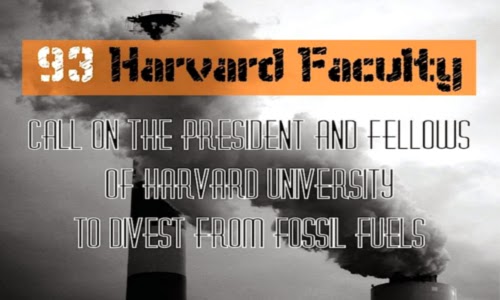
Harvard Faculty Wants the School to Divest from Fossil Fuels

Harvard University faculty members are calling the school to divest from fossil fuels. They stridently disagree with the University's decision to hold on to their fossil fuel investments.

Shortly after Harvard announced that its new sustainable investing guidelines do not exclude investing in fossil fuels, 93 faculty members sent an open letter of protest to the president and fellows.

On April 7th, Harvard President Drew Faust said that divestment is not an option the university is willing to consider. Faust made the absurd statement that the school can do more to influence the future of fossil fuels by holding onto these assets.

As explained by faculty members, the fossil fuel industry is premised on misinformation. They said that in addition to being the primary cause of the climate change, the petrochemical industry compounds promotes misinformation and influences government to move in the wrong direction.

Among the impacts of fossil fuels, the Harvard faculty letter cites the following:
  • Extreme weather
  • Rising levels of ocean acidification acidified
  • Loss of biodiversity
As stated in the letter:

"We know that fossil fuel use must decrease. To achieve this goal, not only must research and education be pursued with vigor, pressure must also be exerted. If there is no pressure, then grievous harm due to climate change will accelerate and entrench itself for a span of time that will make the history of Harvard look short."

Related Articles
Harvard's New Responsible Investing Guidelines do not Include Divestment from Fossil Fuels
Harvard's New VP for Sustainable Investment Proves that Students can Change the World Video - Bill McKibben Makes the Case for Fossil Fuel Divestment at Middlebury College
Students Advocating Divestment from Fossil Fuels
Fossil Fuel Divestment Universities Will Not be Able to Resist

The Leading Clean Energy Nation in Terms of Both Investment and Installed Capacity

Many nations are moving boldly forward with clean energy investments and installations, but there is one nation that has shown unparalleled leadership for the last several years. The clean energy global investment total for 2013 is about $254 billion and one nation is responsible for more than one fifth of this amount. This nation is leading renewable energy investments and dominating solar and wind installations. They installed more solar and wind capacity in 2013 than any other nation on Earth.

The most recent data gives China the distinction of being the world's clean energy leader. According to the Pew Charitable Trusts’ latest report titled "Who’s Winning the Clean Energy Race?," China made more investments and deployed more clean energy than any other country in the world in 2013. They invested a whopping total of $54.2 billion and installed 191 gigawatts (GW) of renewable energy capacity. Despite a strong year the US came in second with 138 GW of installed capacity.

According to Bloomberg China installed between 12 and 14 GW of photovoltaic (PV) projects in 2013. This is a global record beat out its nearest competitor by one third and more than tripled US totals. China's installed PV capacity for 2013 beat out Germany's record of 7.6 GW which was set in 2012. The US installed about 4.2 GW of PV capacity in 2013.

Chinese firms now dominate the global solar market. Three firms in particular are leading the world, they are China Power Investment Corp., China Three Gorges and China Huadian Corp.

This prodigious solar growth shows no signs of letting up in 2014. The Chinese government plans to add an additional 14 GW of PV capacity this year more than half of which will come from rooftop installations connected to the distribution grid.

When it comes to wind power China is also a dominant player. China has been the world’s biggest wind power market for years. In 2012, the nation increased its wind production by 41 percent. In 2013, China led the world by installing more than 16 GW of wind power last year. This is exponentially more than the number two and three spots for installed wind capacity in 2013. Germany installed 3.2 GW in 2013 and the UK installed 1.8 GW last year.  In fact China's totals for 2013 are considerably more than the combined totals for the rest of the top ten nations in the world (16 GW vs. 12. GW)

China's total installed wind capacity is now at 91.4 GW. The next closest competitors are the US with a total installed capacity of 61 GW, followed by Germany with 34 GW.

Due to the government's ongoing commitment to wind, China will remain a world leader. They have raised the official wind target for 2020 to 200GW.

Related
Global Green Economy Index 2014
Ranking of National Performance in the Green Economy (GGEI)
The Best and the Worst Climate Performers (CDP)
National Laws and a Global Climate Agreement
Denmark's Climate Change Bill
Obama's End Run Around the Senate to Secure a Climate Deal
Finland's New Legislation will Reduce Emissions by 80%
Why France is a Global Climate Leader
Video - Iran's Solar Power Revolution
The Sustainability Yearbook 2013 Leading Countries
Global CO2 Emissions Data for 2011 from the CDIAC
Carbon Rankings from the Environmental Investment Organization
Video: Top 10 Greenest Countries
10 Countries for Green Investments
10 Leading Wind Energy Countries

Innovation in the Low Carbon Energy Economy

The competitive advantage afforded by innovations in low carbon energy is a powerful incentive driving adoption by both governments and businesses. With world energy consumption expected to grow by 40 percent over the next twenty years, companies that are capable of quickly scaling innovations in low-carbon technologies will reap substantial rewards.

Low carbon energy, efficiency and other climate related businesses, offer significant benefits as evidenced by historical revenue data as well as future predictions. In 2009 these industries generated $530 billion and by 2020 they are expected to surpass $2 trillion.

Businesses drive low carbon innovation in energy, efficiency, and transportation. One of the areas where there is a great deal of room for improvement concerns buildings which account for approximately 40 percent of global energy demand.

Low-carbon innovations not only reduce carbon emissions, they also bring additional benefits including decreased operating costs, increased flexibility, and higher market share as compared to competitors.

Success in low carbon innovation demands widespread adoption. This in turn is premised on understanding the needs of customers and partners across the value chain.

Low-carbon innovations provides a competitive advantages to individual companies, national economies and the entire globe.

© 2013, Richard Matthews. All rights reserved.

Related Articles
China's Economic Growth and Low Carbon Leadership
2013 Low Carbon Competitiveness Index: US Falling & China Rising
Asian Policies for the Low Carbon Economy and Renewable Energy
Top Climate Innovators

Asian Policies for the Low Carbon Economy and Renewable Energy

Energy demands in Asia are expected to double by 2030, which makes the low carbon economy, and renewables in particular, vital to growth in the region. Led by progressive government policies that support renewable energy, Asia, including China, India, Korea, and Japan, are some of the fastest growing renewables markets in the world.

China is the world's most competitive nation when it comes to renewable energy. Their policy position on renewables is second to none. However, while China gets most of the press, there are other nations in Asia that are also crafting supportive polices and seeing substantial growth.

India is a world leader in renewable energy, with policies like the federal Renewable Energy Certificate scheme. The government is taxing the coal industry to pay for 750 MW of solar energy projects in 2013. India plans to add 3,600 MW through federal policies by March 2017 and about 6,000 MW through state policies. The Bureau of Energy Efficiency which reports into the Ministry of Power has set up energy standards and labeling requirements for IT equipment.

Korea is offering preferential financing for low carbon technologies and they are introducing a cap and trade system and Singapore is an efficiency leader. Singapore’s 2009 Sustainable Singapore Blueprint goals include a strong emphasis on energy efficiency measures across the residential, buildings, industry, and transport sectors.

Japan's government supports research and development in environmental technologies including renewable energy. Japan's Top Runner program is an innovative system that searches for the most efficient model on the market and then makes that level of efficiency the standard for each product category. The program works by putting the brand image of a company at risk if it falls below the prescribed standards.

Part of the success of Asia has to do with its willingness to engage in cooperation. However, in Asia as in many other places around the world, the fastest growing fuel sources through 2035 is expected to be in coal and natural gas.

© 2013, Richard Matthews. All rights reserved.

Related Articles
China's Economic Growth and Low Carbon Leadership
2013 Low Carbon Competitiveness Index: US Falling & China Rising
Innovation in the Low Carbon Energy Economy

2013 Low Carbon Competitiveness Index: US Falling & China Rising

According to the Climate Institute/GE Low-Carbon Competitiveness Index released earlier this year, The US is not in the top ten. France leads the index, followed by Japan, China, South Korea and the UK. Since 2009 this index has been ranking G20 economies that are best prepared to compete in a low-carbon economy.

One of the most notable trends in this report comes from the strong representation of Asian nations. China is particularly notable as they moved from seventh place to third place. Thanks to the nation's aggressive renewable energy initiatives, China is a low carbon global leader. Going forward China is expected to continue to be a leader in low-carbon and clean energy.

The US, which was eighth when the index began in 2009, has fallen to eleventh. This is the most significant drop among countries in the latest index update.

The US has fallen behind because of decreased private investment in sustainable energy. Low fuel prices may also be to blame. Fuel prices in the US rose less than most other G20 countries, this increased the amount of air freight and generated higher emissions per capita from the transport sector.

© 2013, Richard Matthews. All rights reserved.

Related Articles
China's Economic Growth and Low Carbon Leadership
Asian Policies for the Low Carbon Economy and Renewable Energy
Innovation in the Low Carbon Energy Economy

Paul Hawken about Environmental and Social Justice: The Largest Movement in the World


There is an ever growing alternative to rampant consumerism and pervasive environmental neglect. In this video ecological guru Paul Hawken discusses his book "Blessed Unrest: How the Largest Movement in the World Came into Being and Why No One Saw It. " This talk was part of the May 9, 2007, Authors@Google and Google.org series. This event took place at Google's main campus in Mountain View, CA.


Related Articles
24 Hours of Reality 2012
100 Global Activities for Climate Impacts Day
The World “Connects the Dots” Between Extreme Weather & Climate Change
Connect the Dots End Fossil Fuel
24 Hours of Reality
EDF's Voices for Clean Air - National Week of Action 2011
ZeDay: The Global Moratorium on Fossil Fuel Combustion
The I AM Fighting Climate Change Challenge
Michigan State University Protesting Coal on Campus
Power Shift Rally at the US Chamber of Commerce
The Next Big Thing from Bill McKibben and the 350.org Team
Moving Planet Unites the World
Moving Planet: Beyond Fossil Fuels
Video: Introduction to 24 Hours of Reality
10 Business Pledges in Support of A Billion Acts of Green
Green Your Business on Earth Day 2011
Go Beyond the Hour
Earth Hour 2011 Official Video
Video: Earth Hour 2011
Climate Care Day: An Environmental Event for Business
Bike to Work Day - A Growing Movement
SolarDay 2011
Global Wind Day 2011
World Environment Day 2011
Campus Sustainability Day Summary of Events
The Campus Green Builder Online Portal
Green Campus Student Resources
Sustainable University IdeaLab
Chill Out: Climate Action on Campus
Cooperation Between Environmental Organizations and Businesses

Comprehensive Review of Climate Change Science

The evidence for anthropogenic global warming is unassailable. In 2009, 18 scientific groups — including the American Association for the Advancement of Science and the American Meteorological Society — issued a joint statement indicating that human activities are the “primary driver” of climate change. The National Academy of Sciences (the gold standard for objective scientific assessment) have also clearly supported the body of evidence on anthropogenic global warming.

“Some scientific conclusions or theories have been so thoroughly examined and tested, and supported by so many independent observations and results, that their likelihood of subsequently being found to be wrong is vanishingly small. Such conclusions and theories are then regarded as settled facts. This is the case for the conclusions that the Earth system is warming and that much of this warming is due to human activities."

Here are 33 articles, reports and studies that support the existence of anthropogenic climate change:
  1. No scientific body of national or international standing maintains a dissenting opinion on climate change
  2. September 2012 was the Warmest in Recorded History (NOAA)
  3. Strong Body of Evidence for a Changing Climate
  4. American Meteorological Society Corroborates Anthropogenic Climate Change
  5. More Scientific Support for Anthropogenic Climate Change
  6. Science and Pernicious Ignorance of Climate Change Denial
  7. The Fifth Global Environmental Outlook Report
  8. Findings and Solutions in the Living Planet Report 2012
  9. A New Study Indicates We Are Reaching a Tipping Points
  10. Environmental Tipping Points
  11. Climate Change Science
  12. Top Four Climate Studies of 2011
  13. State of the Climate Global Analysis Nov 2011
  14. Interactive Map Reveals Warmer Spring 2012
  15. 2012 is but the Latest Year Marked by Heat and Drought
  16. Heat in the US Northeast and Drought Around the World IN 2012
  17. Temperature Data: 1880 - 2011 (Video)
  18. New NASA Video Graphically Illustrates that the Earth is Warming
  19. Popular Media is Distorting the Facts about Climate
  20. State of the Climate Global Analysis Nov 2011
  21. Debunking CO2 Myths and The Science of Climate Change
  22. Primer on CO2 and other GHGs
  23. Video: Why People are Confused about the Scientific Veracity of Climate Change
  24. Bill McKibben: Global Warming's Terrifying New Math
  25. The Effects of Global Warming
  26. The human fingerprint in global warming
  27. Human activities produce in just 3 to 5 days, the equivalent amount of carbon that volcanoes produce globally each year
  28. Chronological history of atmospheric CO2, showing a massive spike from the Industrial Revolution onwards
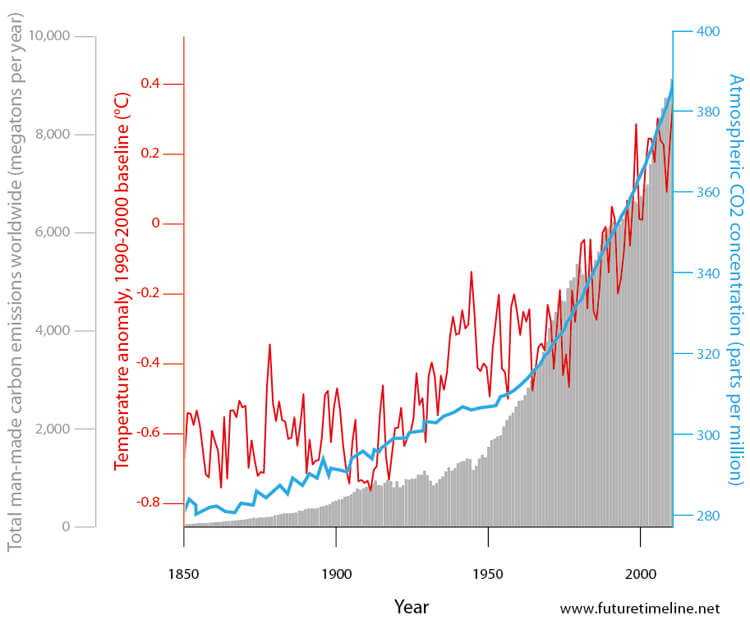
  29. Strong correlation between atmospheric CO2 levels, man-made carbon emissions and the global average temperature
  30. The rapid decline in Arctic sea ice is between 70% and 95% due to man-made global warming
  31. A NASA study reports that changes in solar activity cannot be responsible for the current period of global warming 
  32. 10-year average (2000–2009) global temperature anomaly relative to 1951–1980 mean

© 2012, Richard Matthews. All rights reserved.

September 2012 was the Warmest in Recorded History

A wide range of temperature data indicate that the earth continues to get warmer. September 2012 was tied for the warmest September since the dawn of temperature records. These were the findings of the State of the Climate Global Analysis, September 2012 from the National Oceanic and Atmospheric Administration (NOAA) National Climatic Data Center.

Global Averages

The average combined global land and ocean surface temperature for September 2012 tied with 2005 as the warmest September on record, at 0.67°C (1.21°F) above the 20th century average of 15.0°C (59.0°F). Records began in 1880. The globally-averaged land surface temperature for September 2012 was the third warmest September on record, at 1.02°C (1.84°F) above average. The globally-averaged ocean surface temperature tied with 1997 as the second warmest September on record, at 0.54°C (0.97°F) above average. The average combined global land and ocean surface temperature for January–September 2012 was the eighth warmest such period on record, at 0.57°C (1.03°F) above the 20th century average.

Hungary

Following the second warmest summer (June–August) for Hungary since national records began in 1900, monthly temperatures remained above average across the entire country during September, ranging from about 1.0°–3.5°C (1.8°–6.3°F) above the 1971–2000 average, according to the country's national meteorological service, Országos Meteorológiai Szolgálat.

Australia

Australia experienced its third warmest September since records began in 1950, with the nationally-averaged maximum temperature 1.94°C (3.49°F) above the 1961–1990 average. The minimum temperature was also above average but not quite as extreme as the maximum, at 0.42°C (0.76°F) above the long-term average.

Argentina

According to Argentina's national meterological service, Servicio Meteorológico Nacional, the monthly-averaged daily, maximum, and minimum temperatures were all above normal across Argentina, particularly in the central and northern regions of the country. Record high September minimum temperatures were observed across parts of the midwest.

Japan

As indicated in the land and ocean temperature percentiles map above, Japan observed record warmth during September. According to the Japan Meteorological Agency, the greatest warmth was observed across northern Japan (regions of Hokkaido and Tohuko), which was 3.7°C (6.7°F) above average. It was below average across Okinawa, which had been impacted by Super Typhoons Sanba (middle of the month) and Jelawat (end of the month).

Related Articles
New NASA Video Graphically Illustrates that the Earth is Warming
Popular Media is Distorting the Facts about Climate
Strong Body of Evidence for a Changing Climate
American Meteorological Society Corroborates Anthropogenic Climate Change
More Scientific Support for Anthropogenic Climate Change
A New Study Indicates We Are Reaching a Tipping Points
Environmental Tipping Points
2012 is but the Latest Year Marked by Heat and Drought
Heat in the US Northeast and Drought Around the World
Strong Body of Evidence for a Warming Climate
Interactive Map Reveals Warmer Spring
Temperature Data: 1880 - 2011 (Video)
The Effects of Global Warming
Bill McKibben: Global Warming's Terrifying New Math
Extreme Weather
The Effects of Global Warming
Top Four Climate Studies of 2011
State of the Climate Global Analysis Nov 2011
Bill McKibben: Global Warming's Terrifying New Math
Extreme Weather
Extreme Weather
Extreme Weather and the Costs of Climate
Climate Change Science
The Effects of Global Warming
Top Four Climate Studies of 2011
State of the Climate Global Analysis Nov 2011
Debunking CO2 Myths and The Science of Climate Change
Primer on CO2 and other GHGs
Temperature Data: 1880 - 2011 (Video)
Video: Why People are Confused about the Scientific Veracity of Climate Change
Bill McKibben on Connect the Dots Events
Interactive Map Reveals Warmer Spring
100 Global Activities for Climate Impacts Day
The World “Connects the Dots” Between Extreme Weather & Climate Change
Business and Climate Impacts Day
Bill McKibben on Connect the Dots
Connect the Dots End Fossil Fuel
Extreme Weather
McKibben Attributes Extreme Weather Events to Climate Change
Extreme Weather Makes a Convincing Case for Climate Change
Hurricane Irene and the Staggering Costs of Climate Change
Deadly Tornadoes in Massachusetts
Extreme Weather and the Costs of Climate Change
Floods in the Philipines Underscore the Deadly Toll from Climate Change
The Costs of Global Warming
24 Hours of Reality
Science and Pernicious Ignorance of Climate Change Denial
More Scientific Support for Anthropogenic Climate Change
World Day to Combat Desertification
The Fifth Global Environmental Outlook Report

Popular Media is Distorting the Facts about Climate Change

Major news organizations are not accurately reflecting the truth about climate change. Fox News, the Wallstreet Journal and even PBS have been charged with misrepresenting the facts about climate change.

According to a report from the Union of Concerned Scientists, 93 percent of Fox News' and 80 percent of the Wall Street Journal opinion pages' climate coverage is inaccurate and misleading. This is the finding of an analysis titled "Is News Corp. Failing Science". Even the PBS aired an interview with a biased climate skeptic tied to the controversial Heartland Institute.

However the worst offender is Fox News, followed closely by the Wall Street Journal. As explained in the report, during the period between August 2011 to July 2012, Fox news made inaccurate climate statements in 37 out of 40 mentions and the Wall Street Journal's climate references were found to be inaccurate 39 out of 48 times.

Many scientists have supported the analysis and as reported in Media Matters 10 scientists have gone as far as calling the Fox News and the Wall Street Journal's coverage "Utter Nonsense."

Click here for Media Matters guide for reporters covering climate change.

Related Articles
Strong Body of Evidence for a Changing Climate
American Meteorological Society Corroborates Anthropogenic Climate Change
More Scientific Support for Anthropogenic Climate Change
A New Study Indicates We Are Reaching a Tipping Points
Environmental Tipping Points
2012 is but the Latest Year Marked by Heat and Drought
Heat in the US Northeast and Drought Around the World
Strong Body of Evidence for a Warming Climate
Interactive Map Reveals Warmer Spring
Temperature Data: 1880 - 2011 (Video)
The Effects of Global Warming
Bill McKibben: Global Warming's Terrifying New Math
Extreme Weather
The Effects of Global Warming
Top Four Climate Studies of 2011
State of the Climate Global Analysis Nov 2011
Bill McKibben: Global Warming's Terrifying New Math
Extreme Weather
Extreme Weather
Extreme Weather and the Costs of Climate
Climate Change Science
The Effects of Global Warming
Top Four Climate Studies of 2011
State of the Climate Global Analysis Nov 2011
Debunking CO2 Myths and The Science of Climate Change
Primer on CO2 and other GHGs
Temperature Data: 1880 - 2011 (Video)
Video: Why People are Confused about the Scientific Veracity of Climate Change
Bill McKibben on Connect the Dots Events
Interactive Map Reveals Warmer Spring
100 Global Activities for Climate Impacts Day
The World “Connects the Dots” Between Extreme Weather & Climate Change
Business and Climate Impacts Day
Bill McKibben on Connect the Dots
Connect the Dots End Fossil Fuel
Extreme Weather
McKibben Attributes Extreme Weather Events to Climate Change
Extreme Weather Makes a Convincing Case for Climate Change
Hurricane Irene and the Staggering Costs of Climate Change
Deadly Tornadoes in Massachusetts
Extreme Weather and the Costs of Climate Change
Floods in the Philipines Underscore the Deadly Toll from Climate Change
The Costs of Global Warming
24 Hours of Reality
Science and Pernicious Ignorance of Climate Change Denial
More Scientific Support for Anthropogenic Climate Change
World Day to Combat Desertification
The Fifth Global Environmental Outlook Report

Supreme Court Recognizes EPA Role in Carbon Pollution Protection

On June 20, 2011, the Supreme Court confirmed the vital role of the Environmental Protection Agency (EPA) to protect against global warming causing carbon pollution.

Carbon reduction is critically important particularly in power production. As America's biggest polluters, power plants are pumping more than two billion tons of carbon dioxide pollution into the air each year.

On the day the Supreme Court ruling was announced, David Doniger, policy director of the Climate Center at the Natural Resources Defense Council (NRDC), applauded the decsion saying:
"Today's ruling reaffirms the Environmental Protection Agency's duty under the nation’s 40-year-old Clean Air Act to safeguard public health and welfare from dangerous carbon pollution. Now the EPA must act without delay."
According to Doniger, the pollution from power plants, "is driving dangerous heat waves and smog, stronger storms, floods, and droughts, and many other threats to our health and safety and our homes and communities."

The reduction of pollution from energy generation is a critical component of managing the climate crisis. With the Supreme Court ruling the EPA now has additional legal authority to limit carbon emissions.

© 2011, Richard Matthews. All rights reserved.

Related Posts
Environmental Implications of the Credit Ceiling Agreement
Republican Assault on the Environment
EPA's New Clean Air Rules
The EPA Proposes Cleaner Air
EPA's Proposed Rule to Regulate Emissions
Winners of the 2011 Green Chemistry Awards
Environmental Compliance and Enforcement at ...
Course of Study: Climate Change and the Law
Policies Contributing to More Robust
EPA's New Mileage Estimates for the Volt and the ...
EPA's Top 20 On-Site Power Generation List
Zotos Earns a Place on the EPA's Top 20 On-Site ...
Video: EPA Administrator Lisa Jackson
America's New Fuel Efficiency Standards
US Government's New Car Ratings
America's New Car Ratings: Consumer Concerns and ...
A New Energy Economy: Obama's Gift to America ...
The Environmental and Economic Implications of a Government Shutdown
Republicans Dethrone Czars and Defund the President's
Republican's Fail in their Bid to Defund the EPA
Republican Cuts Target Green Jobs
The Foxes in the Henhouse: Republicans in Charge ...
Koch Industries War with the EPA

UN Chief Asks G20 to Focus on a Sustainable Recovery

Leaders of the group of 20 developing countries (G20) are scheduled to meet in Toronto, Canada, June 26-27, to discuss the recovery of the world economy and the reform of the international financial system in the aftermath of the global crisis.

According to UN Secretary-General Ban Ki-moon, G20 leaders should focus on environment-friendly measures to promote global economic recovery.

In an open letter to the G20 leaders, Mr Ban said,“Based on our collective experience, the best way to enhance the framework for strong, sustainable and balanced economic growth is to put development front and centre, and to invest in a green economic recovery for all.”

“Now, more than ever, investments for the world’s poorest are necessary to recover lost ground in pursuit of development objectives, including the Millennium Development Goals (MDGs),” Xinhua quoted Mr. Ban as saying.

The UN chief welcomed the G20’s intention to include development in its agenda during this week’s summit and at the Seoul Summit in November 2010. “Such an approach can help address food security and climate change, while ensuring job creation,” Mr. Ban said.

The UN is amongst a growing number of organizations that see the green economy as a means of consolidating the recovery, as Mr. Ban said, “Going forward, I encourage support for initiatives that will sustain recovery efforts while enhancing global economic stability, environmental sustainability and achievement of the MDGs.”
__________________________________
Related Posts

Climate Counts: Businesses Combating Climate Change

Climate Counts is a non-profit group that was launched over three years ago to help business leaders combat the climate crisis. Despite an abundance of irresponsible enterprises, some businesses are distinguishing themselves through laudable efforts to engage the serious problem of climate change.

Climate Counts brings consumers and companies together in the fight against global climate change. The Climate Counts Company has developed a scorecard with criteria chosen for their effectiveness at solving the global climate crisis. Since 2007, Climate Counts researchers have used these criteria to rate the climate actions of nearly 150 companies, representing approximately 3,000 brands, in 16 industry sectors.

Late this winter, Climate Counts launched its Industry Innovators (i2) project. Climate Counts created i2 to help companies investing in real climate solutions deepen their market impact. The six charter companies (Amtrak, Ben & Jerry's, Clif Bar, Recreational Equipment, Shaklee, and Timberland) went through the rigorous Climate Counts i2 scoring process. Each of the six charter members earned Climate Counts' top designation.

The Climate Counts scoring ranks companies on criteria in four key areas: Measurement of climate impact; reduction of climate impact; support for public policy that will reduce greenhouse gas emissions; and external transparency and clarity on climate actions - to spur greater corporate climate responsibility.

Companies interested in getting a Climate Counts company benchmark can use the i2 site go through a process of self-evaluation and follow it by requesting Climate Counts' own review of the company to determine a final, public score.

The i2 program applies to companies whether they are beginning the process of going green or more deeply involved in the process of developing sustainable practices. Companies looking into a more sustainable approach can use the i2 scoring process to get a roadmap for the work ahead, while others may want a score on their marketing communications efforts for consumers and stakeholders.

One of the charter members is Amtrak and they have adopted a mission that is ”Safer, Greener, Healthier." They have agreed to reduce greenhouse gas emissions from diesel locomotives by 6 percent from 2003 to 2010.

"We believe business has a responsibility -- not only to be a part of meaningful climate solutions, but also to communicate their efforts transparently to stakeholders. We're honored to be among the charter companies for Climate Counts' Industry Innovators project because we believe it seeks to establish corporate environmental accountability which leads, importantly, to climate action." said Roy Deitchman, Vice President of EHS, Amtrak.

"The Climate Counts scorecard provides a continuous improvement process and is a useful tool in identifying next steps on the climate action continuum. While we have tracked our climate impacts since 2000, making our emissions data and reductions efforts transparent will continue to help us improve our own performance while also serving to raise awareness about and grow markets for innovative solutions to climate change." said Jil Zilligen, Chief Sustainability Officer, Shaklee Corporation.

REI is pursuing business-based solutions where financial performance and social/environmental benefits are mutually reinforcing. "We find that when we look at environmental metrics, we identify new opportunities and risks. In many ways we're just getting started, but we've already seen real business benefits. Pursuing our aspiration of being climate neutral is helping us deliver on the expectation of both financial and environmental performance for our co-op members," said Kevin Hagen, Director of Corporate Social Responsibility, REI.

"True climate solutions that can also boost the economy and our jobs outlook demand innovation and action from businesses, and our charter companies have shown they are committed to making climate action a competitive advantage," said Climate Counts Executive Director Wood Turner.

The charter members of the i2 project are boldly showing leadership with sustainable positioning that betters their bottom line.
_______________________________________

Related Posts
Koch Industries Financing Climate Denial
Koch Industries' Environmental Crimes
Koch Industries Destroys the Environment & Funds Climate Denial
America's Most Sustainable Businesses
Canada's Most Sustainable Businesses
The Overwhelming Logic of Sustainable Business
Consumers Continue to Embrace the Burgeoning Green Market
Consumer Demand for Green
People Remain Loyal to Green Even in an Economic Downturn
Green's Bottom Line: Staying Competitive in Volatile Economic Times