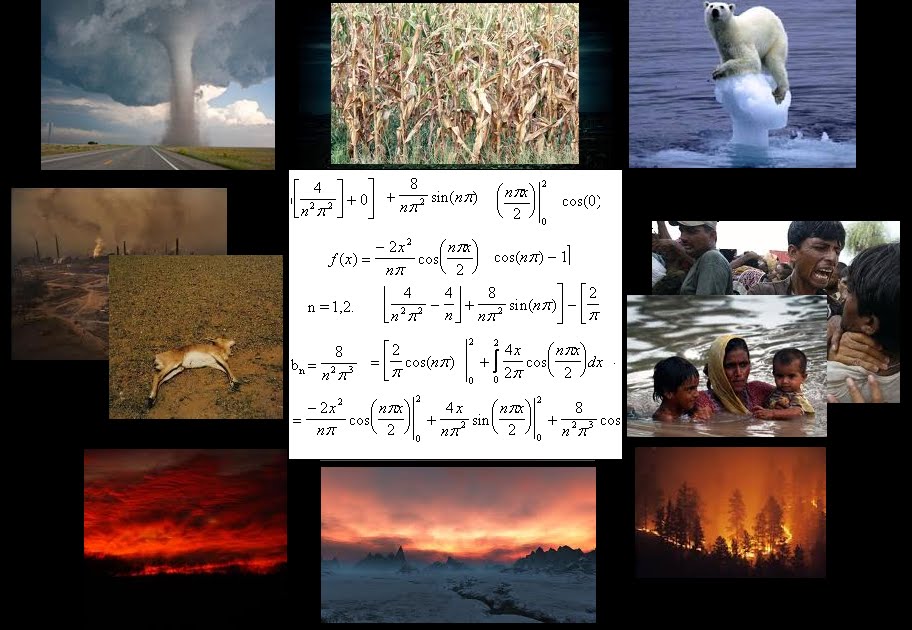
Meteorologists reported that this spring was the warmest ever recorded for our nation – in fact, it crushed the old record by so much that it represented the "largest temperature departure from average of any season on record." The same week, Saudi authorities reported that it had rained in Mecca despite a temperature of 109 degrees, the hottest downpour in the planet's history.
Not that our leaders seemed to notice. Last month the world's nations, meeting in Rio for the 20th-anniversary reprise of a massive 1992 environmental summit, accomplished nothing. Unlike George H.W. Bush, who flew in for the first conclave, Barack Obama didn't even attend. It was "a ghost of the glad, confident meeting 20 years ago," the British journalist George Monbiot wrote; no one paid it much attention, footsteps echoing through the halls "once thronged by multitudes." Since I wrote one of the first books for a general audience about global warming way back in 1989, and since I've spent the intervening decades working ineffectively to slow that warming, I can say with some confidence that we're losing the fight, badly and quickly – losing it because, most of all, we remain in denial about the peril that human civilization is in.
When we think about global warming at all, the arguments tend to be ideological, theological and economic. But to grasp the seriousness of our predicament, you just need to do a little math. For the past year, an easy and powerful bit of arithmetical analysis first published by financial analysts in the U.K. has been making the rounds of environmental conferences and journals, but it hasn't yet broken through to the larger public. This analysis upends most of the conventional political thinking about climate change. And it allows us to understand our precarious – our almost-but-not-quite-finally hopeless – position with three simple numbers.
In the event, of course, we missed it. Copenhagen failed spectacularly. Neither China nor the United States, which between them are responsible for 40 percent of global carbon emissions, was prepared to offer dramatic concessions, and so the conference drifted aimlessly for two weeks until world leaders jetted in for the final day. Amid considerable chaos, President Obama took the lead in drafting a face-saving "Copenhagen Accord" that fooled very few. Its purely voluntary agreements committed no one to anything, and even if countries signaled their intentions to cut carbon emissions, there was no enforcement mechanism. "Copenhagen is a crime scene tonight," an angry Greenpeace official declared, "with the guilty men and women fleeing to the airport." Headline writers were equally brutal: COPENHAGEN: THE MUNICH OF OUR TIMES? asked one.
The accord did contain one important number, however. In Paragraph 1, it formally recognized "the scientific view that the increase in global temperature should be below two degrees Celsius." And in the very next paragraph, it declared that "we agree that deep cuts in global emissions are required... so as to hold the increase in global temperature below two degrees Celsius." By insisting on two degrees – about 3.6 degrees Fahrenheit – the accord ratified positions taken earlier in 2009 by the G8, and the so-called Major Economies Forum. It was as conventional as conventional wisdom gets. The number first gained prominence, in fact, at a 1995 climate conference chaired by Angela Merkel, then the German minister of the environment and now the center-right chancellor of the nation.
Some context: So far, we've raised the average temperature of the planet just under 0.8 degrees Celsius, and that has caused far more damage than most scientists expected. (A third of summer sea ice in the Arctic is gone, the oceans are 30 percent more acidic, and since warm air holds more water vapor than cold, the atmosphere over the oceans is a shocking five percent wetter, loading the dice for devastating floods.) Given those impacts, in fact, many scientists have come to think that two degrees is far too lenient a target.
"Any number much above one degree involves a gamble," writes Kerry Emanuel of MIT, a leading authority on hurricanes, "and the odds become less and less favorable as the temperature goes up." Thomas Lovejoy, once the World Bank's chief biodiversity adviser, puts it like this: "If we're seeing what we're seeing today at 0.8 degrees Celsius, two degrees is simply too much." NASA scientist James Hansen, the planet's most prominent climatologist, is even blunter: "The target that has been talked about in international negotiations for two degrees of warming is actually a prescription for long-term disaster." At the Copenhagen summit, a spokesman for small island nations warned that many would not survive a two-degree rise: "Some countries will flat-out disappear." When delegates from developing nations were warned that two degrees would represent a "suicide pact" for drought-stricken Africa, many of them started chanting, "One degree, one Africa."
Despite such well-founded misgivings, political realism bested scientific data, and the world settled on the two-degree target – indeed, it's fair to say that it's the only thing about climate change the world has settled on. All told, 167 countries responsible for more than 87 percent of the world's carbon emissions have signed on to the Copenhagen Accord, endorsing the two-degree target. Only a few dozen countries have rejected it, including Kuwait, Nicaragua and Venezuela. Even the United Arab Emirates, which makes most of its money exporting oil and gas, signed on. The official position of planet Earth at the moment is that we can't raise the temperature more than two degrees Celsius – it's become the bottomest of bottom lines. Two degrees.
The Second Number: 565 GigatonsScientists estimate that humans can pour roughly 565 more gigatons of carbon dioxide into the atmosphere by midcentury and still have some reasonable hope of staying below two degrees. ("Reasonable," in this case, means four chances in five, or somewhat worse odds than playing Russian roulette with a six-shooter.)
This idea of a global "carbon budget" emerged about a decade ago, as scientists began to calculate how much oil, coal and gas could still safely be burned. Since we've increased the Earth's temperature by 0.8 degrees so far, we're currently less than halfway to the target. But, in fact, computer models calculate that even if we stopped increasing CO
2 now, the temperature would likely still rise another 0.8 degrees, as previously released carbon continues to overheat the atmosphere. That means we're already three-quarters of the way to the two-degree target.
How good are these numbers? No one is insisting that they're exact, but few dispute that they're generally right. The 565-gigaton figure was derived from one of the most sophisticated computer-simulation models that have been built by climate scientists around the world over the past few decades. And the number is being further confirmed by the latest climate-simulation models currently being finalized in advance of the next report by the Intergovernmental Panel on Climate Change. "Looking at them as they come in, they hardly differ at all," says Tom Wigley, an Australian climatologist at the National Center for Atmospheric Research. "There's maybe 40 models in the data set now, compared with 20 before. But so far the numbers are pretty much the same. We're just fine-tuning things. I don't think much has changed over the last decade." William Collins, a senior climate scientist at the Lawrence Berkeley National Laboratory, agrees. "I think the results of this round of simulations will be quite similar," he says. "We're not getting any free lunch from additional understanding of the climate system."
We're not getting any free lunch from the world's economies, either. With only a single year's lull in 2009 at the height of the financial crisis, we've continued to pour record amounts of carbon into the atmosphere, year after year. In late May, the International Energy Agency published its latest figures – CO
2 emissions last year rose to 31.6 gigatons, up 3.2 percent from the year before. America had a warm winter and converted more coal-fired power plants to natural gas, so its emissions fell slightly; China kept booming, so its carbon output (which recently surpassed the U.S.) rose 9.3 percent; the Japanese shut down their fleet of nukes post-Fukushima, so their emissions edged up 2.4 percent. "There have been efforts to use more renewable energy and improve energy efficiency," said Corinne Le Quéré, who runs England's Tyndall Centre for Climate Change Research. "But what this shows is that so far the effects have been marginal." In fact, study after study predicts that carbon emissions will keep growing by roughly three percent a year – and at that rate, we'll blow through our 565-gigaton allowance in 16 years, around the time today's preschoolers will be graduating from high school. "The new data provide further evidence that the door to a two-degree trajectory is about to close," said Fatih Birol, the IEA's chief economist. In fact, he continued, "When I look at this data, the trend is perfectly in line with a temperature increase of about six degrees." That's almost 11 degrees Fahrenheit, which would create a planet straight out of science fiction.
So, new data in hand, everyone at the Rio conference renewed their ritual calls for serious international action to move us back to a two-degree trajectory. The charade will continue in November, when the next Conference of the Parties (COP) of the U.N. Framework Convention on Climate Change convenes in Qatar. This will be COP 18 – COP 1 was held in Berlin in 1995, and since then the process has accomplished essentially nothing. Even scientists, who are notoriously reluctant to speak out, are slowly overcoming their natural preference to simply provide data. "The message has been consistent for close to 30 years now," Collins says with a wry laugh, "and we have the instrumentation and the computer power required to present the evidence in detail. If we choose to continue on our present course of action, it should be done with a full evaluation of the evidence the scientific community has presented." He pauses, suddenly conscious of being on the record. "I should say, a
fuller evaluation of the evidence."
So far, though, such calls have had little effect. We're in the same position we've been in for a quarter-century: scientific warning followed by political inaction. Among scientists speaking off the record, disgusted candor is the rule. One senior scientist told me, "You know those new cigarette packs, where governments make them put a picture of someone with a hole in their throats? Gas pumps should have something like that."
The Third Number: 2,795 GigatonsThis number is the scariest of all – one that, for the first time, meshes the political and scientific dimensions of our dilemma. It was highlighted last summer by the Carbon Tracker Initiative, a team of London financial analysts and environmentalists who published a report in an effort to educate investors about the possible risks that climate change poses to their stock portfolios. The number describes the amount of carbon already contained in the proven coal and oil and gas reserves of the fossil-fuel companies, and the countries (think Venezuela or Kuwait) that act like fossil-fuel companies. In short, it's the fossil fuel we're currently planning to burn. And the key point is that this new number – 2,795 – is higher than 565. Five times higher.
The Carbon Tracker Initiative – led by James Leaton, an environmentalist who served as an adviser at the accounting giant PricewaterhouseCoopers – combed through proprietary databases to figure out how much oil, gas and coal the world's major energy companies hold in reserve. The numbers aren't perfect – they don't fully reflect the recent surge in unconventional energy sources like shale gas, and they don't accurately reflect coal reserves, which are subject to less stringent reporting requirements than oil and gas. But for the biggest companies, the figures are quite exact: If you burned everything in the inventories of Russia's Lukoil and America's ExxonMobil, for instance, which lead the list of oil and gas companies, each would release more than 40 gigatons of carbon dioxide into the atmosphere.
Which is exactly why this new number, 2,795 gigatons, is such a big deal. Think of two degrees Celsius as the legal drinking limit – equivalent to the 0.08 blood-alcohol level below which you might get away with driving home. The 565 gigatons is how many drinks you could have and still stay below that limit – the six beers, say, you might consume in an evening. And the 2,795 gigatons? That's the three 12-packs the fossil-fuel industry has on the table, already opened and ready to pour.
We have five times as much oil and coal and gas on the books as climate scientists think is safe to burn. We'd have to keep 80 percent of those reserves locked away underground to avoid that fate. Before we knew those numbers, our fate had been likely. Now, barring some massive intervention, it seems certain.
Yes, this coal and gas and oil is still technically in the soil. But it's already economically aboveground – it's figured into share prices, companies are borrowing money against it, nations are basing their budgets on the presumed returns from their patrimony. It explains why the big fossil-fuel companies have fought so hard to prevent the regulation of carbon dioxide – those reserves are their primary asset, the holding that gives their companies their value. It's why they've worked so hard these past years to figure out how to unlock the oil in Canada's tar sands, or how to drill miles beneath the sea, or how to frack the Appalachians.
If you told Exxon or Lukoil that, in order to avoid wrecking the climate, they couldn't pump out their reserves, the value of their companies would plummet. John Fullerton, a former managing director at JP Morgan who now runs the Capital Institute, calculates that at today's market value, those 2,795 gigatons of carbon emissions are worth about $27 trillion. Which is to say, if you paid attention to the scientists and kept 80 percent of it underground, you'd be writing off $20 trillion in assets. The numbers aren't exact, of course, but that carbon bubble makes the housing bubble look small by comparison. It won't necessarily burst – we might well burn all that carbon, in which case investors will do fine. But if we do, the planet will crater. You can have a healthy fossil-fuel balance sheet, or a relatively healthy planet – but now that we know the numbers, it looks like you can't have both. Do the math: 2,795 is five times 565. That's how the story ends.
So far, as I said at the start, environmental efforts to tackle global warming have failed. The planet's emissions of carbon dioxide continue to soar, especially as developing countries emulate (and supplant) the industries of the West. Even in rich countries, small reductions in emissions offer no sign of the real break with the status quo we'd need to upend the iron logic of these three numbers. Germany is one of the only big countries that has actually tried hard to change its energy mix; on one sunny Saturday in late May, that northern-latitude nation generated nearly half its power from solar panels within its borders. That's a small miracle – and it demonstrates that we have the technology to solve our problems. But we lack the will. So far, Germany's the exception; the rule is ever more carbon.
This record of failure means we know a lot about what strategies don't work. Green groups, for instance, have spent a lot of time trying to change individual lifestyles: the iconic twisty light bulb has been installed by the millions, but so have a new generation of energy-sucking flatscreen TVs. Most of us are fundamentally ambivalent about going green: We like cheap flights to warm places, and we're certainly not going to give them up if everyone else is still taking them. Since all of us are in some way the beneficiaries of cheap fossil fuel, tackling climate change has been like trying to build a movement against yourself – it's as if the gay-rights movement had to be constructed entirely from evangelical preachers, or the abolition movement from slaveholders.
People perceive – correctly – that their individual actions will not make a decisive difference in the atmospheric concentration of CO2; by 2010, a poll found that "while recycling is widespread in America and 73 percent of those polled are paying bills online in order to save paper," only four percent had reduced their utility use and only three percent had purchased hybrid cars. Given a hundred years, you could conceivably change lifestyles enough to matter – but time is precisely what we lack.
A more efficient method, of course, would be to work through the political system, and environmentalists have tried that, too, with the same limited success. They've patiently lobbied leaders, trying to convince them of our peril and assuming that politicians would heed the warnings. Sometimes it has seemed to work. Barack Obama, for instance, campaigned more aggressively about climate change than any president before him – the night he won the nomination, he told supporters that his election would mark the moment "the rise of the oceans began to slow and the planet began to heal." And he has achieved one significant change: a steady increase in the fuel efficiency mandated for automobiles. It's the kind of measure, adopted a quarter-century ago, that would have helped enormously. But in light of the numbers I've just described, it's obviously a very small start indeed.
At this point, effective action would require actually keeping most of the carbon the fossil-fuel industry wants to burn safely in the soil, not just changing slightly the speed at which it's burned. And there the president, apparently haunted by the still-echoing cry of "Drill, baby, drill," has gone out of his way to frack and mine. His secretary of interior, for instance, opened up a huge swath of the Powder River Basin in Wyoming for coal extraction: The total basin contains some 67.5 gigatons worth of carbon (or more than 10 percent of the available atmospheric space). He's doing the same thing with Arctic and offshore drilling; in fact, as he explained on the stump in March, "You have my word that we will keep drilling everywhere we can... That's a commitment that I make." The next day, in a yard full of oil pipe in Cushing, Oklahoma, the president promised to work on wind and solar energy but, at the same time, to speed up fossil-fuel development: "Producing more oil and gas here at home has been, and will continue to be, a critical part of an all-of-the-above energy strategy." That is, he's committed to finding even more stock to add to the 2,795-gigaton inventory of unburned carbon.
Sometimes the irony is almost Borat-scale obvious: In early June, Secretary of State Hillary Clinton traveled on a Norwegian research trawler to see firsthand the growing damage from climate change. "Many of the predictions about warming in the Arctic are being surpassed by the actual data," she said, describing the sight as "sobering." But the discussions she traveled to Scandinavia to have with other foreign ministers were mostly about how to make sure Western nations get their share of the estimated $9 trillion in oil (that's more than 90 billion barrels, or 37 gigatons of carbon) that will become accessible as the Arctic ice melts. Last month, the Obama administration indicated that it would give Shell permission to start drilling in sections of the Arctic.
Almost every government with deposits of hydrocarbons straddles the same divide. Canada, for instance, is a liberal democracy renowned for its internationalism – no wonder, then, that it signed on to the Kyoto treaty, promising to cut its carbon emissions substantially by 2012. But the rising price of oil suddenly made the tar sands of Alberta economically attractive – and since, as NASA climatologist James Hansen pointed out in May, they contain as much as 240 gigatons of carbon (or almost half of the available space if we take the 565 limit seriously), that meant Canada's commitment to Kyoto was nonsense. In December, the Canadian government withdrew from the treaty before it faced fines for failing to meet its commitments.
The same kind of hypocrisy applies across the ideological board: In his speech to the Copenhagen conference, Venezuela's Hugo Chavez quoted Rosa Luxemburg, Jean-Jacques Rousseau and "Christ the Redeemer," insisting that "climate change is undoubtedly the most devastating environmental problem of this century." But the next spring, in the Simon Bolivar Hall of the state-run oil company, he signed an agreement with a consortium of international players to develop the vast Orinoco tar sands as "the most significant engine for a comprehensive development of the entire territory and Venezuelan population." The Orinoco deposits are larger than Alberta's – taken together, they'd fill up the whole available atmospheric space.
So: the paths we have tried to tackle global warming have so far produced only gradual, halting shifts. A rapid, transformative change would require building a movement, and movements require enemies. As John F. Kennedy put it, "The civil rights movement should thank God for Bull Connor. He's helped it as much as Abraham Lincoln." And enemies are what climate change has lacked.
But what all these climate numbers make painfully, usefully clear is that the planet does indeed have an enemy – one far more committed to action than governments or individuals. Given this hard math, we need to view the fossil-fuel industry in a new light. It has become a rogue industry, reckless like no other force on Earth. It is Public Enemy Number One to the survival of our planetary civilization. "Lots of companies do rotten things in the course of their business – pay terrible wages, make people work in sweatshops – and we pressure them to change those practices," says veteran anti-corporate leader Naomi Klein, who is at work on a book about the climate crisis. "But these numbers make clear that with the fossil-fuel industry, wrecking the planet is their business model. It's what they do."
According to the Carbon Tracker report, if Exxon burns its current reserves, it would use up more than seven percent of the available atmospheric space between us and the risk of two degrees. BP is just behind, followed by the Russian firm Gazprom, then Chevron, ConocoPhillips and Shell, each of which would fill between three and four percent. Taken together, just these six firms, of the 200 listed in the Carbon Tracker report, would use up more than a quarter of the remaining two-degree budget. Severstal, the Russian mining giant, leads the list of coal companies, followed by firms like BHP Billiton and Peabody. The numbers are simply staggering – this industry, and this industry alone, holds the power to change the physics and chemistry of our planet, and they're planning to use it.
They're clearly cognizant of global warming – they employ some of the world's best scientists, after all, and they're bidding on all those oil leases made possible by the staggering melt of Arctic ice. And yet they relentlessly search for more hydrocarbons – in early March, Exxon CEO Rex Tillerson told Wall Street analysts that the company plans to spend $37 billion a year through 2016 (about $100 million a day) searching for yet more oil and gas.
There's not a more reckless man on the planet than Tillerson. Late last month, on the same day the Colorado fires reached their height, he told a New York audience that global warming is real, but dismissed it as an "engineering problem" that has "engineering solutions." Such as? "Changes to weather patterns that move crop-production areas around – we'll adapt to that." This in a week when Kentucky farmers were reporting that corn kernels were "aborting" in record heat, threatening a spike in global food prices. "The fear factor that people want to throw out there to say, 'We just have to stop this,' I do not accept," Tillerson said. Of course not – if he did accept it, he'd have to keep his reserves in the ground. Which would cost him money. It's not an engineering problem, in other words – it's a greed problem.
You could argue that this is simply in the nature of these companies – that having found a profitable vein, they're compelled to keep mining it, more like efficient automatons than people with free will. But as the Supreme Court has made clear, they are people of a sort. In fact, thanks to the size of its bankroll, the fossil-fuel industry has far more free will than the rest of us. These companies don't simply exist in a world whose hungers they fulfill – they help create the boundaries of that world.
Left to our own devices, citizens might decide to regulate carbon and stop short of the brink; according to a recent poll, nearly two-thirds of Americans would back an international agreement that cut carbon emissions 90 percent by 2050. But we aren't left to our own devices. The Koch brothers, for instance, have a combined wealth of $50 billion, meaning they trail only Bill Gates on the list of richest Americans. They've made most of their money in hydrocarbons, they know any system to regulate carbon would cut those profits, and they reportedly plan to lavish as much as $200 million on this year's elections.
In 2009, for the first time, the U.S. Chamber of Commerce surpassed both the Republican and Democratic National Committees on political spending; the following year, more than 90 percent of the Chamber's cash went to GOP candidates, many of whom deny the existence of global warming. Not long ago, the Chamber even filed a brief with the EPA urging the agency not to regulate carbon – should the world's scientists turn out to be right and the planet heats up, the Chamber advised, "populations can acclimatize to warmer climates via a range of behavioral, physiological and technological adaptations." As radical goes, demanding that we change our physiology seems right up there.
Environmentalists, understandably, have been loath to make the fossil-fuel industry their enemy, respecting its political power and hoping instead to convince these giants that they should turn away from coal, oil and gas and transform themselves more broadly into "energy companies." Sometimes that strategy appeared to be working – emphasis on appeared. Around the turn of the century, for instance, BP made a brief attempt to restyle itself as "Beyond Petroleum," adapting a logo that looked like the sun and sticking solar panels on some of its gas stations. But its investments in alternative energy were never more than a tiny fraction of its budget for hydrocarbon exploration, and after a few years, many of those were wound down as new CEOs insisted on returning to the company's "core business." In December, BP finally closed its solar division. Shell shut down its solar and wind efforts in 2009. The five biggest oil companies have made more than $1 trillion in profits since the millennium – there's simply too much money to be made on oil and gas and coal to go chasing after zephyrs and sunbeams.
Much of that profit stems from a single historical accident: Alone among businesses, the fossil-fuel industry is allowed to dump its main waste, carbon dioxide, for free. Nobody else gets that break – if you own a restaurant, you have to pay someone to cart away your trash, since piling it in the street would breed rats. But the fossil-fuel industry is different, and for sound historical reasons: Until a quarter-century ago, almost no one knew that CO2 was dangerous. But now that we understand that carbon is heating the planet and acidifying the oceans, its price becomes the central issue.
If you put a price on carbon, through a direct tax or other methods, it would enlist markets in the fight against global warming. Once Exxon has to pay for the damage its carbon is doing to the atmosphere, the price of its products would rise. Consumers would get a strong signal to use less fossil fuel – every time they stopped at the pump, they'd be reminded that you don't need a semimilitary vehicle to go to the grocery store. The economic playing field would now be a level one for nonpolluting energy sources. And you could do it all without bankrupting citizens – a so-called "fee-and-dividend" scheme would put a hefty tax on coal and gas and oil, then simply divide up the proceeds, sending everyone in the country a check each month for their share of the added costs of carbon. By switching to cleaner energy sources, most people would actually come out ahead.
There's only one problem: Putting a price on carbon would reduce the profitability of the fossil-fuel industry. After all, the answer to the question "How high should the price of carbon be?" is "High enough to keep those carbon reserves that would take us past two degrees safely in the ground." The higher the price on carbon, the more of those reserves would be worthless. The fight, in the end, is about whether the industry will succeed in its fight to keep its special pollution break alive past the point of climate catastrophe, or whether, in the economists' parlance, we'll make them internalize those externalities.
It's not clear, of course, that the power of the fossil-fuel industry can be broken. The U.K. analysts who wrote the Carbon Tracker report and drew attention to these numbers had a relatively modest goal – they simply wanted to remind investors that climate change poses a very real risk to the stock prices of energy companies. Say something so big finally happens (a giant hurricane swamps Manhattan, a megadrought wipes out Midwest agriculture) that even the political power of the industry is inadequate to restrain legislators, who manage to regulate carbon. Suddenly those Chevron reserves would be a lot less valuable, and the stock would tank. Given that risk, the Carbon Tracker report warned investors to lessen their exposure, hedge it with some big plays in alternative energy.
"The regular process of economic evolution is that businesses are left with stranded assets all the time," says Nick Robins, who runs HSBC's Climate Change Centre. "Think of film cameras, or typewriters. The question is not whether this will happen. It will. Pension systems have been hit by the dot-com and credit crunch. They'll be hit by this." Still, it hasn't been easy to convince investors, who have shared in the oil industry's record profits. "The reason you get bubbles," sighs Leaton, "is that everyone thinks they're the best analyst – that they'll go to the edge of the cliff and then jump back when everyone else goes over."
So pure self-interest probably won't spark a transformative challenge to fossil fuel. But moral outrage just might – and that's the real meaning of this new math. It could, plausibly, give rise to a real movement.
Once, in recent corporate history, anger forced an industry to make basic changes. That was the campaign in the 1980s demanding divestment from companies doing business in South Africa. It rose first on college campuses and then spread to municipal and state governments; 155 campuses eventually divested, and by the end of the decade, more than 80 cities, 25 states and 19 counties had taken some form of binding economic action against companies connected to the apartheid regime. "The end of apartheid stands as one of the crowning accomplishments of the past century," as Archbishop Desmond Tutu put it, "but we would not have succeeded without the help of international pressure," especially from "the divestment movement of the 1980s."
The fossil-fuel industry is obviously a tougher opponent, and even if you could force the hand of particular companies, you'd still have to figure out a strategy for dealing with all the sovereign nations that, in effect, act as fossil-fuel companies. But the link for college students is even more obvious in this case. If their college's endowment portfolio has fossil-fuel stock, then their educations are being subsidized by investments that guarantee they won't have much of a planet on which to make use of their degree. (The same logic applies to the world's largest investors, pension funds, which are also theoretically interested in the future – that's when their members will "enjoy their retirement.") "Given the severity of the climate crisis, a comparable demand that our institutions dump stock from companies that are destroying the planet would not only be appropriate but effective," says Bob Massie, a former anti-apartheid activist who helped found the Investor Network on Climate Risk. "The message is simple: We have had enough. We must sever the ties with those who profit from climate change – now."
Movements rarely have predictable outcomes. But any campaign that weakens the fossil-fuel industry's political standing clearly increases the chances of retiring its special breaks. Consider President Obama's signal achievement in the climate fight, the large increase he won in mileage requirements for cars. Scientists, environmentalists and engineers had advocated such policies for decades, but until Detroit came under severe financial pressure, it was politically powerful enough to fend them off. If people come to understand the cold, mathematical truth – that the fossil-fuel industry is systematically undermining the planet's physical systems – it might weaken it enough to matter politically. Exxon and their ilk might drop their opposition to a fee-and-dividend solution; they might even decide to become true energy companies, this time for real.
Even if such a campaign is possible, however, we may have waited too long to start it. To make a real difference – to keep us under a temperature increase of two degrees – you'd need to change carbon pricing in Washington, and then use that victory to leverage similar shifts around the world. At this point, what happens in the U.S. is most important for how it will influence China and India, where emissions are growing fastest. (In early June, researchers concluded that China has probably under-reported its emissions by up to 20 percent.) The three numbers I've described are daunting – they may define an essentially impossible future. But at least they provide intellectual clarity about the greatest challenge humans have ever faced. We know how much we can burn, and we know who's planning to burn more. Climate change operates on a geological scale and time frame, but it's not an impersonal force of nature; the more carefully you do the math, the more thoroughly you realize that this is, at bottom, a moral issue; we have met the enemy and they is Shell.
Meanwhile the tide of numbers continues. The week after the Rio conference limped to its conclusion, Arctic sea ice hit the lowest level ever recorded for that date. Last month, on a single weekend, Tropical Storm Debby dumped more than 20 inches of rain on Florida – the earliest the season's fourth-named cyclone has ever arrived. At the same time, the largest fire in New Mexico history burned on, and the most destructive fire in Colorado's annals claimed 346 homes in Colorado Springs – breaking a record set the week before in Fort Collins. This month, scientists issued a new study concluding that global warming has dramatically increased the likelihood of severe heat and drought – days after a heat wave across the Plains and Midwest broke records that had stood since the Dust Bowl, threatening this year's harvest. You want a big number? In the course of this month, a quadrillion kernels of corn need to pollinate across the grain belt, something they can't do if temperatures remain off the charts. Just like us, our crops are adapted to the Holocene, the 11,000-year period of climatic stability we're now leaving... in the dust.
Source: August 2nd, 2012 issue of Rolling Stone.Related PostsBill McKibben on Connect the Dots EventsInteractive Map Reveals Warmer Spring100 Global Activities for Climate Impacts DayThe World “Connects the Dots” Between Extreme Weather & Climate Change Business and Climate Impacts Day Bill McKibben on Connect the DotsConnect the Dots End Fossil FuelExtreme WeatherMcKibben Attributes Extreme Weather Events to Climate ChangeExtreme Weather Makes a Convincing Case for Climate ChangeHurricane Irene and the Staggering Costs of Climate ChangeDeadly Tornadoes in MassachusettsTornadoes and Floods Underscore the Costs of Global WarmingExtreme Weather and the Costs of Climate ChangeState of the Climate Global Analysis Nov 2011Floods in the Philipines Underscore the Deadly Toll from Climate ChangeThe Costs of Global Warming24 Hours of RealityScience and Pernicious Ignorance of Climate Change DenialCanada’s White Christmas Isn’t So White AnymoreBlumenauer Video: 'The Jihad Against Climate Change Continues'Video: Demand a Green Planet for Yourself and for Your ChildrenThe Effects of Global WarmingTop Four Climate Studies of 2011 State of the Climate Global Analysis Nov 2011 Debunking CO2 Myths and The Science of Climate ChangePrimer on CO2 and other GHGsVideo: Why People are Confused about the Scientific Veracity of Climate ChangeTemperature Data: 1880 - 2011 (Video)