Showing posts with label Tunisia. Show all posts

Norway a Model of Sustainability for the Arab World

We are witnessing profound changes in the Arab world that could give way to a more sustainable world. For a sustainable revolution to take hold the Arab world must become responsible stewards of their natural resources. Norway offers a model of how to put oil and gas reserves to work for a more sustainable future. Since 1996, the Norwegian government has invested over $240 billion of its oil revenues into social welfare initiatives, on the one hand, and renewable energy projects, such as hydro and wind power.

The Arab world also has unlimited renewable power that can be harvested from sunshine. Large scale exploitation of this resource could provide power in the region and in Europe as well.

Exploitation of solar and other renewable projects will not only make the Arab world more sustainable it will also create jobs and provide economic and energy security for decades to come.

© 2011, Richard Matthews. All rights reserved.

Related Posts
Arab Spring Fueling the World's Most Ambitious Solar Project
Arab Spring and the Environment

Arab Spring Fueling the World's Most Ambitious Solar Project

There are early indications that the environment could benefit from the Arab Spring. A $550 Billion plan for the world's most ambitious solar project could be producing energy by 2015.

Paul van Son, the managing director of the Desertec Industrial Initiative (DII), told Reuters that the awareness and interest in the project to turn sunshine into energy has grown with the spread of democracy across North African and the Middle East.

"We like the Arab Spring because it has opened up a lot of ideas and generated support for the project," van Son said in a telephone interview. "We're very supportive. The democratic structures fit very well with ours."

Before the Arab Spring, there had long been concerns about the political stability in the region. Deserts are the perfect place for solar projects because they get more energy in six hours than the world's population consumes in a year, DII says.

Fields of mirrors in the desert would gather solar rays from concentrated solar power (CSP) to boil water, turning turbines to electrify a new carbon-free network linking Europe, the Middle East and North Africa.

Projects like this could help the economy and create jobs in the country and throughout the region, especially for young people. van Son said he hopes Desertec can help bring Mediterranean nations closer together. "I believe large infrastructure projects like this can contribute to stability. It's about the development of new industries in the region, investment, job creation and the transfer of knowledge and know-how," he said.

The first 150 megawatts power plant will be built in Morocco, possibly generating power by 2015 or 2016, with further projects planned in Tunisia and Algeria.

© 2011, Richard Matthews. All rights reserved.

Related Posts
Sustainability in the Arab World
Arab Spring and the Environment

Arab Spring and the Environment

The Arab Spring movement has radically changed the political landscape of the Middle East and North Africa. At this critical juncture many are asking questions about the impact these change will have on environmental issues in the region.

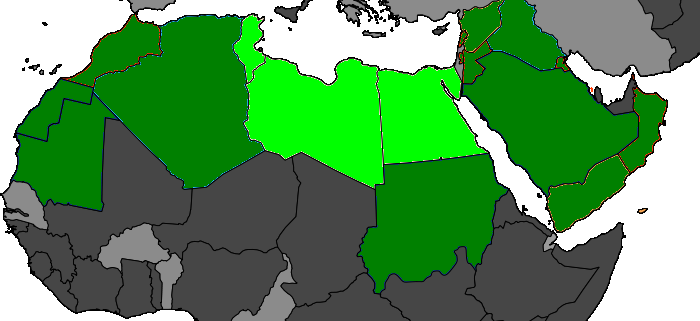
There have been regime changes in Tunisia, Egypt, and Libya in addition to uprising in Syria, Yemen, Bahrain, Algeria, Iraq, Jordan, Kuwait, Morocco, Oman and Saudi Arabia. The misuse of natural resources and corruption was one of the factors fueling the uprisings in Arab states.

The Arab world is at a pivotal juncture not only politically but due to the numerous environmental problems that threaten the region. Among the major challenges being faced are water scarcity, land degradation and desertification, inadequate waste management, coastal and marine environment degradation and air pollution. Many Arab states will need to develop ways of decentralizing power to help them use natural resources in a more sustainable manner.

A 2008 report published by authors M.K. Tolba and N.W. Saab, is the first study of the environment to be compiled and authored by independent experts from across the Arab region. It offers an overview of the state of the environment in the Arab world, highlighting environmental challenges, social, political and demographic trends, progress in regional and sub-regional cooperation and recommendations for future action.

The report attempts to address five key questions: 1) how are the environmental conditions in the Arab world changing? 2) what are the causes of environmental deterioration, and how is it linked to human activities and other stresses? 3) why is the environment a significant issue in the Arab world? 4) what is being done about it? How is society responding to the issues through public and private institutions? and 5) are the measures taken to limit environmental degradation and deterioration of ecosystems enough?

The report recommends long-term planning which includes an emphasis on renewable energy. It stresses the importance of simple measures at the local level to ensure more efficient and sound use of resources.

The report reviews issues like integrating the environment into development planning. It deals with specific issues like urbanization, air quality, water resources, marine environment, waste management, aridity drought and desertification.

Two of the most pressing concerns for the region are addressed in chapters on and the impact of climate change on Arab countries and the environmental impact of conflict and wars. Environmental legislation, media, education and financing are also addressed.

© 2011, Richard Matthews. All rights reserved.

Related Posts
Sustainability in the Arab World
Arab Spring Fueling the World's Most Ambitious Solar Project