Showing posts with label future. Show all posts

Coronavirus Augurs Hope for Climate Action

The coronavirus will augur change and while it is far too early to say with any certainty, it may very well drive the kind of radical transformation that we need to address the climate crisis. People are coming together to face this modern day plague. We are seeing a return to multilateralism and perhaps even a reversal of the trend towards increasing polarization. In the first few weeks of the pandemic we also began to see a reduction in climate change causing emissions.

To be clear we have little reason to celebrate at present. Health care systems are being overwhelmed and people are sick and dying. To make matters worse this pandemic is unfolding against the backdrop of the Trump administration's tragic mishandling of the crisis and a global economic meltdown. The stock markets are experiencing unprecedented volatility and U.S. job losses have spiked to a record 3.3 million making recession a virtual certainty.

However, amidst the pain and suffering we are seeing glimmers of hope. The pandemic has encouraged people to once again appreciate the value of expertise and the importance of science. We can expect renewed interest in fact-based decision making and this may arrest anti-science politics in the U.S.

The global pandemic gives us an opportunity to reconsider the myopia of our propensity to avoid long term thinking and planning. It is not unreasonable to assume that global efforts to combat the coronavirus will contribute to renewed interest in climate action. We have been repeatedly warned that we must act to avert this crisis. It stands to reason that we may see an increase in support for efforts to avert the most serious global threat humanity has ever faced.

In recent weeks we have stood together to fight this pandemic, there is no reason why we cannot do the same to engage the climate crisis. COVID-19 could be the shock we need to finally get serious about combating climate change.

We are on the cusp of a climate catastrophe and we must act quickly if we are to avoid surpassing upper threshold temperature limits from which we may not be able to recover. Climate change is the cause of a wide range of diseases and other health concerns. Acting on climate change is about staving off a catastrophe that represents an existential threat to life on earth.

Managing the economic consequences of this pandemic will require a rethink of some basic economic values. Unprecedented times call for unprecedented measures. We need a coordinated global response that will take us into the next century and it should be obvious that business as usual won't do. If we reconsider the de-regulatory mayhem that resulted in the financial meltdown of 2008 and the insanity of deregulation under the Trump administration, we may be able to change our perilous course.

As we are forced to deal with recession we will have to carefully consider the kind of economic stimulus we will apply. It is reasonable to assume that governments will heed the economic case for climate action. The economic benefits of climate action combined with the disincentive of economic collapse if we fail to act, make a compelling case that will be hard to ignore.

Any serious climate action starts with a reappraisal of our energy landscape. Even before the pandemic hit the oil and gas industry was on life support. We need to acknowledge that the dirty energy industry is being abandoned by investors, banks and insurance companies. Rather than trying to prop-up a dying industry governments need to prepare for the way for the kinds of energy that can safely power our future. Clean energy is vital to our future as it will both grow the economy and provide millions of good jobs. The auto industry will be hit hard by the economic downturn, however, with the appropriate government support this could be an opportunity to transition away from the combustion engine. We need to come to terms with the reality that the benefits of climate action far outweigh the costs.

Resistance to the economic reality comes from politicians that are beholden to the old energy industry. However, this pandemic may signal the end of the fossil fuel powered politics of both Trump and the Republican party. After decades of deceiving the American public, the American electorate could bring the GOP's corruption to an end.

Our times challenge some longstanding principles that are at the core of western civilization and the virus may cause more people to question our market driven economy. We need government support to keep the economy from completely collapsing and government stimulus packages should include efforts to retool the economy to prepare for the world of tomorrow. This should include massive investments in clean energy like wind and solar energy. It must also include carbon removal technologies like direct air capture (DAC) and carbon capture and sequestration or (CCS). These so called negative emissions technologies may be our last hope of reigning in climate change.

We need to see an end to business as usual and this pandemic might very well be the catalyst for the kind of change we need to see. This may include structural changes to our economy. .We are already seeing behavioral changes as less people travel and more people are working from home. If nothing else the reaction to COVID-19 shows us that rapid global change is possible.

Climate activist Greta Thunberg denounced governments for taking urgent action against the coronavirus outbreak but failing to treat global warming as an emergency. "It is shameful that for so long the climate and environmental emergency has been ignored. We are still in a crisis that has never once been treated like a crisis," Thunberg said.

Her logic is sound and if reason prevails COVID-19 could bring about an unprecedented paradigm shift. However, there are some dark days ahead. This pandemic is far from over, and many more will suffer from the disease and the economic aftershocks. As Naomi Klein points out such shocks augur change, sometimes they are for the better and sometimes for the worse. We need to anticipate the very real possibility that if we let it, COVID-19 and its aftershocks could drain money and political will from climate action. We must not allow restrictive capital markets to prevent the flow of financing for clean technologies. We must also be ever mindful of authoritarian efforts to use the crisis to undermine democracy. Let us hope that this dark period will be a womb and not a tomb.

Related
Coronavirus Stock Losses in 2 days Equal to the Cost of Climate Adaptation for the Next 10 Years
Emissions Reduction from the Coronavirus is Being Undermined by Government Subsidies Trump's Handling of the Coronavirus is a lot like his Climate Strategy
Coronavirus Related Stock Losses in 2 days Equal to the Cost of Climate Adaptation
Coronavirus Reduces China's Emissions by 25 Percent

Feedback Loop Between Extreme Weather and Fossil Fuels Makes the Case for Clean Energy

As clean energy continues to grow storms continue to highlight the dangers of oil and gas. Fossil fuels and storms are locked in a perilous relationship that sees each contribute to the destructive force of the other. Extreme weather events have repeatedly ravaged Texas oil infrastructure.

Storms wreak havoc with both the economy and the environment. Preliminary estimates put the economic cost of Hurricane Harvey at $190 billion, making it the costliest natural disaster in US history. There are also costs in the fossil fuel sector associated with Hurricane Harvey passing right through the hub of the US petroleum and natural gas industries in southeast Texas.

Oil companies including Royal Dutch Shell, Anadarko Petroleum, and Exxon Mobil shut down operations and evacuated employees from their offshore rigs in the Gulf of Mexico. Oil refineries also shut down leaving a million barrel shortfall. Crude oil prices have been steadily climbing with many fearing it could top $50 a barrel.

The disruption the fossil fuel industry in Texas significantly impacts domestic energy markets and creates a ripple effect on the national economy. As of September 01, 2017 the national average for regular was $2.54 a gallon, an increase of 18 cents in the last week. During this time prices jumped at least 10 cents a gallon in 24 hours in Texas, Ohio, Georgia and the Mid-Atlantic states. As of September 4th national average gas prices were $2.67 but some are predicting prices as high as $2.75 a gallon in the coming days. Some Dallas area gas stations were charging almost $4.00 a gallon. Many Dallas gas stations have run out of gas presaging long lines and shortages all the way up the east coast.

This is the fourth time in less than a decade that there has been massive storm related energy infrastructure disruptions in Texas. Climate change models predict that the intensity of storms will continue to increase and this will increase both economic and environmental impacts. As if to prove the point one of the strongest Hurricanes ever is currently lashing the Caribbean and barrelling towards the US mainland.

Before the dust settled from Hurricane Harvey another even stronger storm has formed in the Caribbean. It has been named Hurricane Irma and it is poised to hit the US mainland in the coming days. Hurricane Irma has been referred to as "potentially catastrophic" by CNN. It has maximum sustained wind speeds of 180 mph. That is well above the 157 mph threshold for a Category 5 hurricane. These intense storms reveal the destructive synergistic nexus between fossil fuels and climate.

The burning of fossil fuels emit greenhouse gases that trap heat and increase water vapor in the atmosphere. This in turn fuels extreme weather events that disrupt fossil fuel production, refinement and transportation. In addition to increasing fuel prices, these storms destroy fossil fuel infrastructure sometimes resulting in spills that contaminate the environment. This is especially true of Texas which is home to a dense concentration of fossil fuel infrastructure.

According to the EIA approximately 33 percent of US refining capacity comes from the Texas Gulf Coast. Approximately 25 percent of US natural gas production and 50 percent of US oil production originates in Texas and the Gulf of Mexico. The latter accounts for almost 20 percent of US crude oil production.

Harvey is hardly the first storm to disrupt the fossil fuel industry. The last three hurricanes to hit the US Gulf Coast (Gustav and Ike in 2008 and Hurricane Isaac in 2012) all affected oil and natural gas infrastructure. According to the EIA these three storms all shut in more than one million barrels per day of crude oil production and more than three billion cubic feet per day of natural gas production. The storms also shut down significant pipeline and refining capacity. This will have both a national and a global affect. Residents of Canada are already feeling the affects of the storm at the pump.

Distributed energy makes sense in the context of climate change and increasingly intense extreme weather. Highly concentrated oil infrastructure is vulnerable to economic disruption and threatens national security. Flexible clean alternatives including onsite solar and wind facilities offer a more nimble approach to secure energy generation.

Clean energy sites are also subject to interruptions from extreme weather but these are minor compared to fossil fuels. Like the fossil fuel industry the burgeoning wind industry in Texas went off line in advance of Harvey but this did not impact access to electricity in Texas. Unlike renewables the production, refining and transportation of fossil fuels are all especially vulnerable to Hurricanes. The environmental, economic, energy and health impacts of a storm are far worse for fossil fuels than they are for renewables.

Fossil fuels still rely on an out-dated centralized model. The growth of both renewables and energy storage have pushed the US electricity grid towards a more diverse and distributed model. It would appear that the Energy Department shares the view that reforms are required.

At the same time that Harvey was making landfall in the US the Energy Department released its review of national grid resiliency. Despite the study's support for nuclear power and coal (it suggests the EPA should ease permitting requirements for new coal fired plants) the study also seems to indicate that there is value in integrating more renewables into the grid.

Related
El Niño and Global Warming are Locked in a Feedback Loop
The Dangerous Feedback Loop Between Wildfires and Climate Change
Arctic Warming Feedback Loops: Algae Blooms and Thawing Permafrost
Beaches are Facing Environmental and Climate Threats
Hurricane Harvey and the State of Climate Science
Hurricane Harvey and Trump's Hypocritical Resistance to Climate Resilience
A Review of Extreme Weather in 2016
The Eye of the Storm: Hurricane Matthew, Attribution Science and Climate Change (Video)
Review of Extreme Weather in 2015
Growing Levels of GHGs are Warming the Planet and Contributing to Disasters
Extreme Weather and Existential Reflections on Life in the Anthropocene
Extreme Weather Makes a Convincing Case for Climate Change
Typhoon Haiyan and Climate Change
Hurricane Sandy is a Powerful Reminder for those who Ignore Climate Change

Mother Nature Strikes Back: A Review of Extreme Weather in 2016

Extreme weather is a deadly corollary of climate change. A UN study found that between 1995 and 2015, 600,000 people died from natural disasters. Global warming is known to exacerbate the intensity of extreme weather events. We are already seeing clear evidence of climate change playing a role in a growing number of natural disasters. Thanks to advances in attribution science we can now see the role that climate change plays in driving a succession of increasingly severe extreme weather events.

According to a report from the United Nations Office for Disaster Risk Reduction, floods accounted for 30 percent of the world's top ten natural disasters in 2015. In 2015, three of the world's top 10 natural disasters by the number of fatalities were floods. In first place was heat waves, accounting for four of the top 10.

The warming trend and associated extreme weather events continued in 2016, which has replaced 2015 as the hottest year on record. Decades of hot data are the harbingers of a climate catastrophe. As published in Insurance Journal, here is a list of some of the extreme weather events we experienced in 2016
  • Flooding in China’s Yangtze Basin from May through August killed at least 475 people and caused $28 billion in losses.
  • A drought in India that started earlier in the year and stretched through June caused about $5 billion in damage.
  • Flooding in West Virginia and the mid-Atlantic in June killed 23 people and damaged more than 5,500 buildings.
  • Typhoon Nepartak hit the Philippines, Taiwan and China in July, killing 111 people and causing at least $1.5 billion in damage.
  • Flooding in northeast China in July killed 289 people and caused about $5 billion in damage.
  • Temperatures reached 129 degrees (54 degrees Celsius) in Kuwait and Iraq in July.
  • Flooding in Louisiana in August killed 13 people and caused around $15 billion in damage.
  • Flooding in Sudan and South Sudan in July and August killed 129 people and damaged more than 41,000 buildings.
  • A long heat wave coupled with high humidity afflicted the U.S. South and East. Savannah, Georgia, had 69 straight days when the temperature hit 90 or higher.
  • Typhoon Lionrock hit Japan, China and Korea in August and killed 77 people while damaging more than 20,000 buildings.
  • Spain set a record for the hottest September temperature recorded in Europe, with marks of 114 and 115 degrees.
  • Localities in the United States broke nearly 15,000 daily records for hot nighttime minimum temperatures from May into September.
Hurricane Matthew wreaked havoc in Cuba and the Bahamas and it killed almost one thousand people in Haiti. Although not as severe the effects of the Hurricane were felt in Florida, Georgia, South Carolina and North Carolina. What makes this hurricane noteworthy is that advances in attribution science are making it easier to see the role played by climate change.  The relationship between extreme weather and climate change was explored in a recent Scientific American article.

Perhaps the most disturbing thing about extreme weather in the US is the GOP's refusal to accept reality. Republicans ignored unprecedented heat and record breaking precipitation while boldly revealing policy platforms that will exacerbate the situation. The GOP's love of fossil fuels and disdain for climate action is equaled only by their hatred for science.

In the span of six months two once in 500 year storms have devastated Louisiana. Similar catastrophic flooding has gripped many pats of the world in 2016 including China, India, Macedonia, Pakistan and Sudan.

As reported by Damian Carrington in a Washington Post article, this warming trend has dire implications for extreme weather which costs lives, destroys crops and contributes to food insecurity.

"The extra heat from the powerful El Niño event has disappeared. The heat from global warming will continue...Because of climate change, the occurrence and impact of extreme events has risen...Once in a generation’ heatwaves and flooding are becoming more regular," Carrington said.

The WMO said human-induced global warming had contributed to at least half the extreme weather events studied in recent years, with the risk of extreme heat increasing by 10 times in some cases.

"It is almost as if mother nature is making a statement," said climate scientist Michael Mann, at Penn State University in the US.

According to the UN Food and Agriculture Organization, in 2016 extreme weather and climate events have adversely affected agriculture impacting the food security of more than 60 million people.

"Climate change is not like other issues that can be postponed from one year to the next,” he said. “The US and world are already behind; speed is of the essence because climate change and its impacts are coming sooner and with greater ferocity than anticipated."

The situation is dire as indicated by new research published at the end of 2016. The findings are from a Stanford University doctoral dissertation by Carolyn Snyder, a climate policy official at the US Environmental Protection Agency (EPA). As reported in Nature the research suggests the Earth is currently warmer than it has been in 100,000 years. The conclusion of the Snyder study suggests that current levels of fossil fuel use indicate the Earth is 'locked into' temperatures not Seen in 2 million years. The research suggests that we may see temperature rises of up to 9° Celsius.

As reported in an accompanying Nature article: "Even if the amount of atmospheric CO2 were to stabilize at current levels, the study suggests that average temperatures may increase by roughly 5° C over the next few millennia." If Trump delivers on his promise to extract and burn even more fossil fuels the situation could be even worse that predicted by the research.

"The kinds of extreme weather we have seen over the past year or so will be routine all too soon, but then even worse records will be set," Kevin Trenberth, one of the world’s leading climatologists, told Think Progress' Joe Romm.

Related
The Eye of the Storm: Hurricane Matthew, Attribution Science and Climate Change (Video)
Review of Extreme Weather in 2015
Growing Levels of GHGs are Warming the Planet and Contributing to Disasters
Extreme Weather and Existential Reflections on Life in the Anthropocene
Strong Body of Evidence for a Changing Climate
Extreme Weather Makes a Convincing Case for Climate Change

The Eye of the Storm: Hurricane Matthew, Attribution Science and Climate Change (Video)

It is widely accepted that warmer seas contribute to hurricanes but there are also a number of other factors that contribute to extreme weather events. Here is a review of the evidence linking climate change and Hurricane Matthew.

Matthew has already wreaked havoc in Cuba and the Bahamas and it has killed almost one thousand people in Haiti. Four Americans are known to have died due to the storm. There are currently states of emergency in effect in Florida, Georgia, South Carolina and North Carolina.

Although Matthew has been downgraded from a level 5 to a level 1 hurricane it still packs a punch.  It looks as though central Florida was spared the worst, but cities along the East Coast are bracing for the storm.

Florida is no stranger to hurricanes. In 2004, four major hurricanes (Charley, Frances, Ivan, and Jeanne) caused billions of dollars in damage in the state. These storms were followed by Hurricane Katrina a year later.

The cause of these extreme weather events was the subject of cautious reflection in the scientific community.

While we know that climate models predict more intense extreme weather events scientist are very careful about attributing any one storm to climate change. That is not to say there is no link, it merely reflects the cautious approach taken by scientists.

Until very recently there was inadequate data to make a conclusive pronouncement. We now have more reliable satellite systems, which allow better tracking.

Scientists are reluctant to assign any given weather event to climate change. Initially, hurricane Sandy was dismissed as being unrelated to climate change. However, scientists subsequently confirmed that climate change did play a role in Sandy.

The science connecting hurricanes and climate change has improved. Some scientific observations are obvious. One such recent observation corroborating the worsening hurricane trend came from the East Pacific basin which saw Hurricane Patricia generate the highest wind speeds ever recorded on Earth.

Here is a summary of what we know about the climate change/hurricane connection: Warmer oceans spawn more storms and more storms will increase rainfall and water vapor. These phenomena can fuel more intense hurricanes.

The Washington Post delved into the question of the science linking Hurricane Matthew to climate change. They quoted a recent scientific overview on the links between hurricanes and climate.-climate:

“While no significant trends have been identified in the Atlantic since the late 19th century, significant observed trends in [tropical cyclone] numbers and intensities have occurred in this basin over the past few decades, and trends in other basins are increasingly being identified. However, understanding of the causes of these trends is incomplete, and confidence in these trends continues to be hampered by a lack of consistent observations in some basins.”

The situation in the Atlantic is complex. To understand the relationship between climate change and hurricanes in the Atlantic we must factor natural cycles (such as the so-called Atlantic Multidecadal Oscillation). We must even evaluate the impact of reductions in atmospheric aerosols that occurred following tighter regulations on these emissions.

Even when we factor these phenomena it is still very hard to attribute an individual storm to a changing climate.

Still, there are reasons to believe that although other factors are involved, Matthew has been exacerbated by climate change.

Kevin Trenberth, a researcher with the National Center for Atmospheric Research in Boulder, Colo., told the Washington Post there seems to be a combination of the overall warming trend and natural variability, such as the El Nino-La Nina cycle, behind what we’re seeing: "The overall increase in moisture is about 5 to 6% from climate change, and in a hurricane that gets doubled because the storm intensifies and increases the convergence of moisture. But in the Atlantic, in the year following El Nino, the [sea surface temperature] tends to be higher in the subtropics (because with El Nino the winds are lighter and more sunny skies), and indeed in the subtropics east of Florida, Georgia and South Carolina, [sea surface temperatures] have been running 2 deg C (3 to 4F) above normal, and moisture 10 to perhaps 15% above normal. Indeed this was the region that fed the Louisiana floods (not so much the Gulf). So the potential has been there: a natural variability component on top of the global warming to produce a very strong storm."

Matthew had a very rapid rate of escalation to a category 5 and it is also very persistent. These statistically anomalous observations are consistent with climate change but no clear causal link can be drawn. While observations should not be confused with proof they are nonetheless consistent with scientific predictions.

As the world warms, sea levels are rising and this will worsen the impacts of storms. Even small increases in sea level can have a big impact on storm surges.

Climate change has influenced the strength and endurance of Matthew.  While the evidence may not be sufficiently rigorous for a climatologist, those who extrapolate and draw conclusions from existing evidence may prove to be more accurate than the understandably cautious claims of scientists.

It is important to note that the data in no way disproves the connection between Matthew and a changing climate. However, scientists require an abundance of evidence before they will say anything with any degree of confidence.

In a Think Progress article, the venerable  Joe Romm pulls no punches in connecting this hurricane and climate change. "Matthew has already set a number of records — and global warming is giving it a boost," Romm asserts.

He then goes on to review some of Matthew's record-breaking feats and squarely attributes them to climate change:
  • longest-lived Category 4 (or higher) Atlantic hurricane ever recorded. 
  • most accumulated cyclone energy of any Atlantic hurricane ever recorded in the eastern Caribbean
He then cites several papers that support a close relationship between hurricanes and climate change. One showing a 20 - 30 percent increase in category 4 and 5 hurricanes in recent years. A few other studies show an increase in hurricane intensity including in the North Atlantic.

These observations are corroborated by a host of other findings including the fact that the summer of 2016 was the hottest summer in recorded history and possibly the hottest in "thousands of years."

The oceans are warmer and we are also seeing a sharp rise in the most damaging storm surges.

One tropical cyclone expert just warned, "Category 4 and 5 hurricanes could double or triple in the coming decades."

Romm comes to the logical conclusion that in the face of the evidence, "We simply cannot cut carbon pollution fast enough."


Related
Growing Levels of GHGs are Warming the Planet and Contributing to Disasters
Decades of Hot Data: The Harbingers of an Impending Climate Catastrophe
Extreme Weather and Existential Reflections on Life in the Anthropocene
Strong Body of Evidence for a Changing Climate 
Consistent Ongoing Heat is Rewriting the Record Books (April Temperature Update)
Review of Extreme Weather in 2015
Video - Climate Change and Extreme Weather: Prof. Jennifer Francis
Video - Climate Change Fueling Wilder Weather (Climate Commission)
Typhoon Haiyan and Climate Change
Video - Superstorm Sandy Climate Change and Extreme Weather
IPCC Report Predicts More Frequent and More Intense Extreme Weather
Extreme Weather and the Costs of Climate Change

Primer on Sustainability in Small Businesses

There are a number of things that small businesses can do to be more environmentally sustainable.  This both lowers costs and enhances the reputation of your enterprise. A growing number of companies are reducing the environmental impact of their businesses, so engaging sustainability is also about remaining competitive. Increasing consumer interest in sustainability makes it ever more important for small businesses to be able to meet burgeoning demand now and in the future.

Initiatives can include very simple things like turning down the thermostat, turning off lights, paperless billing, double double-sided printing and recycling. They can also include more substantial efforts like retrofitting lighting systems with LEDs, installing solar panels and product redesigns that reduce energy and resource requirements.

Here are a list of sixteen relatively easy and affordable things that small businesses can do to be more environmentally sustainable:

Assessment and benchmarking

Whether you are a 2-person company or have a staff of 50, the first step is to identify areas that most need improvement. To do this perform a self-assessment, with a focus on energy, efficiency, resources and waste. When conducting your assessment look at every detail including printing, shipping and even office lunches. As part of your sustainability assessment establish benchmarks. Having a base from which to measure success will help you to measure the impact of your initiatives. To create this benchmark, go through your daily activities from start to finish. Go through your day and write down everything that you do. Generate a list and identify areas that generate maximum impact.

Planning

Integrate your assessment into a cogent sustainability plan that focuses on areas of improvement. Use your plan to integrate the changes you can make in your company to maintain and increase your environmental sustainability. This plan should outline your company’s environmental philosophies as well as your mission statement.

Energy usage

Increase awareness of energy usage. Help make employees aware of energy usage and make them more conscientious about saving energy. Develop programs that raise employees’ consciousness of behaviors that contribute to high energy usage and that reward them for lowering costs by turning off lights and equipment when they are not in use, particularly overnight and on weekends. Additionally, keep thermostats on low settings in the winter and turn down the air conditioning in the summer. Keep doors and windows closed to prevent heat or air conditioning loss when heating or cooling.

Research local energy efficiency programs

Some states and municipalities have have energy-efficiency programs that offer discounts and assistance to businesses trying to make the switch to energy-efficient appliances or other energy saving improvements. These could include programmable thermostats, furnace replacements, boiler optimization controls and others. In addition, such programs caninclude a free energy assessment to offer you advice about which specific steps will be most effective for your business.

Lighting

Take advantage of natural light as much as possible. Replace incandescent lights with LEDs. These lights last far longer than traditional light-bulbs and also use significantly less energy. Although there is additional upfront costs, the investment pays for itself within a few years. 

Maintenance

Routine maintenance can save energy. For example, clean all filters in the heating or air conditioning systems regularly, as well as in any exhaust fans. Check periodically on any automatic settings in lighting systems or the thermostat to ensure that they are at the most energy-efficient levels. Remove any unneeded light bulbs or replace them with more energy-efficient models where possible.

Water Consumption

Install low-flow plumbing fixtures. One very simple and inexpensive change is to change the aerators on your faucets. By putting in new low-flow aerators that reducing the flow of water from the faucets in your bathroom sinks and any other areas in the office that use water, you can reduce your bill every month and also stop waste. Buying new aerators is relatively inexpensive – just make sure to get the right fit from your local hardware store. Look for the EPA’s WaterSense Label when selecting a faucet, urinal or toilet. These labels show that the fixtures are “water-efficient,” meaning that they use a significantly lower flow of water than comparable models. This could save businesses the cost of thousands of gallons of water a year.

Fix Leaks

Another way of potentially saving money is to look for leaks in your faucets, pipes, or hot water heaters. Water leaks can cost you money every month and also mean wasting water that isn’t really needed. Many leaks can be fixed yourself with some rudimentary supplies.

Go paperless

Reduce the amount of paper you use in your office to the bear minimum.  If an item can be saved on the hard drive of your computer, it doesn’t need to be printed. Process bills electronically and so online banking.

Employee buy-in

Encourage employee engagement by disseminating information, soliciting feedback and running contests for adherence. One of the best ways to get your staff to go green is by having the leadership model by example. When hiring, engage committed staff by looking for employees that are committed to a green philosophy. When working with your staff hold monthly meeting with staff to discuss their goals and get feedback.

Leadership

Once you have identified the environmental cause that your business will support, be a leader in that movement. Create initiatives that will build awareness as well as potential solutions. Donate your time and support your employees in doing the same. If you are able to, share your profits with environmentally-related causes. Actively lead by example.

Highlight achievements

Make sure you actively communicate your green efforts and accomplishments both internally and externally. There are a number of private companies that will assess and accredit truly sustainable companies.

Avoid greenwash

The environmentally friendly attributes of your efforts must be authentic. Whatever you do avoid being dishonest. When a customer's trust is betrayed it is hard to recapture. Lead by example and practice what you preach.

Support and collaborate

There are large numbers businesses that share your philosphy. Seek them out, partner with them, ask their advice and support their endeavors. No need to reinvent the wheel. You can achieve much more when working with a company whose experiences you can use. .

Inspire

Inspire existing and potential clients to be more environmentally sustainable. This is also a good way to introduce the benefits of working with your company. Stay positive and keep improving your business model.

Ongoing learning

Being sustainable is an ongoing process of improvement. Make sure you are up to date on your options by continually increasing your awareness of sustainability trends. Keep on top of the latest developments and best practices in corporate sustainability. When you find out something new, share your research with your customers. Doing so will not only build a trusting relationship between you both, but will provide you with the ongoing incentive to be on top of the latest developments.

Related
Small Business Owners Support Action on Climate and Energy
Why Small Businesses are Engaging Sustainability
Why Small Businesses are Well Suited to Sustainability
Why Small Businesses are Not Engaging Sustainability
Now is the Time for Environmental Sustainability
What Businesses Can Do to be More Environmentally Sustainable
Small Businesses Need to Engage the Green Economy

Why Small Businesses are Engaging Sustainability

The size of the market opportunities is driving small businesses to engage environmental sustainability, as are concerns about survival and long term success. In addition to improving profits, reducing costs and mitigating against risk, engaging sustainability affords opportunities for collaboration and innovation.

While big corporate sustainability initiatives steal headlines, the small business community is also going green. For example, operational efficiency practices are increasingly commonplace even in small companies.

The rationale for engaging sustainability is largely about meeting and anticipating consumer demand. This translates to more customers, increased sales, higher revenues and even price premiums. Sustainability contributes to the crafting of a unique selling proposition, it helps to differentiate a company from the competition, and it offers a competitive advantage. Sustainability provides a host of reputational benefits. The latter contributes to word of mouth marketing, greater trust, improved loyalty, and enhanced employee recruitment and retention.

Small businesses also need to conform to the sustainability policies of companies in their supply chains and doing so increases the prospects for successful tenders.

Economic and environmental importance

The small business sector is the driving force behind most economies and their engagement of environmental sustainability is vital to their own viability and the prospects of addressing environmental degradation and global emissions reduction. Small businesses have a major impact on our economy and the environment. So their adoption of sustainability is crucial both economically and environmentally.

According to the US Small Business Administration, small and medium-sized (SMBs) businesses collectively account for 49 percent of US employment. There are almost 28 million small businesses in the US, and businesses with 5 or fewer employees represent 88 percent of businesses in the US. In the UK, more than 99 percent of the 4.9 million registered businesses SMEs.

Growth

As reported in Entrepreneur, a 2012 Office Depot poll indicates that 61 percent of small businesses were in the process of "going greener" and 70 percent of US small businesses plan to go green within the next two years. A similar picture emerges in the UK. According to Lloyds’ 2013 survey of SMEs in the UK, a quarter of businesses viewed sustainability as their top priority in 2014, while 52 percent recognized the cost benefits of implementing sustainable business practices.

There is evidence that small businesses are adopting increasingly sustainable practices. According to a report titled, "The Big Green Opportunity for Small Business in the U.S.," green market segments in the US are growing fast. In fact, growth rates of green segments are outpacing conventional segments in every industry where data was collected.

"The growth in green segment market share across the economy is unprecedented and systematic it’s clear that we’re hitting the tipping points where sustainable products and services have moved from fringe alternatives to industry norms," the report said.

Although there is growing interest in sustainability, small businesses are still not engaging at the same rate as large corporations. When it comes to sustainability, there are many reasons why small businesses are not as proactive as their corporate cousins. However, this belies the fact that they are ideally suited to sustainability.

Consumer demand

The growth in sustainability among small businesses is being driven by consumer demand. An Accenture study titled, Long-Term Growth, Short-Term Differentiation and Profits from Sustainable Products and Services, indicates that consumer demand is the salient driving force behind the transition to sustainability. Consumers want greener products and services and this is a growing trend that shows no sign of slipping.

A 2013 survey stated that 30 percent of consumers expect to increase the amount of goods and services they buy from socially responsible companies.

According to Cone Communications research conducted in 2013, 71 percent of Americans consider the environment when they shop. This is up from 66 percent in 2008.

The Big Green Opportunity report indicated that small businesses are seeing growing demand for green products and services and greater competition for green-oriented customers.

Higher revenues and competitive advantage

Sustainability generates a return on investment and offers a competitive advantage. There is now a growing body of evidence that proves the bottom line benefits and competitive advantages of being environmentally sustainable.  “Going green attracts customers which results in a higher revenue,” says Colin Moore. Moore has implemented an energy efficiency policy for New York Client Solutions and he actively encourages small businesses to engage environmental sustainability.

According to The Big Green Opportunity report, small businesses are engaging sustainability for more than just ethical reasons. The national survey of more than 1,300 business owners suggests there is a compelling business case for going green. The survey indicated that green offerings tend to be profitable, often more profitable, than less environmentally beneficial offerings.

The survey showed that small businesses on the front lines of these green opportunities are capturing significant market share and benefiting from operational advantages. The survey results showed that 79 percent of survey respondents strongly agreed that offering green products and services gave their business a competitive advantage. The report indicated that 70 percent of those surveyed said that others in their industries have succeeded by offering green products or services. Of these,77 percent were successful in growing sales of their own green products and services through the economic slowdown (2008-2010).

A total of 62 percent of the small businesses surveyed offer green products or services because it’s a competitive requirement in their industry. Of these, 80 percent experienced increased sales. The report also revealed that a number of industries now have green minimums that are essential to remaining competitive.

Green products and services allowed 58 percent to expand their offerings and of these, 84 percent saw increased sales. A total of 76 percent of those surveyed strongly agreed that their green products and services are profitable and 89 percent reported that their green products and services are at least as profitable as their non-green offerings. Almost one third (31 percent) reported that their green products and services are more profitable than their non-green offerings.

Price premiums

Customers are willing to pay more for green offerings. The Big Green Opportunity report indicates that premium pricing can be attached to a green product or service. In both survey data and interviews, green business owners reported that, where a high trust relationship develops between a conscious consumer and an authentically green business, those consumers are willing to pay a premium for truly green offerings.

While there may be additional costs associated with green products and services, there is also room for premium pricing. These price premiums equal or exceed any additional costs. The margin for green products or services is the same or better than non-green offerings.

According to an Accenture study, businesses can charge a 19 percent price premium for green products and services. A 2013 report on green consumption indicates that almost half (47 percent) of young consumers are willing to pay more for eco-friendly products.

One of the upsides of premium prices to producers is the social capital generated. In addition to “word-of-mouth” marketing, socially driven businesses can secure capital from values-driven investors and creditors.

The greener the better

"The Big Green Opportunity" report indicates that the greener you are, the more profitable you can be. Leaders of deep green businesses reported greater growth potential, higher revenue growth, and higher sales prices than their less-green peers. Deep green businesses were significantly more likely then their less-green peers to report that their customers are willing to pay more for green products and services.

Deep green businesses were significantly more likely to report a competitive advantage from their green offerings than their lighter green peers. Overall, the results show that the greener the company, the better they tended to perform and the more likely they were to reach new customers.

Leaders of deeper green businesses were able to leverage trust to expand through cross-selling. Their core customers supported faster uptake of new offerings, leading to quicker ROI and profitability.

Deep green businesses in the study were far more likely than their lighter green counterparts to agree that their existing customers continue to support them because of their green attributes.

Deep green businesses were far more likely to report strong revenue growth from their green products and services than their light green counterparts through the recession . Many of the deeper green businesses reported that they were able to build revenues through the recession due to growing consumer demand. Deep green businesses benefited from relatively low customer attrition through the downturn. They were also able to leverage their insight into methods and channels for reaching new green customers to offset turnover and the negative effects of the recession.

Timing action

Although there is clearly value in going green, timing is important and there is a risk of getting too far ahead of demand when selling to mainstream markets. But as explained by Lauren Kelley Koopman, director for PwC’s Sustainable Business Solutions, "Sustainability is next-generation business thinking because it creates value, attracts customers, retains employees and improves capital and funding."

No matter the size of your enterprise, now is the time for environmental sustainability. All of these factors are likely to accelerate the adoption of sustainability by the small business community.

Source: Global Warming is Real

Related
Primer on Sustainability in Small Businesses
Why Small Businesses are Well Suited to Sustainability
Why Small Businesses are Not Engaging Sustainability
Now is the Time for Environmental Sustainability 
What Businesses Can Do to be More Environmentally Sustainable
Business Case for Sustainability: Corporations, Banks and Investors
Best Practices and Case Studies

Why Small Businesses are Well Suited to Sustainability

Small businesses and sustainability are a perfect match. Yet their are a number of reasons why they are not adopting sustainability at the same rate as their corporate counterparts. Just like their larger corporate cousins, small businesses should adopt sustainability policies. There are good reasons why it is easier to engage sustainability in a small business as compared to a large corporation.

While they may not have the deep pockets of big corporations, a small business is more nimble and able to change directions more quickly than large enterprises.

In 2011 three international accounting bodies released a comprehensive research report, titled "SMEs Set Their Sights on Sustainability" which includes case studies from the UK, the US, and Canada. This report highlighted the growing emphasis on sustainability from small and medium sized enterprises. It indicated that small and medium sized businesses partner well with sustainability because they are:

• More in-touch with employees: engaging and actively managing employees on an individual level.
• More in-touch with investors: closely working business relationships to meet the expectations of its stakeholders and investors.
• More in-touch with customers: working directly with consumers and business customers to deliver products that meet specific requirements and delivery expectations.
• More in-touch with suppliers: directly communicating with smaller set of business partnerships often directly integrated into the business operations. ,

Related
Primer on Sustainability in Small Businesses
Why Small Businesses are Engaging Sustainability
Why Small Businesses are Not Engaging Sustainability
Now is the Time for Environmental Sustainability 
What Businesses Can Do to be More Environmentally Sustainable
Business Case for Sustainability: Corporations, Banks and Investors
Best Practices and Case Studies

Why Small Businesses are Not Engaging Sustainability

Many small businesses fail to realize the value of sustainability and as a consequence they are not adopting sustainability as quickly as large corporations. Despite the convincing business case for sustainability, small businesses have yet to engage in large numbers. Small business owners commonly perceive sustainability to be overly complex and too costly. The result is that small businesses are often absent from discussions about sustainability.

The inaction of the small business community does not appear to be due to disinterest in environmental responsibility. According to a Lloyds’ survey, 61 percent of small and medium business leaders practice sustainability at home, while only 43 percent incorporate eco-friendly practices at the office.

Small businesses are understandably concerned about cost issues. While monetary concerns are a barrier of entry, the real obstacle to their engagement is inadequate awareness about the real value of sustainability. According to a report titled, "The Big Green Opportunity for Small Business in the U.S.," many small business owners lack the market insight to take advantage of green opportunities.

The truth is that small businesses are very well suited to sustainability.

Related
Primer on Sustainability in Small Businesses
Why Small Businesses are Engaging Sustainability
Why Small Businesses are Well Suited to Sustainability
Now is the Time for Environmental Sustainability 
What Businesses Can Do to be More Environmentally Sustainable
Business Case for Sustainability: Corporations, Banks and Investors
Best Practices and Case Studies

Video - Years of Living Dangerously (Premiere Full Episode)


Watch the world premiere of the new series, "Years of Living Dangerously" which involves celebrities and respected journalists as they span the globe to explore the issues of climate change and cover intimate stories of human triumph and tragedy. The "Years of Living Dangerously" takes you directly to the heart of climate change issues in an awe-inspiring, cinematic documentary series event.

Register or join a WATCH PARTY for the premiere, this Sunday - April 13th! Parties start at 7:00pm ET. Click here to join the Google+ HANGOUT after watching.

Click here to subscribe to the Years of Living Dangerously channel on YouTube. Watch new episodes Sundays at 10PM ET/PT, on SHOWTIME. Click here to watch on Showtime anytime or click here to order online.

Related
Infographic - Climate Change Threat or Opportunity?
Organizations and Individuals Coalesce for Action on Climate Change
Why We Must Act on Climate Change (Ban Ki Moon and John Kerry)

Secretary of State Kerry Compares Climate Change to Weapons of Mass Destruction
Secretary of State Kerry: Climate Change is a Catastrophic Threat
What We Learned about Climate Change in 2013
NASA's MAVEN to Explore Climate Change on Mars
Its Going to Get Even Hotter than Predicted by Climate Models According to a New Cloud Study
Global Warming Predictions for 2014 and Beyond
Video - A Brief History of Anthropogenic Climate Change
Climate Change is Already Killing 400000 People Annually
PricewaterhouseCoopers Climate Change Warning

Senators All Night Vigil Urging Action on Climate Change

Starting on Monday, March 10 and concluding on Tuesday, March 11, 28 Senators (26 Democrats and two independents) will be speaking all night to urge action on climate change. Immediately following votes on the evening of Monday, March 10 until approximately 9 am ET Tuesday, March 11, Senators from the Senate Climate Action Task Force will be holding the Senate floor to urge action on climate change.

“Climate change is real, it is caused by humans, and it is solvable,” said Senator Schatz. “Congress must act. On Monday night we’re going to show the growing number of Senators who are committed to working together to confront climate change.”

Senator Boxer said: “So many Senators coming together for an all-night session shows our commitment to wake up Congress to the dangers of climate change. All you have to do is look at China to see what happens to your country when you throw the environment under the bus.”

"The cost of Congress' inaction on climate change is too high for our communities, our kids and grandkids, and our economy,” Senator Whitehouse said. “On Monday we’ll be sending a clear message: it’s time for Congress to wake up and get serious about addressing this issue.”

Senators expected to participate include:

Majority Leader Harry Reid, D-Nev.
Senator Dick Durbin, D-Ill.
Senator Charles Schumer, D-N.Y.
Senator Patty Murray, D-Wash.
Senator Brian Schatz, D-Hawaii
Senator Sheldon Whitehouse, D-R.I.
Senator Barbara Boxer, D-Calif.
Senator Dianne Feinstein, D-Calif.
Senator Ron Wyden, D-Ore.
Senator Bill Nelson, D-Fla.
Senator Maria Cantwell, D-Wash.
Senator Benjamin L. Cardin, D-Md.
Senator Bernard Sanders, I-Vt.
Senator Amy Klobuchar, D-Minn.
Senator Mark Udall, D-Colo.
Senator Tom Udall, D-N.M.
Senator Jeanne Shaheen, D-N.H.
Senator Jeff Merkley, D-Ore.
Senator Kirsten Gillibrand, D-N.Y.
Senator Al Franken, D-Minn.
Senator Richard Blumenthal, D-Conn.
Senator Chris Murphy, D-Conn.
Senator Martin Heinrich, D-N.M.
Senator Angus King, I-Maine
Senator Tim Kaine, D-Va.
Senator Elizabeth Warren, D-Mass.
Senator Edward J. Markey, D-Mass.
Senator Cory Booker, D-N.J.

Senators will be actively participating on social media as well throughout the night – using the hashtag #Up4Climate.

Related
Organizations and Individuals Coalesce for Action on Climate Change
Why We Must Act on Climate Change (Ban Ki Moon and John Kerry)

Secretary of State Kerry Compares Climate Change to Weapons of Mass Destruction 
Secretary of State Kerry: Climate Change is a Catastrophic Threat
What We Learned about Climate Change in 2013

Its Going to Get Even Hotter than Predicted by Climate Models According to a New Cloud Study
Global Warming Predictions for 2014 and Beyond
Video - A Brief History of Anthropogenic Climate Change
PricewaterhouseCoopers Climate Change Warning
US Climate Change Policy
The Cherry-Picking of Climate Change Skeptics
Obama Addresses Solutions to Climate Change Long Before Becoming President
President Obama Spells out his Climate Change Agenda
President Obama Addresses Climate Change at the UN
World Bank Climate Change Warning
Comprehensive Review of Climate Change Science
10 Charts on Climate Change
Global Solutions to Climate Change (Video)
Making Climate Change an Issue
The Staggering Costs of Ignoring Climate Change
New Study Quantifies the Costs of Climate Change

Secretary of State Kerry Compares Climate Change to Weapons of Mass Destruction

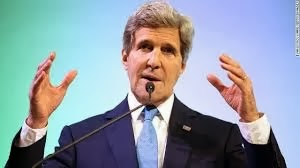
Here are excerpts of US Secretary of State John Kerry's Sunday February 16th speech in Jakarta, Indonesia, in which he compares climate change to weapons of mass destruction.

Think about this: terrorism, epidemics, poverty, the proliferation of weapons of mass destruction — all challenges that know no borders. The reality is that climate change ranks right up there with every single one of them.

Think about the proliferation of weapons of mass destruction. It doesn’t keep us safe if the United States secures its nuclear arsenal, while other countries fail to prevent theirs from falling into the hands of terrorists.

The bottom line is this: it is the same thing with climate change. And in a sense, climate change can now be considered another weapon of mass destruction, perhaps the world’s most fearsome weapon of mass destruction.

© 2014, Richard Matthews. All rights reserved.

Related
Secretary of State Kerry: Climate Change is a Catastrophic Threat
What We Learned about Climate Change in 2013

Its Going to Get Even Hotter than Predicted by Climate Models According to a New Cloud Study
Global Warming Predictions for 2014 and Beyond
Video - A Brief History of Anthropogenic Climate Change
Climate Change is Already Killing 400000 People Annually
Boxer's Climate Change Caucus Breeds Hope for Legislation
PricewaterhouseCoopers Climate Change Warning
US Climate Change Policy

Obama Addresses Solutions to Climate Change Long Before Becoming President
President Obama Spells out his Climate Change Agenda
President Obama Addresses Climate Change at the UN
World Bank Climate Change Warning
Comprehensive Review of Climate Change Science


10 Charts on Climate Change

Secretary of State Kerry: Climate Change is a Catastrophic Threat

Secretary of State John Kerry gave a speech in Indonesia on Sunday February 16. In this speech he made some of his most powerful statements to date about the threat posed by climate change.

Here are some highlights from his speech in Jakarta:

It’s not an exaggeration to say to you that the entire way of life that you live and love is at risk.

[In 1992]...Maurice Strong...told us: “Every bit of evidence I’ve seen persuades me that we are on a course leading to tragedy.”

When I think about the array of global climate – of global threats – think about this: terrorism, epidemics, poverty, the proliferation of weapons of mass destruction – all challenges that know no borders – the reality is that climate change ranks right up there with every single one of them.

And the reason is simple: The science of climate change is leaping out at us like a scene from a 3D movie. It’s warning us; it’s compelling us to act. And let there be no doubt in anybody’s mind that the science is absolutely certain. It’s something that we understand with absolute assurance of the veracity of that science. No one disputes some of the facts about it.

So when thousands of the world’s leading scientists and five reports over a long period of time with thousands of scientists contributing to those reports – when they tell us over and over again that our climate is changing, that it is happening faster than they ever predicted, ever in recorded history, and when they tell us that we humans are the significant cause, let me tell you something: We need to listen.

When 97 percent of scientists agree on anything, we need to listen, and we need to respond.

Well, 97 percent of climate scientists have confirmed that climate change is happening and that human activity is responsible. These scientists agree on the causes of these changes and they agree on the potential effects. They agree that the emission of greenhouse gases like carbon dioxide contributes heavily to climate change. They agree that the energy sources that we’ve relied on for decades to fuel our cars and to heat our homes or to air condition our homes, to – all the things that provide us electricity like oil and coal – that these are largely responsible for sending those greenhouse gases up into the atmosphere. And the scientists agree that emissions coming from deforestation and from agriculture can also send enormous quantities of carbon pollution into our atmosphere.

And they agree that, if we continue to go down the same path that we are going down today, the world as we know it will change – and it will change dramatically for the worse.

And the results of our human activity are clear. If you ranked all the years in recorded history by average temperature, you’d see that 8 of the 10 hottest years have all happened within the last 10 years.

And because the earth is getting hotter at such an alarming speed, glaciers in places like the Arctic are melting into the sea faster than we expected. And the sea is rising

Now, climate change also tragically means the end of some species. The changing sea temperature and the increasing amount of acidity – the acidity comes from coal-fired power plants and from the pollution, and when the rain falls the rain spills the acidity into the ocean. And it means that certain species of fish like cod or sardines can no longer live where they once lived. This is devastating for the world’s fisheries.

Climate change also means water shortages. And if you have these enormous water shortages, then you have a change in the weather – because of the weather patterns, you’re going to wind up with droughts, the lack of water. And the droughts can become longer and more intense. In fact, this isn’t something around the corner – this is happening now.

We are seeing record droughts right now, and they’re already putting a strain on water resources around the world. We’ve already seen in various parts of the world – in Africa, for instance – people fighting each other over water, and we’ve seen more conflicts shaping up now over the limits of water. Back in the United States, President Obama just the other day visited California, where millions of people are now experiencing the 13th month of the worst drought the state has seen in 500 years. And no relief is in sight. What used to be a 100-year or a 500-year event is now repeating itself within 10 years.

Furthermore, climate change means fundamental transformations in agriculture worldwide. Scientists predict that, in some places, heat waves and water shortages will make it much more difficult for farmers to be able to grow the regular things we grow, like wheat or corn or rice. And obviously, it’s not only farmers who will suffer here – it’s the millions of people who depend on those crops that the farmers grow. For example, the British government research showed that climate change may have contributed to the famine that killed as many as 100,000 people in Somalia just back in 2010 and 2011.

And scientists further predict that climate change also means longer, more unpredictable monsoon seasons and more extreme weather events.

On top of the unspeakable humanitarian toll, the economic cost that follows a storm like that is absolutely massive...So it’s not just about agriculture – it’s also about technology. It’s about our global economy. It’s about potentially catastrophic effects on the global supply chain.

Now, despite all of these realities – despite these facts – much of the world still doesn’t see or want to see the need to pursue a significant response to this threat.

one of the most catastrophic, grave threats in the history of human life.

The window of time is still open for us to be able to manage this threat. But the window is closing... We just don’t have time to let a few loud interests groups hijack the climate conversation...I’m talking about big companies that like it the way it is that don’t want to change, and spend a lot of money to keep you and me and everybody from doing what we know we need to do.

First and foremost, we should not allow a tiny minority of shoddy scientists and science and extreme ideologues to compete with scientific fact. Nor should we allow any room for those who think that the costs associated with doing the right thing outweigh the benefits. There are people who say, “Oh, it’s too expensive, we can’t do this.” No. No, folks. We certainly should not allow more time to be wasted by those who want to sit around debating whose responsibility it is to deal with this threat, while we come closer and closer to the point of no return.

I have to tell you, this is really not a normal kind of difference of opinion between people. Sometimes you can have a reasonable argument and a reasonable disagreement over an opinion you may have. This is not opinion. This is about facts. This is about science. The science is unequivocal. And those who refuse to believe it are simply burying their heads in the sand.

...Obama and I believe very deeply that we do not have time for a meeting anywhere of the Flat Earth Society. One of the arguments that we do hear is that it’s going to be too expensive to be able to address climate change. I have to tell you, that assertion could not be less grounded in fact. In fact, it’s exactly the opposite. Serious analysts understand that the costs of doing nothing far outweigh the costs of investing in solutions now. You do not need a degree in economics or a graduate degree in business in order to understand that the cost of flooding, the cost of drought, the cost of famine, the cost of health care, the cost of addressing this challenge is simply far less – the costs of addressing this challenge are far less than the costs of doing nothing. Just look at the most recent analysis done by the World Bank, which estimates that by 2050, losses – excuse me one second – losses from flood damage in Asian ports – fishing ports, shipping ports – the losses in those ports alone could exceed $1 trillion annually unless we make big changes to the infrastructure of those ports.

It’s everyone’s responsibility. Now certainly some countries – and I will say this very clearly, some countries, including the United States, contribute more to the problem and therefore we have an obligation to contribute more to the solution. I agree with that. But, ultimately, every nation on Earth has a responsibility to do its part if we have any hope of leaving our future generations the safe and healthy planet that they deserve.

climate change can now be considered another weapon of mass destruction, perhaps the world’s most fearsome weapon of mass destruction.

The fact is that climate change, if left unchecked, will wipe out many more communities from the face of the earth. And that is unacceptable under any circumstances – but is even more unacceptable because we know what we can do and need to do in order to deal with this challenge.

At the end of the day, emissions coming from anywhere in the world threaten the future for people everywhere in the world...we need a global solution.

...climate change isn’t only a challenge. It’s not only a burden. It also presents one of the greatest economic opportunities of all time.

I am absolutely confident that if we choose to, we will meet this challenge...Human ingenuity has long proven its ability to solve seemingly insurmountable challenges. It is not a lack of ability that is a problem. It is a lack of political resolve that is standing in our way. And I will tell you as somebody who ran for elected office, when you hear from the people, when the people make it clear what they want and what they think they need, then people in politics respond.

Today I call on all of you in Indonesia and concerned citizens around the world to demand the resolve that is necessary from your leaders. Speak out. Make climate change an issue that no public official can ignore for another day. Make a transition towards clean energy the only plan that you are willing to accept.

And if we come together now, we can not only meet the challenge, we can create jobs and economic growth in every corner of the globe. We can clean up the air, we can improve the health of people, we can have greater security; we can make our neighborhoods healthier places to live; we can help ensure that farmers and fishers can still make a sustainable living and feed our communities; and we can avoid disputes and even entire wars over oil, water, and other limited resources. We can make good on the moral responsibility we all have to leave future generations with a planet that is clean and healthy and sustainable for the future.

we can meet this challenge, the greatest challenge of our generation, and we can create the future that everybody dreams of.

Thank you all very much for letting me be with you. Thank you.

Related Articles
What We Learned about Climate Change in 2013
NASA's MAVEN to Explore Climate Change on Mars
It Going to Get Even Hotter than Predicted by Climate Models According to a New Cloud Study
Global Warming Predictions for 2014 and Beyond
Video - A Brief History of Anthropogenic Climate Change
Climate Change is Already Killing 400000 People Annually
Boxer's Climate Change Caucus Breeds Hope for Legislation
PricewaterhouseCoopers Climate Change Warning
US Climate Change Policy
The Cherry-Picking of Climate Change Skeptics
Obama Addresses Solutions to Climate Change Long Before Becoming President
President Obama Spells out his Climate Change Agenda
President Obama Addresses Climate Change at the UN
World Bank Climate Change Warning
Comprehensive Review of Climate Change Science
10 Charts on Climate Change