Showing posts with label pay. Show all posts

Video - WEF Global Risks Report

Video - Climate Risks: Abrupt Unpredictable Irreversible Changes

Video - Climate Risks: Abrupt Unpredictable Irreversible Changes

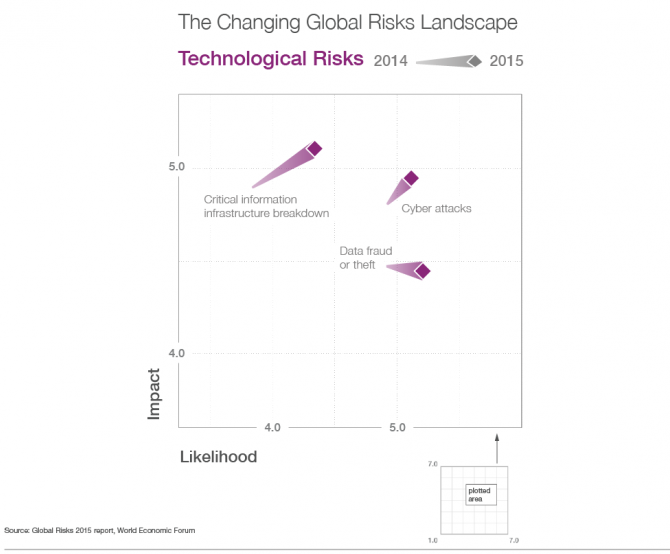
Infographic - Global Risks Report

Risks Associated with Environment, Climate, Water Crisis and Extreme Weather in the WEF Report

In the 2015 edition of the Global Risks report environmental risks are viewed as more prominent than economic risks. At the very top of the list are international conflicts although water crises rank highest in terms of impact. Overall, geopolitical and societal risks dominate as the biggest threat to global stability.

The 10th edition of the Global Risks report, was published on January 15, 2015 by the WEF. The annual report features an assessment by nearly 900 experts on the top 28 global risks in terms of likelihood and potential impact over the coming 10 years.

Despite a preponderance of economic concerns, the report ranks more environmental issues among the top risks than economic ones. This is a consequence of the negative assessment attributed to existing preparations to cope with challenges such as extreme weather and climate change.

In terms of likelihood of a given risk, extreme weather events are exceeded only by interstate conflict followed by failure of national governance systems, state collapse or crisis, and high structural unemployment or underemployment.

In terms of impact, the water crises was deemed to be the greatest risk facing the world followed by the spread of infectious diseases, weapons of mass destruction and failure of climate change adaptation.

The report expresses concern over the world’s ability to solve its most pressing societal issues, including economic, environmental and geopolitical risks.

In addition to ranking risks, the report features three examples of risk management and resilience practices related to extreme weather events.

Margareta Drzeniek-Hanouz, Lead Economist, World Economic Forum said, "seeking to return the world to a path of partnership, rather than competition, should be a priority for leaders as we enter 2015."

Click here to read the Global Risks 2015 Report.

Related

Infographic - Global Risks Report
Video - 2015 Global Risks Report
Video - Climate Risks: Abrupt Unpredictable Irreversible Changes
Video - UN Report on the Business Risks from Climate Change
Managing Materiality, Risk and Stakeholder Engagement in Sustainability Reporting
Infographic - Sustainable Business Risk Management
Rise Initiative: Helping Businesses and Investors Manage the Risks Associated with Climate Change
Factoring Climate Risks for Business
Sectors Most at Risk from Climate Change
World Economic Forum Risk Report Singles Out Climate Change
World Economic Forum Report: '"Global Risks 2014"
Guide - Physical Risks from Climate Change (Ceres)
Global Risks Report 2013: Interconnectedness of the Economy

Course - Ecological Risk Assessment: Practice and Protocols

This course will take place on March 17-18, 2015 from 9 a.m. - 4:30 p.m. at Trayes Hall - Douglass Campus Center, 100 George St, New Brunswick, NJ. Help your client understand how the ecological risk assessment process aids in developing realistic approaches to remediating sites.

For LSRP's,understand the role that ecological risk assessment plays in developing clean-up goals for your site. This two-day program will provide you with a comprehensive overview of regulatory expectations of ecological risk assessments from both federal and state perspectives.

On Day One, learn about methodologies and innovative approaches being employed to conduct ecological risk evaluations and assessments of aquatic and terrestrial ecosystems under CERCLA, RCRA, and various state mandates.

On Day Two, NJDEP representatives will take you through the new NJ guidance document for the completion of ecological risk assessments under the Licensed Site Remediation Professionals Program.

Help your client understand how the ecological risk assessment process aids in developing realistic approaches to remediating sites. For LSRP's, understand the role that ecological risk assessment plays in developing clean-up goals for your site.

This two-day program will provide you with a comprehensive overview of regulatory expectations of ecological risk assessments from both federal and state perspectives.

On Day One, learn about methodologies and innovative approaches being employed to conduct ecological risk evaluations and assessments of aquatic and terrestrial ecosystems under CERCLA, RCRA, and various state mandates.

On Day Two, NJDEP representatives will take you through the new NJ guidance document for the completion of ecological risk assessments under the Licensed Site Remediation Professionals Program.

Featured Topics

Applicability of Ecological Risk Assessments
Federal, State (NJ, NY and PA) and Regional Approaches
Regulatory Drivers
Development of Clean-up Goals
Hazard Assessment: How and Why
The US EPA's 8-Step Process
And much more!

Instructors

Charles Harman, AMEC Earth and Environmental
Nancy Hamill, NJ Department of Environmental Protection (NJDEP)
Allan Motter, NJ Department of Environmental Protection (NJDEP)

Click here to register.

Related
Risks Associated with Environment, Climate, Water Crisis and Extreme Weather in the WEF 2015 Report
Infographic - 2015 Global Risks Report
Video - WEF 2015 Global Risks Report
Video - Climate Risks: Abrupt Unpredictable Irreversible Changes
Video - UN Report on the Business Risks from Climate Change
Managing Materiality, Risk and Stakeholder Engagement in Sustainability Reporting
Infographic - Sustainable Business Risk Management
Rise Initiative: Helping Businesses and Investors Manage the Risks Associated with Climate Change
Factoring Climate Risks for Business
Sectors Most at Risk from Climate Change
World Economic Forum Risk Report Singles Out Climate Change
World Economic Forum Report: '"Global Risks 2014"
Guide - Physical Risks from Climate Change (Ceres)
Global Risks Report 2013: Interconnectedness of the Economy

Event - Risk Assessment & Remediation Conference, plus Awards Ceremony

This conference and awards ceremony will take place on October 23-24, 2014 at the Grange Tower Bridge Hotel, 45 Prescot St., London, UK. Brownfield Briefing is the host for these two seminal events. The first of these, Risk Assessment and Remediation 2014, takes place in London on 23-24 October, with the first day focusing on remediation and the second on risk assessment (both days bookable separately).

The two-day conference offers delegates the very latest information, advice and guidance concerning advances, development and innovative technologies showcasing best practice, cost-effectiveness and sustainability in risk assessment and remediation.

During the two-day event, an expert panel comprising of more than twenty speakers - representing contractors, consultants, developers and government - will address topics including:
  • Government policy on contaminated land (including State of Contaminated Land report); Building effective monitoring and verification measures;
  • Sustainable Remediation: balancing cost, resources and environmental benefit;
  • Asbestos: remediation or re-use?;
  • Developer’s perspective – current market, planning changes, brownfield challenges and solutions;
  • Financier’s perspective – attitudes to risk and brownfield sites;
  • Emerging in-situ assessment and remediation technology;
  • Remedial options;
  • Stabilisation and solidification – a durable long term solution?;
  • In-situ thermal and accelerated bioremediation;
  • Site specific risk assessment;
  • Practicalities of applying new risk assessment guidance;
  • Expert Panel case studies;
  • The role of S4ULs in effective risk assessment;
  • What is the impact of climate change on risk assessment and remediation of land and groundwater;
  • Testing and verification of hazardous ground gas protection measures;
  • Remediation through real time VOC air boundary air monitoring.

The second event, Brownfield Briefing Awards 2014 - the flagship event for the brownfield community, and one of the highest industry accolades that a company can receive - takes place at the same venue on Thursday 23rd October, giving recognition to technical and conceptual excellence in projects that have been underway over the past 12 months.

For more information or to register click here.

Related
Video - UN Report on the Business Risks from Climate Change
Managing Materiality, Risk and Stakeholder Engagement in Sustainability Reporting
Infographic - Sustainable Business Risk Management
Rise Initiative: Helping Businesses and Investors Manage the Risks Associated with Climate Change
Factoring Climate Risks for Business
Sectors Most at Risk from Climate Change
World Economic Forum Risk Report Singles Out Climate Change
World Economic Forum Report: '"Global Risks 2014"
Guide - Physical Risks from Climate Change (Ceres)
Global Risks Report 2013: Interconnectedness of the Economy
A Growing Number of Companies See the Risks Posed by Climate Change (CDP)
Climate Change as an Investment Risk or Opportunity
Alternative Energy Stocks and Risk Mitigation
Risk Posed by Climate is an Investment Risk or Opportunity
CDP Report Shows Companies See the Risks Posed by Climate Change
Investors Prompt SEC To Push for Climate Risk Disclosure
Going Beyond Compliance and Mitigating Risk
Growing US Corporate Investment is Reducing Climate Risk
Corporate America is Benefiting from Mitigating Reputational Risk
Report: Canadian Businesses are Mitigating Risk
Risk Based Approach to Responsible Procurement
CSR Standards Reduce Risk
New Types of Insurance Reduce Risk
New Tool Helps Companies with Water Risks
Top Climate Innovators Reduce Risk

Event - SEJ Conference: Risk and Resilience

SEJ's 24th annual environmental journalism conference is subtitled "Risk and Resilience." It will take place on September 3-7, 2014 in New Orleans.

South Louisiana is all about risk and resilience however, New Orleans is also a place where we can eat, drink, dance, listen to music and generally partake of the whole spectrum of humanity's offerings, and all this with the climate change monster right outside the door.

Participants will leave this conference motivated, empowered and well-connected with story leads, political context, new insights, contacts, research data, experiences and enhanced skills for effective storytelling on relevant issues.

For more information or to register click here.

Related
Video - UN Report on the Business Risks from Climate Change
Managing Materiality, Risk and Stakeholder Engagement in Sustainability Reporting
Infographic - Sustainable Business Risk Management
Rise Initiative: Helping Businesses and Investors Manage the Risks Associated with Climate Change
Factoring Climate Risks for Business
Sectors Most at Risk from Climate Change
World Economic Forum Risk Report Singles Out Climate Change
World Economic Forum Report: '"Global Risks 2014"
Guide - Physical Risks from Climate Change (Ceres)
Global Risks Report 2013: Interconnectedness of the Economy
A Growing Number of Companies See the Risks Posed by Climate Change (CDP)
Climate Change as an Investment Risk or Opportunity
Alternative Energy Stocks and Risk Mitigation
Risk Posed by Climate is an Investment Risk or Opportunity
CDP Report Shows Companies See the Risks Posed by Climate Change
Investors Prompt SEC To Push for Climate Risk Disclosure
Going Beyond Compliance and Mitigating Risk
Growing US Corporate Investment is Reducing Climate Risk
Corporate America is Benefiting from Mitigating Reputational Risk
Report: Canadian Businesses are Mitigating Risk
Risk Based Approach to Responsible Procurement
CSR Standards Reduce Risk
New Types of Insurance Reduce Risk
New Tool Helps Companies with Water Risks
Top Climate Innovators Reduce Risk

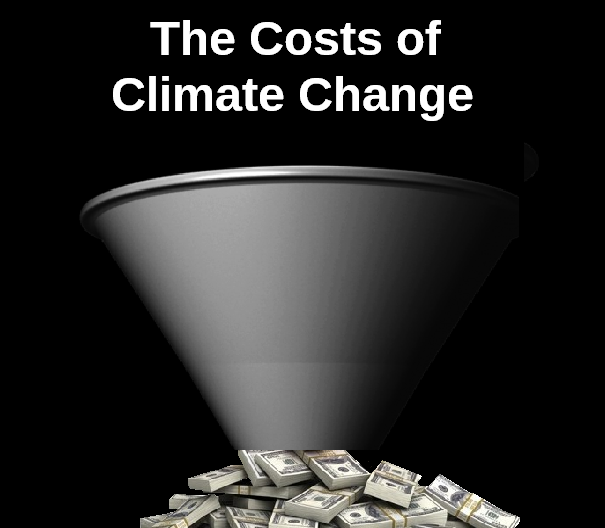
Risky Business: The Costs of Climate Change in the US

The Risky Business report makes it harder for people, businesses and investors to ignore the veracity of climate change. The report details the economic costs ranging from rising sea levels, storm surges, agricultural impacts, labor productivity and public health.

Rather than focus on the costs of action, the non-partisan Risky Business report addresses the costs of inaction. The report focuses on the US and it is a deliberate attempt to depoliticise the issue and lay out the case for urgent action. Rather than address the impact of climate change on the world's poor (who will suffer disproportionately) the report focuses on the costs of climate change to Americans. The inference here is that action is a matter of national and self-interest.

The combination of President Obama's 2014 State of the Union address, the IPCC's AR5, the National Climate Assessment, and the EPA's move to reign in emissions from power plants are helping to move the world's largest economy from a nation of denial to a nation of climate action.

The Risky Business report estimates that
  • Coastal storms could cost as much as $35 billion per year in the US alone. 
  • By 2100, $507 billion worth of property will be below sea level. 
  • In some places agricultural yields could decline by up to 70 percent. 
  • Warmer temperatures will require more energy for cooling costing residential and commercial ratepayers up to $12 billion per year in the next 25 years.
The report reiterates the obvious point that we cannot continue with business as usual without incurring catastrophic costs.

Related Articles
New Report on the Costs of Delaying Action on Climate Change
Acting on Climate Change: A Cost Benefit Analysis
Paulson Calls for Climate Action including a Carbon Tax
Video - Overview of the Risky Business report
Video - The Risky Business report (Michael Bloomberg)

Paulson Calls for Climate Action including a Carbon Tax

Henry Paulson, is one of several prominent people behind the report, Risky Business: The Economic Risks of Climate Change in the United States.

Paulson is a Republican who was secretary of treasury under George Bush, he describes climate change as something that everybody must face regardless of their political allegiances. "[I]t’s going to be increasingly be difficult for anybody, regardless of party, to say there isn’t a problem," Paulson said. He goes on to say that we must act as we really have no choice, "the cost of inaction is quite high, because it's - it's actual radical risk taking."

"We’re staring down a climate bubble that poses enormous risks to both our environment and economy. The warning signs are clear and growing more urgent as the risks go unchecked,” Paulson wrote. “I feel as if I’m watching as we fly in slow motion on a collision course toward a giant mountain. We can see the crash coming, and yet we’re sitting on our hands rather than altering course."

Paulson said it would be folly for America to remain heavily invested in a carbon-intensive economy and he specifically called for a carbon tax.

"[S]ome people that oppose it [a carbon tax] are opposing it because they don't like the government playing a big role." Paulson told Fareed Zakaria. "And, you know, the perverse aspect of that is, frankly, those that are resisting taking action now are guaranteeing that the government will be playing a bigger role, because we're seeing now and we're going to see an increasing number of natural disasters, Mother Nature acts. We have forest fires, we have floods, we have big storms and storm surges, we have killer tornadoes. And what happens? When those events occur, one part of society gets hit particularly hard, and government comes in. And that's the role of government. Government should come in, but we all pay."

Related Articles
New Report on the Costs of Delaying Action on Climate Change
Acting on Climate Change: A Cost Benefit Analysis
Risky Business: The Costs of Climate Change in the US
Video - Overview of the Risky Business report
Video - The Risky Business report (Michael Bloomberg)

Video - UN Report on the Business Risks from Climate Change


This video is derived from an UN report reviews the risks faced by businesses around the world from climate change.


Related
Managing Materiality, Risk and Stakeholder Engagement in Sustainability Reporting
Infographic - Sustainable Business Risk Management
Rise Initiative: Helping Businesses and Investors Manage the Risks Associated with Climate Change
Factoring Climate Risks for Business
Sectors Most at Risk from Climate Change
World Economic Forum Risk Report Singles Out Climate Change
World Economic Forum Report: '"Global Risks 2014"
Guide - Physical Risks from Climate Change (Ceres)
Global Risks Report 2013: Interconnectedness of the Economy
A Growing Number of Companies See the Risks Posed by Climate Change (CDP)
Climate Change as an Investment Risk or Opportunity
Alternative Energy Stocks and Risk Mitigation
Risk Posed by Climate is an Investment Risk or Opportunity
CDP Report Shows Companies See the Risks Posed by Climate Change
Investors Prompt SEC To Push for Climate Risk Disclosure
Going Beyond Compliance and Mitigating Risk
Growing US Corporate Investment is Reducing Climate Risk
Corporate America is Benefiting from Mitigating Reputational Risk
Report: Canadian Businesses are Mitigating Risk
Risk Based Approach to Responsible Procurement
CSR Standards Reduce Risk
New Types of Insurance Reduce Risk
New Tool Helps Companies with Water Risks
Key Messages from Climate Congress Scientists
Top Climate Innovators Reduce Risk
Sustainability Success Kit from Enviance
UNESCO's Education for Sustainable Development
Global Survey on Sustainability
Event: Risk, Competitiveness and Sustainability

Video - The Risky Business report (Michael Bloomberg)


The American economy could face significant and widespread disruptions from climate change unless U.S. businesses and policymakers take immediate action to reduce climate risk, according to a new report, "Risky Business: The Economic Risks of Climate Change in the United States."

For more information click here.

Related Articles
New Report on the Costs of Delaying Action on Climate Change
Acting on Climate Change: A Cost Benefit Analysis
Risky Business: The Costs of Climate Change in the US
Paulson Calls for Climate Action including a Carbon Tax
Video - Overview of the Risky Business report

Video - Overview of the Risky Business report


The US economy faces significant risks from unmitigated climate change. The Risky Business report presents a new approach to understanding these risks for key US business sectors, and provides business leaders with a framework for measuring and mitigating their own exposure to climate risk.

For more information click here.

Related Articles
New Report on the Costs of Delaying Action on Climate Change
Acting on Climate Change: A Cost Benefit Analysis
Risky Business: The Costs of Climate Change in the US
Paulson Calls for Climate Action including a Carbon Tax
Video - The Risky Business report (Michael Bloomberg)

New Report on the Costs of Delaying Action on Climate Change

The cost of inaction on climate change is explored in a new report from Bloomberg titled "Risky Business: The Economic Risks of Climate Change in the United States." The report explains how a warmer world will lead to cataclysmic storms, floods, droughts and fires which will cost lives, destroy property and disrupt businesses. The report was prepared by a bipartisan group of three former Treasury Secretaries (Hank Paulson, Robert Rubin and George Schultz), the former mayor of New York Michael Bloomberg and the billionaire investor Thomas Steyer.

According to the report as much as $106 billion worth of existing coastal property in the US will fall below sea level by 2050. This oceans could engulf as much as $507 billion worth of property by 2100.

While areas inland will not succumb to flooding, they will not be immune from the impacts of a warmer world. In the Midwest extreme heat will result in reduced crop yields and in the Southeast, extreme heat will have serious impacts on labor productivity. Both reduced crop yields and decreased productivity will have far reaching economic consequences.

As Bloomberg, co-chair of the Risky Business Project, says: "Damages from storms, flooding, and heat waves are already costing local economies billions of dollars—we saw that first hand in New York City with Hurricane Sandy. With the oceans rising and the climate changing, the Risky Business report details the costs of inaction in ways that are easy to understand in dollars and cents—and impossible to ignore."

To put this is terms an investor can understand, "Climate change is nature’s way of charging us compound interest for doing the wrong thing," explained Tom Steyer, an investor, philanthropist and president of NextGen Climate. "The longer we wait to address the growing risks of climate change, the more it will cost us all."

As explained by Dr. Al Sommer, dean emeritus of the Bloomberg School of Public Health at Johns Hopkins University, "if we stay on the ‘business as usual’ path, things only get worse from there—we shouldn’t take that risk."

Anything short of immediate action on climate change presents "risky business."

Related Articles
Acting on Climate Change: A Cost Benefit Analysis
Risky Business: The Costs of Climate Change in the US
Paulson Calls for Climate Action including a Carbon Tax
Video - Overview of the Risky Business report
Video - The Risky Business report (Michael Bloomberg)

Managing Materiality, Risk and Stakeholder Engagement in Sustainability Reporting

For those engaged in sustainability reporting materiality is an impediment. This free eight page mini-report from the Ethical Corporation can help to manage materiality, risk and stakeholder engagement.

This report offers insights from pioneers in reporting and it specifically addresses how they developed a matrix that works for their business. This short read provides key insights from sustainability leaders on their approach to the materiality challenge and how you can translate it for use in your organization.  

The report reviews:
  • The impacts your stakeholder trust 
  • How to bounce-back when quantifying reputational risks to your business 
  • What a focused and sophisticated engagement means for your external and internal stakeholders to build lasting relationships and inform the decision-making of the business 
  • A condensed G4 guide
Click here download the report.

© 2014, Richard Matthews. All rights reserved.

Related
Infographic - Sustainable Business Risk Management
Rise Initiative: Helping Businesses and Investors Manage the Risks Associated with Climate Change
Factoring Climate Risks for Business
Sectors Most at Risk from Climate Change
World Economic Forum Risk Report Singles Out Climate Change
World Economic Forum Report: '"Global Risks 2014"
Guide - Physical Risks from Climate Change (Ceres)
Global Risks Report 2013: Interconnectedness of the Economy
A Growing Number of Companies See the Risks Posed by Climate Change (CDP)
Climate Change as an Investment Risk or Opportunity
Alternative Energy Stocks and Risk Mitigation
Risk Posed by Climate is an Investment Risk or Opportunity
CDP Report Shows Companies See the Risks Posed by Climate Change
Investors Prompt SEC To Push for Climate Risk Disclosure
Going Beyond Compliance and Mitigating Risk
Growing US Corporate Investment is Reducing Climate Risk
Corporate America is Benefiting from Mitigating Reputational Risk
Report: Canadian Businesses are Mitigating Risk
Risk Based Approach to Responsible Procurement
CSR Standards Reduce Risk
New Types of Insurance Reduce Risk
New Tool Helps Companies with Water Risks
Key Messages from Climate Congress Scientists
Top Climate Innovators Reduce Risk
Sustainability Success Kit from Enviance
UNESCO's Education for Sustainable Development
Global Survey on Sustainability
Event: Risk, Competitiveness and Sustainability

Rise Initiative: Helping Businesses and Investors Manage the Risks Associated with Climate Change

On Monday May 19th, the United Nations (UN) launched an initiative that helps businesses to manage the risks associated with climate change. After a decade of record breaking economic losses and disruption due to climate change, risk management is an increasingly high priority issue for businesses all around the world. This UN initiative is called RISE and it shows the current and future effects of climate change. The idea is that by laying out current and future threats it can businesses to plan for disasters and invest wisely.

Those who are contributing to the RISE Project include the UN Office for Disaster Risk Reduction (UNISDR), PricewaterhouseCoopers (PwC), the Economist Intelligence Unit, Florida International University, Principles for Responsible Investment, AECOM and global insurance broker Willis.

As part of this initiative PwC will continue to work on disaster risk management with some of the world’s largest corporations, including Walmart and Citibank. In an ongoing effort they will continue to develop disaster risk management strategies and create voluntary industry standards intended to strengthen social demand for disaster risk-sensitive products. The Economist Intelligence Unit will develop risk analysis for economic and business forecasts that include disaster risk.

In addition to global businesses the R!SE Initiative is intended for asset owners, investment managers, insurers and re-insurers.

Risks like disruption from flooding, crucial materials to manufacturing becoming more and more expensive and damage to reputation all need different handling, and risk management approaches haven’t evolved as fast as the changing landscape, PwC says.

See PwC's February report titled, "How can resilience prepare companies for environmental and social change?"

For more information on the RISE initiative click here.

© 2014, Richard Matthews. All rights reserved.

Related Posts
Factoring Climate Risks for Business
Sectors Most at Risk from Climate Change
World Economic Forum Risk Report Singles Out Climate Change
World Economic Forum Report: '"Global Risks 2014"
Guide - Physical Risks from Climate Change (Ceres)
Global Risks Report 2013: Interconnectedness of the Economy
A Growing Number of Companies See the Risks Posed by Climate Change (CDP)
Climate Change as an Investment Risk or Opportunity
Alternative Energy Stocks and Risk Mitigation
Risk Posed by Climate is an Investment Risk or Opportunity
CDP Report Shows Companies See the Risks Posed by Climate Change
Investors Prompt SEC To Push for Climate Risk Disclosure
Going Beyond Compliance and Mitigating Risk
Growing US Corporate Investment is Reducing Climate Risk
Corporate America is Benefiting from Mitigating Reputational Risk
Report: Canadian Businesses are Mitigating Risk
Risk Based Approach to Responsible Procurement
CSR Standards Reduce Risk
New Types of Insurance Reduce Risk
New Tool Helps Companies with Water Risks
Key Messages from Climate Congress Scientists
Top Climate Innovators Reduce Risk
Sustainability Success Kit from Enviance
UNESCO's Education for Sustainable Development
Global Survey on Sustainability
Event: Risk, Competitiveness and Sustainability

Factoring Climate Risks for Business

The business community must understand the benefits of engaging climate change and the costs of failing to act. The sooner we factor climate risks the lower the ultimate price tag.

Businesses that are reluctant to assume the costs of mitigation and adaptation need to appreciate the costs associated with delays. According to some estimates, in the last two years alone delays in engaging climate change have cost us $8 trillion. The longer we wait the higher the price tag. BSR says that climate change will cost us $4 trillion by 2030 while the IEA estimates that we can save $115 trillion in fuel costs by 2050.

According to a CDP report some of the world's biggest brands are coming to terms with climate change related risks and costs.

These climate change risks and costs are a current concern and not just part of some distant future. Three years ago 26% of S&P 500 companies said that climate change poses a risk within the next five years, the most recent CDP study saw that number jump to almost half (45%). These costs include damage to facilities, reduced product demand, lost productivity and write-offs.

Half of S&P 500 companies said that these risks range from “more likely than not” to “virtually certain” which is up from slightly more than a third (34 %) three years ago.

Here is a brief sampling of some of the corporate risks and costs associated with climate change:
  • Dr. Pepper Snapple Group is concerned about extreme weather and the cost of water due to growing scarcity. They have assigned a price tag of $2.5 billion for their sales at risk.
  • The Gap expects higher costs for cotton due to climate change related drought impacts on precipitation in China.
  • Sempra Energy has indicated that wildfires in San Diego have accrued costs exceeding its $1.1 billion of liability insurance coverage.
  • Union Pacific reports a decrease in freight revenue due to droughts in 2012.
  • HP describes a decline in revenue of 7 percent due to the 2011 floods in Thailand.&
  • Consolidated Edison has indicated that the costs associated with Hurricane Sandy are close to half a billion dollars ($431 million).

© 2014, Richard Matthews. All rights reserved.

Related Posts
Sectors Most at Risk from Climate Change
World Economic Forum Risk Report Singles Out Climate Change
World Economic Forum Report: '"Global Risks 2014"
Guide - Physical Risks from Climate Change (Ceres)
Global Risks Report 2013: Interconnectedness of the Economy
A Growing Number of Companies See the Risks Posed by Climate Change (CDP)
Climate Change as an Investment Risk or Opportunity
Alternative Energy Stocks and Risk Mitigation
Risk Posed by Climate is an Investment Risk or Opportunity
CDP Report Shows Companies See the Risks Posed by Climate Change
Investors Prompt SEC To Push for Climate Risk Disclosure
Going Beyond Compliance and Mitigating Risk
Growing US Corporate Investment is Reducing Climate Risk
Corporate America is Benefiting from Mitigating Reputational Risk
Report: Canadian Businesses are Mitigating Risk
Risk Based Approach to Responsible Procurement
CSR Standards Reduce Risk
New Types of Insurance Reduce Risk
New Tool Helps Companies with Water Risks
Key Messages from Climate Congress Scientists
Top Climate Innovators Reduce Risk
Sustainability Success Kit from Enviance
UNESCO's Education for Sustainable Development
Global Survey on Sustainability
Event: Risk, Competitiveness and Sustainability

Sectors Most at Risk from Climate Change

Whether we are talking about impacts on manufacturing facilities from extreme weather events or supply chain disruptions due to resource scarcity, climate change poses a risk to businesses all around the world. If we continue with business as usual it is safe to assume that operating costs will go up across the board as the world warms. While all sectors have some degree of exposure, certain sectors are more vulnerable than others. Here is a summary of some of the sectors with the greatest exposure derived from a report titled, Physical Risks from Climate Change.
The agriculture, food, beverage and apparel sectors are vulnerable to drought and other forms of extreme weather. While the electric sector is susceptible to heat waves which can radically increase power demand. The mining sector is at risk because it is very water and energy intensive. Anything that impacts access to water or energy supply can interupt mining operations.

One of the sectors that entertains the greatest risk is the industry most responsible for climate change. The oil and gas sector is prone to extreme weather events because drilling operations are often located in places like deep water. Historically, the petrochemical industry has also been vulnerable to flooding.

While tourism is significantly reduced by extreme or anomalous weather, the industry most at risk from global warming is the insurance sector as it will incur the greatest costs from climate change.The insurance industry must pay for a wide range of global warming related events from violent storms to flooding. We have already seen evidence of this as evidenced by the trend towards increased insurance costs in recent years.

© 2014, Richard Matthews. All rights reserved.

Related Posts
World Economic Forum Risk Report Singles Out Climate Change
World Economic Forum Report: '"Global Risks 2014"
Guide - Physical Risks from Climate Change (Ceres)
Global Risks Report 2013: Interconnectedness of the Economy
A Growing Number of Companies See the Risks Posed by Climate Change (CDP)
Climate Change as an Investment Risk or Opportunity
Alternative Energy Stocks and Risk Mitigation
Risk Posed by Climate is an Investment Risk or Opportunity
CDP Report Shows Companies See the Risks Posed by Climate Change
Investors Prompt SEC To Push for Climate Risk Disclosure
Going Beyond Compliance and Mitigating Risk
Growing US Corporate Investment is Reducing Climate Risk
Corporate America is Benefiting from Mitigating Reputational Risk
Report: Canadian Businesses are Mitigating Risk
Risk Based Approach to Responsible Procurement
CSR Standards Reduce Risk
New Types of Insurance Reduce Risk
New Tool Helps Companies with Water Risks
Key Messages from Climate Congress Scientists
Top Climate Innovators Reduce Risk
Sustainability Success Kit from Enviance
UNESCO's Education for Sustainable Development
Global Survey on Sustainability
Event: Risk, Competitiveness and Sustainability

Report - Sustainability and the Finance Sector's Views on Opportunities in Extractives

Ethical Corporation has recently published a complimentary analysis on ‘How sustainability affects the way the finance sector views opportunities in extractives’. This report analyzes the financial pressures that oil, gas and mining companies face from three key perspectives: the commercial and multilateral lenders, with J.P. Morgan and the IFC, and the investor perspective with asset manager F&C.

The report gives a great insight into the evolving expectations and priorities of different financial stakeholders to the extractive industry and how this will affect extractive companies’ social performance and communication practices.

With increasing demand from vital financial communities being one of the leading drivers for making the sustainability case, this report gives you an excellent insight to the main concerns, social expectations and risk management innovations of key financial stakeholders to the oil, gas and mining industries

The featured analysis gives you an understanding of:

•Why are investors and lenders looking at ESG? •What aspects of ESG is the financial community mostly concerned about? •How does the extractive company respond to these different stakeholder expectations in their communication and wider business practices? •What areas of sustainability matter to investors and lenders? Furthermore, I will not rent, sell, or share your personal information with 3rd parties or non-affiliated companies.

Click here to access the complimentary analysis.

Related
Video - Unleashing Public & Private Financing for a Low-Carbon Economy
Report - Sustainability and the Finance Sector's Views on Opportunities in Extractives
Hope for Climate Finance and Why We Can't Give Up on UN Climate Talks
Climate Adaptation and Finance Report (World Economic Forum)
COP16 Market Based Finance Mechanisms
Video - COP Walkouts Over Inaction on Climate Finance
Investing in the Green Economy: Leveraging Significant Private Investment through Modest Public Finance
Two Extreme Weather Reports Presented at COP 19/CMP 9 Support Climate Finance

Video - Unleashing Public & Private Financing for a Low-Carbon Economy: Legislative Hearing in Silicon Valley Provides Policy Direction


Focused on the question of how to best leverage limited public dollars and maximize reductions in energy consumption and reduce greenhouse gases (GHG), Senator Kevin de Leá½¹n, Chair of the Select Committee on Energy Efficiency, convened a hearing in Silicon Valley with local Senator Jim Beall (D-San Jose). Experts from private capital and clean energy companies explored California's opportunities to more effectively attain our goals to reduce GHG emissions to 1990 levels by the year 2020. We will need several strategies toward a low-carbon economy with the demands for electricity and fuel increasing every year. California's growing population, now 38 million, is expected to top 50 million by 2050.

In his opening remarks, Senator Beall said, “Silicon Valley is the home for the world’s brightest minds for technology and clean energy innovation. I am fortunate to be their elected representative and as the chairman of a budget committee that is crafting recommendations on clean energy strategies, I will take their ideas to the Senate.’’

Senator De León remarked, “We need to harness market forces to effectively reduce our greenhouse gas emissions and grow our economy.”

To learn from the success of states pursing Green Banks, Bryan T. Garcia, President and CEO of the Connecticut Clean Energy Finance and Investment Authority, and Greg Hale, Senior Advisor in the Office of the Governor in New York, testified via Google Hangout and discussed tackling the challenge of high upfront costs for clean energy and efficiency upgrades.

Ken Berlin at Coalition for Green Capital testified as an expert on clean energy financing, "By using innovative financial tools, a California Green Bank will leverage private investment, so that each public dollar supports multiple dollars of private investment. Ultimately, this will create cheaper, cleaner, and more reliable energy at scale, and help the state achieve its ambitious greenhouse-gas reduction goals."

Tom Vanderheiden, Senior Vice President of One Pacific Coast Bank and Lisa Hagerman, Ph.D., Director of Programs at DBL Investors, spoke of financial tools such as long-term and low interest rate loans, revolving loan funds, insurance products (such as loan guarantees or loan-loss reserves), and low-cost public investments, a Green Bank could use to catalyze private financing for low-carbon technologies to help bring energy retrofits, clean energy and transportation to scale.

Senator De León has introduced Senate Bill 1121 to help drive private investment into energy efficiency retrofit activity in California. The testimony of this hearing and the continued input from stakeholders will craft this legislation to multiply our limited public dollars and existing programs. This bill will be heard by the Senate Committee on Energy, Utilities and Communications later this spring.

At the hearing Tiffany Roberts representing the Legislative Analyst Office presented an overview of California's existing clean energy programs.

Also there to testify from the clean energy finance sector were Dan Scripps, Senior Advisor, Energy Finance, Advanced Energy Economy; Brad Copithorne, Director, Clean Energy Financing Solutions, Environmental Defense Fund; Tim McRae, Energy Director, Silicon Valley Leadership Group; and Dan Adler, Managing Director, California Clean Energy Fund. Representing clean energy companies were Pat Romano, CEO, ChargePoint; Tom Bowen, Regional Director, Energy & Facility Services, McKinstry; and Tom Stepien, CEO, BoD, Primus Power.

Related
Report - Sustainability and the Finance Sector's Views on Opportunities in Extractives
Hope for Climate Finance and Why We Can't Give Up on UN Climate Talks
Climate Adaptation and Finance Report (World Economic Forum)
COP16 Market Based Finance Mechanisms
Video - COP Walkouts Over Inaction on Climate Finance
Investing in the Green Economy: Leveraging Significant Private Investment through Modest Public Finance
Two Extreme Weather Reports Presented at COP 19/CMP 9 Support Climate Finance