Showing posts with label fossil fuel industry. Show all posts

Diminishing Profits Signal the Beginning of the End of Oil

Oil is dying. Low oil prices are erasing profits and setting into motion a death spiral from which fossil fuels will not recover. Big Oil is cutting costs, and scaling back production, this results in smaller returns and diminished investor confidence. The addition of carbon pricing schemes and the elimination of subsidies will ultimately inflate prices and reduce demand.
____________________________

The profits of the big oil companies keep falling along with the price of a barrel of crude. In 2015, the profits of oil behemoths like Shell, Chevron, Exxon Mobil and BP tumbled. Together, these big four saw profits decline by an average of 65 percent last year. These falling margins have a cascade of impacts that are hastening the demise of dirty energy.

Shell

At the beginning of 2014, Royal Dutch Shell’s quarterly earnings for the end of 2013 fell by almost half (48%). This was the third consecutive quarter of disappointing earnings. This was in part due to Shell’s failed multibillion dollar Alaskan drilling program. The situation has continued to deteriorate for the oil giant as Shell’s profits fell by 56 percent in the fourth quarter of 2015. Over the course of the entire year, Shell’s earnings fell by 80 percent compared to 2014. To make matters worse, Standard & Poor's downgraded Shell’s long term credit rating in February and further downgrades have been intimated.

Chevron

In 2015, Chevron saw its profits decline by 40 percent compared to 2014 and the company reported losses in the fourth quarter of last year. Chevron lost $588 million in the last quarter of 2015; during the same period in 2014 the company made a profit of $3.5 billion. This is the first time the company has reported quarterly losses since 2002.

Exxon Mobil

Exxon Mobil saw its quarterly profits decline by 58 percent at the end of 2015 and the company’s profits are down by half compared to the year before. Its exploration and production business lost $538 million in the U.S.

BP

British Petroleum said that its profits fell by 91 percent last year. They recorded a $3.3 billion loss in the fourth quarter of last year and $6.48 billion in losses for the year. Like Shell, the company also kicked off the new year with a long term credit downgrade from Standard & Poor’s.

Macro realities

There is no end in sight to low oil prices and falling share prices. We have not seen a commodity collapse of this magnitude in decades. However, unlike preceding oil crashes, environmental pressures and economic trends make the longer term financial forecast look bleak for fossil fuels.

Oil production continues to outpace demand and more supply is on the way now that the sanctions against Iran have been lifted. The situation is about to get even worse as storage space is nearing capacity.

While many are waiting for oil prices to rebound they may be disappointed. Driven by climate concerns and the declining price of both renewables and energy storage, we are seeing unprecedented interest in non-fossil fuel based energy production from all quarters.

In the longer term, the outcome at COP21 lends credence to the belief that fossil fuels will be subject to a host of headwinds. The fossil fuel industry is also having to deal with a rapidly expanding number of legal challenges, negative public perceptions and disruptions due to protests.

Death spiral

In addition to market pressure associated with low oil prices, producers realize that to bring oil prices up you have to decrease supply (i.e. reduce production). However, decreased production will further diminish returns and this will scare off investors.

Low oil prices have already shut down hundreds of extraction operations. Oil prices are currently about half of what they need to be to make the tar sands and shale oil viable. The exodus had begun even before oil prices fell to their current lows. At the beginning of last year, Shell announced that it was among a number of oil companies that are shelving their tar sands operations. Many are predicting that at least half of all shale oil producers will perish this year. It is not only energy intensive forms of fossil fuels that are at risk, as explained by Jesse Thompson, an economist at the Federal Reserve Bank in Dallas, “at this price range, nothing is safe.”

Big oil is responding to low oil prices and declining profits by slashing capital spending and operating expenses. For example, Exxon has said that it will cut spending by one quarter this year compared to last and BP is expected to cut spending by almost $3.6 billion this year. This translates to less production and exploration. Less exploration means lower reserves and lower reserves sends a powerful message about the future of the industry.

The linkage between lower oil prices and decreased production have set in motion a causal chain of events that does not bode well for the fossil fuel industry. As explained in a New York Times article:

"To assure their futures, oil companies need to add to their reserves to replace production, but with plunging prices, companies are delaying or canceling projects and struggling to add to their reserves."

Reduced earnings are translating to cuts in production. For Shell that means delaying a liquefied natural gas facility in Canada and a deep water oil and gas development in Nigeria.

The combination of less production and low oil prices translates to lower profits which puts downward pressure on the dividends that they can pay out to investors. This in turn, curtails investor interest. While big oil is trying to reassure investors by saying that they will continue to pay big dividends, the situation is untenable.

Maintaining investor interest will be challenging for BP and others, as explained by Biraj Borkhataria, an analyst at RBC Capital Markets in London. He is quoted as saying:

"2016 is likely to be a year of transition for BP with limited ability" to cover its dividend unless oil prices rose substantially.

Michael Hewson, an analyst at CMC Markets puts it this way:

"But with average oil prices still trading at multi-year lows so far this year the question now needs to be asked in how long can BP sustain the dividend at current levels, without an imminent pick up in oil prices."

When investor confidence evaporates, the fate of the fossil fuel industry is sealed.

The position of big oil goes from bad to worse when we factor carbon pricing and an end to subsidies. This will raise the cost of fossil fuels and reduce demand.

Although it will take decades it is clear that we can kill what Bill McKibben has called the immortal zombie of fossil fuels.

Source: Global Warming is Real

Related Articles
Falling oil Prices Make Fossil Fuels a High Risk Investment
Oil is a Bad Investment
Financial Losses Associated with Fossil Fuels
Low Oil Prices Offer an Opportunity to Combat Climate Change
The Upside to Low Oil Prices
Climate Pros and Cons of Low Oil Prices
Falling Oil Prices and a Global Climate Agreement
Cheap Oil Will Not Stop Renewables
Why Oil Prices Matter for Renewable Energy
An Upside to Low Oil Prices?
Video - Why Oil Prices Will Keep Falling

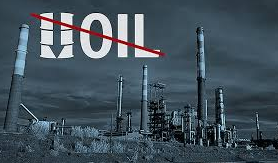
Oil is a Bad Investment

Iinvestors can no longer avoid the realization that their fossil fuel holdings are fraught with risks. While there are many factors at play, the 18 month slide and low price forecasts combine to make the point that investing in oil makes no economic sense.

In the short term China's slowing growth and the glut of oil are driving down the price. The situation will be exacerbated by the lifting of sanctions allowing Iran to sell its oil. High production and lower than expected demand mean that oil prices will continue to fall well into 2016.

Oil has fallen a long way, it has lost 80 percent of its value compared to its high in January 2014 when it was more than $110 a barrel (bbl). When oil slipped below $60/bbl a number of intensive drilling operations from the Arctic to the Canadian tar sands and American shale oil ceased to be profitable. These price declines reduced production but not enough to stop oil's plummeting trajectory.

At the end of 2015 the price oil plunged below $40/bbl. As the new year dawned oil prices continued to slide, they even briefly slipped below $30/bbl. US oil prices fell to $26.55/bbl on January 20th. We have not seen oil prices this low in 14 years and we have not seen an 18th month long slide in more than 60 years. 

According to the Financial Forecast Center the outlook for the next six months suggest that oil will continue to decline, falling to around $25/bbl by the start of the summer.

Although the market will eventually balance out supply and demand, the longer term outlook is still challenging for oil prices. The eia predicts that oil prices could fall to as low as $20/bbl in 2017. The Telegraph reports that some are predicting that oil could go as low as $10/bbl.

Looking even further out the situation for oil may become even more difficult. The COP21 deal sent a powerful message to the markets. The era of oil is coming to an end and as we gear up for the implementation date of the deal in 2020 there will be unprecedented downward pressure on oil prices.

Related Articles
Diminishing Profits Signal the Beginning of the End of Oil
Falling oil Prices Make Fossil Fuels a High Risk Investment
Financial Losses Associated with Fossil Fuels
Low Oil Prices Offer an Opportunity to Combat Climate Change
The Upside to Low Oil Prices
Climate Pros and Cons of Low Oil Prices

Financial Losses Associated with Fossil Fuels

The losses associated with fossil fuels are staggering and it is not just oil producing states and companies that are feeling the heat. Pension funds going long on oil are getting killed as they hope that prices will rebound.

With oil prices around $50 per barrel, the IEA estimates that OPEC states have lost half a trillion dollars a year in revenues since the oil price fell from over $100 a barrel in 2011-2014 to current levels. The declining price of oil is also creating volatility in the stock market and significantly impacting the petro-economies of both Russia and Canada.

As reported by the Star, a new study from the Canadian Centre for Policy Alternatives indicates that fossil fuel holdings in Ontario's five largest pension funds lost a total of $2.4 billion. Here is their review of the amount of money lost due to falling oil and coal prices from June to December 2014:
  • Ontario Teachers’ Pension Plan: $1.77 billion
  • Ontario Municipal Employees Retirement System: $192 million
  • Healthcare of Ontario Pension Plan: $53 million
  • Ontario Pension Plan: $154 million
  • Ontario Public Service Employees Union Pension Trust: $188 million
California pension funds have been decimated by the declining price of fossil fuels. This has caused the state to pass legislation forbidding big pension funds from investing in coal. Others institutions are getting out of fossil fuels altogether. A recent report from consultancy Arabella Advisors found that 430 institutions, including the Canadian Medical Association, have committed to phasing out their fossil-fuel investments.

A Corporate Knights Capital report estimated that the CPPIB has lost $7 billion (US) in value since 2012 due to the decline in the values of carbon intensive industries. Bill & Melinda Gates Foundation Trust Endowment have lost $1.9 billion, and the University of Toronto pension and endowment fund lost $419 million.

More than 100 institutional investors representing $8 trillion in assets have signed the one-year-old Montreal Carbon Pledge. Those that took the pledge have committed to “measure, disclose and reduce portfolio carbon footprints.” Signatories include Addenda Capital, The Co-operators and the United Church.

“If they’re putting money into fossil-fuel stocks, it should be incumbent on managers and trustees to justify why they’re doing that,” said Marc Lee, a senior economist with Policy Alternatives.  

Related
Diminishing Profits Signal the Beginning of the End of Oil
Falling oil Prices Make Fossil Fuels a High Risk Investment
Oil is a Bad Investment
Low Oil Prices Offer an Opportunity to Combat Climate Change
The Upside to Low Oil Prices
Climate Pros and Cons of Low Oil Prices
Falling Oil Prices and a Global Climate Agreement
Cheap Oil Will Not Stop Renewables
Why Oil Prices Matter for Renewable Energy
An Upside to Low Oil Prices?
Video - Why Oil Prices Will Keep Falling

Low Oil Prices Offer an Opportunity to Combat Climate Change

The plunge in the price of oil makes this an ideal time to deploy market disincentives that can cut emissions and combat climate change. We know that if we are to stave off the worst impacts of climate change we must substantially reduce our emissions. As the leading cause of climate change fossil fuels are the most obvious focal point.

All but the willfully ignorant understand that the economic costs of inaction far outweigh the costs of engagement. We have seen a number of studies which suggest the longer we wait the more it will cost.

Scientists tell us that we are running out of time and we must address climate change as soon as possible. That is part of the reason why we must deploy market levers. They can quickly and efficiently augur the changes we need. A two tiered approach involving a carbon pricing scheme and the removal of subsidies would pull back the curtain and expose some of the hidden costs associated with fossil fuels. Together these two initiatives would correct the false impression that fossil fuels are cheap.

President Obama has said that carbon pricing allows the market to do the "heavy lifting." In 2013, Rajendra Pachauri, chairman of the UN Intergovernmental Panel on Climate Change spoke about the utility of carbon pricing calling it , "an extremely effective instrument." He went on to say, "it’s only through the market that we might be able to get a large enough and a rapid enough response."

A number of studiesincluding one from UCL conclusively demonstrate that if we are to have a shot of curtailing climate change we must keep most of the known fossil fuel reserves in the ground. The UCL study's co-author Paul Ekins explained that falling oil prices present an ideal time to remove subsidies and implement a carbon tax. 

While further innovation should be rewarded, we already possess the technological wherewithal to wean ourselves away from fossil fuels. The application of the two market levers outlined would generate billions of dollars that could be used to provide greater support for energy efficiency and renewables. This would would not only combat climate change it would improve people's health in the process. It will also create a host of economic spin-offs including jobs and reduced healthcare costs.

Now is the time to impose carbon pricing schemes and eliminate fossil fuel subsidies. The plunging price of oil coupled with advances in clean energy provide a golden opportunity for politicians to rationalize their energy policies.

Related
Diminishing Profits Signal the Beginning of the End of Oil
Falling oil Prices Make Fossil Fuels a High Risk Investment
Oil is a Bad Investment
Financial Losses Associated with Fossil Fuels
The Upside to Low Oil Prices
Climate Pros and Cons of Low Oil Prices
Falling Oil Prices and a Global Climate Agreement
Cheap Oil Will Not Stop Renewables
Why Oil Prices Matter for Renewable Energy
An Upside to Low Oil Prices?
Video - Why Oil Prices Will Keep Falling