Showing posts with label scrubbing. Show all posts

Carbon Capture and Storage is Essential Post Paris

Interest in carbon capture and storage (CCS) has intensified in the wake of the Paris Climate Agreement. CCS refers to a suite of technologies that pull CO2 from a smokestack before it escapes into the air. It is then sequestered in some fashion, most commonly by burying it deep underground. CCS is a much needed technology, if for no other reason than the fact that fossil fuels are likely to be with us for years to come.

There have been a number of notable achievements in the area of CCS in recent years. According to Victor Der, executive advisor and acting general manager – the Americas, Global CCS Institute:

"Up to 28 million metric tons of carbon dioxide emissions will be captured by existing operational carbon capture and storage projects this year."

There are now 22 CCS projects that are either operating or under construction in 2016 representing a 100 percent increase in the last ten years and 14 more projects are in the advanced planning stages.

Ion Engineering completed a pilot project using its proprietary technology in 2015. According to the company, Ion's CCS process was able to capture more than 99 percent of the CO2 from a coal fired facility.

Another older carbon capture project in Port Arthur, Texas succeeded in capturing more than one million tons of CO2. This process was able to capture more than 90 percent of the CO2 from two commercial-scale stream methane reformers.

One of the early CCS projects was one by the Midwest Geological Sequestration Consortium (MGSC). In 2011 they started a three year trial to pump more than one million tonnes of CO2 underground.

The Department of Energy has invested and continue to invest significant sums of money into CCS. According to Environmental Leader, so far, DOE projects have stored almost seven and a half metric tons of CO2.

Shell’s Quest carbon capture and storage project is already operating at commercial scale in Alberta, Canada. The Quest project is designed to capture one third of the emissions generated by the refinement of oil sands amounting to one million tons per year.

Recently, the world’s first steel plant with large-scale CCS launched in Abu Dhabi. The project is a joint venture between Masdar and the Abu Dhabi National Oil Company (ADNOC), and it will sequester 800,000 metric tons of CO2 annually.

In 2016 Aker Solutions announced a carbon capture project at a waste-to-energy plant in Norway which the company expects will capture 90 percent of the CO2 emitted.

CCS is an integral part of mitigation planning. Countries like the United States, Europe and Canada are counting on CCS to enable them to meet their INDC pledges. The European Commission's 2030 climate and energy policy framework depends on CCS and Canadian reports indicated that CCS is essential. .Although the US Environmental Protection Agency has also offered some guidance on the subject,  it has yet to be demonstrated cost effectively.

A CO2 Solutions project at Salaberry-de-Valleyfield, Québec came in a cost of $28/metric ton, the lowest demonstrated cost in the industry. However, the real-world reality at present puts the cost of CCS on a coal plant at around $100/ton.

While no one denies that carbon capture is technologically possible, the major obstacle has always been cost. This view is eloquently rendered in a 2016 article by Mike Barnard titled, "Carbon Capture Is Expensive Because of Physics"

"Carbon capture and sequestration is expensive because it has three components, each with its own expensive challenges: capture, distribution, and sequestration."

In March 2015 the Global CCS Institute said:

"The next 18-24 months will see CCS deployed across a range of industries and storage types. A further two large-scale CCS power projects are in construction in the US - the Kemper County Energy Facility in Mississippi and the Petra Nova Carbon Capture Project in Texas. Both projects are expected to be operational in 2016. Also in the US, the Illinois Industrial CCS project slated for launch later this year will capture CO2 from the Archer Daniels Midland corn-to-ethanol plant in Decatur, Illinois for storage in an onshore deep saline formation."

As explained in a December, 2015 report titled Closing the Gap on Climate: Why CCS is a Vital Part of the Solution, governments need to enact supportive policies.

This report indicates that CSS is essential to keep us within the 2 degrees Celsius upper threshold limit. Governments need to pass laws, support regulations and provide incentives to help advance CCS. Governments will likely provide incentives for sequestration in the form of tax credits on a per-ton basis.

We currently have 22 CCS facilities but we will need thousands around the world to make a difference.

Related
Ambient Air Carbon Capture (Video)
Innovations that Sequester Carbon and Combat the Climate Crisis (Videos)
The Failure of Clean Coal
The Farce of Canada's Carbon Capture
Canada is Banking on Carbon Capture to Offset Tar Sands

Carbon Air Capture and Storage (Videos)

We need technologies that draw carbon dioxide from the air and either re-use or store it. While we must curtail our carbon emissions we must also find ways to reduce existing levels of atmospheric carbon. Climate change is caused by the buildup of greenhouse gases in the atmosphere, especially carbon. Prior to the dawn of the industrial revolution atmospheric carbon levels were below 300 ppm, they are currently above 400 ppm and climbing.
In 2009 Columbia University Physicist Peter Eisenberger claimed to have invented a machine that could clean carbon from the air. As explained in MIT Technology Review, his company called Global Thermostat uses chemicals called amines rather than sodium hydroxide.

"Negative emissions are definitely needed to restore the atmosphere given that we’re going to far exceed any safe limit for CO2, if there is one," says Daniel Schrag, director of the Harvard University Center for the Environment.

Reducing the emissions that we produce is essential but we need to think about a post-sustainability world. Our current INDC pledges are inadequate as they will not reduce emissions enough to keep up from breaching the 2 Celsius upper threshold limit. We must begin thinking about technologies that will enable us to actively remove carbon from the air.

Carbon Engineering is working on the industrial-scale capture of CO2 from ambient air. This video explains the technology and the rationale behind direct capture of CO2 from the atmosphere and what Carbon Engineering is doing to commercialize air capture.


Below you will find a Carbon Talk, by Dr. Richard Adamson, President of Carbon Management Canada Research Institutes. This video explores the need and the state of  industrial-scale air capture technology development.

Dr. Naoko Ellis, Professor of Chemical Engineering at UBC, introduced the audience to some of the innovative technologies currently under development, including different methods for carbon capture from the air such as amine scrubbers, sorbents, and metal-organic frameworks. She also discussed engineering new forms of hydrocarbon combustion that do not release CO2 and the need to commodify CO2. Following the presentation, discussion during the dialogue touched on the role of technology in creating climate solutions and how carbon pricing can drive economic innovation.

Panelists: -- Richard Adamson, President, CMC Research Institutes -- Naoko Ellis, Professor, Department of Chemical and Biological Engineering at the University of British Columbia


Related
Innovations that Sequester Carbon and Combat the Climate Crisis (Videos)
The Failure of Clean Coal
The Farce of Canada's Carbon Capture
Canada is Banking on Carbon Capture to Offset Tar Sands

Innovations that Sequester Carbon to Combat Climate Change (Videos)

There have been a wide assortment of innovative solutions proposed to combat the climate crisis. While most of these technologies offer low carbon alternatives to existing technologies, others actually remove greenhouse gases (GHGs) like carbon right out of the air.

Some innovations use renewable energy to power traditional technologies like air conditioning and water desalination. Others use structures in novel ways like rotating power-generating buildings and skyscrapers.

Microsoft founder turned philanthropist Bill Gates advocates creative renewable technologies like solar chemical power, in which sunlight converts water into hydrogen fuel. Gates is also a fan of high-altitude wind power, which uses the intense energy of jet stream 20,000 feet above the ground. Another novel approach involves generating electricity with orbiting solar arrays. While these approaches are feasible they are still years away.

We need technologies that can be implemented in the short term. Some agricultural innovations are already a reality like vertical farming. Other innovations are adaptations to a warmer world where we can expect much higher sea levels. This includes things like floating houses and even floating cities.

There can be no doubt that the best way to reduce the amount of GHGs in the atmosphere involves not putting them there in the first place. However, the next best approach seeks out ways of siphoning GHGs directly from the air.

Carbon sequestration is a problem because even if it can be done cost effectively, where to put all the of the CO2 once it’s been captured. Some suggest that we can recycle carbon instead of mining fossil fuels.

One possibly groundbreaking approach was created by a Canadian company called Carbon Engineering. They have created a wall that can suck carbon dioxide straight out of the air and convert it into fuel. As shown in the video below, air flows through the row of fans. They are connected to a carbon dioxide-rich solution, which absorbs carbon compounds out of the air. The solution is purified, with the carbon dioxide within it extracted, and then purified again for reuse.


There are a number of other innovative inventions that remove carbon from the air including tiny silicon capsules that employ bicarbonate (baking soda) to dissolve CO2. This process is called encapsulated liquid sorbents.


Scientists at the University of Southern California, have used a cheap and easy to synthesize polymer called polyethylenimine (PEI) to filter carbon from smokestacks or right out of the air. The polymer coated with a substance called fumed silica can be packed into columns, which can be inserted into flues and chimneys in factories and power plants. Carbon is collected and when it becomes saturated, the PEI device is replaced. When the PEI device is heated above 100 degrees Celsius, it releases the carbon. This is easy way to collect and concentrate carbon dioxide so that it can be reused as fuel.

Graphene is another material capable of sequestering carbon that may indeed prove to be a game changer. Although these technological innovations may prove invaluable, we should realize that forests are by far the most powerful source of carbon sequestration currently existing on earth. Oceans also sequester carbon, although this causes acidification which has a destructive and costly impact on marine ecosystems.  New research reveals that deserts also sequester carbon. 

Related
The Failure of Clean Coal
The Farce of Canada's Carbon Capture
Canada is Banking on Carbon Capture to Offset Tar Sands
Seminar - Carbon Capture and Storage in the UK

The seminar, Carbon Capture and Storage in the UK is subtitled "policy priorities, collaboration and long-term confidence." It will take place on Tuesday July 7th, 2015 at the Royal Aeronautical Society, No. 4 Hamilton Place, London, UK. This CDP certified event features Peter Emery, Director, Capture Power and Production Director, Drax Group; Bill Spence, Business Opportunity Manager, Peterhead Project, Shell and Amy Clemitshaw, Deputy Director, Fossil Fuel Generation and Carbon Capture and Storage Policy, Department of Energy and Climate Change.

This seminar will provide a timely opportunity to assess progress and next steps of the Government's Carbon Capture and Storage (CCS) Commercialisation Programme as the UK seeks to move into Phase 2 of rollout.

Delegates will consider priority challenges for deploying CCS technology at a commercial level, including development of CCS in large industrial sectors, technology and engineering issues, and requirements for supply chain and transportation infrastructure.

Additional areas for discussion include investment priorities and the level of Government support in light of the £2.5 million funding to develop North Sea CO2 storage. There will also be assessment of EU support for projects including the future of the new "NER 400" innovation fund, announced in the 2030 framework for climate and energy policies, which will succeed the NER 300 programme to provide funding for the development of innovative low-carbon technologies and environmentally safe CCS demonstration projects.

Further sessions will evaluate international CCS development and collaboration, as well as the future of this technology in the context of agreement of EU climate targets to reduce emissions by 40% by 2030, and as a wider international climate deal is sought.

We are delighted that Amy Clemitshaw, Deputy Director, Fossil Fuel Generation and Carbon Capture and Storage Policy, Department of Energy and Climate Change; Peter Emery, Director, Capture Power and Production Director, Drax Group; Bill Spence, Business Opportunity Manager, Peterhead Project, Shell; Professor Stuart Haszeldine, Director, SCCS and Professor of Carbon Capture and Storage, Edinburgh University; Ed Heartney, Counsellor, Environment, Science, Technology and Health, Embassy of the United States, London and Luke Warren, Chief Executive, Carbon Capture and Storage Association have agreed to deliver keynote addresses at this seminar.

John Baker, Site Senior Technologist, Lotte Chemical UK and Spokesperson, Teesside Collective; Professor Jon Gibbins, Director, UK CCS Research Centre; Andrew Green, Programme Manager, Carbon Capture & Storage, Energy Technologies Institute; William Hazell, Principal Consultant - Impact Assessment and Planning, ERM Alan James, Managing Director, Pale Blue Dot; Alex Kazaglis, Senior Analyst, Power Sector, Committee on Climate Change; Harsh Pershad, Lead Technologist - Energy (Generation and Supply), Innovate UK; Dr Adina Popa, Sector Leader, Carbon Capture and Storage, Mott MacDonald; Paul Sullivan, CCS Business Lead, National Grid and Peter Whitton, Managing Director, Progressive Energy have also agreed to speak.

Matthew Billson, Programme Director, Energy 2050, University of Sheffield and former Head of Strategy, Communications and International, Office of Carbon Capture and Storage, Department of Energy and Climate Change and Lord Redesdale, CEO, Energy Managers Association have kindly agreed to chair this seminar.

To register click here.

Related
The Failure of Clean Coal
The Farce of Canada's Carbon Capture
Canada is Banking on Carbon Capture to Offset Tar Sands

The Failure of Clean Coal

Despite billions of dollars in investments it would appear that clean coal is an expensive pipe-dream that is not delivering results. Clean coal technology has been plagued with cost overruns and it has been shown to be far less effective at sequestering carbon than its supporters had promised. Independent assessments also suggest that it is proving to be a financial boondoggle.

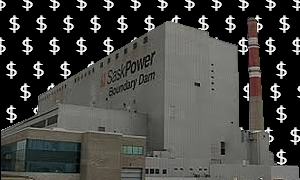
The Canadian province of Saskatchewan has the first full sized coal fired plant that captures and stores emissions. This heavily subsidized clean coal project, is known as the Boundary Dam Power Station which is run by the province's utility monopoly SaskPower. The one and a half billion dollar price tag of the plant was shouldered by Canadian tax payers and SaskPower customers.

Carbon sequestration is ostensibly intended to reduce greenhouse gas emissions. However, one of the greatest ironies associated with the project is the fact that it is being used to produce more climate change causing fossil fuels. The captured carbon dioxide is compressed into liquid form and transported through a pipeline to Cenovus Energy's Weyburn oil field where it is used to boost oil production.

The sulfur dioxide captured in the process is turned into sulfuric acid and sold for industrial use and fly ash is also captured and sold for industrial use. Even if we tally up the sale of energy, liquid carbon, sulfuric acid and fly ash, the numbers do not justify the expense.

A financial analysis of the plant’s operations indicate that it operates at a substantial loss. The project has exceeded initial cost forecasts (initial estimates were $1.2 billion but its actual costs is $1.47 billion). Over the 30-year life of the plant it is expected to net out at a $1,042 million loss. Subtract that $391 million profit from the boiler from the $1,042 million loss from the CCS facility and you get a $651 million net financial loss for SaskPower customers.

Perhaps even more troubling is the fact that the amount of carbon sequestered is far lower than the amount promised. While SaskPower says the plant will capture 30-million tonnes of CO2 (90 percent of its carbon emissions) during its lifetime they overestimate the plants abilities by almost one third or 10 million tonnes. However, more than 10 percent of that ( 3.3-million tonnes) will be lost in the capture process. An additional 28 percent (9-million tonnes) will be lost during processing of the CO2/crude mix recovered from the Weyburn oil field. The net carbon savings will be only 17.7 million tonnes. This translates to a cost of $100 per tonne of sequestered carbon.

As pointed out in the assessment a similar investment in renewable energy like wind power makes much more financial sense. 

Even industry insiders like Enbridge have already withdrawn from the farce of carbon capture. The technology is not viable but it is being kept alive by politicians and business interests who are hell bent on finding devious ways of extending the life of the coal industry.

Related
The Farce of Canada's Carbon Capture
Canada is Banking on Carbon Capture to Offset Tar Sands