Showing posts with label GHG. Show all posts

Event - Renewable Energy World International

This event will take place on December 13-15, 2016 in Orlando Florida at the Orange County Convention Center (North and South Halls). Renewable Energy World International tracks are designed to be made horizontally applicable across all technology sectors. Hear from our track champions on what is being covered during these impactful conference sessions.

Building Relationships

Make connections with 20,000 other renewable energy professionals from around the globe. Learn from each other during multiple networking events.

Expand Your Knowledge

Hear from industry experts on topics such as Energy Storage, Distributed Energy Resources, Large Scale Renewables, Global Markets and Utility Integration and more. Conference Tracks CPC Pre-Conference Tracks CEU Training Courses

1,400 Companies to Choose From

Explore the newest technology and see products/services in power generation, renewables, and nuclear. Make deals right from the show floor.

To register click here.

Related
Renewable Energy Business Leadership: Tools and Guidance
The New RE100 Initiative: 1000 Businesses 100% Renewable
Europe is Proving that 100% Renewables is Possible
The State of Renewable Energy: Summary of the Key Findings in the REN21 GSR 2016 Report
Solar Innovations are Revolutionizing Energy
Energy Issues and Market Forces in 2016
Big Changes in the Energy Sector in 2015
Renewables will Keep Growing Whether Oil Prices are Low or High
Renewables Decoupled from the Price of Oil
Investments in Renewables Eclipsing Fossil Fuels

Event - Renewable Energy World Conference & Expo North America 2016

This event will take place from December 13 to December 15, 2016 in Orlando Florida. This BIG PICTURE' conference, will cover the full landscape of renewables. Attendees will hear from several Renewable Energy World International Committee Members about what HOT industry topics are being covered in this years conference.

Become An Exhibiting Company Showcase Your Brand. Get Results.

Why Exhibit? Get in front of 20,000+ industry professionals from 111 countries. Generate quality leads and reach our concentrated group of targeted decision-makers.

Sponsor And Stand Out Accomplish Your Goals.

Bolster your event investment's ROI by working with the sponsorship team. They'll build a customized option based on your company's goals.

For more information and to register click here.

Related
The State of Renewable Energy: Summary of the Key Findings in the REN21 GSR 2016 Report
Solar Innovations are Revolutionizing Energy
Energy Issues and Market Forces in 2016
Big Changes in the Energy Sector in 2015
Market Reaction to COP21 Fossil Fuels Crash Renewables Soar
Renewables are Unstoppable
Why the Corporate World is Embracing Renewable Energy
Renewable Energy Milestones in Germany, Denmark and the US
Renewables will Keep Growing Whether Oil Prices are Low or High
Renewables Decoupled from the Price of Oil
Investments in Renewables Eclipsing Fossil Fuels
Renewable Energy Can Replace Fossil Fuels

Carbon Capture and Storage is Essential Post Paris

Interest in carbon capture and storage (CCS) has intensified in the wake of the Paris Climate Agreement. CCS refers to a suite of technologies that pull CO2 from a smokestack before it escapes into the air. It is then sequestered in some fashion, most commonly by burying it deep underground. CCS is a much needed technology, if for no other reason than the fact that fossil fuels are likely to be with us for years to come.

There have been a number of notable achievements in the area of CCS in recent years. According to Victor Der, executive advisor and acting general manager – the Americas, Global CCS Institute:

"Up to 28 million metric tons of carbon dioxide emissions will be captured by existing operational carbon capture and storage projects this year."

There are now 22 CCS projects that are either operating or under construction in 2016 representing a 100 percent increase in the last ten years and 14 more projects are in the advanced planning stages.

Ion Engineering completed a pilot project using its proprietary technology in 2015. According to the company, Ion's CCS process was able to capture more than 99 percent of the CO2 from a coal fired facility.

Another older carbon capture project in Port Arthur, Texas succeeded in capturing more than one million tons of CO2. This process was able to capture more than 90 percent of the CO2 from two commercial-scale stream methane reformers.

One of the early CCS projects was one by the Midwest Geological Sequestration Consortium (MGSC). In 2011 they started a three year trial to pump more than one million tonnes of CO2 underground.

The Department of Energy has invested and continue to invest significant sums of money into CCS. According to Environmental Leader, so far, DOE projects have stored almost seven and a half metric tons of CO2.

Shell’s Quest carbon capture and storage project is already operating at commercial scale in Alberta, Canada. The Quest project is designed to capture one third of the emissions generated by the refinement of oil sands amounting to one million tons per year.

Recently, the world’s first steel plant with large-scale CCS launched in Abu Dhabi. The project is a joint venture between Masdar and the Abu Dhabi National Oil Company (ADNOC), and it will sequester 800,000 metric tons of CO2 annually.

In 2016 Aker Solutions announced a carbon capture project at a waste-to-energy plant in Norway which the company expects will capture 90 percent of the CO2 emitted.

CCS is an integral part of mitigation planning. Countries like the United States, Europe and Canada are counting on CCS to enable them to meet their INDC pledges. The European Commission's 2030 climate and energy policy framework depends on CCS and Canadian reports indicated that CCS is essential. .Although the US Environmental Protection Agency has also offered some guidance on the subject,  it has yet to be demonstrated cost effectively.

A CO2 Solutions project at Salaberry-de-Valleyfield, Québec came in a cost of $28/metric ton, the lowest demonstrated cost in the industry. However, the real-world reality at present puts the cost of CCS on a coal plant at around $100/ton.

While no one denies that carbon capture is technologically possible, the major obstacle has always been cost. This view is eloquently rendered in a 2016 article by Mike Barnard titled, "Carbon Capture Is Expensive Because of Physics"

"Carbon capture and sequestration is expensive because it has three components, each with its own expensive challenges: capture, distribution, and sequestration."

In March 2015 the Global CCS Institute said:

"The next 18-24 months will see CCS deployed across a range of industries and storage types. A further two large-scale CCS power projects are in construction in the US - the Kemper County Energy Facility in Mississippi and the Petra Nova Carbon Capture Project in Texas. Both projects are expected to be operational in 2016. Also in the US, the Illinois Industrial CCS project slated for launch later this year will capture CO2 from the Archer Daniels Midland corn-to-ethanol plant in Decatur, Illinois for storage in an onshore deep saline formation."

As explained in a December, 2015 report titled Closing the Gap on Climate: Why CCS is a Vital Part of the Solution, governments need to enact supportive policies.

This report indicates that CSS is essential to keep us within the 2 degrees Celsius upper threshold limit. Governments need to pass laws, support regulations and provide incentives to help advance CCS. Governments will likely provide incentives for sequestration in the form of tax credits on a per-ton basis.

We currently have 22 CCS facilities but we will need thousands around the world to make a difference.

Related
Ambient Air Carbon Capture (Video)
Innovations that Sequester Carbon and Combat the Climate Crisis (Videos)
The Failure of Clean Coal
The Farce of Canada's Carbon Capture
Canada is Banking on Carbon Capture to Offset Tar Sands

Carbon Air Capture and Storage (Videos)

We need technologies that draw carbon dioxide from the air and either re-use or store it. While we must curtail our carbon emissions we must also find ways to reduce existing levels of atmospheric carbon. Climate change is caused by the buildup of greenhouse gases in the atmosphere, especially carbon. Prior to the dawn of the industrial revolution atmospheric carbon levels were below 300 ppm, they are currently above 400 ppm and climbing.
In 2009 Columbia University Physicist Peter Eisenberger claimed to have invented a machine that could clean carbon from the air. As explained in MIT Technology Review, his company called Global Thermostat uses chemicals called amines rather than sodium hydroxide.

"Negative emissions are definitely needed to restore the atmosphere given that we’re going to far exceed any safe limit for CO2, if there is one," says Daniel Schrag, director of the Harvard University Center for the Environment.

Reducing the emissions that we produce is essential but we need to think about a post-sustainability world. Our current INDC pledges are inadequate as they will not reduce emissions enough to keep up from breaching the 2 Celsius upper threshold limit. We must begin thinking about technologies that will enable us to actively remove carbon from the air.

Carbon Engineering is working on the industrial-scale capture of CO2 from ambient air. This video explains the technology and the rationale behind direct capture of CO2 from the atmosphere and what Carbon Engineering is doing to commercialize air capture.


Below you will find a Carbon Talk, by Dr. Richard Adamson, President of Carbon Management Canada Research Institutes. This video explores the need and the state of  industrial-scale air capture technology development.

Dr. Naoko Ellis, Professor of Chemical Engineering at UBC, introduced the audience to some of the innovative technologies currently under development, including different methods for carbon capture from the air such as amine scrubbers, sorbents, and metal-organic frameworks. She also discussed engineering new forms of hydrocarbon combustion that do not release CO2 and the need to commodify CO2. Following the presentation, discussion during the dialogue touched on the role of technology in creating climate solutions and how carbon pricing can drive economic innovation.

Panelists: -- Richard Adamson, President, CMC Research Institutes -- Naoko Ellis, Professor, Department of Chemical and Biological Engineering at the University of British Columbia


Related
Innovations that Sequester Carbon and Combat the Climate Crisis (Videos)
The Failure of Clean Coal
The Farce of Canada's Carbon Capture
Canada is Banking on Carbon Capture to Offset Tar Sands

The Allure of Low Carbon Investment Opportunities

Investors are waking up to the opportunities afforded by the low carbon economy. The benefits of emissions reduction extend far beyond averting a climate catastrophe. Decreasing our GHG emissions will help create jobs, alleviate poverty, improve public health and even provide greater food security.

The math supports climate action and the economics are becoming harder to refute. Market forces are driving a steady flow of capital and investors are finding it impossible to ignore the return potential of low carbon technologies.

We have never confronted such a portentous and daunting challenge as the climate crisis, nor have we ever seen such a stellar opportunity. This is a unique investment that offers phenomenal returns, while fostering socio-economic growth.

The case for a low carbon economy is getting stronger and concerns that it will bankrupt the economy are proving to be false. Early in 2016 IRENA indicated that doubling the amount of clean energy by 2030 compared to 2010 levels, will increase GDP by $1.3 trillion.

As explained in the background of a EurActiv.com article, the amount of money that needs to be invested to cut emissions to sustainable levels is estimated at between 500 ($568) and 1,500 ($1,705) billion euros per year.

Nations like the US are poised to formally ratify the emissions reduction pledges they made at COP21. Most of the world's leading emitters have already announced plans to massively increase their renewable energy capacities. These commitments are expected to grow over time.

At the beginning of the year, Mindy Lubber and Christiana Figueres wrote,
"The winds of change from Paris are already shifting policy and financial flows towards ever cleaner and renewable energies and sustainable infrastructure."
The size of the opportunity is enormous. US Secretary of State John Kerry said that climate change presents an opportunity that could far surpass the tech boom of the 1990s. The climate crisis is, "a multitrillion-dollar market with billions of users worldwide." Kerry said. "[C]lean energy is one of the greatest economic opportunities the world has ever seen...There are opportunities literally everywhere you look."

Research from the New Climate Economy corroborates Kerry's claim and finds that low carbon investing in cities alone could generate savings of between $17 and 22 trillion by 2050. For example, New York City has reduced its GHG emissions by 19 percent since 2005, and it plans to reduce emissions 80 percent by 2050.

Clean energy has grown six fold in the last decade and in 2015 we saw big changes in the energy sector. A record 330 billion was invested in new clean energy initiatives. According to Global Trends in Renewable Energy Investment 2016, since 2004, the world has invested $2.3 trillion in renewable energy. This will only grow reaching an astounding $68 trillion in energy investments by 2040. The IEA says that we will need $90 trillion of new energy investment by 2030.

As explained by Lubber and Figueres:
"The actions needed are legion, but so too are the rewards for investors and companies who make the shift early and embed the transition rapidly."
Related
Economics
Renewables are Unstoppable
Renewables will Keep Growing Whether Oil Prices are Low or High
Renewables Decoupled from the Price of Oil
Investments in Renewables Eclipsing Fossil Fuels
Market Reaction to COP21 Fossil Fuels Crash Renewables Soar
Corporate Pledges to Increase Renewable Energy
Why the Corporate World is Embracing Renewable Energy

US Proposals to Cut Methane and Other Pollutants

As an extension of his Climate Action Plan President Obama through the EPA has announced a series of proposals that will reduce methane and other harmful emissions. While there are there are already some voluntary programs to reduce methane emissions, the EPA has proposed new regulations that will significantly reduce methane in the oil and gas sector as well as in landfills.

In June of this year the EPA announced that it was preparing plans to limit methane. On August 18, 2015, the EPA publishes more details of the new rules. The standards are intended for the oil and gas sector. They are designed to reduce methane, VOCs and other toxic air pollutants. Under the proposed regulations the oil and gas industry would have to cut methane emission by 40 to 45 percent from 2012 levels by 2025.

The new standards would reduce methane emissions by between 340,000 and 400,000 short tons. This is equivalent to reducing 7.7 to 9 million metric tons of carbon dioxide. According to EPA estimates the net climate benefits will be worth between $120 and $150 million. In addition to methane the new rule will eliminate as much as 180,000 tons of volatile organic compounds (VOCs).

To achieve these goals the new EPA rules require the oil and gas industry to find and repair leaks, capture gas leaking from fracking wells, as well as limit emissions from pumps and other equipment. Several studies have shown that due to leakages, natural gas has a higher emissions profile than coal.

The new standards also address airborne toxins, including benzene, toluene, ethylbenzene and xylene. Under the plan as much as 2,500 tons of these toxic emissions will be eliminated.

On August 14, 2015 the EPA issued two other proposals that are intended to reduce methane emissions from municipal solid waste landfills which are the third largest source of anthropogenic methane. As part of the proposals landfills would have to reduce methane emissions by almost one third. 

Landfills generate around 18 percent of methane emissions which is the equivalent to 100 million metric tons of carbon dioxide pollution.

The proposed rules are expected to reduce methane emissions by an estimated 487,000 tons a year which is equivalent to reducing 12.2 million metric tons of carbon dioxide.

The EPA estimates the climate benefits of the combined proposals at nearly $750 million in 2025 or nearly $14 for every dollar spent to comply. Combined costs of the proposed rules are estimated at $55 million in 2025.

Related
EPA Announces Plans to Regulate Methane
Video - Methane is a Potent Greenhouse Gas
Video - Methane is the Ticking Time Bomb Beneath the Ice
Radiative Forcing: Carbon Dioxide and Methane
Natural Gas (Methane) is Not Clean Energy
A Primer on Greenhouse Gases
Video - Massive Costs Associated with Arctic Methane
Video - Unlocking Methane in the Permafrost is a Global Warming Time Bomb
The Dramatic Implications of Melting Arctic Sea Ice
Melting Arctic Ice is Releasing Massive Amounts of Methane
Video - Arctic Warming: Risks for Methane Emissions

Innovations that Sequester Carbon to Combat Climate Change (Videos)

There have been a wide assortment of innovative solutions proposed to combat the climate crisis. While most of these technologies offer low carbon alternatives to existing technologies, others actually remove greenhouse gases (GHGs) like carbon right out of the air.

Some innovations use renewable energy to power traditional technologies like air conditioning and water desalination. Others use structures in novel ways like rotating power-generating buildings and skyscrapers.

Microsoft founder turned philanthropist Bill Gates advocates creative renewable technologies like solar chemical power, in which sunlight converts water into hydrogen fuel. Gates is also a fan of high-altitude wind power, which uses the intense energy of jet stream 20,000 feet above the ground. Another novel approach involves generating electricity with orbiting solar arrays. While these approaches are feasible they are still years away.

We need technologies that can be implemented in the short term. Some agricultural innovations are already a reality like vertical farming. Other innovations are adaptations to a warmer world where we can expect much higher sea levels. This includes things like floating houses and even floating cities.

There can be no doubt that the best way to reduce the amount of GHGs in the atmosphere involves not putting them there in the first place. However, the next best approach seeks out ways of siphoning GHGs directly from the air.

Carbon sequestration is a problem because even if it can be done cost effectively, where to put all the of the CO2 once it’s been captured. Some suggest that we can recycle carbon instead of mining fossil fuels.

One possibly groundbreaking approach was created by a Canadian company called Carbon Engineering. They have created a wall that can suck carbon dioxide straight out of the air and convert it into fuel. As shown in the video below, air flows through the row of fans. They are connected to a carbon dioxide-rich solution, which absorbs carbon compounds out of the air. The solution is purified, with the carbon dioxide within it extracted, and then purified again for reuse.


There are a number of other innovative inventions that remove carbon from the air including tiny silicon capsules that employ bicarbonate (baking soda) to dissolve CO2. This process is called encapsulated liquid sorbents.


Scientists at the University of Southern California, have used a cheap and easy to synthesize polymer called polyethylenimine (PEI) to filter carbon from smokestacks or right out of the air. The polymer coated with a substance called fumed silica can be packed into columns, which can be inserted into flues and chimneys in factories and power plants. Carbon is collected and when it becomes saturated, the PEI device is replaced. When the PEI device is heated above 100 degrees Celsius, it releases the carbon. This is easy way to collect and concentrate carbon dioxide so that it can be reused as fuel.

Graphene is another material capable of sequestering carbon that may indeed prove to be a game changer. Although these technological innovations may prove invaluable, we should realize that forests are by far the most powerful source of carbon sequestration currently existing on earth. Oceans also sequester carbon, although this causes acidification which has a destructive and costly impact on marine ecosystems.  New research reveals that deserts also sequester carbon. 

Related
The Failure of Clean Coal
The Farce of Canada's Carbon Capture
Canada is Banking on Carbon Capture to Offset Tar Sands

Scotland Leads UK Renewable Energy Generation

Scotland derived half of its electricity needs from renewables last year. Renewable energy, once dismissed as a pipe dream by some, is becoming a reality for many nations including Denmark and Germany. According to data released by the Scottish government in June, Scotland generated 49.8 percent of all of its electricity needs from renewable sources in 2014.

The Scottish government has met its target of meeting 50 percent of electricity demand with renewables one year ahead of schedule. Scotland is now setting its sights on the goal of meeting all of its electricity demand with renewables by 2020.

Scotland increased its renewable energy generating capacity by 5.4 percent over 2013. This growth continues into 2015 with first quarter results showing 4.3 percent growth compared to the first quarter of 2014.

Wind power, both onshore and offshore, is responsible for the majority of Scottish renewable energy producing a total of 4,452 GWh, which is enough to power one million homes in the UK for one whole year. In 2014 Scotland generated 19,000 GWh from renewables which is almost one third (30%) of all renewable energy produced in the UK.

Thanks in large part to Scotland, the UK is ahead of schedule to meet its 15 percent clean energy commitment by 2020. Led by wind energy, the UK generated 64,654 GWh of power from renewable sources in 2014. This is a 21 percent increase over 2013.

Wind energy is responsible for half of Scotland's renewable energy mix, hydro generates one third and far a smaller share ( 137.9 GWh) is generated by solar.

Although wind energy enjoys popular support in the UK, British Prime Minister David Cameron paradoxically won reelection on a policy that promises to end renewable energy subsidies. Since being reelected he has stated his intention to end subsidies for onshore wind next April. If he follows through this will have a cooling effect on the growth of renewables in Scotland and the UK as a whole. An end to subsidies could endanger almost $5 billion of onshore wind projects and over 5,000 jobs.

Related
Europe Moving Towards 100 percent Renewable Energy
Growth of Renewable Energy in 2015 and Beyond
Australian State Meets Energy Needs with Renewables
Moving Towards 100% Renewables in the US 
One of the Best Years Ever for Renewable Energy in 2014
The EU Debt Crisis did Not Curb the Growth of Renewables in 2011
UK Renewable Energy 2011 Overview
UK Wind Energy
Cuts to UK Solar FiTs Could Prove Deadly
Cuts to UK Wind Power ROCs & FiTs
UK Government Investments in Efficiency and Renewable Energy

Renewable Energy Milestones in Germany, Denmark and the US

Germany, Denmark and the US are clean energy leaders that are proving that renewables can meet the electricity needs of modern nations. In Germany and Denmark they are producing so much power from renewables that they are exporting clean energy. In the US renewables continue to grow accounting for the vast majority of new energy production in the first half of 2015.

Germany

Germany is both a clean energy and an economic leader that broke a number of records in 2014. For a period in May of last year renewable energy supplied almost three quarters of the nation's overall electricity needs. In the first quarter of 2014 more than one quarter (27%) of Germany's electricity demand was being met by renewables. In 2014 Germany increased its renewable energy generation by 5 billion kilowatt hours compared to the same period in 2013 (40.2 billion vs 35.7 billion kilowatt-hours).

Renewable energy generated 32.5 percent of Germany's electricity in the first half of 2015. Most of the increased capacity came from new wind generation.  That is an increase in overall renewable energy electricity production compared to the same January to June period last year.

Germany has been an energy exporter since 2003. Its principal customer has been the Netherlands, followed by Austria, Switzerland, and Poland. Germany has set exporting records in 2012, 2013 and 2014. It exported 18 TWh during the first half of 2014, as compared to 14.5 TWh during the same period in 2013.

As part of its Energiewende (energy transformation) program Germany seeks to be almost entirely powered by renewable sources by 2050. Although there are some concerns about Germany's ability to meet its 2020 European target.

Denmark

At the end of last summer Denmark has passed a world leading climate change bill. In July Denmark's windfarms produced more energy than the nation could use. In addition to meeting their own domestic electricity demand they export additional supply to Norway, Germany and Sweden. After producing 16 percent more power than they needed on Thursday July 9th, they produced 40 percent more power than the country needed on Friday July 10th as demand dropped in the early morning hours.

These peaks were not close to Denmark's 4.8GW capacity and more capacity will be coming online soon with an additional 1.5GW coming from new offshore windfarms. Overall, thanks to strong government support, there has been an 18 percent year over year growth in wind energy in Denmark.

Denmark could be producing half of its electricity from renewable sources well before a target date of 2020.

United States

The US also posted a milestone of its own between January and June 2015. Renewable energy which includes wind, solar, hydro, geothermal and bioimass, was responsible for almost 70 percent of the new electrical generation in the first half of 2015.

As reviewed in the July "Energy Infrastructure Update" report from the Federal Energy Regulatory Commission's (FERC) office of energy projects, in the first half of 2015 there was an additional 1,996 MW of new wind generating capacity, 549 MW of solar, 45 MW of geothermal and 21 MW of hydro.

New capacity from renewables in the first half of 2015 is 904 times greater than that from coal and more than double natural gas. In June alone wind contributed 320 MW, biomass 95 MW and solar 62 MW.

As a whole renewable energy now accounts for more than 17 percent of total installed operating generating capacity in the US (hydro 8.61%, wind 5.84%, biomass 1.40%, solar 1.08% and geothermal 0.34%). Renewable energy now generates more power than nuclear (9.20%) and oil (3.87%) combined.

The growth of renewables is lending credence to those who believe we can get all (or most) of our energy from clean sources.

As explained by Oliver Joy, a spokesman for trade body the European Wind Energy Association,
"It shows that a world powered 100% by renewable energy is no fantasy.”

Related
Moving Towards 100% Renewables in the US
Germany's Renewable Energy Leadership
Europe Moving Towards 100 percent Renewable Energy
Growth of Renewable Energy in 2015 and Beyond
One of the Best Years Ever for Renewable Energy in 2014
2014 Year End Review: Renewable Energy Achievements
Renewable Energy in Africa and the Middle East
The ABCs of Latin American Renewable Energy (Argentina, Brazil and Costa Rica)
Asian Renewable Energy (China, India Japan, South Korea)
Australia Can Go 100% Renewable Due to Falling Costs
Canada Could Get All of Its Electricity from Renewables
Renewable Energy Case Studies: Burlington Vermont and Argentina

Iran Poised to be a Renewable Energy Superpower

Now that Iran has reached a nuclear agreement with six world powers it is well positioned to become a global energy superpower that includes renewables. Iran's geographical position means that the nation has enormous potential for the production of different kinds of renewable energies, including geothermal, solar and wind power. Prior to the signing of the deal Iran was already working to expand its renewable energy sector. For both economic and environmental reasons Iran has indicated that it intends to be a serious player in renewable energy going forward.

The historic deal was reached on Tuesday July 14th, sanctions will eventually be lifted and the country will be able to trade more freely with the rest of the world. Iranian Foreign Minister Mohammad Javad Zarif said, "now we are starting a new chapter of hope." US Secretary of State John Kerry said, "this is the good deal that we have sought." President Obama said, "This deal is not built on trust, it is built on verification." Violation of the deal would mean a return to the sanctions regime. Iran's President Hassan Rouhani called the deal it a "win-win" result.

In return for significantly limiting Iran's nuclear ability, the P5+1 group (which includes the five permanent members of the U.N. Security Council and Germany) have agreed to lift international oil and financial sanctions against the nation. Click here to see the text of the Iran nuclear deal.

Fossil fuels

Iran has the 4th largest conventional oil reserves and the 2nd largest gas reserves in the world, but production is far behind its potential. Wikipedia lists Iran as having the second largest oil reserves in the world in 2006 the country produced about five percent of total global crude oil production. This amounted to 4.2 million barrels per day (670,000 m3/d) of total liquids. Iran also has the world's largest reserves of natural gas (17.9% of the world's total) a large share of which are untapped. The oil embargo halved Iran’s oil export revenues within two years, from $118 billion to $56 billion.

Electricity

Currently, the Iranian grid generates 70 GW of power, and domestic demand is growing at 5 GW per year (subsidized electricity rates are just US$0.02 cents per kW). Iran is a net exporter of electricity and exchanges electrical power with all its land neighbors. Iran is the 19th largest producer and 20th largest consumer of electricity in the world. The nation is still heavily reliant on traditional thermal energy sources of electricity, with a small fraction being produced by hydroelectric plants. Consumption is expected to rise at about 6 percent per year for the following decade. According to research by the Ministry of Energy indicated that between 15,000-20,000 megawatts of capacity should be added in Iran in the next 20 years. Iran also has work to do with regard to efficiency of tis grid. It is estimated that some 18.5 percent of electricity generated in Iran are wasted before it reaches consumers.

Nuclear

Iran plans to generate 23,000 MWh of electricity through nuclear technology by 2025 to meet its increasing demand for energy. The first of four 915 MW reactors of Bushehr Nuclear Power Plant, built with help from Russia, came online in August 2010. Iran's indigenously designed Darkhovin Nuclear Power Plant is scheduled to come online in 2016. 

Renewables overview

Iran's Renewable Energy Organization (SUNA) is a governmental institution that has addressed the environmental problems associated with fossil fuels and the need to increase the nation's production of renewable energy. SUNA developes the application of energies resulting from renewable resources and is the responsible party as manager of Energy Deputy Directorate’s projects, for carrying out R&D activities. SUNA has a budget of around $60 million.

A 2013 overview of renewable energies in Iran by Mohsen Bahramia and Payam Abbaszadeha discusses 11 solar energy projects. This report indicates that he total photovoltaic power installed in 2004 was 14,020 MW. This rate reached 67 MW by the end of 2010. The report also references two geothermal projects and progress on fuel cell research. Biogas power plants have a total installed capacity of 1.665 MW. Signed private sector contracts are in place to build more than 600 MW of biomass systems. There is also 500 MW of new wind energy developments from the private sector. The report states that the wind potential in Iran is approximately 6500 MW, employing wind turbines of 60,000 MW nominal power.

In 2010, the Iranian government announced plans to build 2,000MW of renewable energy capacity between 2010-2015. As of 2010, Iran had 8,500MW of hydroelectric capacity, as of 2014 hydro accounts for 11 GW of Iran's energy generation. Wind energy accounted for 130MW.

In 2012, Iran allocated $780 million from the National Development Fund for renewable energy projects. In May 2014, at the Iranian embassy in Berlin, Iran revealed its ambition to add 5 GW of wind and solar power by 2018.

The government has implemented a number of favorable policy initiatives to promote renewable energy infrastructure development including a feed-in-tariff (FiT). To help make renewable energy commercially viable the Ministry of Energy is required to buy privately produced renewable energy at world market prices. FiTs for renewable energy are around $0.15 per kWh. The government also provides 50 percent of the installation costs of residential solar power systems.

In 2014 Iran announced plans to create an energy saving company in conjunction with the Iranian subsidy reform plan. Also in 2014 Iran sought the help of Azerbaijan to implement wind and geothermal power projects. This includes a wind energy project at Manjeel, Iran.

Solar

In 2014 Iran has opened a solar park near the Tehran using Swedish panels and German inverters. Iran's unique geographical position means 90 percent of the country has enough sun to generate solar power 300 days a year. Iran has 520 watts per hour per square meter of solar radiation every day. Other sources give an average of 2,200 kilowatt-hour solar radiation per square meter. Energy generated by solar power reached 53 MW in 2005 and 67 MW in 2011. The Iranian government intends to develop at least 500 MW of solar power capacity initially. Construction on 400 MW capacity has already been started while contracts for 900 MW projects have been signed. A couple of European companies currently supplying solar energy systems to Iran are Trunsun Solar and Sanavi.

Wind

Iran has the potential to generate 20 to 30 GW of wind energy. That is half of the total energy consumption needs of the country. As at 2012 Iran had 163 wind turbines with an installed capacity of 92470 kWh. Most of the proposed 5,000 MW renewable energy capacity will come from wind energy.

Geothermal

Iran has the potential to become the 9th largest geothermal energy producer.

Western Investment

At the May 2014 meeting at the Iranian embassy, Iran's energy ministry clearly stated his intention to open a closer dialogue with Western investors in an effort to help meet the country’s ever-expanding thirst for electricity.

The Iranian energy minister indicated that environmental concerns and economic realities are pushing Iran to pursue a more decentralized and renewable energy future.

In 2014 Iran indicated that it wanted to enact a new law aimed at creating a more attractive environment for foreign investment. Now that sanctions may be lifted investors are expected to line-up to help the country move forward.

To help address concerns about the volatility of the country's currency, Iranian policymakers are making it easier for foreign investors. They have introduced an index formula to correct for significant fluctuations and also give power providers the option to be compensated with oil instead of Rials.

Poised to lead

Iran will not only increase its renewable energy it may very well become a global leader. This is the view of Prof. Dr Friedbert Pflüger, the Director of the European Center for Energy and Resource Security (EUCERS) at King‘s College London and former German Deputy Minister of defense. As he explained in a November, 2014 article, an international agreement could put Iran on a path to becoming an energy superpower including renewable energy.

Exploiting Iran's resource wealth has been hampered by sanctions. Once these sanctions are lifted and Iran emerges from its isolation, it may well spark an energy "ranaissance". As stated by Pflüger, an end to sanctions, "may place Iran on a path to reaching its full potential as an energy superpower – both in the field of fossils and renewables."

Driven by increasing interest in staving off climate change from a stronger civil society, environmental NGOs and many small firms, Iran may be ready to lead the energy efficiency and renewable revolution that is taking hold all around the world.

Early in 2015, a top Iranian energy official said the country will see its capacity of renewable energy doubled by the end of the current Iranian calendar year (March, 2015). Homayoun Haeri, who serves as the director of Iran’s Power Generation and Transmission Company (TAVANIR), said that the government plans to double the capacity of Iran’s wind and solar power generation across the country.

Iran is preparing for an increase in its renewable energy infrastructure. In February 2015 Iran organized the 7th International Energy Saving Exhibition, Renewable Energy and Energy Efficiency. They invited companies and successful organizations in the field of energy to exhibit their latest achievements in the related fields.

Conclusion

Iran is now on the cusp of being free to transform itself into a renewable energy superpower.. This will provide strong economic benefits while addressing global and local environmental concerns.

Predictably, Republicans have sided with Israel in condemning the deal. If the deal is not stymied by the US Congress, Iran can expect trade sanctions to be lifted in the coming months and this will invite a wide range of foreign investors which should include significant investments in renewable energy. Congress now has 60 days to review the deal before President Barack Obama can start removing congressional sanctions. The President has promised to veto any attempt to interfere with the deal. However, with enough legislators the Congress could override a presidential veto.

Related
Renewable Energy Milestones in Germany, Denmark and the US
Germany's Renewable Energy Leadership
Moving Towards 100% Renewables in the US
Europe Moving Towards 100 percent Renewable Energy
Growth of Renewable Energy in 2015 and Beyond
Renewable Energy in Africa and the Middle East
The ABCs of Latin American Renewable Energy (Argentina, Brazil and Costa Rica)
Asian Renewable Energy (China, India Japan, South Korea)
Australia Can Go 100% Renewable Due to Falling Costs
Australian State Meets Energy Needs with Renewables
Canada Could Get All of Its Electricity from Renewables   
Expected and Unexpected Countries Using Renewables
One of the Best Years Ever for Renewable Energy in 2014
2014 Year End Review: Renewable Energy Achievements
Renewable Energy Case Studies: Burlington Vermont and Argentina

Event - Renewable Energy India Expo (REI)

The REI event will take place on September 23 - 24, 2015 in Noda, India. The sessions at REI are interactive panel discussions. These sessions bring together leading Indian and global renewable energy developers, financial experts, sector knowledge experts and investors. Discussions will address key issues and trends related to renewable energy, with a particular emphasis on solar and wind power in India.

Sessions will also address strategies to scale up renewable energy to achieve government targets of 100 GW of solar and 70 GW of wind by 2020.

The conference will also address policy interventions, manufacturing reach, financial viability, risk mitigating, smart grid pilot projects, geothermal, Bio Energy some of the key topics that will be deliberated upon at the upcoming conference.

The Government of India has announced ambitious targets for renewable energy (15 percent generation by 2020) and to achieve this target the government is is committed to ensuring sustainable inflow of capital. There have also been significant cost reductions in renewable energy over the past decade.India is a sought after investment destination as it has one of the largest and most ambitious renewable energy programs in the world.

Speakers
  • Craig O'Connor, Director of Business Development, Renewable Energy & High Technology Project & Structured Finance Division
  • Dwipen Boruah, Co-founder and Managing Director, GSES India
  • Eran Meller, Co-Founder and CEO, Ecoppia™
  • Pravan Malhotra, Venture Capital, South & South-East Asia
  • Eng. Mauro Moroni, founder and CEO, Moroni & Partners
  • Mr. Pashupathy Gopalan, President of Asia Pacific, SunEdison LLC
  • Geoff Stapleton, Founder and Managing Director, GSES Australia; Co-founder and Director of GSES India
  • Sachin Agrawal, AGM (Business Head Renewable Energy), Godrej E&E Division (PIRE)

Click here for the full agenda.

For more information or to register contact Rajneesh Khattar:
E: Rajneesh.khattar@ubm.com
M: +91 9871 726762

Related
Renewable Energy Milestones in Germany, Denmark and the US
Germany's Renewable Energy Leadership
Moving Towards 100% Renewables in the US
Europe Moving Towards 100 percent Renewable Energy
Growth of Renewable Energy in 2015 and Beyond
Renewable Energy in Africa and the Middle East
The ABCs of Latin American Renewable Energy (Argentina, Brazil and Costa Rica)
Asian Renewable Energy (China, India Japan, South Korea)
Australia Can Go 100% Renewable Due to Falling Costs
Australian State Meets Energy Needs with Renewables
Canada Could Get All of Its Electricity from Renewables
Iran Poised to be a Renewable Energy Superpower   
Expected and Unexpected Countries Using Renewables
One of the Best Years Ever for Renewable Energy in 2014
2014 Year End Review: Renewable Energy Achievements
Renewable Energy Case Studies: Burlington Vermont and Argentina

Seminar - Carbon Capture and Storage in the UK

The seminar, Carbon Capture and Storage in the UK is subtitled "policy priorities, collaboration and long-term confidence." It will take place on Tuesday July 7th, 2015 at the Royal Aeronautical Society, No. 4 Hamilton Place, London, UK. This CDP certified event features Peter Emery, Director, Capture Power and Production Director, Drax Group; Bill Spence, Business Opportunity Manager, Peterhead Project, Shell and Amy Clemitshaw, Deputy Director, Fossil Fuel Generation and Carbon Capture and Storage Policy, Department of Energy and Climate Change.

This seminar will provide a timely opportunity to assess progress and next steps of the Government's Carbon Capture and Storage (CCS) Commercialisation Programme as the UK seeks to move into Phase 2 of rollout.

Delegates will consider priority challenges for deploying CCS technology at a commercial level, including development of CCS in large industrial sectors, technology and engineering issues, and requirements for supply chain and transportation infrastructure.

Additional areas for discussion include investment priorities and the level of Government support in light of the £2.5 million funding to develop North Sea CO2 storage. There will also be assessment of EU support for projects including the future of the new "NER 400" innovation fund, announced in the 2030 framework for climate and energy policies, which will succeed the NER 300 programme to provide funding for the development of innovative low-carbon technologies and environmentally safe CCS demonstration projects.

Further sessions will evaluate international CCS development and collaboration, as well as the future of this technology in the context of agreement of EU climate targets to reduce emissions by 40% by 2030, and as a wider international climate deal is sought.

We are delighted that Amy Clemitshaw, Deputy Director, Fossil Fuel Generation and Carbon Capture and Storage Policy, Department of Energy and Climate Change; Peter Emery, Director, Capture Power and Production Director, Drax Group; Bill Spence, Business Opportunity Manager, Peterhead Project, Shell; Professor Stuart Haszeldine, Director, SCCS and Professor of Carbon Capture and Storage, Edinburgh University; Ed Heartney, Counsellor, Environment, Science, Technology and Health, Embassy of the United States, London and Luke Warren, Chief Executive, Carbon Capture and Storage Association have agreed to deliver keynote addresses at this seminar.

John Baker, Site Senior Technologist, Lotte Chemical UK and Spokesperson, Teesside Collective; Professor Jon Gibbins, Director, UK CCS Research Centre; Andrew Green, Programme Manager, Carbon Capture & Storage, Energy Technologies Institute; William Hazell, Principal Consultant - Impact Assessment and Planning, ERM Alan James, Managing Director, Pale Blue Dot; Alex Kazaglis, Senior Analyst, Power Sector, Committee on Climate Change; Harsh Pershad, Lead Technologist - Energy (Generation and Supply), Innovate UK; Dr Adina Popa, Sector Leader, Carbon Capture and Storage, Mott MacDonald; Paul Sullivan, CCS Business Lead, National Grid and Peter Whitton, Managing Director, Progressive Energy have also agreed to speak.

Matthew Billson, Programme Director, Energy 2050, University of Sheffield and former Head of Strategy, Communications and International, Office of Carbon Capture and Storage, Department of Energy and Climate Change and Lord Redesdale, CEO, Energy Managers Association have kindly agreed to chair this seminar.

To register click here.

Related
The Failure of Clean Coal
The Farce of Canada's Carbon Capture
Canada is Banking on Carbon Capture to Offset Tar Sands

Event - Central American Renewables Investment Summit (CAMRIS)

This event will take place on July 13, 2015 - July 14, 2015 from 8:25 AM - 6:00 PM at the Hotel Riu Plaza Panamá Calle 50, Panama City, Panama.

Central America is rich in natural resources and boasts some of the highest penetrations of renewable energy in the world. To date hydropower has dominated the landscape for renewable generation, but as countries look for power sources that don't come with a high environmental and social price tag, the development of geothermal, wind, solar and biomass have become regional priorities. Factor in a regional transmission line that can carry clean energy across borders, and it is increasingly clear that the Central American market is poised for the next wave of clean energy investment.

Against this backdrop New Energy Events, in close collaboration with the Central American Bank for Economic Integration (CABEI), will convene the Central American Renewables Investment Summit (CAMRIS), a new annual event that will gather key regional and international stakeholders to catalyze investment in Central American renewables. In a highly granular fashion the Summit will examine opportunities for development and investment on a market-by-market basis, promote the deployment of capital, and enable the relationships across the region which will define the future of renewables in Central America.

To register click here.

Related
Renewable Energy Milestones in Germany, Denmark and the US
Germany's Renewable Energy Leadership
Moving Towards 100% Renewables in the US
Europe Moving Towards 100 percent Renewable Energy
Growth of Renewable Energy in 2015 and Beyond
Renewable Energy in Africa and the Middle East
The ABCs of Latin American Renewable Energy (Argentina, Brazil and Costa Rica)
Asian Renewable Energy (China, India Japan, South Korea)
Australia Can Go 100% Renewable Due to Falling Costs
Australian State Meets Energy Needs with Renewables
Canada Could Get All of Its Electricity from Renewables
Iran Poised to be a Renewable Energy Superpower   
Expected and Unexpected Countries Using Renewables
One of the Best Years Ever for Renewable Energy in 2014
2014 Year End Review: Renewable Energy Achievements
Renewable Energy Case Studies: Burlington Vermont and Argentina

The Failure of Clean Coal

Despite billions of dollars in investments it would appear that clean coal is an expensive pipe-dream that is not delivering results. Clean coal technology has been plagued with cost overruns and it has been shown to be far less effective at sequestering carbon than its supporters had promised. Independent assessments also suggest that it is proving to be a financial boondoggle.

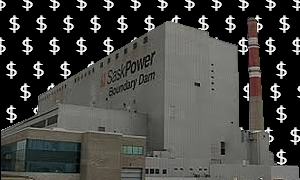
The Canadian province of Saskatchewan has the first full sized coal fired plant that captures and stores emissions. This heavily subsidized clean coal project, is known as the Boundary Dam Power Station which is run by the province's utility monopoly SaskPower. The one and a half billion dollar price tag of the plant was shouldered by Canadian tax payers and SaskPower customers.

Carbon sequestration is ostensibly intended to reduce greenhouse gas emissions. However, one of the greatest ironies associated with the project is the fact that it is being used to produce more climate change causing fossil fuels. The captured carbon dioxide is compressed into liquid form and transported through a pipeline to Cenovus Energy's Weyburn oil field where it is used to boost oil production.

The sulfur dioxide captured in the process is turned into sulfuric acid and sold for industrial use and fly ash is also captured and sold for industrial use. Even if we tally up the sale of energy, liquid carbon, sulfuric acid and fly ash, the numbers do not justify the expense.

A financial analysis of the plant’s operations indicate that it operates at a substantial loss. The project has exceeded initial cost forecasts (initial estimates were $1.2 billion but its actual costs is $1.47 billion). Over the 30-year life of the plant it is expected to net out at a $1,042 million loss. Subtract that $391 million profit from the boiler from the $1,042 million loss from the CCS facility and you get a $651 million net financial loss for SaskPower customers.

Perhaps even more troubling is the fact that the amount of carbon sequestered is far lower than the amount promised. While SaskPower says the plant will capture 30-million tonnes of CO2 (90 percent of its carbon emissions) during its lifetime they overestimate the plants abilities by almost one third or 10 million tonnes. However, more than 10 percent of that ( 3.3-million tonnes) will be lost in the capture process. An additional 28 percent (9-million tonnes) will be lost during processing of the CO2/crude mix recovered from the Weyburn oil field. The net carbon savings will be only 17.7 million tonnes. This translates to a cost of $100 per tonne of sequestered carbon.

As pointed out in the assessment a similar investment in renewable energy like wind power makes much more financial sense. 

Even industry insiders like Enbridge have already withdrawn from the farce of carbon capture. The technology is not viable but it is being kept alive by politicians and business interests who are hell bent on finding devious ways of extending the life of the coal industry.

Related
The Farce of Canada's Carbon Capture
Canada is Banking on Carbon Capture to Offset Tar Sands

Moving Towards 100 Percent Renewable Energy in the US

We are moving towards 100 percent renewable energy. While we are still a long way off (currently the world only gets about 1 percent of its total energy needs from renewables) we now know that it is possible. We are seeing promising reports about the feasibility of 100 percent renewables in nations and regions all around the world. This disproves the claims of the fossil fuel lobby and their political minions in the Republican party.  The urgent need to reduce emissions alongside declining costs give renewables unstoppable momentum.
_________________________________

There are no technological or economic reasons why we cannot completely replace fossil fuels with renewable sources of energy. In addition to curbing climate change causing greenhouse gas emissions, renewable energy also improves human health. Minimizing climate impacts and reducing health costs would generate trillions of dollars of cumulative savings.

The idea that the world can be powered entirely by renewable energy is not new. In 2011, Stanford researcher Mark Z. Jacobson and UC-Davis researcher Mark A Delucci concluded that the world can be powered by clean and sustainable energy. The study they co-wrote authored found that using existing technology, the world can abandon fossil fuels and adopt renewable energy in as little as two decades. The researchers further stated that this can be done for the same price as conventional energy.

There are already commitments and functioning examples of 100 percent renewable energy use. In 2014 a number of leading companies pledged to get their power entirely from renewables. The EPA’s Green Power List reviews the growing number of businesses, municipalities and universities that use only clean energy.

Hawaii has been reducing its dependence on fossil fuels to generate electricity, but the state still uses petroleum for 70 percent of its energy generation. A new bill will abandon oil altogether and require the state to get all of its energy from renewables (primarily wind, solar, geothermal and hydro) by 2040.

California is working towards the goal of getting one third of its electricity from renewable sources by 2020. New research suggests that California could produce enough solar energy to provide as much as five times the electricity it currently consumes. This is achievable by deploying solar in developed areas (roof tops or open spaces on the ground) close to where people live and consume power.

California is already getting more than 12 percent of its power from renewable sources and individual cities in California are going even further. San Jose, San Francisco and San Diego have all pledged to get off fossil fuels, starting in 2022, 2035 and 2020 respectively. The San Diego 100% Renewables report shows how San Diego can get all of its electricity from renewable energy.

As of 2014, Aspen Colorado was getting more than 86 percent of its energy from renewables (hydro and wind) and the city has vowed to go 100 percent renewable by the end of 2015. Early in 2015, Burlington, Vermont became the first US city to deliver on the promise to end fossil fuel use for electricity and meet all of their power demands with renewables (biomass, hydroelectric, solar and wind).

On March 18, 2015, Georgetown, Texas announced that it would soon be generating 100 percent of its electricity from renewable sources (solar and wind). What makes this noteworthy is the fact that Texas is the largest oil producing state in the US. The reason Georgetown is turning to renewables is because they are a cheaper source of electricity than fossil fuels.

A number of studies show that renewable energy can meet or exceed U.S. energy demands in a timely fashion. U.S. National Oceanic and Atmospheric Administration (NOAA) research indicates that renewable energy can replace fossil fuels within 20 years. Sandy MacDonald, director of the earth system research lab at NOAA said that wind and solar could supply 70 per cent of electricity demand in the lower 48 states, with fossil fuel and hydro/nuclear renewables each accounting for just 15 per cent by 2030.

The National Renewable Energy Laboratory’s (NREL) Renewable Electricity Futures Study (RE Futures) found that using a diverse array of commercially available technologies, the US could easily supply 80 percent of its electricity needs with renewables by 2050. The Union of Concerned Scientists published a plan for renewable energy to provide 80 percent of our electricity by 2050.

A recent Stanford paper entitled “100 percent Wind, Water, Sunlight (WWS) All Sector Energy Plan for the 50 U.S. States,” suggests that the United States can get all of their power needs from renewables.

These U.S. examples alongside research from all around the world (Europe, Asia, Latin America, Canada, Australia, Africa and the Middle East) reveals that renewable energy has the potential to quickly and affordably replace fossil fuel as the world’s primary source of energy.

As pointed out in a Bloomberg article, renewable energy has “passed a turning point” and we can now say with confidence that 100 percent is possible. The world is shifting away from fossil fuels and towards renewables.

Recent and future prospects look very good for the growth of renewables. In 2014, renewable energy had one of the best years ever and it is looking very good for 2015 and beyond.
“The shift occurred in 2013, when the world added 143 gigawatts of renewable electricity capacity, compared with 141 gigawatts in new plants that burn fossil fuels,” the article stated. “The shift will continue to accelerate, and by 2030 more than four times as much renewable capacity will be added.”
The fossil fuel lobby frequently point to the problem of indeterminacy of renewables (eg the sun is not always shining and the wind is not always blowing). However, as pointed out in a another Bloomberg article, the example of Germany proves the naysayers wrong.

Cheaper storage will further minimize the so called indeterminacy problem. “There’s a myth among opponents of renewable energy that you need 100 percent backup spinning all the time, and it’s utter nonsense,” said Michael Liebreich, founder of Bloomberg New Energy Finance.

The world is transitioning away from fossil fuels and towards renewable energy, the only question that remains to be answered is how long it will take. The real issue that will help or hinder the speed at which this transition occurs is not about technological feasibility or even economics, it is about political will.

The real question is whether the world will allow entrenched interests to threaten the future of humanity.

Source: Global Warming is Real

Related
Renewable Energy in Africa and the Middle East
The ABCs of Latin American Renewable Energy (Argentina, Brazil and Costa Rica)
Asian Renewable Energy (China, India Japan, South Korea)
Australia Can Go 100% Renewable Due to Falling Costs
Investors in Renewables Flee Australia Causing Job Losses
Australian State Meets Energy Needs with Renewables
Australia Can Dump Coal and Adopt Renewables
Canada Could Get All of Its Electricity from Renewables
Europe Moving Towards 100 percent Renewable Energy
Growth of Renewable Energy in 2015 and Beyond
One of the Best Years Ever for Renewable Energy in 2014
2014 Year End Review: Renewable Energy Achievements
Renewable Energy Case Studies: Burlington Vermont and Argentina
Germany's Renewable Energy Leadership
Why France is a Global Climate Leader