Showing posts with label commerce. Show all posts

Climate Change was the Hot Topic at the World Economic Forum in Davos

Climate change was the dominant theme at and this year's World Economic Forum (WEF). Panel discussions covered a wide range of related topics and including global warming, ocean sustainability and biodiversity. Al Gore, David Attenborough and Jane Goodall were among the participants.

This year's Global Risk Assessment report released at the WEF in Davos revealed, yet again, that climate change and related phenomenon are among the greatest risks both in terms of impact and likelihood. The report surveys nearly 1,000 decision-makers (public sector, private sector, academia and civil society) who are asked to assess the risks facing the world.  Over a ten-year horizon, extreme weather and climate-change policy failures are seen as the gravest threats.

The WEF has issued many similar warnings in recent years. The 2016 Global Risks Report was the first that put environmental risks at the top the ranking. This report said the failure of climate change mitigation and adaptation is the risk with the greatest potential to impact society. It specifically warned about the impact of climate change on food security. As an interesting aside, the 2016 report included a prophetic warning about the risks associated with disempowered citizens.

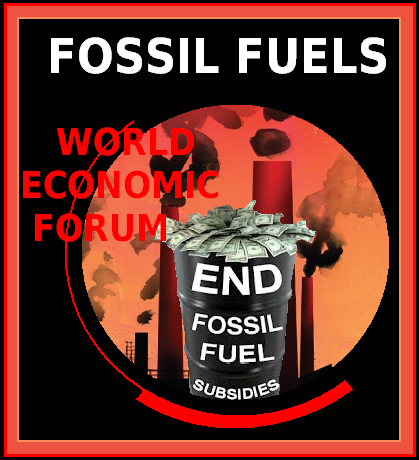
The experts at Davos called for corporate and government action and there was widespread agreement that this requires economic change. As reported by CNN, these experts singled out fossil fuel subsidies in G7 countries. "There are still fossil fuel subsidies from G7 countries — that's ridiculous," said Rachel Kyte, special representative of the UN Secretary-General for Sustainable Energy. "Why we are subsidizing something we know is killing our children, poisoning them and affecting their ability to learn? That's beyond me," she added.

Attenborough, Gore and others have been sounding the alarm about climate change for years. However, the most powerful warning came from 16 year old Greta Thunberg who told attendees: "I don't want you to be hopeful, I want you to panic, I want you to feel the fear I feel every day," She also pulled no punches when she ascribed blame those assembled in Davos: "Some people say that the climate crisis is something that we will have created, but that is not true, because if everyone is guilty then no one is to blame. And someone is to blame," Thunberg said flatly. "Some people, some companies, some decision-makers in particular, have known exactly what priceless values they have been sacrificing to continue making unimaginable amounts of money. And I think many of you here today belong to that group of people."

After her speeches at COP24 and the WEF Greta has emerged as a leading voice for climate action. She is a realist in a world where many are either ebulliently optimistic about the prospects for climate action.

"Many people say that this is not an easy issue, we cannot just say that this is how it is, it's not black and white. But I say that this is black and white. Either we stop the emissions or we don't. There are no gray areas when it comes to survival,"Greta said.

In a chapter on the human causes and effects, the Global Risks Report 2019 calls for greater action around rising levels of psychological strain across the world.

"The world faced a growing number of complex and interconnected challenges in 2018. From climate change and slowing global growth to economic inequality, we will struggle if we do not work together in the face of these simultaneous challenges," the report's authors conclude.

Related
Climate Optimism and Sustainability Initiatives at the World Economic Forum in Davos
Climate Focus at The World Economic Forum in Davos
This Year's WEF Gives us Reason to Hope
Video - WEF 2015: A Climate for Action
WEF Summaries: Climate Change
Towards a Global Climate Agreement at COP21 (WEF Summaries)
Business Leadership on Climate Change (WEF Summaries)
Curbing Fossil Fuels - Carbon Pricing and an End to Subsidies (WEF Summaries)
The Value of Investing in Climate Mitigation (WEF Summaries)
Global Economies Feeling the Heat from Climate Change (WEF Summaries)
Collaboration and Cooperation are Imperitive (WEF Summaries)
What is The World Economic Forum (WEF)
Risks Associated with Environment, Climate, Water Crisis and Extreme Weather in the WEF Report

Small Business Owners Support Action on Climate and Energy

The US small business community overwhelmingly believe in the veracity of climate change. They see this as a threat to their businesses and they endorse government regulatory efforts to reduce power plant emissions.

The views of the small business community on climate and energy issues is crucial because they are both a powerful economic engine and the primary source of job creation in America. The sheer size and scope of the small business community make their contributions to climate mitigation and adaptation absolutely essential.

These are the findings in a June 2014 American Sustainable Business Council poll of 555 small business owners. For the purposes of this study small business are defined as those with between 2 and 99 employees. 

While we commonly associate climate and energy strategies with larger corporations, the data shows that forward looking small businesses also understand that there are benefits to engaging environmental sustainability. They know that investments in clean energy and energy efficiency offer short term cost savings and position their businesses for longer term growth.

The survey found that clear majorities of small business owners are concerned about how climate change will affect their companies, including its impact on energy costs, health care costs and the infrastructure. Almost two thirds (64 percent) of small business owners believe that government regulation is essential, particularly with regard to reducing power plant emissions.

When it comes to perceiving climate change as a threat the results were unequivocal. A total of 87 percent of business owners named one or more consequences of climate change as potentially harmful to their business. What makes this so compelling is that these results hold across party lines (55 percent of Republicans, 65 percent of Independents and 81 percent of Democrats). Less than one third (29 percent) stated that they think power plants should be allowed to regulate themselves. These findings have obvious implications for the Obama administration's Clean Power Plan.

It is interesting to note that more than half (53 percent) think that extreme weather has or will have, a negative impact on their businesses. Among larger small business (those with between 20 and 99 employees), that number goes up to almost three quarters (71 percent).

The poll indicates that many are willing to pay for climate mitigation efforts. Despite concerns about energy costs, the largest share of respondents said they would accept a 10 percent increase rather than suffer the consequences of climate change.

Small business owners are concerned about costly, disruptive consequences of climate change. The bigger the business the more they are concerned.

To read the full report click here.

Related
Primer on Sustainability in Small Businesses
Why Small Businesses are Engaging Sustainability
Why Small Businesses are Well Suited to Sustainability
Why Small Businesses are Not Engaging Sustainability
Now is the Time for Environmental Sustainability
What Businesses Can Do to be More Environmentally Sustainable
Small Businesses Need to Engage the Green Economy

This Year's WEF Gives us Reason to Hope

Climate and energy conversations that took place at this year's World Economic Forum (WEF) in Davos gave us reason to hope. Many of those who constitute the core of the world's economic power acknowledged the urgency of climate action and the opportunities associated with forging a new green economy.

We are beginning to see the kind of leadership from CEO's and investors that is an essential if we are to succeed in tackling climate change. Companies and investors are coming together to advance meaningful solutions. Business leaders are now looking at climate change as both a risk and an opportunity. Investors are showing unprecedented interest in investments that support low carbon technologies.

There was even support for bold action that includes ambitious climate policies. Such government support was highlighted for its ability to drive innovation, advance clean energy and improve energy efficiency.

As we head towards a hoped for global climate agreement in Paris at the end of the year, there is reason for unprecedented optimism.

Related
Video - WEF 2015: A Climate for Action
WEF Summaries: Climate Change
Towards a Global Climate Agreement at COP21 (WEF Summaries)
Business Leadership on Climate Change (WEF Summaries)
Curbing Fossil Fuels - Carbon Pricing and an End to Subsidies (WEF Summaries)
The Value of Investing in Climate Mitigation (WEF Summaries)
Global Economies Feeling the Heat from Climate Change (WEF Summaries)
Collaboration and Cooperation are Imperitive (WEF Summaries)
What is The World Economic Forum (WEF)
Risks Associated with Environment, Climate, Water Crisis and Extreme Weather in the WEF Report

Collaboration and Cooperation are Imperitive (WEF Summaries)

Collaboration and cooperation are commonly mentioned as important aspects of sustainability and they emerged as salient themes at the World Economic Forum in Davos, Switzerland. Over the course of the last year we have seen historic collaboration on carbon emissions reduction between the US and China. We have also seen tremendous progress in some private sector areas.

While many are talking about global disunity, others are pointing to significant examples of global collaboration. John Kerry, US Secretary of State, said "I don’t see an unraveling [of international cooperation]. I see just the opposite. I see nations coming together … to reach an ambitious global agreement to address climate change, with the recent agreement by China and the United States that begins to set the targets to make the Paris negotiations this year a success."

Over the course of the last year businesses have come together and provide real leadership on issues like sustainably sourced palm oil. This was the subject of a talk by Dominic Waughray, Head of Public/Private Partnerships at the World Economic Forum. He addressed how the peer-to-peer conversations among business leaders led to significant commitments to sustainably sourced palm oil. As of right now over 90 percent of global palm oil demand is covered by voluntary agreements focused on sustainability.

However, the reality on the ground does not always live up to the talk, particularly in the private sector. As revealed by the BCG/Sloan Management Review annual sustainability survey which found that while 90 percent of respondents believe that collaboration is needed for sustainability, only 47 percent of companies are actually collaborating on sustainability.

We will need to see a lot of progress on the collaboration front if we are to sign a global agreement at COP21 in Paris.

"The key is coming up with a vision of how we are going to finance mitigation and adaptation to climate change," said World Bank President Jim Kim. "We have got to get away from the mutual accusations between rich and poor and move towards cohesive collaboration."

In both the public and the private sector we require more collaboration and cooperation to advance the sustainability agenda.

Related
WEF Summaries: Climate Change
Towards a Global Climate Agreement at COP21 (WEF Summaries)
Business Leadership on Climate Change (WEF Summaries)
Curbing Fossil Fuels - Carbon Pricing and an End to Subsidies (WEF Summaries)
The Value of Investing in Climate Mitigation (WEF Summaries)
Global Economies Feeling the Heat from Climate Change (WEF Summaries)
What is The World Economic Forum (WEF)
Risks Associated with Environment, Climate, Water Crisis and Extreme Weather in the WEF Report

Towards a Global Climate Agreement at COP21 (WEF)

Much of the climate momentum that occurred at the World Economic Forum (WEF) in Davos is in anticipation of COP21 where it is hoped that a global agreement can be signed.

François Hollande, the President of France and host to next year's COP21 climate talks in Paris, made a number of prescient comments in Davos.

"I call upon the whole of business to make an economic contribution to the most fragile of states, in the name of solidarity and security. I call on you also to counter another threat which is one that looms over the very future of this world: we need to fight global warming,"  Hollande said.

He continued saying, "The time is past when humankind thought it could selfishly draw on exhaustible resources. We know now the world is not a commodity, is not a source of revenue; it’s a common good, it’s our heritage. And the consequences of climate change are fully known now – we’re not talking about theories anymore, we’re talking about certainties."

Lord Stern has made it clear that the decisions taken at the intergovernmental conference in Paris in late 2015 will shape the next 20 years.

"Paris needs to result in a binding global agreement that will map out an effective fight against climate change – that is the major challenge of the twenty-first century," Hollande said.

UN Secretary-General Ban-Ki Moon added, "Ours is the first generation that can end poverty, and the last that can take steps to avoid the worst impacts of climate change."

The private sector has an important advocacy role to play. They must push governments to be more ambitious with their targets ahead of COP21.

"We have a single mission, to protect and hand on the planet to the next generation," Hollande said. "We are faced with a moral and political responsibility, because a botched solution to a crisis might result in exacerbating the consequences of climate change."

As he introduced the Live Earth: Road to Paris concert, Al Gore said: "The purpose is to have a billion voices with one message to demand climate change now...It is absolutely crucial that we build public will for an agreement."

Although the importance of securing a global climate deal is obvious it will not be easy. "There is a huge challenge ahead for the rest of this year," World Bank President Jim Kim told the Guardian.

"If this year goes badly, and I don't think it will, it would be a massive missed opportunity," said Nobel laureate Michael Spence Michael Spence.

Related
WEF Summaries: Climate Change
Business Leadership on Climate Change (WEF Summaries)
Curbing Fossil Fuels - Carbon Pricing and an End to Subsidies (WEF Summaries)
The Value of Investing in Climate Mitigation (WEF Summaries)
Global Economies Feeling the Heat from Climate Change (WEF Summaries)
Collaboration and Cooperation are Imperitive (WEF Summaries)
What is The World Economic Forum (WEF)
Risks Associated with Environment, Climate, Water Crisis and Extreme Weather in the WEF Report

Curbing Fossil Fuels - Carbon Pricing and an End to Subsidies (WEF Summaries)

Carbon pricing and fossil fuel subsidies were popular topics at the World Economic Forum (WEF) in Davos, Switzerland. The comments made by economists, business leaders and climate experts signal a global readiness to price carbon and remove oil subsidies.

Investors and business leaders need and want regulatory certainty. Regulations on fossil fuels are coming the only question is when. Climate economist Lord Nicholas Stern was among those who argued that we need to see carbon taxes and eliminate oil subsidies.

If we are to get serious about tackling climate change we will need to curb fossil fuel use. One of the best ways to do so is through carbon pricing schemes. Rowan Douglas, CEO Capital, Science & Policy Practice and Chairman, Willis Research Network, said, "Carbon pricing is a very important tool in the armory. I think it is difficult to see the world achieving its targets without some sort of pricing mechanism for this critical pollutant."


Stern said, "Those of us who think that market economies work well, are also those who think when we see a major failure like this that the right thing to do to get the markets to work well is to correct it. And there’s a very simple correction: it’s carbon pricing. It can raise revenues for all the important things we have to do, like enhancing the life of poor people, [and] investing in innovation, health and education." He also said, "If you want to put a carbon tax on, now is absolutely the right moment."

Rachel Kyte, World Bank Group, Vice President and Special Envoy for Climate Change said, ‘We want carbon pricing. If you price carbon, we will be able to reduce emissions,’ then that will be a powerful message." World Bank President Jim Yong Kim urged governments around the world to agree on a pricing system for climate-changing CO2 emissions.

We are seeing momentum build for some form of carbon pricing scheme. Kim noted there had been progress over the last 12 months, including the UN general assembly’s commitment to set a carbon price. The head of Unilever, Paul Polman explained that businesses are also getting on-board, "50 of the top-200 companies now have an internal price for carbon. In New York, we had 1,000 businesses who signed a statement calling for a price on carbon."

In the US the Republican controlled congress stands in the way of carbon pricing. As Al Gore said in Davos, "We need to put a price on carbon and we need to put a price on denial in politics."

In addition to carbon pricing we also need to eradicate fossil fuel subsidies. Richard Branson, founder of the Virgin group said, "We have to make sure there are no more coal-fired power stations built anywhere in the world from today onwards. And we’ve got to get rid of all fossil fuel subsidies.”

Nobel Economics Prize laureate Michael Spence talked about progress being made removing oil subsidies in the developing world. "Fortunately, they [oil subsidies] are in the process of disappearing. Energy subsidies are a catastrophic policy. They produce a distorted development of the economy and all kinds of bad things."

Related
WEF Summaries: Climate Change
Towards a Global Climate Agreement at COP21 (WEF Summaries)
Business Leadership on Climate Change (WEF Summaries)
The Value of Investing in Climate Mitigation (WEF Summaries)
Global Economies Feeling the Heat from Climate Change (WEF Summaries)
Collaboration and Cooperation are Imperitive (WEF Summaries)
What is The World Economic Forum (WEF)
Risks Associated with Environment, Climate, Water Crisis and Extreme Weather in the WEF Report

The Value of Investing in Climate Mitigation (WEF Summaries)

One of the salient themes that emerged at the 2015 edition of the World Economic Forum (WEF) is that investors are very interested in climate action. There have been a number of important developments during the course of the WEF but few are more important than the emerging trend of integrating climate risks into financial assessments. The risks and the opportunities  posed by climate change are bottom line issues.

Low carbon energy investments are providing considerable returns. According to Bloomberg New Energy Finance, clean energy investment increased by 16 percent in 2014. The We Mean Business Coalition reports that companies are achieving 20+ percent internal rates of return on their own clean energy projects.

United Nations Secretary General Ban Ki-Moon noted that investing in climate protection could make a significant impact.

"Infrastructure and sustainability are treated as separate issues. We see this at the meetings of the G20, at other international gatherings, and even here at the World Economic Forum. We need to address this troubling disconnect," Ban said.

According to Paul Polman, Chief Executive of Anglo-Dutch food company Unilever, the size of global infrastructure investment will reach $90 trillion over the next 15 years.

"That needs to be done anyway. Do it in the right way, and you can solve your climate change issues and stimulate economic growth," he said.

Related
WEF Summaries: Climate Change
Towards a Global Climate Agreement at COP21 (WEF Summaries)
Business Leadership on Climate Change (WEF Summaries)
Curbing Fossil Fuels - Carbon Pricing and an End to Subsidies (WEF Summaries)
Global Economies Feeling the Heat from Climate Change (WEF Summaries)
Collaboration and Cooperation are Imperitive (WEF Summaries)
What is The World Economic Forum (WEF)
Risks Associated with Environment, Climate, Water Crisis and Extreme Weather in the WEF Report

Global Economies Feeling the Heat from Climate Change (WEF Summaries)

Economic assessments of climate risks and the potential returns from mitigation and adaptation emerged as salient themes at the World Economic Forum (WEF) in Davos, Switzerland.

A number of speakers made the point that it is important to calculate the massive risks associated with climate change. We are already seeing that climate change is systemically disrupting the global economy and the situation is destined to get far worse if we do not significantly reduce global carbon emissions.

As explained by several economists, we do not have to make the false choice between combating climate change and growth. We can both grow our economy and act on climate change.

The climate economist Lord Nicholas Stern, delivered a powerful presentation at Davos. His speech was rendered in a language that the business community and investors can understand. Stern makes the point that addressing climate change affords room for "better" growth. He explained the hidden cost of burning fossil fuels and extolled the virtues of renewable energy.

Although the price of oil is currently very low, we have seen tremendous volatility in the market valuation of fossil fuels. Against the backdrop of this volatility the cost of renewables has been steadily decreasing.

"Very serious economic analyses have shown that we have alternative energy sources and that at a relatively modest cost – about 1 or 2% of global GDP – we could take measures to decrease the risk [of climate change] very significantly," said Nobel Prize winning Professor Mario J. Molina at the WEF.

The economics of climate change mitigation is not only about decreasing the risks it is also about generating a very major for each dollar invested. As Jim Yong Kim pointed out, in the next decade, the potential return on aggressive investments inefficiency and clean transport alone could amount to US$ 1.8 - 2.6 trillion.

Related
WEF Summaries: Climate Change
Towards a Global Climate Agreement at COP21 (WEF Summaries)
Business Leadership on Climate Change (WEF Summaries)
Curbing Fossil Fuels - Carbon Pricing and an End to Subsidies (WEF Summaries)
The Value of Investing in Climate Mitigation (WEF Summaries)
Collaboration and Cooperation are Imperitive (WEF Summaries)
What is The World Economic Forum (WEF)
Risks Associated with Environment, Climate, Water Crisis and Extreme Weather in the WEF Report

Business Leadership on Climate Change (WEF Summaries)

The 2015 edition of the World Economic Forum (WEF) put unprecedented emphasis on the role of business to manage climate change. Both to mitigate costly risks and reap lucrative benefits, the business community is beginning to take climate concerns very seriously.

One of the key stories that emerged out of the WED last week is that an unprecedented number of business leaders are showing bold leadership on climate action. Business leaders are speaking more clearly and more cohesively than ever about the need to address climate change.

As Al Gore explained in a Davos presentation, "We have the solutions at hand. And this is why I’m so excited about all of the work being done, led by the business community," he said. "The private sector is leading the way," he added.

The private sector represents more than half (60%) of the global economy, so their importance in efforts to combat climate change cannot be overstated. Christiana Figueres, Executive Secretary of the UNFCCC made the point eloquently when she said, "There is no solution for climate without business, but equally there is no business continuity without a solution to climate."

Business has a critical role in helping to meet the climate challenge and they appear to be prepared to play their part. Business leaders continue to be concerned about risk not only in the future but as a present day reality. They see that climate change is already impacting their bottom lines.

Necessity is driving an unprecedented number of businesses to get on-board. Paul Polman, the CEO of Unilever, a leading sustainability focused company, summarized the current state of business saying, "It is not surprising that more businesses are stepping up to the plate. We now have 4,000 businesses reporting their greenhouse gas emissions; 80% of the world’s 500 largest companies are now setting target emissions standards."

The conversation on climate and energy in Davos shifted from one focused exclusively on financial risks to a discussion about economic benefits. With more companies than ever benefiting from low carbon investments, business leaders are beginning to see that climate change is not only a matter of reducing costs by managing risk it is also a lucrative opportunity. The Climate Has Changed Report demonstrates that in 2012 and 2013, companies invested in low-carbon programs are reaping an average rate of return of 27 percent.

Andrew Wales, SVP Sustainable Development, SABMiller put it this way. "I think progressive businesses have no option but to stand up more frequently and boldly to talk about the growth impact of not tackling climate change, of not understanding water scarcity. It's a growth question, therefore it's a business success question."

Businesses cannot afford to avoid acting on climate change nor should they ignore the opportunities. More than at any point in human history, the business community is acknowledging that addressing climate change makes good business sense.

Related
WEF Summaries: Climate Change
Towards a Global Climate Agreement at COP21 (WEF Summaries)
Curbing Fossil Fuels - Carbon Pricing and an End to Subsidies (WEF Summaries)
The Value of Investing in Climate Mitigation (WEF Summaries)
Global Economies Feeling the Heat from Climate Change (WEF Summaries)
Collaboration and Cooperation are Imperitive (WEF Summaries)
What is The World Economic Forum (WEF)
Risks Associated with Environment, Climate, Water Crisis and Extreme Weather in the WEF Report

WEF Summaries: Climate Change

Climate change was a central part of this year's World Economic Forum (WEF) which took place in Davos Switzerland from January 21 to 24. Unlike previous meetings there was an unprecedented sense of urgency in this year's discussions about climate change.

A WEF plenary titled "Tackling Climate, Development and Growth" included Paul Polman, A. Michael Spence, Jakaya M. Kikwete, Christine Lagarde, Ban Ki-moon and Jim Yong Kim. This distinguished panel shared the view that to combat climate change we must engage sustainable development. They also said that to succeed in efforts to reduce climate impacts we must see significant investments from both the public and private sector.

Barack Obama addressed climate change in his State of the Union speech saying, “And no challenge – no challenge – poses a greater threat to future generations than climate change.”

This point was borne out in the WEF's Global Risks Report which indicated that climate change and water issues are among the most serious concerns.

The headlines about the WEF meeting say it all, as explained by an article in The Guardian titled, Davos 2015: climate change makes a comeback,"The financial crisis pushed climate down the Davos agenda. This year, there are clear signs that it has made a comeback." The New York Times made a similar point in an article titled, “Leaders in Davos Urge Quick Action to Alter the Effects of Climate Change.”

At the WEF meeting Nobel laureate Michael Spence pointed to the "window of a very small number of years, after which we cannot win the battle." He also said that, "There is a tremendous sense of public sector awareness, commitment, demonstrations on the streets, a sense of momentum that has not been there before."

Related
Towards a Global Climate Agreement at COP21 (WEF Summaries)
Business Leadership on Climate Change (WEF Summaries)
Curbing Fossil Fuels - Carbon Pricing and an End to Subsidies (WEF Summaries)
The Value of Investing in Climate Mitigation (WEF Summaries)
Global Economies Feeling the Heat from Climate Change (WEF Summaries)
Collaboration and Cooperation are Imperitive (WEF Summaries)
What is The World Economic Forum (WEF)
Risks Associated with Environment, Climate, Water Crisis and Extreme Weather in the WEF Report

Video - WEF 2015: A Climate for Action

Video - WEF Pre-Annual Meeting Press Conference

What is The World Economic Forum (WEF)

The 2015 edition of the World Economic Forum convenes on Wednesday January 21, in Davos-Klosters, Switzerland. The World Economic Forum (WEF) is an international institution committed to improving the state of the world through public-private cooperation. The WEF’s Annual Meeting convenes global leaders from across business, government, international organizations, academia and civil society to map the changes taking place in our world.

The Forum has evolved from an opportunity for European corporate stakeholders to discuss business strategies into an organization that today is widely regarded as the world’s foremost multistakeholder platform for public-private partnership.

Together with other stakeholders, the WEF works to define challenges, solutions and actions, always in the spirit of global citizenship. It both serves and builds sustained communities through an integrated concept of high-level meetings, research networks, task forces and digital collaboration.

The WEF was established in 1971 as a not-for-profit Foundation and is headquartered in Geneva, Switzerland. It is independent, impartial and not tied to any special interests, although it works in close cooperation with all major international organizations. It strives in all its efforts to demonstrate entrepreneurship in the global public interest while upholding the highest standards of governance. Moral and intellectual integrity is at the heart of everything it does.

German-born Klaus Schwab, then Professor of Business Policy at the University of Geneva, chaired the initial gathering, which took place in Davos, Switzerland. Professor Schwab’s inspiration for creating the Foundation was his book –Moderne Unternehmensführung im Maschinenbau – in which the stakeholder principle was first defined. This concept states that the management of an enterprise is not only accountable to its shareholders but must also serve the interests of all stakeholders, including employees, customers, suppliers and, more broadly, government, civil society and any others who may be affected or concerned by its operations.

From the beginning, the Forum had considerable impact in improving political, economic and social awareness, acting as a catalyst for major bridge-building efforts. The Forum has provided a critical platform for furthering peace and reconciliation in many parts of the world, promoting understanding between East and West before and after the fall of the Berlin Wall, introducing emerging economies such as China and India to the international community, and bringing to the fore the latest trends and developments in many fields.

The Forum has also been the catalyst for a number of significant global initiatives, such as the Global Compact (developed jointly with the UN); the GAVI Alliance (initially the Global Alliance for Vaccines and Immunization); the Global Fund to Fight AIDS, Tuberculosis and Malaria; the expansion of the OECD; and the development of the G20 concept.

Over the last 20 years, the Forum has also evolved the stakeholder principle beyond the corporate level to a truly global sphere, stipulating that political, business and civil society leaders must work together to address the challenges of a globally interconnected world. This enhanced dimension has led to the notion of corporate global citizenship, as outlined by Professor Schwab in a Foreign Affairs article published in 2008.

Complexity, fragility and uncertainty are potentially ending an era of economic integration and international partnership that began in 1989. What is clear is that we are confronted by profound political, economic, social and, above all, technological transformations. They are altering long-standing assumptions about our prospects, resulting in an entirely “new global context” for decision-making.

Related
WEF Summaries: Climate Change
Towards a Global Climate Agreement at COP21 (WEF Summaries)
Business Leadership on Climate Change (WEF Summaries)
Curbing Fossil Fuels - Carbon Pricing and an End to Subsidies (WEF Summaries)
The Value of Investing in Climate Mitigation (WEF Summaries)
Global Economies Feeling the Heat from Climate Change (WEF Summaries)
Collaboration and Cooperation are Imperitive (WEF Summaries)
Risks Associated with Environment, Climate, Water Crisis and Extreme Weather in the WEF Report

Complimentary e-Book: How to Add Value with Environmental Data

"How to Add Value with Environmental Data" is a complimentary e-book that teaches you how to put your data to better use. It helps readers to to take full advantage of the Environmental Data they collect.

The book is intended for those who want to know more about how environmental data already captured in your systems can be usable information that creates business value.

In the book you will learn about critical tips to help you better manage your data, streamline operations and create cost savings.

Don't wait – get the 5 Ways to Create Business Value with your Environmental Data e-book today!

Click here to download the book.

Related
Profit Oriented Sustainability Guide for Small Businesses
Twelve Online Tools for Greener Businesses
Guide - Solutions to Sustainable Living: A New Narrative
Guide - Environmental, Health, and Safety (EHS)
Guide - Green City Philosophy
New Tool Tracks State Energy Legislation Across the US
Powerful New Tool Analyzes Website Sustainability
Complimentary eBook - Energy Efficient Lighting Explained
Guide to Government Incentives for Green Commercial Trucks
Guides - Sustainable Events
Carbon Measurement Guide for Companies
CaelusReleases the CurrentState Guide
Green Economy Guide for Women
Green Guide for SMEs from the Carbon
Global Solar Companies Guide
Interface's  Environmental Product Declarations Guide
Major US Environmental Engineering Companies Guide
How to Make Sustainable Choices a Managers Guide
GreenBlue's Packaging Design Guide
SmallBusiness Guide to Social Media
Sustainable Supply Chains Guide
The Business Case for REDD (Guide)
Objection Handling: A Professional's Guide
The Guru's Guide to Implementing Sustainability
Carbon Measurement Guide for Companies
Global Solar Companies Guide
Global Green Investors Guide
Major US Environmental Engineering Companies Guide
Greenpeace Green Electronics Guide
Green Guide for SMEs from the Carbon Trust
Small Business Guide to Social Media
Canadian Guidelines on Environmental Claims

Introduction to Sustainable Supply Chains
GEMI Sustainable Supply Chain Tool: Free & Interactive

Event - Green Port South Asia

The 2nd GreenPort South Asia Conference will take place on February 26 and 27, 2014 at the The President Hotel in Mumbai, India. The conference will again focus on the sustainable development of ports and terminals but will also look at the need for the infrastructure to keep pace with the development of ports together with investment and finance options and initiatives. This conference will include environmental policy framework and legislation; infrastructure: green initiatives for development and construction; investment for port development: financing green projects as well as the practical issues of pollution control; improving efficiency and increasing profitability in ports and terminal.

India’s economy has the potential to be the fastest growing of the BRIC countries over the next half century. It is predicted that the Indian economy will overtake Italy in 2015, France in 2020, Germany in 2023 and Japan by 2032, in terms of gross size.

With the vast majority of India’s international trade moving by sea (90 percent by volume and 70 percent by value), development of the country’s ports will be critical. The global average of containerisation is 60-70 percent; India’s rate is currently only around 25 percent, therefore highlighting that the demand for new container ports and inland transport infrastructure is forecast to be particularly strong.

To register click here.

Related Articles
Sustainable Development Goals to Follow Millennium Development Goals
Studying Sustainable Development Best Practices
UN's Global Development Goals are Important for the US
European Commissioner for Climate Action Urges Development Banks to Divest from Fossil Fuels
Governance and Sustainable Development: Building Commerce
Food Production and UN Millennium Development Goals
UNESCO's Education for Sustainable Development
Sustainable Development Defined
Sustainable Development is a High Priority for the UN
UN Decade of Education for Sustainable Development
RIO + 20 Supported Education for Sustainable Development
Innovation and the Development of Sustainable Products or Processes
The Education for Sustainable Development Toolkit
Regeneration Project: 20 Sustainable Development Pioneers
Social Network for Sustainable Development
Environmental Impact of Overpopulation and Sustainable Development
Pakistan's Sustainable Development Strategy
Video: Sustainable Economic Development that Works
Sustainable Product Development and Design Link Event for SMEs
Sustainable Economic Development is the Only Way
European Elections and Sustainable Development
The Fractal Frontier: Sustainable Development Trilogy from SLDI
Video: Our Role in Education for Sustainable Development 

Ethical Corporations Top Anayses of 2013

The Ethical Corporation provides business intelligence for sustainability to more than 3,000 multinational companies every year. Their conferences are widely recognized as the best in the field of corporate responsibility and sustainability.  They publish the leading responsible business magazine, website, research reports and analyses. 

Here are the Ethical Corporations three most read analyses of 2013 from the Business Strategy hub:

Here are some of the key CR reporting and sustainability analysis recently published on EthicalCorp.com

Related Articles
GMO's Top Sustainability and Green Economy Stories of 2013
GMO's Top Energy Stories of 2013
GMOs Top Political Stories of 2013
GMO's Top Communications Stories of 2013
GMO's Top Climate Change Stories of 2013
GMO's Top Green School Stories of 2013
The Growth of US Renewable Energy in 2013
Examples of Renewable Energy Innovations in 2013
US Energy Efficiency in 2013: Success Stories and Barriers
What We Learned about Climate Change in 2013
Climate Villains of 2013
Global Extreme Weather in 2013
Green Economy and Trade Opportunties (2013 - 2014)
Andrew Winston's Top 10 Sustainable Business Stories for 2013
EcoWatch's Top Seven EcoBusiness Stories of 2013
EcoWatch's Five Realities of Climate Change in 2013
WWF's Top Global Success Stories of 2013
Top Five Positive Climate Stories for 2013 from Grist
Environmental Defense Canada 2013 Achievements
EDF's Top Stories of 2013
Top Climate Reality Stories of 2013
Greenpeace: Top Stories of 2013
Top Canadian Environmental Defense Issues in 2013
The David Suzuki Foundation Reflects on 2013 and Raises the Bar
Video - NRDC Environmental Victories in 2013
Video - A Satellite View of Weather in 2013]
Infographic - Review of US Solar in 2013
Infographic: Global Solar Energy 2007 - 2014
Obama Found the Courage to Act on Climate Change
Video - What Obama is Doing to Combat Climate Change

US Energy Efficiency in 2013: Success Stories and Barriers

Energy efficiency has played a pivotal role in American productivity improvements. In 2013, energy efficiency continued to move forward in the U.S. Driven by cost savings, energy efficiency is good for business and the economy. Improving efficiency increases production and can even lead to a higher quality of material life. Energy efficiency improves the nation’s GDP for each national energy dollar. Perhaps most importantly, energy efficiency is a meaningful part of emissions reductions, which combats climate change and improves air quality.

Despite progress, there is still a lot of room for improvement in energy efficiency. As reported in Forbes, the U.S. is the global leader in wasting energy with the nation currently wasting more energy than it uses. A total of 57 percent of the energy flowing into our economy is wasted as heat, noise, and leaks, costing U.S. businesses and households an estimated $130 billion per year. In addition to massive cost savings, it is estimated that energy efficiency can also create more than one million jobs in the U.S.

Federal legislation pertaining to energy efficiency has been around for almost 27 years. Existing energy efficiency standards for everything from appliances to commercial products was first signed into law in 1987. Congress and the Department of Energy have subsequently added many new products and updated standards.

According to a 2012 study by the American Council for an Energy-Efficient Economy (ACEEE), appliance, equipment, and lighting standards will save businesses and consumers more than $1.1 trillion by 2035. By updating existing standards and setting new standards for additional products, consumers and businesses could save another $170 billion.


Climate benefits of energy efficiency


The benefits of energy efficiency extend well beyond cost savings. As indicated in an International Energy Agency (IEA) report, adopting measures to promote energy efficiency can buy the world an additional five years to secure a global climate deal. The IEA also suggests that energy efficiency may help us to keep temperature increases within 3 degrees Celsius (5.4 Fahrenheit) or perhaps even the 2 degrees Celsius upper threshold limit agreed upon by scientists.


Economic improvements


The health of the American economy is being buoyed in part by energy efficiency. This is one of the findings in a new report by the Natural Resources Defense Council (NRDC) titled Energy and Environment Report, America’s (Amazingly) Good Energy News. The report demonstrates that energy efficiency measures are working in America. Although the U.S. economy grew by 25 percent between 1999 and 2012, total U.S. energy use actually declined during this period. The costs of energy services has also declined during the same period according to the NRDC report.


Energy productivity


Energy efficiency was largely replaced by the term energy productivity in 2013, this is due to the growing appreciation that conserving energy is good for the economy. Energy productivity is defined as the amount of economic output possible at a given level of energy supply.

Energy productivity rose to prominence in 2013, due largely to the political advocacy of the Alliance to Save Energy and their Energy 2030 plan, which was put forth by the Alliance Commission on National Energy Efficiency Policy. The plan proposes doubling energy productivity by 2030.


The Obama administration and energy efficiency


The Obama administration embraced energy efficiency in earnest in 2013. President Obama showed his support for energy efficiency in his State of the Union address in which he called for cutting energy waste by half in our homes and buildings by 2030. As outlined in the President’s 2014 budget, energy efficiency is central to the Race to the Top program.

Doubling energy productivity is a key strategy in the President’s Climate Action Plan. The President’s Plan also sets power plant carbon standards, builds a 21st-century transportation sector, reduces energy bills for families and businesses, invests in R&D, and modernizes the grid.

The federal government’s Better Building Challenge has been expanded to include multifamily housing, and incorporate new accelerator programs for building data, performance contracting, and energy performance certification. Govenment agencies have also increased their energy savings performance contracts, which augments efficiency in federal buildings. Another catalyst is the Energy Efficiency and Loan Conservation Program, which provides $250 million for energy efficiency retrofitting projects in rural communities.

A couple of federal government agencies stand out for their promotion of energy efficiency. Both the Environmental Protection Agency (EPA) chief Gina McCarthy and Secretary of Energy Ernest Moniz are energy efficiency advocates.

The Department of Energy (DOE) is taking a leadership role by working on energy efficiency with new publications detailing methods for estimating energy efficiency savings and creating protocols for energy efficiency programs. Moniz has pledged to address appliance and equipment standards as well as establish rules pertaining to efficiency standards in electric motors. As reported by The Hill, the new rules will save up to $23 billion in energy costs over 30 years, as cited by DOE data.

According to Steven Nadel, Executive Director of ACEEE, electricity use and oil for transportation were down nationwide in 2013 as compared to 2011 and 2012 levels. He attributed the decline to utility-run energy efficiency programs, as well as equipment and vehicle standards.

States and cities


Energy efficiency is also moving forward on state and municipal levels. According to Nadel, highlights include utility programs in states like Mississippi and Louisiana, and legislation that was passed in Connecticut and Maine.

ACEEE’s 2013 State Energy Efficiency Scorecard shows that the top 10 states for energy efficiency are Massachusetts, California, New York, Oregon, Connecticut, Rhode Island, Vermont, Washington, Maryland, and Illinois. With Mississippi, Maine, Kansas, Ohio, and West Virginia showing the most improvement.

As explained in the ACEEE Scorecard report, states are continuing to use energy efficiency as a key strategy to generate cost-savings, promote technological innovation, and stimulate growth.  A total of twenty six states have adopted and adequately funded an energy efficiency resource standard (EERS), which sets long term energy savings targets and drives investments in utility sector energy efficiency programs.

Ranked number two by the ACEEE Scorecard, California is one of the best examples of state level energy efficiency efforts. However, action at the municipal level is proving to be another important factor driving energy efficiency. This is particularly true of Minneapolis, Chicago, Boston, Atlantic City, and Dallas.


Business


Driven by cost concerns, the business community has been leading energy efficiency efforts. A growing number of corporations are getting onboard the efficiency train and putting pressure up and down their supply chains to produce economy wide impacts.

According to an article in Greentech Media (GTM), in 2013, energy efficiency became “cooler, sexier and cheaper than ever before — driven largely by innovations in intelligent efficiency such as energy management software, virtual audits and better data crunching abilities.”

GTM solicited the perspectives of efficiency executives in response to the question “What was the most important technology or market development for efficiency in 2013?” These executives indicated that a growing number of large corporations are getting serious about energy efficiency, they also talked about the importance of data, reporting and technology. Here is a summary of their responses:

Clay Nesler, VP of global energy and sustainability Johnson Controls, shared the results of their 2013 global survey of 3,000 facility and energy management executives. Their study showed that 73 percent of organizations surveyed had made internal or public goals to reduce energy consumption, of those, 50 percent implemented more efficiency measures in 2013.

Stephen Cowell, CEO, Conservation Services Group, said that smart devices provided multiple benefits by combining technologies to control equipment, engage customer behavior and link both demand response and efficiency.

Paul Baier, vice president of sustainability at Groom Energy indicated that the widespread acceptance of energy efficiency among senior management was driven by three trends: 1) Execution to achieve publicly stated greenhouse gas reduction goals. 2) Pressure from top customers like Wal-Mart. 3) Increased funding from utilities for behavior change (through demand response) and retrofits (through incentives).

Chuck McKinney, VP of marketing at Aircuity suggested that the availability of building energy consumption information helped to drive the efficiency market in 2013. Swapnil Shah, CEO at FirstFuel, said that in 2013, utilities demonstrated some innovative thinking in energy efficiency. He further indicated that energy efficiency oriented pilot programs were a defining feature of 2013.

Buildings and energy efficiency


Buildings account for 40 percent of all U.S. energy requirements, and a report by the Rhodium Group and United Technologies, entitled “Unlocking American Efficiency: The Economic and Commercial Power of Investing in Energy Efficient Buildings,”  indicates that this translates to costs of almost half a trillion dollars per year. ($432 billion in 2011).

Building efficiency not only saves costs and benefits investors, it actually boosts the economy. Improving energy efficiency in buildings by 30 percent can create a $275 billion market for advanced technology, engineering and design services, and construction activity.

As reviewed in the 2013 State Energy Scorecard, a total of seven states adopted building energy codes in 2013, which require large commercial buildings to benchmark and report on their energy use.

Building efficiency is good business that offers outstanding ROI. It not only increases the productivity of existing assets, it also protects against volatile energy costs. According to the Rhodium Group report, the return on investment is exceptional.  As explained by John Mandyck, Chief Sustainability Officer for United Technologies Climate, Controls & Security in an Energy Manager Today article,

“[I]nvesting…30% improvement in building energy efficiency would have an internal rate of return (IRR) of 28.6% over a 10-year period. An IRR of 28.6% is four times better than average corporate bond yields or average equity performance, and more than double the returns even high-performing venture capital firms.”

As reviewed in the Rhodium Group report, with a five percent penetration rate, U.S. government and utility sponsored programs are just starting to impact on the efficiency finance opportunity.

The financing barrier


Despite the fact that energy efficiency is a valuable investment for almost all companies, a lack of capital and difficulties associted with financing continue to represent challenging obstacles. In addition to addressing the issue of up-front costs, financing can make energy efficiency cash flow positive by spreading out payments over time so that the cost is actually less than the savings cash flow. For qualifying companies there are also a number of utility rebates, tax refunds, credits, and other sources of free money that will improve a project’s financial return.

However, as pointed out by Clay Nesler of Johnson Controls, funding is a perennial barrier to investment in energy efficiency. The specific barriers cited by Nesler include lack of internal capital, competition from other investments and lack of competitive third-party financing options.

Swapnil Shah, of FirstFuel, concurs, reiterating the point that fostering private investment is the most serious hurdle for commercial building efficiency. He sees the absence of standard assessment metrics in energy efficiency as the major problem.

Despite these financing problems, the increasing focus on energy efficiency/productivity in 2013 represents important progress in the evolution of the green economy.

Source: Global Warming is Real

Related Articles
GMO's Top Sustainability and Green Economy Stories of 2013
GMO's Top Energy Stories of 2013
GMOs Top Political Stories of 2013
GMO's Top Communications Stories of 2013
GMO's Top Climate Change Stories of 2013
GMO's Top Green School Stories of 2013
The Growth of US Renewable Energy in 2013
Examples of Renewable Energy Innovations in 2013
What We Learned about Climate Change in 2013
Climate Villains of 2013
Global Extreme Weather in 2013
Ethical Corporations Top Anayses of 2013
Green Economy and Trade Opportunties (2013 - 2014)
Andrew Winston's Top 10 Sustainable Business Stories for 2013
EcoWatch's Top Seven EcoBusiness Stories of 2013
EcoWatch's Five Realities of Climate Change in 2013
WWF's Top Global Success Stories of 2013
Top Five Positive Climate Stories for 2013 from Grist
Environmental Defense Canada 2013 Achievements
EDF's Top Stories of 2013
Top Climate Reality Stories of 2013
Greenpeace: Top Stories of 2013
Top Canadian Environmental Defense Issues in 2013
The David Suzuki Foundation Reflects on 2013 and Raises the Bar
Video - NRDC Environmental Victories in 2013
Video - A Satellite View of Weather in 2013]
Infographic - Review of US Solar in 2013
Infographic: Global Solar Energy 2007 - 2014
Obama Found the Courage to Act on Climate Change
Video - What Obama is Doing to Combat Climate Change