Showing posts with label Day. Show all posts

Earth Day 2016 is the Most Hopeful Ever

This is an Earth Day unlike any that have preceded it. After almost five decades of grass roots activism, the festivities in 2016 finally have something to celebrate. This year we are driving a stake into the heart of climate pessimism. We are challenging those that doubt our resolve and we are breathing hope into a new climate narrative. 

We are seeing tremendous momentum in renewable energy and corporate sustainability. There is clear evidence that the fossil fuel industry is in decline. The Paris Climate Agreement offers the strongest reason yet to be optimistic this Earth Day. For the first time in history the human race has come together to collectively resolve to take on the greatest threat modern humans have ever known.

Last year was the most important year ever for climate action and 2016 promises to be even better. Although 2015 will be remembered as the year the world woke up and began to address the problem of climate change, the good news is mixed with bad. There were a number of very serious climate and environmental disasters in 2015. For a review of the best and the worst climate stories of 2015 click here.

In 2016 there was more bad news contributing to the urgency of climate action. We have witnessed the death of vast swaths of the Great Barrier Reef drawing attention to the death of coral in oceans all around the world.

We have also seen research suggesting that heat and sea level rise are not the only serious threats to human civilization. In addition to air pollution, we may actually see decreases of atmospheric oxygen attributable to climate change.

Despite these terrifying threats, there are good reasons to be hopeful. Led by US President Barack Obama and Pope Francis, we are seeing climate leadership from some of the most powerful people on the planet.

In Canada a new Liberal government released its budget that has delivered on its green promises. Canada has also partnered with the US on climate action and Arctic protections.

A clear trend is emerging as the economics of climate action are becoming clear. The COP21 climate deal will inevitably result in major policy and regulatory changes. However, it is now up to the business community to realize the ambitious goals set in Paris. The business of sustainability has reached a turning point. There are a number of reasons why corporations are embracing sustainability as never before. In 2016 we are also seeing that green finance has gone mainstream

The best news from 2015 was the successful outcome of COP21. It delivered the Paris Climate Agreement that is being formally signed today at a UN ceremony in New York. Around 150 nations including the world's top two emitters, China and the US will be present to formally sign the deal. 

The agreement is a turning point that has augured a number of optimistic predictions. Perhaps most importantly the agreement augurs a radical shift in energy production which is critical step in addressing the climate crisis. Last year was a transformational year for energy and in 2016 it looks as though it will continue in earnest.

The COP21 deal specifically signals the end of fossil fuels and the dawn of unprecedented growth for renewable energy.  The fossil fuel industry has been exposed. We are already seeing that investments in renewables are eclipsing fossil fuels and we are also seeing how we can address climate change by riding fossil fuels into the ground.

We have reason to be hopeful about renewable energy. We have seen the prodigious growth of renewables in 2015 and there are even higher expectations going forward is 

It is heartening to see that a new understanding is permeating the powerful pressure exerted by market forces supporting the transition away from fossil fuels and towards renewable sources of energy.  We are also seeing ancillary trends that like a new wave of more affordable electric vehicles.

Although the real work is just beginning, the world is coming to the realization the green economy is the right solution for our troubled times.

Related
President Obama's Earth Day Address: Action on Climate Change Cannot Wait (Video)
Earth Day 2015: The Marriage of Economic Growth and Sustainability
The Crucial Significance of Earth Day and Grassroots Environmentalism
Infographic - Saving Energy to Make Everyday Earth Day
The Business of Earth Day Greenwashing
The Historical Roots of Earth Day and its Relevance Today
Earth Day Marketing Mayhem
The Commercialization of Earth Day
Silencing Earth Day Critics
The Business of Earth Day
Earth Day Special: Green Blueprint 

The Crucial Significance of Earth Day and Grassroots Environmentalism

April 22, is Earth Day, this annual flagship event has achieved a great deal in the last 44 years. In the US and around the world, Earth Day leads the way on issues associated with environmental advocacy. Earth Day not only raises awareness, it encourages people to act in defense of planetary ecology and local environmental issues throughout the year.

If there is one thing we have learned from the IPCC's efforts, it is that science alone has not been able to change our current trajectory. Despite decades of peer reviewed research (much of it predating the IPCC), a mountain of solid scientific evidence has not managed to build the critical mass required to augur change. If we are to change our course we will need to continue to grow grassroots environmentalism and events like Earth Day play a crucial role.

From its early origins in 1970 to its present day incarnation, Earth Day has become the leading environmental event in the world. On the inaugural Earth Day in 1970, 20 million people across the US, stood up for the environment. The event is now coordinated globally by the Earth Day Network, and it is celebrated in more than 192 countries. More than a billion people around the world celebrate Earth Day and engage in actions that will lessen our impact on the planet.

In 2014, these actions cover a wide range of issues including greening our cities, reducing energy use, increasing renewable energy, conserving forests, and saving wild elephants. People have committed to more than one billion "Acts of Green." To see the pledges made or to make one of your own click here.

At a 1969 UNESCO Conference in San Francisco, peace activist John McConnell proposed a day in recognition of the Earth, to be first celebrated on March 21, the first day of spring or Vernal Equinox in the northern hemisphere.

One of the early advocates of government action in support of better environmental stewardship was US Senator Gaylord Nelson of Wisconsin. In 1969 Nelson began to think of ways he could marshal people to demonstrate the way people actively protested the Vietnam War. Nelson got activist Denis Hayes involved to organize the first Earth Day on April 22, 1970.

In the months which followed the first Earth Day, the Environmental Protection Agency (EPA) was born and environmental issues were on the US political map. In the years which followed the celebration went global. In 1990 Hayes organized events in 141 nations and now, thanks in part to Earth Day, environmentalism is mainstream.

Earth Day is about far more then empty advocacy, the day has helped to foster meaningful change. In the early days people demanded federal action on air pollution and land contamination. Subsequently, a number of legislative measures have been passed along with a wide range of regulatory actions from government agencies including the EPA. Thanks in part to Earth Day, the air and water are now much cleaner in the US than they were.

Although we now face more difficult and less visible environmental problems. It is hard to see how skyrocketing rates of carbon (now at 400 ppm) and other greenhouse gases in the atmosphere are causing climate change. As we rapidly head towards devastating temperature increases, Earth Day's efforts to raise awareness become even more pressing.

We need grassroots action now more than ever. Events like Earth Day serve as powerful catalysts to help get larger numbers of people involved so that we can succeed in changing our perilous trajectory.

Related
Infographic - Saving Energy to Make Everyday Earth Day
The Business of Earth Day Greenwashing
Infographic - Chronological History of Earth Day in the US
The Historical Roots of Earth Day and its Relevance Today
Earth Day Marketing Mayhem
What Businesses are Doing for Earth Day 2012
Green Your Business on Earth Day
The Commericialization of Earth Day
Silencing Earth Day Critics
The Business of Earth Day
Earth Day 2010: Life and Death Decisions for Business
Earth Day Special: Green Blueprint Earth Day Business Resources

Event - 2014 Edison Earth Day Celebration

The 2014 Edison Earth Day celebration will take place on April 27, 2014, 9:00 am - 3:00 pm at Papaianni Park, 100 Municipal Boulevard Edison, NJ. This free, annual, family-friendly, green/sustainable, public event in honor of Earth Day. This celebration is co-presented by the Township of Edison, Edison Clean Communities Program; Edison Township Environmental Commission (ETEC) and the Edison Sustainable Jersey Green Team (ESJGT). Activities include: Volunteer plantings, site cleaning and organic debris consolidation, as well as a variety of other green/sustainable activities; Test America environmental testing; Central Jersey Bicycle Association (CJBA) Bike Ride.

The Edison Clean Communities Program has provided free, re-usable Edison Earth Day shopping bags and water bottles for event participants and the first 150 visitors. The Arbor Day Foundation has afforded free tree saplings for the public as part of the New Jersey Tree Recovery Campaign to help replant communities damaged by Superstorm Sandy. The National Gardening Association has provided free vegetable and flower seed packets, as well as youth gardening information for the public as part of its Gardening with Kids program. Ample free parking will be available for event participants and visitors.

For more information as to event attendance, volunteer/vendor/presenter participation and/or sponsorship, please contact Chris Mazauskas, Resource Development Officer, Dept. of Administration, Township of Edison at 732-248-7356 (Office Telephone), 732-287-6679 (Office Fax) and/or cmazauskas@edisonnj.org (E-mail).

Related
The Crucial Significance of Earth Day and Grassroots Environmentalism
Infographic - Saving Energy to Make Everyday Earth Day
The Business of Earth Day Greenwashing
Infographic - Chronological History of Earth Day in the US
The Historical Roots of Earth Day and its Relevance Today
Earth Day Marketing Mayhem
What Businesses are Doing for Earth Day 2012
Green Your Business on Earth Day
The Commericialization of Earth Day
Silencing Earth Day Critics
The Business of Earth Day
Earth Day 2010: Life and Death Decisions for Business
Earth Day Special: Green Blueprint Earth Day Business Resources

Toshiba's Greenwash Fiasco

Toshiba is a great example of a company that is vulnerable to accusations of Greenwash. While they produce highly efficient LED lights and have committed to reducing their carbon footprint, there are other aspects of the company's operations that are questionable.

In 2007, Toshiba Corporation established its Environmental Vision 2050, which is the company's long-term commitment to contribute to a better environment by recognizing and responding to environmental issues. Part of this initiative involves improving the value and eco-efficiency of its products and business processes and to reduce emissions of carbon dioxide by the equivalent of 57.6 million tons per year in FY2025 compared with FY2000, while concurrently working to enhance its environmental efficiency.

Toshiba is one of the largest lighting companies and LED lamp manufacturers in the world. The first product Toshiba ever produced was an incandescent light bulb in 1890, and since then the company has been a leader in lighting fixtures and lamps in Japan. In addition to lighting systems, Toshiba also produces industrial, power systems, and transmission and distribution systems.

In 2010, Toshiba abandoned production of incandescent lamps and in 2011 Toshiba's LED lamps earned the US Environmental Protection Agency's Energy Star® label. Energy Star was started by EPA in 1992 as a market-based partnership to reduce greenhouse gas emissions through energy efficiency. Today, the Energy Star label can be found on more than 60 different kinds of products as well as new homes and commercial and industrial buildings that meet strict energy-efficiency specifications set by EPA. Last year alone, with the help of Energy Star, Americans saved approximately $18 billion on their energy bills while preventing greenhouse gas emissions equivalent to the annual emissions of 33 million vehicles.

Toshiba's LED lighting products use up to 75% less energy and can last up to 40 times longer than incandescents, which reduces landfill waste. Plus our LED lights don't contain lead or mercury, are manufactured using recycled/recyclable materials and use up to 80% less energy compared to incandescents.

However with a sustainability score of 4 out of 19 from Rankabrand, Toshiba is a company that talks a good line but does not follow through. With a grade of D they are well behind brands like Philips and Nokia.

According to a 2012 press release from Toshiba, they proclaimed October 23 "National No-Print Day." Their goal was to raise awareness ‘of the impact printing has on our planet’ and of ‘the role of paper in the workplace,’ Toshiba America Business Solutions asked people and companies not to print or copy anything on that day. The campaign was announced at the Sustainable Brands Conference ’12 in San Diego. A

 the initiative was a nationwide campaign to encourage individuals and companies to commit to one day of no printing.

‘We know that approximately 336,000,000 sheets of paper are wasted daily -- that's more than 40,000 trees discarded every day in America,’ Bill Melo, a Toshiba America vice president, said.'

As part of the campaign, Toshiba has launched a National No-Print Day website, Facebook page (where individuals can take the National No-Print Day pledge by “liking” the page), and LinkedIn page.

The company is promoting the campaign with a series of web videos featuring Tree, an ‘affable spokescharacter’ and alleged Toshiba employee. Viewers are asked to sign a pledge to give Tree “and his leafy colleagues” the day off.

The first video shows a tree marking Oct. 23 on a paper calendar, but the real issue is that while making questionable claims about how to be more environmentally friendly, they failed to acknowledge their own questionable environmental record.

Shortly after making the announcement, Toshiba was forced to scrap its National No Print Day campaign.

Google had a similar problem in 2012 when its anti-paper campaign came under attack. The search giant's campaign titled 'Go Paperless in 2013' was swiftly attacked by Two Sides, which took issue with Google's data-centre energy usage which accounts for about 2% of the US annual electricity consumption.

Toshiba rescinded its no paper day campaign and Google made some major modification including changes to their main tagline which now reads, “Take the paper out of paperwork” rather than “Save money. Save time. Save trees”.

In 2013, Toshiba is still trying to associate its brand with Earth Day. An April Toshiba ad reads:

TOSHIBA LED LIGHTING - Earth Day
"Every little bit helps, and as advocates for LED lighting we are doing our part.... Did you know using one Toshiba Par30 lamp can replace the use of up to 25 halogens? Toshiba is committed to sustainability and has reduced printing in 2013 by consolidating marketing materials where possible, and migrating to an electronic versus paper library. Please join us in celebrating Earth Day Today April 22."
To make green claims while being less than sustainable is simply bad marketing. The costs of such a campaign far outweigh the benefits.  By doing it halfway right, they get it all the way wrong.

© 2013, Richard Matthews. All rights reserved.

Related Articles
The Business of Earth Day Greenwashing
Infographic - Chronological History of Earth Day in the US
The Historical Roots of Earth Day and its Relevance Today
Video - Earth Day 2013: The Face of Climate Change
Video - Earth Day 2013

The Business of Earth Day Greenwashing

Just because you paint an oil rig green does not make it environmentally friendly. Businesses have cashed in on the popularity of Earth Day with an avalanche of what can only be described as greenwashing. However, businesses are increasingly understanding that sustainability is about far more than trying to benefit from media attention one day per year. Despite the flurry of marketing activity that tries to capitalize on the event there is a growing awareness that engaging sustainability is about a serious and sustained long term commitment.

The data is clear, corporate sustainability is growing, Numerous sustainability reports support this contention and new research indicates that consumer awareness is driving this growth.

According to The Generation Roadmap, consumers believe that as a society we need to “consume a lot less to improve the environment for future generations.” Research shows that 66 percent of American executives think their social responsibility strategies improve their corporate reputation.

Responsible businesses celebrate Earth Day to do more than just raise awareness about environmental issues, they give back to their communities and interact with potential customers.  Most importantly they take meaningful steps to reduce the environmental footprint of their operations.

According to Greenbiz, "tying your sales strategy to Earth Day means you're part of the problem." While this may be overstating the case, it is safe to say that unless sustainability is a year round commitment, that delivers measurable results, the criticism has merit.

While the cynicism often expressed towards corporate brands on Earth Day can be unnecessarily harsh, it is often justified. GreenBiz has made their "Earth Day Fail" an annual tradition.

Just because something's organic, does not make it good or sustainable, nor does planting a tree make a purchase green. Often things like tree plantings are paired with products that are anything but environmentally friendly.

A great example of this is JetBlue which in 2012 said it would plant a tree for each flight taken on the airline during Earth Day. Although this did result in the planting of an estimated 83,000 trees, this is eclipsed by the environmental toll of air travel. Plastic gift cards may be the rage, but even if they come with a tree planting, that does not make the card, or the products purchased with them "green.'

One of the biggest fails of 2012 came from the Glad Company which tries to pair its waste generating garbage bags with Earth Day. These types of tenuous tie-ins are a problem for the planet and the companies that generate them. The simple rule of thumb is that you cannot partner green efforts with environmentally destructive practices.

In two forthcoming articles I will review a promotion from Toshiba which is an example of greenwash. I will also review an example of a 2013 Earth Day promotion from a truly sustainable company called Mightybytes that has launched a new product with real environmental benefits called Ecograder.

© 2013, Richard Matthews. All rights reserved.


Related Articles
Infographic - Chronological History of Earth Day in the US
The Historical Roots of Earth Day and its Relevance Today
Video - Earth Day 2013: The Face of Climate Change
Video - Earth Day 2013
Toshiba's Greenwash Fiasco

The Historical Roots of Earth Day and its Relevance Today

Earth Day is celebrated around the world on April 22nd, and it is now one of the world's most popular global events, but it has a long history that dates back more than four decades. Quite understandably Earth Day has been criticized as being only one day on the calendar year, but increasingly Earth Day is about promoting responsible environmental conduct all year long.

As Explained by the Earth Day Network, April 22, marks the anniversary of what many consider the birth of the modern environmental movement in 1970. Earth Day was born out the cultural foment that saw the hippie movement, flower power and protests against the Vietnam war.

This was a time when Americans showed a flagrant disregard for the environment. They drove gas guzzling behemoths and industrial growth polluted the air and water.

One of the factors that helped to foster environmental awareness was the publication of Rachel Carson's New York Times bestseller Silent Spring in 1962. Carson should be acknowledged as an environmental pioneer who helped to change our world for the better. The book represented a watershed moment for the modern environmental movement, selling more than 500,000 copies in 24 countries.

In this climate of wanton environmental destruction and popular cultural upheaval, a U.S. Senator from Wisconsin, Gaylord Nelson drew upon popular anti-war sentiments to advocate for clean air and clean water in what he called a “national teach-in on the environment.”

Although it is hard to fathom given where the Republican party is today, both political parties spurred this burgeoning environmental awareness. In a true show of bipartisanship, Nelson secured the support of a conservation minded Republican Congressman by the name of Pete McCloskey, to serve as his co-chair; and recruited Denis Hayes as national coordinator. Hayes built a national staff of 85 to promote events across the land. Through their combined efforts 20 million Americans took to the streets, parks, and auditoriums to demonstrate for a healthy, sustainable environment in massive coast-to-coast rallies.

While environmentalism was not new, the idea of coming together to organize was a novel idea whose time had come. Students joined forces with disparate groups that were combating issues like oil spills, industrial pollution, raw sewage, toxic dumps, pesticides, the loss of wilderness, and the extinction of wildlife. People from across the country and varying economic, cultural and educational backgrounds came together to demand action.

The first Earth Day produced powerful legacy that endures to this day including the EPA, the Clean Air, Clean Water, and Endangered Species Acts.

As 1990 Earth Day became a truly global phenomenon mobilizing 200 million people in 141 countries. This event helped to make recycling an internationally recognized issue and helped to spawn the 1992 United Nations Earth Summit in Rio de Janeiro. It also prompted President Bill Clinton to award Senator Nelson the Presidential Medal of Freedom (1995) -- the highest honor given to civilians in the United States -- for his role as Earth Day founder.

In 2000 the issue of global warming became the focus of Earth Day and in response people began advocating for clean energy en masse. This event included a total of more than 5,000 environmental groups in a record 184 countries encompassing hundreds of millions of people,

One of the features of the millennial Earth Day in 2000 was the fact that employed the technology of new media to send a message to world leaders demanding quick and decisive action on clean energy.

It is easy to malign the day for not producing the changes required to alter our current environmentally destructive trajectory. However, Earth Day is increasingly about far more than just raising awareness, it is about being more sustainable throughout the year. In the final analysis we are much better off with Earth Day than without it. As a focal point of awareness and action, Earth Day has a proud history and through the use of digital technologies it now has an international scope that affords us the opportunity to induce global change. Earth Day is one day a year, but what we do throughout the year is up to all of us.

© 2013, Richard Matthews. All rights reserved.

Related Articles
The Business of Earth Day Greenwashing
Infographic - Chronological History of Earth Day in the US
The Historical Roots of Earth Day and its Relevance Today
Video - Earth Day 2013: The Face of Climate Change
Video - Earth Day 2013

Calendar of Environmental Events


Here are more than 50 environmental events that take place throughout the course of the year. Many of these events are meant to raise awareness while others encourage tangible actions in support of the environment. These events run the gamut from the World Kitchen Garden Day (August 26th) to the crucially important U.N. sponsored COP process (end of November and the beginning of December) meant to forge an internationally binding treaty that is necessary to save our planet from runaway climate change. 

FEBRUARY
MARCH
APRIL
MAY
JUNE
JULY  
AUGUST
SEPTEMBER
OCTOBER
NOVEMBER
NOVEMBER & DECEMBER 2012
DECEMBER

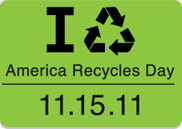
America Recycles Day (ARD)

November 15 is America Recycles Day (ARD) a day to promote the social, environmental and economic benefits of recycling. This day was started by the National Recycling Coalition in 1997. ARD is the only nationally recognized day dedicated to the promotion of recycling in the U.S. (World Recycling Day is on July 8).

The purpose of America Recycles Day is to encourage more people to join the movement to create a better natural environment. ARD has helped millions of Americans become better informed about the importance of recycling and buying products made from recycled materials.

Through America Recycles Day, the National Recycling Coalition helps volunteer coordinators organize events in hundreds of communities nationwide to raise awareness and educate people about the benefits of recycling.

Recycling has a prominent role in reducing greenhouse gas emissions that contribute to global warming. ARD is a day to promote and celebrate recycling. To join an event or make an ARD pledge click here.

© 2011, Richard Matthews. All rights reserved.

Related Posts
Recycling In America: More Than Just A Feel Good Experience
Recycling Can Create Millions of Jobs
Recycling Waste Tires
PepsiCo Canada's 100% Recycled EcoGreen Bottle Breakthrough
LG's Recycling Leadership
TerraCycle Reach a Major Milestone in Non-Recyclables
GreenBlue's Packaging Design
Microsoft Selects Greys Harbor for 100% Recycled Paper
Steve Jobs: Apple's Product Recycling Efforts
The 3 Stages of a Recycling Loop
Study on US Environmental Attitudes
Coke's Zero Waste Carbon Neutral Olympic Sponsorship
HP's Sustainable Innovation
Best Practices for Sustainable Businesses
Video: Does Your Business Recycle?
Video: Profitable Recycling for Business
Video: The Perils of Plastic Waste
House Made of Plastic Bottles in Nigeria
Video: Plastic Bottle Greenhouse
Video: House Built With Plastic Bottles