Showing posts with label sensitive. Show all posts

Shell Downplays Crude Oil Spill in the Gulf of Mexico (Video)

On May the 12th Shell claims that its offshore Brutus platform spewed 88,200 gallons of crude (2,100 barrels) into the Gulf of Mexico. The spill in Shell's Glider field created a 13 mile long by 2 mile wide oil slick in an area 97 miles south of Port Fourchon, Louisiana. Shell offered the standard commentaries as dictated by their post-spill public relations protocols. The incident has been contained the said and "cleanup operations are underway." Shell spokesperson Kimberly Windon added, "no release is acceptable, and safety remains our priority as we respond to this incident."

Historically post spill press releases from the offending company tend to radically underplay the amount spilled and the dangers that these spills pose. 


BP infamously underplayed the magnitude of the Deepwater Horizon spill in the Gulf of Mexico. A total of eleven men died on that day in 2010. This oil spill went on to become the largest in history leaking a staggering 3 million barrels of oil to into the Gulf. The cost to marine life has been devastating and it is being felt to this day. In 2015 BP reached a settlement with the US government in which it agreed to pay $20 billion in fines and penalties.

The recent Shell leak appears to have originated in a subsea well-head flow line that connects four wells in the Green Canyon area to the Brutus platform. In 2011 another of Shell's flow lines sprung a leak, the time in the North Sea. Shell has also been the subject of derision for its test drilling in the Arctic. Their Arctic drilling exploits have not gone well. First one of their oil rigs ran aground and then they abandoned the Arctic as the price of oil fell below the point where this oil was financially viable. Then on Friday May 13th Shell was forced to give up all of its oil concessions in the Arctic except one.

The May 11th oil spill adds to the large and growing number of spills. This is but the latest of “thousands” of oil industry accidents in the Gulf of Mexico every year. In fact spills have become commonplace, as evidenced by this summary of fossil fuel spills in 2015.

Whether by pipe, rail or tanker, oil cannot be safely transported.  Offshore oil has its own unique set of risks that set it apart and make it an even more dangerous proposition. However, offshore oil is an avoidable tragedy.

For these and other reasons President Obama is being pressed to deny any additional offshore oil drilling leases in the Gulf.

Greenpeace Stalls Arctic Drilling by Blocking Shell's Ice Breaker (Video)

Late in July an icebreaker that is crucial to Shell's drilling operation in the Arctic sea was turned back by Greenpeace activists in Portland, Oregon. Activists spent almost 2 days suspended from St. Johns Bridge, while others took to kayaks in Willamette River below. However they managed to block Shell's icebreaker, the MSV Fennica from leaving the city on July 30th. The emergency equipment on-board the Fennica is essential for Shell's drilling activities in the Arctic.

Hundreds of people gathered on the dock in support of the Greenpeace protest. After being threatened with fines of up to $10,000 an hour, law enforcement succeed in removing the activists from the area allowing the Fennica to pass. Here is a video report from Democracy Now.


Related
Obama Administration Cuts Shell's Arctic Drilling in Half
The Unacceptable Risks of Arctic Drilling
After a Failed Cover-up Shell Sub-Contractor Pleads Guilty
Save the Arctic from a "Death Sprial"
Greenpeace forces Lego to Dump Shell
Shell Pauses its Arctic Drilling for 2013
Video of the Oil Rig Belonging to Shell that Ran aground in Alaska
Shell Oil Rig Runs Aground in Alaska Raising Safety Concerns
Shell's Game with the Future of the Arctic
Lawsuit Protecting the Arctic from Oil and Gas Drilling
Another Offshore Oil Leak this Time from Shell

Ecuador to Drill for Oil in the Amazon Rainforest

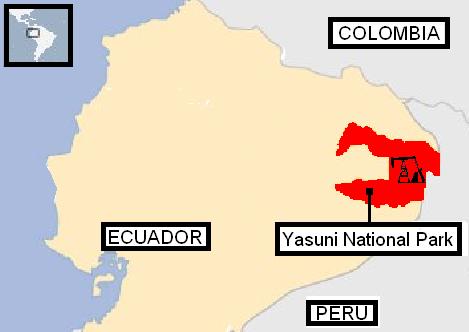
Ecuador has abandoned a UN backed conservation plan that would have paid the country not to drill for oil in the 10,000 sq km (3,860 sq miles) Yasuni National Park located in the Amazon rainforest. According to President Rafael Correa, the plans to drill in the area are the result of rich nations failing to live up to their commitments.

"The world failed us," explained Correa, "It was not charity that we sought from the international community, but co-responsibility in the face of climate change."

Correa was looking to recover half of the revenues from drilling equivalent to $3.6 billion of the value of the reserves in the park's Ishpingo-Tambococha-Tiputini (ITT) oil field, over 13 years. The Yasuni oilfields hold an estimated 846 million barrels of crude, or 20 percent of Ecuador's reserves. Oil is Ecuador's primary export.

Drilling in the park is an environmental calamity as this is the home of a number of different indigenous communities and one of the most biodiverse areas in the world. This area is also home to species of birds, monkeys and amphibians found nowhere else on earth.

The drilling will reportedly add more than 400 million tonnes of carbon dioxide emissions into the atmosphere. The Yasuni drilling will add to a number of other hydrocarbon projects in the western Amazon.

A total of 78 percent of Ecuadorians are reportedly against drilling in the park. Although Correa was faced with protests, the hundreds of people gathered in Quito are unlikely to change plans to drill which are expected to start in the next few weeks.

Just after signing the executive decree, Correa said the decision was one of the most difficult he had to take as president.

© 2013, Richard Matthews. All rights reserved.

Related Articles
Why Oil Prices Matter for Renewable Energy
The Dangers of Transporting Fossil Fuels
Debate: McKibben vs. Epstein—Are Fossil Fuels a Risk to the Planet? (Video)
350.org's Connect the Dots End Fossil Fuel (2012)
350.org's Bill McKibben on Connect the Dots (2012)
4 Principles for Climate and Energy Legislation
The Cost of Carbon
Offshore Oil is an Avoidable Tragedy
Shell Oil Rig Runs Aground in Alaska Raising Safety Concerns
Two More Reasons to Move Beyond Fossil Fuels

Video of the Oil Rig Belonging to Shell that Ran aground in Alaska

Shell Oil Rig Runs Aground in Alaska Raising Safety Concerns

As 2012 drew to a close we were given yet another reason to be weary of fossil fuels. On December 31st an offshore oil drilling rig belonging to Shell ran aground in the Gulf of Alaska after it broke free from tow ships in rough seas (see video). The rig called the Kulluk is carrying more than 140,000 gallons of diesel fuel and 12,000 gallons of lubricating oil and hydraulic fluid.

The US Coast Guard managed to rescue the 17 crew members on board the Kulluk. Alaska's wildlife, including a quarter million birds are being threatened by the rogue oil rig.

Spills in Alaska are potentially far more destructive due to the diverse array of wildlife they impact. Additionally the remoteness of Alaska compounds the already difficult task of managing a spill.

On March 24, 1989 in Prince William Sound, Alaska, an oil tanker named Exxon Valdez spilled between 260,000 to 750,000 barrels of oil. The Valdez spill is second only to the Deepwater Horizon a well owned by BP in the Gulf of Mexico. This environmental disaster killed 11 men and spewed crude for three months in 2010. A total of 4.9 million barrels of oil poured into the Gulf making it the largest accidental marine oil spill in the history of the petroleum industry.

BP's ecological infamy is not reserved to the Gulf of Mexico, the company has a long history of oil spills at its Alaskan pipeline. In July 2011, a BP oil pipeline at its Lisburne field ruptured during testing and spilled a mixture of methanol and oily water onto the tundra. The Alaska Department of Environmental Conservation said the spill amounted to 2,100 to 4,200 gallons.

In a more recent example of the risks associated with oil in the state, a Spanish drilling company suffered a blowout at its well on Alaska’s North Slope in February 2012.

Sadly, these events are not anamalous. As reviewed by a 2010 National Wildlife Federation report oil disasters are tragically common.

Marilyn Heiman, director of the Pew Environment Group’s U.S. Arctic program, said “Given that the Kulluk has run aground, it calls into question our readiness to drill in such a remote and risky region,” Heiman said. “The Obama administration needs to impose Arctic-specific safety, training and spill response standards. Clearly we’re not there yet.”

In his haste to mollify an energy hungry public President Obama is putting the environment at risk. In light of recent accidents and potential impacts to wildlife, oil exploitation is nothing short of irresponsible, particularly in Alaska. While a prohibition on drilling in Alaska would make sense, at the very least resources should be put in place to deal with inevitable spills.

© 2013, Richard Matthews. All rights reserved.

Related Articles
Video of the Shell Oil Rig Grounded in Alaska
Shell's Game with the Future of the Arctic
Another Offshore Oil Leak this Time from Shell
Lawsuit Protecting the Arctic from Arctic Drilling
Oil Spills off the Coast of New Zealand
Transocean to Pay $1.4 billion for its Role in the Gulf Oil Spill of 2010
The Cost of Oil: BP Barred from Doing Business with the US
The Costs of Oil: BP Liable for Tens of Billions
BP's Corporate Irresponsibility
Responsibility for the Costs of the Gulf Oil Spill
The Costs of Offshore Drilling
Managing the Massive Gulf Oil Spill
Offshore Oil is an Avoidable Tragedy
Two More Reasons to Move Beyond Fossil Fuels
The End of Oil and the Next Energy Economy
Reigning in Irresponsible Oil Giants Chevron and Exxon Mobil
The Business of Climate Change Deception
Planning a Future Without Oil
Koch Industries' Environmental Crimes
Koch Industries Financing Climate Denial
Koch Industries Destroys the Environment & Funds Climate Denial
Protecting the Planet from Corporate Influence