Showing posts with label incentives. Show all posts

Fiscal Cliff Deal Extends PTC and ITC for Wind Energy

On the cusp of the fiscal cliff the House voted to approve a sweeping tax deal that also extends the Production Tax Credit (PTC) and Investment Tax Credit (ITC) for wind energy for one year. The wind industry has grown tremendously under the PTC and ITC and it can be expected that the year long extension will continue this growth into 2013. This is good news for America’s 75,000 workers in wind energy in 50 states. While the deal passed overwhelmingly in the Senate the House vote was much closer (257-167). Predictably many Republicans did not support the initiative and almost pushed the credits over the cliff.

The U.S. Energy Information Administration (EIA) reported that wind set a new record in 2012 by installing 44 percent of all new electrical generating capacity in America, leading the electric sector compared with 30 percent for natural gas.

The American Wind Energy Association (AWEA) said that the extension of the wind energy PTC and ITC will save up to 37,000 jobs and create far more over time, The extension will also revive business at nearly 500 manufacturing facilities across the country.

One study indicated that half the American jobs in wind energy—37,000 out of 75,000—and hundreds of U.S. factories in the supply chain would have been at stake had the PTC been allowed to expire.

Margie Alt, executive director of Environment America said that wind energy is a very significant front in efforts to diminish greenhouse gases.

“In powering nearly 13 million homes across the country already, wind energy avoids as much global warming pollution as taking 13 million cars off the road each year, according to a recent Environment America Research & Policy Center report. Our current wind energy capacity also reduces air pollution by avoiding 137,000 pounds of smog-forming emissions and 91,000 pounds of soot-forming emissions every year,” Alt said.

© 2013, Richard Matthews. All rights reserved.

Related Articles
US Wind Energy Market Review and Forecasts for 2012
China and the Growth of Global Wind Power
The Implications of the Expiration of US Renewable Energy Subsidies
Obama 2013 Budget Seeks to Make Renewable Tax Credits Permanent
IAIA12 Energy Future: The Role of Impact
UK Wind Energy
Scottish Wind Energy Can Power Europe
Cuts to UK Wind Power ROCs and FiTs

Canada's Mystery Biodiesel Train

As reported by CBC News, between June 15 and 28, 2010, biodiesel tanker cars have been sent back and forth numerous times between Canada and the US by CN Rail but were never unloaded. Ostensibly the purpose of these mystery rides may be attributable to efforts to benefit from incentives offered by Natural Resources Canada's $1.5-billion biodiesel program.

According to leaked internal CN documents, the rail company stood to make $2.6 million for the effort. Each shipment generated bills of lading, customs import and export forms that suggest total biodiesel shipments of 1,984 cars — which, taken together, would be valued in the hundreds of millions.

An Email from Teresa Edwards, CN’s manager of transportation for Port Huron/Sarnia stated 'If we can get in more flips back and forth we will attempt to do so. Each move per car across the border is revenue generated for Sarnia/Port Huron.' The email also says that this movement “has the potential to make a lot of money for CN so need everyone’s assistance to maximize the number of trips that we make and ensure that it all moves smooth.”

According to internal CN records, Train 503 shipped the biodiesel to Port Huron, Mich., from Sarnia, Ont.; Train 504 brought them back. These back and forth train journeys generated an entirely unnecessary carbon footprint.

The US biodiesel companies listed as customers were HeroBX and Northern Biodiesel. Northern Biodiesel did not answer calls from CBC, and it is unclear whether it is still operating as a business and HeroBX refused to respond.

CN records say the Canadian company that arranged the deal is Bioversel Trading Inc., which is being investigated by the Canada Border Services Agency on allegations it made false statements to avoid duties in shipping biodiesel to Romania and Italy. Officials are now investigating claims the companies were routing American-made biodiesel through Canada and falsifying its origin to avoid paying tens of millions of dollars in European anti-dumping duties.

Related Articles
The Biofuels Pipedream
US Military may Stop Buying Biofuels
Earth Day Special: Green Blueprint

Tell the G20 to End Fossil Fuel Subsidies Now

Our tax dollars are being used to subsidize massive oil companies that are making astronomical profits. Big Oil is not only responsible for climate change they are using their record-breaking profits on massive misinformation campaigns and political influence. A growing number of people are seeking to put an end to this $600 billion dollar a year travesty. One of those groups is Avaaz.org, they are organizing a protest against Big Oil when the G20 convenes in Washington and a petition to put an end to fossil fuel subsidies. The following is an excerpt of an Avaaz.org article and call to action called Paid to Pollute:

Next week we have a chance to draw a line in the sand -- the G20 finance ministers are meeting in Washington [The G20 Meeting of Deputy Ministers of Finance will take place on April 19 and 20 in Washington] and we can meet them there with a massive global outcry calling on them to finally stop paying polluters billions in our tax dollars. These leaders have agreed to end black subsidies but failed to act, let's hold them to their word.

Sign the petition and tell everyone -- it's time to end polluter payments for good.

The timing couldn’t be more urgent -- extreme weather continues to smash records and island nations are entering negotiations to relocate their entire populations. Yet oil, coal and gas companies pay ‘experts’ to soil public debate with false arguments like climate change isn’t real and we have no reason for action. All of these are ploys to make these companies more money -- a recent study has shown that for every $0.01 increase in petrol prices, the oil companies make $200bn more in profits. Last year Exxon alone made $4.7 million in profits every hour!

The truth is that a clean energy revolution is close, and if realised it would permanently break the fossil fuel barons’ dangerous grip on our planet and politicians. Already many forms of clean energy are finding ways to compete and if we ended government gifts to fossil fuels it would level the playing field overnight, spurring a worldwide surge in clean energy.

The G20 is the first in a long road to ending polluter payments -- but it's a battle we can win.

The petition reads: "To G20 leaders: As concerned global citizens, we urge you to disclose and end direct hand-outs to fossil fuel producers, and also start the phase-out of schemes that drive demand for dirty energy. We’re on the brink of a climate catastrophe, and stopping taxpayer gifts to fossil fuels would level the energy playing field overnight, spurring a worldwide surge in clean energy. Honour your previous commitments and make ending polluter payments the top global priority for the upcoming UN Earth Summit."

Sign the petition, and forward it widely.

Together, time and time again we have achieved the impossible. And now, our entire planet's future is at stake. Let’s launch a climate spring and take a step closer to freeing the world from the tyranny of fossil fuels.

More information:
Slate: "Dirty Money"
Financial Post: "Obama says tax breaks for Big Oil need to end"
Daily Kos: "Big-five oil companies: $101 billion in profits for 2011"
Guardian: "Phasing out fossil fuel subsidies 'could provide half of global carbon target'"
Center for American Progress: "Pumped and Quartered"

Related Posts
End Fossil Fuel Subsidies
GOP Fights Removal of Oil Subsidies
Obama Striving to Put an End to Oil
Obama's Call for an End to Oil
Reigning in Irresponsible Oil Giants
Connect the Dots End Fossil Fuel
Air and Water in the OECD Report
Highlights of Obama's 2011 State of Union Address
Environmental Politics: Obama Versus
The G20 and the Transition to a Greener Economy
The G20 and the Developing World

Cuts to Ontario's Wind and Solar FiTs

The Canadian province of Ontario announced cuts to Feed-in Tariff (FiT) for wind and solar on Thursday March 22. Enacted in 2009, the tariffs have driven the province's exponential renewable energy growth. Wind power in Ontario now has more than 1,750 MW of installed capacity and they plan to have 7,500 MW by 2018. Solar power in the province can now generate more than 200 MW. In 2011, Ontario's generous FiTs also provoked a great deal of interest from international players.

According to the government of Ontario, the Green Energy Act has leveraged more than $27 billion in new investment and economic opportunities. It also has created 20,000 clean energy jobs.

The cuts to Ontario's FiTs are due to pressure from conservative legislators, the cost of electricity and the steep decline of equipment prices in solar and wind. Rates are now adjusted annually to reflect current prices.

The government has expedited the approval process and made more funds available for local communities. Ontario is also calling for new strategies in other cleantech sectors like smart grid technologies.

© 2012, Richard Matthews. All rights reserved.

Related Posts
Ontario Urged to Stay with Green Energy Act
Green Energy Beats Tax Cuts in Ontario
Will Ontario Vote for the Green Energy Act?
Ontario's Green Energy Act is Leading the Way
Ontario's Green Energy Investments in Sault St Marie
Ontario Electric Vehicles Incentive Program

President Obama's 2013 Budget Seeks to Increase EV Tax Credits

President Obama's proposed budget seeks to increase tax credits for electric vehicles (EVs). According to the President's proposed budget, EV incentives would increase from $7,500 to $10,000 beginning in fiscal 2013.

The idea behind the tax credit program is to increase sales of EVs which are not selling as well as many had hoped. To attain the President's goal of a half million EVs on the road by 2015, the Verge reports that sales of plug-in vehicles will need to grow by 143 percent each year in order for the President to reach his goal of a million EVs on the road by 2015.

Americans are still not habituated to the idea of EVs. One factor inhibiting the growth of EV sales in the US is the relatively high sticker price. The Tesla Model S sells for $57,400 and the Fisker Karma sells for a whopping $102,000. Even the more affordable Nissan Leaf sells for $35,000.

Governments have an important role to play fostering the adoption of electric vehicles. Even though ten thousand dollars is a sizable tax credit, EV prices may have to be lower still to make these vehicles affordable for the average American.

It may be hard to gain desirable penetration rates for EVs until they have a lower price point and that can only be achieved through mass production. To help the sector to grow and achieve economies of scale, governments may have to fill the void until market demand can drive mass manufacturing.

For a summary of the enviromentally oriented elements within President Obama's 2013 Budget click here.

© 2012, Richard Matthews. All rights reserved.

Related Posts
Obama Budget 2013: Striving to Put an End to Oil Subsidies
Obama's 2013 Budget Seeks to Make Renewable Tax Credits Permanent
Obama's National Goal of One Million EVs by 2015
US Government Incentives for EVs
The Value of Electric Vehicle Subsidies
Governments and the Growth of EVs
Government Investment Fuels the Growth of EVs
Electric Vehicles Create Jobs
Survey Shows China More Receptive to EVs than America
EV Sales Predictions in the US
The US is Positioned to Lead the Global Competition for EV Supremacy
American Electric Vehicle Strategy
Study Finds EVs Better than a Renewable Energy Standard
US DOE Supporting EVs and Creating Jobs
DOE's EV Oriented Transportation Budget
Beneficiaries of US Government Investment in EVs
Factors Determining Adoption Rate of EVs
Electric Vehicles Increasingly Competitive

Quebec's Electric Vehicle Incentive Program

Quebec has launched a new program that is designed to increase the use of its renewable energy resources to power ground transportation. Quebec gets almost all of its electricity from hydro power which is a renewable resource. Quebec is the fourth largest hydroelectric producer in the world making electric vehicles a natural fit. Quebec already has the electricity to power at least one million elelctric cars. The province's Electric Vehicles Action Plan will make transportation electrification a centerpiece of Quebec's efforts to develop a new sustainable mobility system.

Quebec has one of the most ambitious GHG reduction targets in North America and the provinces electric vehicle strategy is the cornerstone of that effort. The province wants to encourage a thriving green economy and the province's plan will see an investment of 165 million between 2011 and 2020. Quebec's program is titled Running on Green Power. It is scheduled to launch on January 1, 2012.

With its abundant hydroelectric power, Quebec is a world leader in the fight against climate change. According to Environment Canada, Quebec's electrical grid is the cleanest in the country with an electricity intensity of only 2 grams of CO2 (2g CO2e/kWh) equivalent emitted for every kilowatt-hour (kWh). Quebec also has the lowest per-capita greenhouse gas emissions in Canada.

The 4.5 million vehicles in Quebec consume 35 percent of the province's oil consumption. The goal is to make 25 percent of all of Quebec's light passenger vehicle sales electric (plug-in hybrid or fully electric) by 2020.

The province's Deputy Premiere Nathalie Normandeau said the goal of the program is to reduce oil consumption, make electricity the fuel of choice for cars, buses, and trains.

According to Clement Gignac, the Minister of Economic Develolopment, Innovation and Esort Trade, one of the goals of the Electric Vehicles Action Plan is to spur the development of innoavtvative market-driving products and thus the creation of a world-class industrty.

Pierre Arcan, the Minister of Sustainable Development Environment and Parks indicates that the transportation sector accounts for 43 percent of Quebec's GHGs. That is up 28 percent since 1990.

Sam Harnad, the Minister of Transport indicates that the province has succeeded in increasing public transit use by nearly 8 percent. According to the Minister, 50 percent of all trips on public transit already involves electrically powered equipment.

According to government figures, Quebecers could save $37 per week with plug-in hybrids and $39 per week with fully electric vehicles.

For individuals who purchased a vehicle in 2011 were offered a refundable tax credit for the purchase or lease of a new fuel efficient vehicle. As of January 1, 2012, the refundable tax credit for the purchase or lease of fuel efficient vehicles will be replaced with rebates for the first purchasers of hybrid or electric vehicles. The rebate will be deducted from the after-tax purchase or lease price.

In the case of electric vehicles the amount of the rebate will depend on the battery s elelctgrical storage capacity.

To help Quebecers charge their vehicle, those who purchase or lease eligible vehicles will also be able eligible for grants to purchase home charging stations. Quebec is the first province in Canada to provide financial assistance for these home charging stations.

A total of $50 million will be set aside for purchase or lease rebates for hybrids, electrics and charging stations.

All electric and plug-in hybrids with a minimum 4 KWH battery will be eligible for a rebate of between 5
$5000 and $8000 in 2012. Low speed electric vehicles (LSVS) and hybrids will be eligible for a rebate of $1000.

Eligible hybrids must not exceed 5.27 liters/100km for gas-powered vehicles and 4.54 liters/100km for diesel-powered low speed electric vehicles.

For more information see Quebec EV action plan.

© 2011, Richard Matthews. All rights reserved.

Related Posts
Canadian Electric Vehicle Incentive Programs Ontario's Electric Vehicles Incentive Program
BC's Electric Vehicle Incentive Program
The B.C. Government's Greener Transportation Incentives
Hydrogen Powered Vehicles and Infrastructure in the Province of BC
The BC Hydrogen Highway
The Waste Hydrogen Utilization Project (IWHUP) in BC
World's First Small-Scale Hydrogen Liquefaction Plant to be Built in BC

Ontario Electric Vehicles Incentive Program

As of July 1, 2010, Ontario consumers were eligible for an incentive ranging from $5,000 to $8,500 towards the purchase or lease of a new plug-in hybrid electric or battery electric vehicle. The Ontario EV program also offers non-monetary incentives. These include access to high-occupancy vehicle (HOV) lanes – even if only one person is in the car – and access to public recharging infrastructure at Ontario government parking lots (such as GO bus and train stations around the Greater Toronto Area).

The EV incentive program applies to new, highway capable, plug-in hybrid eligible electric vehicles (PHEVs) or battery electric vehicles (BEVs) purchased on or after July 1, 2010. The value of the incentive is based on the vehicle’s battery capacity and ranges from $5,000 for a 4 kWh battery to $8,500 for a 17kWh battery. The value of the incentive for leased vehicles is scaled to the term of the lease.

Consult the official list of vehicles that currently qualify for the incentive.

The EV incentive program is open to persons, businesses, municipalities, non-government organizations and non-profit groups. Applicants can receive incentives for no more than five vehicles per calendar year.

Leased vehicles are eligible for an incentive depending on the term of the lease and whether the vehicle is used for personal or fleet purposes. To qualify for the full value of the incentive, a minimum 36-month lease term is required. For vehicles leased for shorter terms, the incentive will be applied according to the following schedule:

Term of Lease (months)    Personal Vehicles       Fleet Vehicles
               12                                         33.3%                               0%
               24                                         66.7%                               0%
               36                                          100%                           100%

If vehicles do not meet the specified term requirements, the incentive payment must be repaid in full.

To qualify for the incentive, EVs for personal use must be registered and plated in Ontario for a minimum of 12 months. Fleet vehicles must be registered and plated in Ontario for a minimum of 36 months to qualify for the program.

Eligible electric vehicles purchased in another jurisdiction can qualify for the incentive only if the registration of the vehicle in Ontario is the first time the vehicle has been registered in any jurisdiction. Vehicles that have been registered in other jurisdictions prior to Ontario do not qualify for the incentive.

If vehicles do not meet the residency requirements for the specified term, the incentive payment must be repaid in full.

There are two ways to receive the incentive. The automobile dealer can apply the incentive at the point-of-sale and then submit the incentive application on your behalf. Alternatively, you can purchase the vehicle at full price and apply directly for the incentive by completing the application form and submitting it to the Ontario Ministry of Revenue.

The incentive is applied to the after tax value of the vehicle. In the case of a leased vehicle, the monthly principle amount will reflect the reduced cost of the vehicle.

Download the incentive application form (PDF version, Web version) and guide (PDF version, Web version).

Consult the list of eligible vehicles and incentive values
Download the incentive application form (PDF version, Web version) and guide (PDF version, Web version).
If you are a vehicle manufacturer, download an application to qualify your vehicle for the Electric Vehicle Incentive Program

Contact Service Ontario at 1-866-668-8297

© 2011, Richard Matthews. All rights reserved.

Related Posts
Canadian Electric Vehicle Incentive Programs
Quebec's Electric Vehicle Incentive Program
BC's Electric Vehicle Incentive Program
The B.C. Government's Greener Transportation Incentives
Hydrogen Powered Vehicles and Infrastructure in the Province of BC
The BC Hydrogen Highway
The Waste Hydrogen Utilization Project (IWHUP) in BC
World's First Small-Scale Hydrogen Liquefaction Plant to be Built in BC
Ontario's Green Energy Investments in Sault Ste. Marie
Ontario's Green Energy Act is Leading the Green Economy
Ontario Urged to Stay with Green Energy Act

The Waste Hydrogen Utilization Project (IWHUP) in BC

Treatment of waste hydrogen is being recylced for use in vehicular and stationary power applications in British Columbia, Canada. Captured waste hydrogen gas from places like sodium chlorate plants is being recycled into compressed hydrogen. It is known as the Waste Hydrogen Utilization Project (IWHUP). In the IWHUP project waste hydrogen that is normally burned off is being captured and recycled so that it can be used as fuel. The project in Vancouver, British Columbia, Canada where they are building the world’s first small scale liquid hydrogen plant.

This contribution agreement aims to showcase an integrated use of hydrogen in a real-world setting. During the first stage, waste hydrogen from a sodium chlorate manufacturing plant is captured and processed for use as a source of clean power. It is then distributed for use among many applications: passenger buses; cargo trucks; utility vehicles (pick-up trucks) and; stationary power for a car wash facility.

This project represents a comprehensive consortium approach to demonstrating innovative technology through several funding partners and project participants. Together with Sustainable Development Technology Canada, and Natural Resources Canada (through the Canadian Transportation Fuel Cell Alliance), this project's total costs exceed $18 million. This project allows several stakeholders to contribute to developing solutions for clean energy, while many end-users receive an opportunity to learn new technology applications in their key responsibility areas.

It is expected that new knowledge, solutions, and practices in the use of various hydrogen technologies will be acquired through the operations of the IWHUP project. In addition to the anticipated reduction in harmful emissions, this project's integrated approach will also allow for an examination of the real-world functionality of the Hydrogen Highway. Eventually, this project's approach may lead to a significant number of vehicles in the Greater Vancouver Area running on clean power.

This is the type of collaborative project that makes sense both as a model of public-private cooperation and as a practical means of reducing our footprint.

The UWHUP project employs several of the basic building blocks of environmentally sustainable businesses. Its use of recycling, efficiency and alternative energy is be a model that others can follow.

These types of innovative approaches not only demonstrate entirely new strategies, they also show how we can work with existing industrial processes to make them more efficient and better for the environment.

© 2011, Richard Matthews. All rights reserved.

Related Posts
Hydrogen Powered Vehicles and Infrastructure in the Province of BC
The BC Hydrogen Highway
World's First Small-Scale Hydrogen Liquefaction Plant to be Built in BC
Canadian Electric Vehicle Incentive Programs
Quebec's Electric Vehicle Incentive Program
Ontario's Electric Vehicles Incentive Program
BC's Electric Vehicle Incentive Program
The B.C. Government's Greener Transportation Incentives

The BC Hydrogen Highway

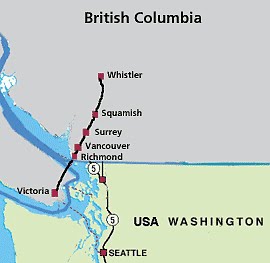
The Canadian province of British Columbia (BC) built a hydrogen highway system for the 2010 Olympics. The BC hydrogen highway runs between the cities of Vancouver and Whistler. It was designed to showcase zero-emissions hydrogen technology.

There are hydrogen refueling stations near Victoria and on the University of British Columbia campus in Vancouver. In Surrey, hydrogen refueling station was opened in March 2002. As of late 2006, hydrogen fueling stations were built in Victoria, Vancouver and Surrey.

The province of British Columbia and BC Transit have also built hydrogen powered buses which were used as transport along the hydrogen highway during the Olympics.

Companies like Ford test drove its Focus FCV cars along the hydrogen corridor gathering information about operating hydrogen cars in cold weather conditions.

In addition to the British Columbia Hydrogen Highway Initiative, Canada also has invested in three other hydrogen initiatives as well. The Vancouver Fuel Cell Vehicle Project, Hydrogen-Powered Delivery Van Project and the Hydrogen High-Pressure Valve Development Project.

These three programs are part of the Canadian Transportation Fuel Cell Alliance's goal of moving Canada towards expanded use of hydrogen and fuel cell technologies.

© 2011, Richard Matthews. All rights reserved.

Related Posts
Hydrogen Powered Vehicles and Infrastructure in the Province of BC
The Waste Hydrogen Utilization Project (IWHUP) in BC
World's First Small-Scale Hydrogen Liquefaction Plant to be Built in BC
Canadian Electric Vehicle Incentive Programs
Quebec's Electric Vehicle Incentive Program
Ontario's Electric Vehicles Incentive Program
BC's Electric Vehicle Incentive Program
The B.C. Government's Greener Transportation Incentives

World's First Small-Scale Hydrogen Liquefaction Plant to be Built in BC

British Columbia announced $870,000 in provincial funding for the development of the world's first small-scale hydrogen liquefaction plant. The plant will be built in North Vancouver and it will supply clean hydrogen throughout the Pacific Northwest. It will produce 1200 kg/day of liquid hydrogen which is enough to fuel a fleet of over 1,500 passenger fuel cell vehicles or 50 transit busses.

“Innovation like this by B.C. companies shows why the province is and will remain a world-centre for hydrogen and fuel cell technology,” said Premier Christy Clark. “We will continue to champion made-in-B.C. hydrogen, electricity, and natural gas as clean, green fuels of the future for B.C. families.”

B.C.-based Hydrogen Technology & Energy Corporation (HTEC), and Sacré-Davey Engineering, along with international partner Air Liquide, are building this innovative, high-tech plant.

“HTEC is excited to lead this innovative project that is enabled by progressive government support, leading-edge hydrogen technologies and the availability of clean hydro power. It demonstrates that solid opportunities are beginning to emerge for businesses and investors in hydrogen energy,” said Colin Armstrong, HTEC Vice President.

The plant plans to use proprietary technology and processes developed by HTEC for purification and Air Liquide’s Advanced Technical Group from France for liquefaction. In addition to making cleaner fuel the plant will also provide about 18 local high tech jobs.

To learn more about B.C.’s hydrogen and fuel cell innovation click here.

© 2011, Richard Matthews. All rights reserved.

Related Posts
Hydrogen Powered Vehicles and Infrastructure in the Province of BC
The BC Hydrogen Highway
The Waste Hydrogen Utilization Project (IWHUP) in BC
Canadian Electric Vehicle Incentive Programs
Quebec's Electric Vehicle Incentive Program
Ontario's Electric Vehicles Incentive Program
BC's Electric Vehicle Incentive Program
The B.C. Government's Greener Transportation Incentives

Hydrogen Powered Vehicles and Infrastructure in the Province of BC

British Columbia (BC) has announced incentives to increase their support for hydrogen fuel cell vehicles and infrastructure. These programs will help create Canada's first publicly accessible hydrogen refueling station. The initiatives were announced by the Government of BC as a part of its clean energy strategy.

A hydrogen fuel cell does not need to be recharged as it converts the chemical energy of fuel (hydrogen, natural gas, methanol, gasoline, etc.) and an oxidant (air or oxygen) into electricity. It produces almost no emissions.

BC already has the largest number of hydrogen fueling stations in Canada. More than $6 million in provincial funding has been earmarked for new charging stations and upgrades to hydrogen fueling stations at existing facilities.

The news was welcomed by the Canadian Hydrogen and Fuel Cell Association(CHFCA). The announcements from the province led Eric Denhoff, President and CEO of the CHFCA to say:

"These two initiatives are further evidence of the strong commitment the Government of BC has made to supporting British Columbia's world-leading hydrogen infrastructure, and the organizations involved in the province's hydrogen and fuel cell sector."

British Columbia is a world leader in hydrogen fuel cell transportation solutions. An estimated 75 per cent of Canadian fuel cell and hydrogen-based research and development expenditures have been invested in British Columbia.

The government of BC's investments in hydrogen are also creating green energy jobs in the province. The province is home to 35 hydrogen and fuel cell technology companies that employ 1,200 people. These companies include Ballard Power Systems, Angstrom Power, the Automotive Fuel Cell Cooperation, Powertech Labs, HTEC and Sacre-Davey Engineering.

The Automotive Fuel Cell Cooperation in Burnaby is a company that employs more than 200 people. The province also attracted Mercedes-Benz to build a fuel cell manufacturing facility in Burnaby. In March 2011, Mercedes-Benz Canada announced plans to build the new facility.

By 2016, global sales for the hydrogen and fuel cell sector are estimated to be $8.5 billion, creating an estimated 14,000 jobs in Canada. BC Transit already has fleet of 20 hydrogen-powered fuel cell buses in Whistler which is the largest deployment of its kind in the world.

"These announcements by the Government of BC create tremendous momentum for the hydrogen and fuel cell industry," said Mr. Denhoff. "We have world-class research and development at the NRC Institute for Fuel Cell Innovation and UBC's Clean Energy centre; world-leading manufacturing at Ballard and the Automotive Fuel Cell Cooperation; and a host of innovative small and medium enterprises supporting the research and development efforts in the province."

For more information about BC's hydrogen initiatives including which vehicles qualify under the new program click here.

© 2011, Richard Matthews. All rights reserved.

Related Posts
The BC Hydrogen Highway
The Waste Hydrogen Utilization Project (IWHUP) in BC
World's First Small-Scale Hydrogen Liquefaction Plant to be Built in BC
Canadian Electric Vehicle Incentive Programs
Quebec's Electric Vehicle Incentive Program
Ontario's Electric Vehicles Incentive Program
BC's Electric Vehicle Incentive Program
The B.C. Government's Greener Transportation Incentives

The B.C. Government's Greener Transportation Incentives

The Canadian province of British Columbia's SCRAP-IT® program provides financial remuneration for vehicles with poor fuel efficiency and incentives for greener forms of transportation. Reducing (inefficient) vehicular traffic improves air quality and reduces emissions.

The BC SCRAP-IT Society fund is already in operation and with new funding it will expand the program and remove even more high-polluting vehicles from B.C. roads. The SCRAP-IT Society has already removed over 30,000 vehicles from B.C. roads, resulting in a reduction of over 200,000 tonnes of GHGs. The program has a $2.5-million budget.

The success of the program has prompted Dennis Rogoza, CEO of the BC Scrap-It Society to say:
"We're excited about moving more power polluters off of B.C. roads. It's clear with programs like these, British Columbia is committed to providing greener options for a cleaner future. These older vehicles scrapped by our program represent emissions that are up to 60 times greater than that of newer vehicles"

The government of B.C. offers a total of seven programs that provide incentives to encourage greener transportation.

HERE ARE SEVEN INCENTIVE PROGRAMS:

Option #1
Replacement Vehicle - $300, $600 or $1,000*
(*based on CO2 emission reduction), PLUS a $250 discount at the point of sale

$300 for a reduction of up to 5 tonnes.

$600 for a reduction of 5.1 to 10 tonnes.

$1,000 for a reduction of 10.1 tonnes, or more.

Plus a $250 discount, before taxes, at the point of sale. Note: You must purchase or lease a 2004* or newer vehicle from a Participating Dealership in order to receive the discount.

Option #2
TransLink 3 Zone MultiPass - Lower Mainland
A 9 month 3 zone MultiPass

BC Transit ECOPASS - Victoria
A 1 year ECOPASS valid on the Victoria Regional Transit System.

Option #3
New Bike
Up to $500 off the purchase of a new bike. A 10% discount, up to $100 at the point of sale and the remainder, 40%, up to $400 directly from SCRAP-IT when you purchase your new bike from a Participating Bicycle Retailer.

Option #4
West Coast Express Passes
One of the following West Coast Express options:

MISSION AREA (Three 28 day passes)
MAPLE RIDGE AREA (Four 28 day passes)
TRI-CITIES AREA (Five 28 day passes)
INTER-SUBURBAN AREA (Seven 28 day passes)
or, if you are not a regular rider, a GO2 Card

Option #5
Car Sharing Credit
A $750 credit with one of the 3 following organizations:

• Modo The Car Co-op
• Zipcar
• The Victoria Car Share Co-Op

Option #6
Ride Sharing Credit
A $750 credit with RideShare, The Jack Bell Foundation

Option #7
$200 "Cash"

Approved applicants will receive an email approval letter with more details about each incentive offered.

© 2011, Richard Matthews. All rights reserved.

Related Posts
BC's Electric Vehicle Incentive Program
Hydrogen Powered Vehicles and Infrastructure in the Province of BC
Canadian Electric Vehicle Incentive Programs
Quebec's Electric Vehicle Incentive Program
Ontario's Electric Vehicles Incentive Program
The BC Hydrogen Highway
The Waste Hydrogen Utilization Project (IWHUP) in BC
World's First Small-Scale Hydrogen Liquefaction Plant to be Built in BC

BC's Electric Vehicle Incentive Program

British Columbia’s provincial incentives for electric vehicles and home charging systems begin to take effect On December 1, 2011. B.C.'s new clean vehicle incentive program hopes to grow the sales of clean tech vehicles in the province with point of purchase incentives and supplementary incentive offerings to help build the required charging infrastructure for electric vehicles (EVs).

Environment Minister Terry Lake and Energy and Energy and Mines Minister Rich Coleman announced the 'Canada Starts Here: The BC Jobs Plan.' The government is supporting EVs and the green-tech sector with a fund valued at $17 million for that province.

Purchases of EVs can get rebates up to $5000 depending on battery size. Compressed natural gas vehicles will also qualify for a rebate. These financial incentives will help with early adopter uptake in the short-term and ensure a quicker payback period on the price premium for plug-in electric vehicles. These incentives are designed to help build the critical mass and production capacity required by OEMs to bring the costs of these vehicles down in the longer-term.

In other provinces full-functioning electrics qualify for slightly higher rebates than the hybrid options but in B.C. purchasing the fully electric Nissan LEAF qualifies for the same rebate as the Chevrolet Volt.

These investments have prompted Blair Qualey, CEO, New Car Dealers Association of B.C. to say:

"The point-of-sale rebate program is key to attracting new clean energy vehicles to the B.C. market. Manufacturers are eager to launch their new electric, plug-in hybrid electric and fuel cell cars in markets that demonstrate both high demand and with infrastructure in place - B.C. is now one of those markets."

According to Environment Canada, the British Columbia electrical grid is the third cleanest in the country with an electricity intensity of only 20 grams of CO2 equivalent emitted for every kilowatt-hour (kWh) produced.

Homeowners in B.C. that install a dedicated EV charging station in their homes will also qualify for an additional $500 rebate. Battery-powered electric vehicles should cost as little as $300 per year in electricity bills compared to upwards of $1,500 per year to fuel a gas-powered car.

For more information on B.C.'s cleaner vehicle programs click here.

© 2011, Richard Matthews. All rights reserved.

Related Posts
Canadian Electric Vehicle Incentive Programs
Quebec's Electric Vehicle Incentive Program
Ontario's Electric Vehicles Incentive Program
The B.C. Government's Greener Transportation Incentives
Hydrogen Powered Vehicles and Infrastructure in the Province of BC
The BC Hydrogen Highway
The Waste Hydrogen Utilization Project (IWHUP) in BC
World's First Small-Scale Hydrogen Liquefaction Plant to be Built in BC

Canadian Electric Vehicle Incentive Programs

Three Canadian provinces offer incentives for the purchase of an electric vehicle (EV). Ontario was the first province to offer EV incentives followed by British Columbia and Quebec.

A battery electric vehicle (EV) is a vehicle that is powered by electricity and contains a battery to store energy. There are two main types of EVs: conventional hybrid electric vehicles (HEVs) and grid-connected vehicles that include plug-in hybrid battery electric vehicles (PHEVs) and battery electric vehicles (BEVs)Unlike HEVs, PHEVs and BEVs have larger capacity batteries that can be recharged by plugging in to the electricity grid. Only new PHEVs and BEVs are eligible for the incentive program.

Although the incentives for EVs differ from province to province, the maximum goes as high as $8,500.

Ontario's program commenced in July 2010, B.C.'s program went into effect in December 2011 and Quebec's program will start offering rebates in January 2012.

Canada is a large country with vast expanses of uninhabited land. For EVs to make significant inroads they will have to be more practical (ie: get better mileage on a single charge).

It is no coincidence that the three provinces offering EV incentives are also the wealthiest non-oil producing provinces with the greatest population densities.

© 2011, Richard Matthews. All rights reserved.

Related Posts
Quebec's Electric Vehicle Incentive Program
Ontario's Electric Vehicles Incentive Program
BC's Electric Vehicle Incentive Program
The B.C. Government's Greener Transportation Incentives
Hydrogen Powered Vehicles and Infrastructure in the Province of BC
The BC Hydrogen Highway
The Waste Hydrogen Utilization Project (IWHUP) in BC
World's First Small-Scale Hydrogen Liquefaction Plant to be Built in BC

Green Jobs for America

Green Jobs for America is a national campaign to educate the public about the need for (government) investments in green jobs. This national educational initiative is led by Blue Green Alliance, United Steelworkers, Sierra Club and NRDC and other partners.

The realization that green jobs have a vital role to play in America's employment picture is nothing new. A 2008 report indicated that green jobs fight global warming and help put an end to America's dependence on fossil fuels.

The green jobs report was created by the University of Massachusetts' Political Economy Research Institute, it is titled, Job Opportunities for the Green Economy: A State-by-State Picture of Occupations that Gain from Green Investments. Read the full report (pdf)

The report examined 12 states and the people employed in occupations affected by six green economic strategies: building retrofitting, mass transit, energy-efficient automobiles, wind power, solar power and cellulosic biofuels. It also looked at what the average wages are in each state for these jobs.

The report indicates that millions of US workers, across a wide range of occupations, states, and income and skill levels, will benefit from efforts to transform the United States into a green economy. Read the national report and press release.

The Green Jobs for America campaign is at work in twelve states: Florida, Indiana, Minnesota, Missouri, Nebraska, New York, Ohio, Oregon, Pennsylvania, Tennessee, Virginia and Wisconsin.
It is clear to all but the willfully ignorant, that millions of US workers will all benefit from transforming the United States into a green economy.

Related Posts
Government Incentives are Growing Renewable Energy
Hot Green Jobs for 2011 and Beyond
Green Stimulus Investments and Job Creation
Government Investment Green Jobs and Economic Recovery
Highlights of Obama's 2011 State of the Union Address: Clean Energy, EVs and Eliminating Oil Subsidies
Video: Green Jobs
Democrats the Environment and Green Jobs
Oakland's Green Jobs and Energy Initiatives
Clean Tech Job Trends 2010 Report: Growth and Global Competition
Clean Tech Job Trends 2010 Report: Manufacturing Issues
Good Jobs, Green Jobs National Conference
Dream Green Job Workshop
Sustainable Brands Conference 2011
Leading the Green Job Market with a Sustainable MBA
How to Land a Green Job
A Green Jobs Bill Will Have to Wait
The Green Job Market

Hot Green Jobs for 2011 and Beyond

Here is a review of some of the sectors and careers that will benefit from green jobs investments. According to a UNEP report, this includes, renewable energy, construction, transportation, food, agriculture, commodities, and forestry.

President Obama made his commitment to green jobs clear in his State of the Union Address. The US Department of Labor is working with the community, labor and industry to support green job growth.

Here are some of the areas where green careers are most in demand for 2011 and beyond:

Sustainable business management, recycling, solar energy, wind energy, smart grid, energy efficiency, retrofitting, green building, sustainable farming, sustainable forestry, conservation biology, bio-mimicry, green chemistry, public transportation, waste management, urban planning and sustainable systems development.

Many of these positions require special training. A large number of colleges and technical institutes offer complete career training. See The Green Market's Searchable Environmental Education Resources for a wide range of sustainable and green education options in the US and around the world. One of the best degrees with the widest applicability is a Green MBA.

Preparing for a job in these high growth fields increases employment, grows the economy and contributes to a healthier planet.


Related Posts
Government Incentives are Growing Renewable Energy
Green Jobs for America
Green Stimulus Investments and Job Creation
Government Investment Green Jobs and Economic Recovery
Highlights of Obama's 2011 State of the Union Address: Clean Energy, Electric Cars and Eliminating Oil Subsidies
Video: Green Jobs
Democrats the Environment and Green Jobs
Oakland's Green Jobs and Energy Initiatives
Clean Tech Job Trends 2010 Report: Growth and Global Competition
Clean Tech Job Trends 2010 Report: Manufacturing Issues
Good Jobs, Green Jobs National Conference
Dream Green Job Workshop
Sustainable Brands Conference 2011
Leading the Green Job Market with a Sustainable MBA
How to Land a Green Job
A Green Jobs Bill Will Have to Wait
The Green Job Market

Government Investment Green Jobs and Economic Recovery

Green jobs can fuel economic recovery. This is the logic behind President Obama's pledge to invest $150 billion to create 5 million green jobs in the US over the next 10 years.

The convergence of automation and globalization have permanently eliminated millions of jobs. High rates of unemployment are a function of a changing global economy.The green economy can create jobs and fuel the ongoing recovery.

Research from the United Nations Environmental Programme (UNEP) has indicated that transitioning to a sustainable, low-carbon economy can create millions of green jobs. The US Department of Labor has projected significant growth in green jobs between 2008-2018.

If these predictions are to materialize, governments will have to invest. This means governments will have to set and meet ambitious goals that will help to accelerate the growth of the green economy. President Obama made clear his commitment in his 2011 State of the Union address when he announced his desire to see America pursue clean energy, electric vehicles and an end to oil subsidies.


Related Posts
Government Incentives are Growing Renewable Energy
Green Jobs for America
Green Stimulus Investments and Job Creation
Hot Green Jobs for 2011 and Beyond
Highlights of Obama's 2011 State of the Union Address: Clean Energy, Electric Cars and Eliminating Oil Subsidies
Video: Green Jobs
Democrats the Environment and Green Jobs
Oakland's Green Jobs and Energy Initiatives
Clean Tech Job Trends 2010 Report: Growth and Global Competition
Clean Tech Job Trends 2010 Report: Manufacturing Issues
Good Jobs, Green Jobs National Conference
Dream Green Job Workshop
Sustainable Brands Conference 2011
Leading the Green Job Market with a Sustainable MBA
How to Land a Green Job
A Green Jobs Bill Will Have to Wait
The Green Job Market

Green Government Investments and Job Creation

The jobs creation potential of the green economy is staggering. In the US, President Obama has pledged $150 billion over 10 tears to create five million green-collar jobs.

Green-collar jobs are well paying positions that benefit the environment while cutting pollution and reducing waste.

According to Shari Shapiro, associate with Obermayer Rebmann Maxwell & Hippel LLP, the numbers show that green stimulus investments are among the most cost-effective ways to spend the Recovery Act dollars and create jobs.

Green industries include everything from renewable energy to electronics manufacturing.
We are entering an era of unprecedented growth in the green market, and this growth will supply millions of jobs. The emergence of green industries will also have a ripple effect that will create countless employment opportunities. These include teaching positions required to train people for their new roles in the emerging green economy.

Governments around the world are seeing green investments as a way of putting people to work and preparing for the future. At present, America is being outspent by many of the world's major powers. However, the green investments that President Obama outlined in his 2011 State of the Union Address would drive job creation.

Government investment in green job creation is a winning strategy. As government investment helps green industries to grow they would benefit from economies of scale and this would bring down costs. Greater competition would also drive innovation.


Related Posts
Government Incentives are Growing Renewable Energy
Green Jobs for America
Government Investment Green Jobs and Economic Recovery
Highlights of Obama's 2011 State of the Union Address: Clean Energy, Electric Cars and Eliminating Oil Subsidies
Hot Green Jobs for 2011 and Beyond
Video: Green Jobs
Democrats the Environment and Green Jobs
Oakland's Green Jobs and Energy Initiatives
Clean Tech Job Trends 2010 Report: Growth and Global Competition
Clean Tech Job Trends 2010 Report: Manufacturing Issues
Good Jobs, Green Jobs National Conference
Dream Green Job Workshop
Sustainable Brands Conference 2011
Leading the Green Job Market with a Sustainable MBA
How to Land a Green Job
A Green Jobs Bill Will Have to Wait
The Green Job Market

Best Practices for Engaging Employees in Sustainability

A successful sustainability initiative demands the willing participation of employees. Although there are ample opportunities for creative innovation, there are some simple best practices for introducing and cultivating a workplace environment that supports sustainability initiatives.

The first step to engaging employees in sustainability involves setting targets. This means developing clear strategic objectives and then sketching out actionable plans to achieve those objectives.

It is important to provide incentives for participation from the inception. Establish recognition and/or reward programs for employees who contribute to the company's sustainability initiatives.

Announce the program and schedule an inaugural event for employees. Use coordinated communications to inspire and motivate change, while enhancing the company brand. Focus on educational efforts that help employees understand how their individual actions can make a positive impact on the organization.

Promote the program with regular communications and updates. Add sustainability to your company newsletter and educate customers about the company's sustainability initiatives. Remind people that individual actions multiplied many times make a difference.

Empower people at the local level. Be open and transparent about the progress on individual sustainability projects. Develop interactive scorecards and encourage friendly competition among office and regions. Provide opportunities for employees to participate and collaborate, it is good to maximize participation, however, green programs work best if they are voluntary.

Businesses that succeed in engaging employees in sustainability, improve morale and benefit the bottom line while developing a productive collaborative culture.
____________________________________

Related Posts
Sustainable Best Practices
Sustainable Supply Chains
Walmart and HP's Sustainable Supply Chains
IT Sector Should Leverage Their Supply Chains
Best Practices for Communicating Sustainability
Innovation and the Development of Sustainable Products or Processes
An Integrative Approach to Eco-Innovation
10 Steps to Sustainability-Driven Innovation
Sustainability is a Catalyst for Innovation
Sustainable Brands 2010
Sustainable Brands Innovation Open Finalists
Sustainable Successes and Failures
Sustainable Business Methods, Strategy, Management and Reporting
Sustainability is an Unstoppable Megatrend
The Overwhelming Logic of Sustainable Business
Climate Counts: Businesses Combating Climate Change
Social Action Driving Businesses to Adopt Sustainable Practices
Consumers Continue to Embrace the Burgeoning Green Market
The 2010 World Energy Technologies Summit
America's Most Sustainable Businesses
Canada's Most Sustainable Businesses
Social Media and Sustainability
Environmental Revolution: Leadership and Morale

Making Mobile Marketing Work for Your Business: Interactive Digital Marketing For the Young and the Not So Young

New media is enabling marketers to target a wide-ranging group of highly interactive and motivated consumers. This is the first in a series of seven posts on mobile marketing. This post reviews some of the key features of the digital environment that are fueling mobile's growth.

As reported in a recent Adage article, "Interactive- and digital-marketing budgets have experienced a healthy increase. The first quarterly Epsilon CMO Survey reveals that nearly two-thirds of chief marketing officers said their interactive/digital marketing budgets have increased in the past year, while 60% have seen their traditional advertising budgets go south. The findings reflect marketers' growing need to better target their campaigns, according to Steve Cone, CMO of Epsilon. The results show that because of the economy, companies are really trying to identify the consumers that are very active in communicating with each other through social computing, blogging or podcasting. The more popular interactive and digital channels that marketers said they are keen to start experimenting with are social computing (42%), which includes word-of-mouth, social-networking sites and viral advertising; blogs (35%); podcasting (31%); and mobile devices (29%), which include phones and PDAs. The study found that some marketers have already started incorporating these tactics, with 19% of respondents already using blogs, 18% making use of podcasting and 22% using mobile devices as part of their marketing mixes. Blogging is a major activity among a relatively educated, affluent and not-as-young-as-you-would-imagine age group. And when you're talking about podcasting and mobile devices, that's a younger demographic. Marketers are trying to target the broadest age range of consumers, and that's reflected in how these break down from top to bottom. You can find hundreds of thousands of people who are really active in these areas, and they are going to be extremely receptive to offers of relevance. The study also revealed that CMOs are relying on analytics, CRM techniques and other measurable marketing strategies when determining who they want to go after."

Of all digital media, mobile is the channel that is growing most rapidly. As reported in Mobile Marketer "It’s no exaggeration to say that mobile advertising is about to revolutionize the way that marketers reach out to consumers for branding or customer acquisition or customer retention purposes. A well-targeted mobile ad campaign will strengthen bonds between brand and consumer." Mobile Web usage was up 29.4 percent from the first quarter of this year to the second. There are many reasons why Mobile marketing is destined to keep growing including the fact that mobile is a less expensive, targeted channel in an uncluttered medium.

As reported in a recent Mobile Marketer article, "A common theme voiced by mobile marketers is that to get high response rates from young consumers, they have to issue a simple, [clear]direct call-to-action that is tied to an appealing incentive and with the need to be informed that they have the ability to opt out at any time. The call-to-action must [offer] a direct incentive that is related to some type of prize or reward. The messaging of the campaign should be very straightforward and feed control to the respondent."

While the youth demographic may be the most receptive to mobile campaigns, other groups are catching on quickly. According to Dan Miller, the executive vice president of Neighborhood America. “Mobile phones are the one common device that we have with us all the time, and the youth demographic is key, but its appeal is extending across all demographics. Over time, mobile is appealing to broader and broader demographics, from older people and high-end, high net worth all the way down to blue-collar workers—the complete socio-economic spectrum...”

Digital marketing is tapping into new communication trends. In this downturn, the metrics that come with digital tactics are crucial and a significant reason why this demand is increasing. The way you approach the call to action is also important, particularly with younger audiences. However, as noted above, interactive digital's base is not exclusive to the young as it is growing accross many age demographics. In the digital marketing milieu, mobile is emerging as the hottest commodity in the expanding digital marketing universe.

Next: Understanding the Differences Between Mobile and Online Marketing / Research Your Target / Presentation Tips / Design Tips / Applications and Video / Key Success Factors