Showing posts with label Big Oil. Show all posts

Investor Warning: Fossil Fuels and the Risk of Stranded Assets

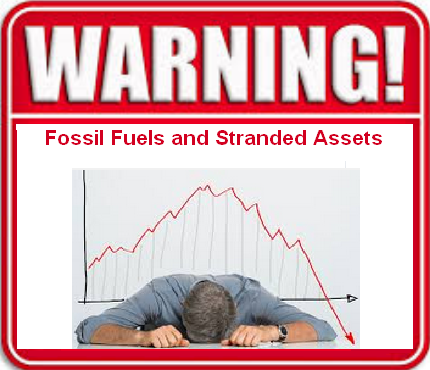
It is becoming increasingly apparent that fossil fuels represent a substantial risk that should make investors wary. Fossil fuel reserves, including oil, gas and coal will be rendered obsolete in the coming decades, leaving investors holding valueless investments. A plethora of peer reviewed science tells us the curbing fossil fuel use is key to climate mitigation.

From widespread calamitous coastal flooding to devastating extreme weather events the need to urgently act on climate change has finally been accepted by every nation on earth. The economics of climate action is sound. A cost benefit analysis reveals the overwhelming logic. We must the eradication of fossil fuels as soon as possible. The impetus to act on climate change, once dismissed by some, is now a fact of life for all thinking people.

There is already downward pressure on the fossil fuel industry and this will only intensify in 2016 as we begin to see policy shifts and new regulatory regimes. The Paris Climate Agreement formally signals the end of fossil fuels

We are already seeing trillions of dollars being divested from the fossil fuel industry. Much of the money divested is being reallocated to renewable energy, the primary competition for the fossil fuel industry. Investments in fossil fuels need time to mature, however post Paris time is the one thing that fossil fuel investors do not have.

The IPCC Synthesis Report indicates that the burning of fossil fuels must be completely ended by 2100. We must work quickly to radically reduce our use of fossil fuels because the longer we wait the more it will cost. We also risk surpassing dangerous tipping points from which we will not be able to recover.  Simply put we cannot continue to burn fossil fuels if we hope to stay within the 2C upper threshold limit. 

The concerns about fossil fuels and stranded assets were reviewed in an April 8, 2016, CBC Business article by Don Pittis in which he warned investors about the dangers of fossil fuels. As he explained, the issue of stranded assets is not merely the concern of environmentalists, it is central to shrewd analyses of the investment community. Concerns about stranded assets are coming from all quarters including mainstream, credible sources, like Mark Carney, governor of the Bank of England.

Research from the Canadian Association of Petroleum Producers has already announced a $50 billion drop in Canadian oil and gas investment in electrical power plant generation from fossil fuels. However, there are implications for the oil sands and pipelines.

As explained in the CBC article, a Oxford University study indicates that after 2017, fossil fuel powered electricity generation may "not be able to run long enough to pay off their capital costs, turning them into stranded assets." This study expands the stranded-assets concept to include what economists call capital.

"Investors putting money into new carbon-emitting infrastructure need to ask hard questions about how long those assets will operate for, and assess the risk of future shutdowns and writeoffs," says Cameron Hepburn, one of the academics involved in Oxford study.

"If the 2 C target is to be taken seriously, then current and future assets will have to be written off before the end of their economically useful life (become stranded assets) or we will have to rely on large-scale investments down the line in carbon capture and storage technologies that are as yet unproven and expensive," says the report.

While the Oxford study is focused on electricity generation the implications extend to the fossil fuel industry as a whole. According to Duetsche Bank at least half of all known fossil fuel reserves will need to be kept in the ground to stay within our carbon budget. 

"For their own financial benefit, what investors must consider is whether the climate risk has been properly calculated into the future income stream." Pittis wrote. "If investors in power plants, pipelines and new oil development go ahead without proper regard to climate risk and find those assets stranded, they will be worth less than advertised."

The Financial Times covered the same study and reported:
"Virtually all new fossil fuel-burning power-generation capacity will end up stranded... A similar logic can be applied to parts of the capital stock."
Carbon dioxide remain in the atmosphere for centuries so we must appreciate not just annual emissions but their cumulative totals or the global carbon budget.

The Oxford paper states that capital stock created after 2017 would break the global carbon budget. However the Financial Times article suggests that the Oxford study is premised on some optimistic assumptions and therefore it may be more difficult to keep temperatures from rising beyond the 2C upper threshold limit. This assessment suggests that the risks are even greater than those presented in the Oxford research.

Why would any sane investor put his or her money into a source of energy that is doomed to be shut down?

As explained in the FT article:

"[G]iven the longevity of a large part of the capital stock, the time for decisive change is right now, not decades in future."

As reported in the Green Market Oracle, just ahead of the Paris Climate Agreement two reports corroborated concerns about stranded assets.  One of these reports come from the Think Tank, Carbon Tracker and another comes from Critical Resource, a firm that advises fossil fuel companies.

The Carbon Tracker report indicated that more than 2.2 trillion worth of fossil fuel projects are at risk of being stranded. Anthony Hobley, chief executive at Carbon Tracker said:

"Our report offers these companies a warning [about] avoiding significant value destruction,"

The top four countries at risk from stranded fossil fuel assets are the US at $412 billion, Canada at $220 billion, China at $179 billion and Australia at $103bn. The companies with the greatest exposure are Shell, ExxonMobil and Pemex.

Despite these risks, $1.3 trillion is being spent on new oil projects and $124 billion is being spent on existing projects. We need to start with a moratorium on new fossil fuel development.

Daniel Litvin, MD of Critical Resources said.

"The critical mass point could be as soon as a couple of years down the road, which is pretty soon for an industry that has been around for 100 years."

How can the oil industry fail to see the writing on the wall? The fossil fuel industry would not be the first that failed to see clear signs of its demise. Hobley pointed to the demise of Kodak and Blockbuster as illustrations.

In the past decade, the emissions implied by the investment in power generation have been rising at 4 percent a year. The math behind this investment growth when partnered with the need for climate action make investing in fossil fuels a fool's errand.

Related
The Risks Associated with Stranded Fossil Fuel Assets
COP21 and Stranded Fossil Fuel Assets
Fossil Fuel Divestment and Stranded Assets
Infographic - Stranded Fossil Fuel Assets
Oil is a Bad Investment
The Fossil Fuel Industry has Reason to be Nervous
Fossil Fuels are a Clear and Present Danger
Study on the Fossil Fuel Industry and the Bursting of the Carbon Bubble
Graph of Fossil Fuels GHG Contributions
The Cost of Carbon
Now is the Time to End our Reliance on Fossil Fuels
Fossil Fuels are making the Planet Uninhabitable
Fossil Fuels are the Most Hated Industry in the US
Exxon is not the Only Bad Apple: The Whole Fossil Fuel Industry is Rotten to the Core

Diminishing Profits Signal the Beginning of the End of Oil

Oil is dying. Low oil prices are erasing profits and setting into motion a death spiral from which fossil fuels will not recover. Big Oil is cutting costs, and scaling back production, this results in smaller returns and diminished investor confidence. The addition of carbon pricing schemes and the elimination of subsidies will ultimately inflate prices and reduce demand.
____________________________

The profits of the big oil companies keep falling along with the price of a barrel of crude. In 2015, the profits of oil behemoths like Shell, Chevron, Exxon Mobil and BP tumbled. Together, these big four saw profits decline by an average of 65 percent last year. These falling margins have a cascade of impacts that are hastening the demise of dirty energy.

Shell

At the beginning of 2014, Royal Dutch Shell’s quarterly earnings for the end of 2013 fell by almost half (48%). This was the third consecutive quarter of disappointing earnings. This was in part due to Shell’s failed multibillion dollar Alaskan drilling program. The situation has continued to deteriorate for the oil giant as Shell’s profits fell by 56 percent in the fourth quarter of 2015. Over the course of the entire year, Shell’s earnings fell by 80 percent compared to 2014. To make matters worse, Standard & Poor's downgraded Shell’s long term credit rating in February and further downgrades have been intimated.

Chevron

In 2015, Chevron saw its profits decline by 40 percent compared to 2014 and the company reported losses in the fourth quarter of last year. Chevron lost $588 million in the last quarter of 2015; during the same period in 2014 the company made a profit of $3.5 billion. This is the first time the company has reported quarterly losses since 2002.

Exxon Mobil

Exxon Mobil saw its quarterly profits decline by 58 percent at the end of 2015 and the company’s profits are down by half compared to the year before. Its exploration and production business lost $538 million in the U.S.

BP

British Petroleum said that its profits fell by 91 percent last year. They recorded a $3.3 billion loss in the fourth quarter of last year and $6.48 billion in losses for the year. Like Shell, the company also kicked off the new year with a long term credit downgrade from Standard & Poor’s.

Macro realities

There is no end in sight to low oil prices and falling share prices. We have not seen a commodity collapse of this magnitude in decades. However, unlike preceding oil crashes, environmental pressures and economic trends make the longer term financial forecast look bleak for fossil fuels.

Oil production continues to outpace demand and more supply is on the way now that the sanctions against Iran have been lifted. The situation is about to get even worse as storage space is nearing capacity.

While many are waiting for oil prices to rebound they may be disappointed. Driven by climate concerns and the declining price of both renewables and energy storage, we are seeing unprecedented interest in non-fossil fuel based energy production from all quarters.

In the longer term, the outcome at COP21 lends credence to the belief that fossil fuels will be subject to a host of headwinds. The fossil fuel industry is also having to deal with a rapidly expanding number of legal challenges, negative public perceptions and disruptions due to protests.

Death spiral

In addition to market pressure associated with low oil prices, producers realize that to bring oil prices up you have to decrease supply (i.e. reduce production). However, decreased production will further diminish returns and this will scare off investors.

Low oil prices have already shut down hundreds of extraction operations. Oil prices are currently about half of what they need to be to make the tar sands and shale oil viable. The exodus had begun even before oil prices fell to their current lows. At the beginning of last year, Shell announced that it was among a number of oil companies that are shelving their tar sands operations. Many are predicting that at least half of all shale oil producers will perish this year. It is not only energy intensive forms of fossil fuels that are at risk, as explained by Jesse Thompson, an economist at the Federal Reserve Bank in Dallas, “at this price range, nothing is safe.”

Big oil is responding to low oil prices and declining profits by slashing capital spending and operating expenses. For example, Exxon has said that it will cut spending by one quarter this year compared to last and BP is expected to cut spending by almost $3.6 billion this year. This translates to less production and exploration. Less exploration means lower reserves and lower reserves sends a powerful message about the future of the industry.

The linkage between lower oil prices and decreased production have set in motion a causal chain of events that does not bode well for the fossil fuel industry. As explained in a New York Times article:

"To assure their futures, oil companies need to add to their reserves to replace production, but with plunging prices, companies are delaying or canceling projects and struggling to add to their reserves."

Reduced earnings are translating to cuts in production. For Shell that means delaying a liquefied natural gas facility in Canada and a deep water oil and gas development in Nigeria.

The combination of less production and low oil prices translates to lower profits which puts downward pressure on the dividends that they can pay out to investors. This in turn, curtails investor interest. While big oil is trying to reassure investors by saying that they will continue to pay big dividends, the situation is untenable.

Maintaining investor interest will be challenging for BP and others, as explained by Biraj Borkhataria, an analyst at RBC Capital Markets in London. He is quoted as saying:

"2016 is likely to be a year of transition for BP with limited ability" to cover its dividend unless oil prices rose substantially.

Michael Hewson, an analyst at CMC Markets puts it this way:

"But with average oil prices still trading at multi-year lows so far this year the question now needs to be asked in how long can BP sustain the dividend at current levels, without an imminent pick up in oil prices."

When investor confidence evaporates, the fate of the fossil fuel industry is sealed.

The position of big oil goes from bad to worse when we factor carbon pricing and an end to subsidies. This will raise the cost of fossil fuels and reduce demand.

Although it will take decades it is clear that we can kill what Bill McKibben has called the immortal zombie of fossil fuels.

Source: Global Warming is Real

Related Articles
Falling oil Prices Make Fossil Fuels a High Risk Investment
Oil is a Bad Investment
Financial Losses Associated with Fossil Fuels
Low Oil Prices Offer an Opportunity to Combat Climate Change
The Upside to Low Oil Prices
Climate Pros and Cons of Low Oil Prices
Falling Oil Prices and a Global Climate Agreement
Cheap Oil Will Not Stop Renewables
Why Oil Prices Matter for Renewable Energy
An Upside to Low Oil Prices?
Video - Why Oil Prices Will Keep Falling

Oil is a Bad Investment

Iinvestors can no longer avoid the realization that their fossil fuel holdings are fraught with risks. While there are many factors at play, the 18 month slide and low price forecasts combine to make the point that investing in oil makes no economic sense.

In the short term China's slowing growth and the glut of oil are driving down the price. The situation will be exacerbated by the lifting of sanctions allowing Iran to sell its oil. High production and lower than expected demand mean that oil prices will continue to fall well into 2016.

Oil has fallen a long way, it has lost 80 percent of its value compared to its high in January 2014 when it was more than $110 a barrel (bbl). When oil slipped below $60/bbl a number of intensive drilling operations from the Arctic to the Canadian tar sands and American shale oil ceased to be profitable. These price declines reduced production but not enough to stop oil's plummeting trajectory.

At the end of 2015 the price oil plunged below $40/bbl. As the new year dawned oil prices continued to slide, they even briefly slipped below $30/bbl. US oil prices fell to $26.55/bbl on January 20th. We have not seen oil prices this low in 14 years and we have not seen an 18th month long slide in more than 60 years. 

According to the Financial Forecast Center the outlook for the next six months suggest that oil will continue to decline, falling to around $25/bbl by the start of the summer.

Although the market will eventually balance out supply and demand, the longer term outlook is still challenging for oil prices. The eia predicts that oil prices could fall to as low as $20/bbl in 2017. The Telegraph reports that some are predicting that oil could go as low as $10/bbl.

Looking even further out the situation for oil may become even more difficult. The COP21 deal sent a powerful message to the markets. The era of oil is coming to an end and as we gear up for the implementation date of the deal in 2020 there will be unprecedented downward pressure on oil prices.

Related Articles
Diminishing Profits Signal the Beginning of the End of Oil
Falling oil Prices Make Fossil Fuels a High Risk Investment
Financial Losses Associated with Fossil Fuels
Low Oil Prices Offer an Opportunity to Combat Climate Change
The Upside to Low Oil Prices
Climate Pros and Cons of Low Oil Prices

Financial Losses Associated with Fossil Fuels

The losses associated with fossil fuels are staggering and it is not just oil producing states and companies that are feeling the heat. Pension funds going long on oil are getting killed as they hope that prices will rebound.

With oil prices around $50 per barrel, the IEA estimates that OPEC states have lost half a trillion dollars a year in revenues since the oil price fell from over $100 a barrel in 2011-2014 to current levels. The declining price of oil is also creating volatility in the stock market and significantly impacting the petro-economies of both Russia and Canada.

As reported by the Star, a new study from the Canadian Centre for Policy Alternatives indicates that fossil fuel holdings in Ontario's five largest pension funds lost a total of $2.4 billion. Here is their review of the amount of money lost due to falling oil and coal prices from June to December 2014:
  • Ontario Teachers’ Pension Plan: $1.77 billion
  • Ontario Municipal Employees Retirement System: $192 million
  • Healthcare of Ontario Pension Plan: $53 million
  • Ontario Pension Plan: $154 million
  • Ontario Public Service Employees Union Pension Trust: $188 million
California pension funds have been decimated by the declining price of fossil fuels. This has caused the state to pass legislation forbidding big pension funds from investing in coal. Others institutions are getting out of fossil fuels altogether. A recent report from consultancy Arabella Advisors found that 430 institutions, including the Canadian Medical Association, have committed to phasing out their fossil-fuel investments.

A Corporate Knights Capital report estimated that the CPPIB has lost $7 billion (US) in value since 2012 due to the decline in the values of carbon intensive industries. Bill & Melinda Gates Foundation Trust Endowment have lost $1.9 billion, and the University of Toronto pension and endowment fund lost $419 million.

More than 100 institutional investors representing $8 trillion in assets have signed the one-year-old Montreal Carbon Pledge. Those that took the pledge have committed to “measure, disclose and reduce portfolio carbon footprints.” Signatories include Addenda Capital, The Co-operators and the United Church.

“If they’re putting money into fossil-fuel stocks, it should be incumbent on managers and trustees to justify why they’re doing that,” said Marc Lee, a senior economist with Policy Alternatives.  

Related
Diminishing Profits Signal the Beginning of the End of Oil
Falling oil Prices Make Fossil Fuels a High Risk Investment
Oil is a Bad Investment
Low Oil Prices Offer an Opportunity to Combat Climate Change
The Upside to Low Oil Prices
Climate Pros and Cons of Low Oil Prices
Falling Oil Prices and a Global Climate Agreement
Cheap Oil Will Not Stop Renewables
Why Oil Prices Matter for Renewable Energy
An Upside to Low Oil Prices?
Video - Why Oil Prices Will Keep Falling

Low Oil Prices Offer an Opportunity to Combat Climate Change

The plunge in the price of oil makes this an ideal time to deploy market disincentives that can cut emissions and combat climate change. We know that if we are to stave off the worst impacts of climate change we must substantially reduce our emissions. As the leading cause of climate change fossil fuels are the most obvious focal point.

All but the willfully ignorant understand that the economic costs of inaction far outweigh the costs of engagement. We have seen a number of studies which suggest the longer we wait the more it will cost.

Scientists tell us that we are running out of time and we must address climate change as soon as possible. That is part of the reason why we must deploy market levers. They can quickly and efficiently augur the changes we need. A two tiered approach involving a carbon pricing scheme and the removal of subsidies would pull back the curtain and expose some of the hidden costs associated with fossil fuels. Together these two initiatives would correct the false impression that fossil fuels are cheap.

President Obama has said that carbon pricing allows the market to do the "heavy lifting." In 2013, Rajendra Pachauri, chairman of the UN Intergovernmental Panel on Climate Change spoke about the utility of carbon pricing calling it , "an extremely effective instrument." He went on to say, "it’s only through the market that we might be able to get a large enough and a rapid enough response."

A number of studiesincluding one from UCL conclusively demonstrate that if we are to have a shot of curtailing climate change we must keep most of the known fossil fuel reserves in the ground. The UCL study's co-author Paul Ekins explained that falling oil prices present an ideal time to remove subsidies and implement a carbon tax. 

While further innovation should be rewarded, we already possess the technological wherewithal to wean ourselves away from fossil fuels. The application of the two market levers outlined would generate billions of dollars that could be used to provide greater support for energy efficiency and renewables. This would would not only combat climate change it would improve people's health in the process. It will also create a host of economic spin-offs including jobs and reduced healthcare costs.

Now is the time to impose carbon pricing schemes and eliminate fossil fuel subsidies. The plunging price of oil coupled with advances in clean energy provide a golden opportunity for politicians to rationalize their energy policies.

Related
Diminishing Profits Signal the Beginning of the End of Oil
Falling oil Prices Make Fossil Fuels a High Risk Investment
Oil is a Bad Investment
Financial Losses Associated with Fossil Fuels
The Upside to Low Oil Prices
Climate Pros and Cons of Low Oil Prices
Falling Oil Prices and a Global Climate Agreement
Cheap Oil Will Not Stop Renewables
Why Oil Prices Matter for Renewable Energy
An Upside to Low Oil Prices?
Video - Why Oil Prices Will Keep Falling

ALEC Must Die

There is a sinister force that is corrupting American politics by giving the most environmentally destructive elements of Big Business significant control over state legislatures. The American Legislative Exchange Council (ALEC) turns 40 this year. This organization is composed of large corporations and state lawmakers. They draft environmentally harmful model laws that have been adopted in state legislatures across the country.

ALEC describes itself as “nonpartisan public-private partnership” and is registered as a not for profit organization. While the organization enjoys 501(c)(3) tax-exempt status, many groups see it as little more than a front for one of the most powerful and influential lobby groups in America.

The threat to America’s democracy from ALEC should not be underestimated as this is a well-funded and well-coordinated organization that has a proven track record of successfully manipulating state legislatures.

According to a new report from the Center for Media and Democracy (CMD), ALEC continues to hold sway over statehouses across the country. In total, CMD identified 466 ALEC bills that were introduced in state legislatures during the first seven months of 2013. At least eighty-four of these measures have become law.

As reviewed in PR Watch, ALEC’s real mission in state legislatures is, “to allow dirty energy companies to pollute as much as they want, to attack incentives for clean energy competitors and to secure government handouts to oil, gas and coal interests,” says Connor Gibson, a Research Associate at Greenpeace.

Fossil fuel lobby


One of the most egregious threats to the public interest comes from the fossil fuel industry’s involvement with ALEC. “Disregarding science at every turn, ALEC is willing to simply serve as a front for the fossil fuel industry,” says Bill McKibben, co-founder of 350.org.

Corporate sponsors of ALEC include the leaders of the fossil fuel industry. Companies like Koch Industries, ExxonMobil, Duke Energy, Peabody Energy, BP, Shell, Chevron, TransCanada and American Coalition for Clean Coal Electricity, as well as industry trade associations and large corporate foundations provide almost all of ALEC’s funding.

ALEC’s goals are clear, they seek to provide financial rewards and protections to the companies that they work with.

According to Calvin Sloan, a legislative researcher with People for the American Way, corporations pay $50,000 each for full membership in ALEC. The purpose of the ALEC meetings is to instruct lawmakers on policy initiatives, which according to Sloan is “a fossil fuels-funded agenda.”
“They [ALEC] have participating corporations like fossil fuel companies drafting legislation that benefits those corporations directly, and then can get that legislation introduced in 50 states within a year,” Sloan said. “It’s part of an overall framework of corporations exerting their will and agenda upon the people.”
ALEC supports some of the most destructive fossil fuel legislation ever tabled including bills supporting coal, fracking and the Keystone XL Pipeline project.  It should come as no surprise that TransCanada Corp., the company that wants to build the Keystone XL pipeline, is also a member of ALEC. The company even sponsored an expense-paid trip called “ALEC academy” for nine ALEC-member state legislators. Following the trip, some of those in attendance introduced resolutions backing the pipeline in their state legislatures.
According to CMD, 77 ALEC bills promoting fossil fuels and undermining environmental protections were introduced in 34 states in 2013. At least seventeen of these measures have become law.


Climate change denial


ALEC’s activities extend beyond support for fossil fuel interests and encompass climate change misinformation. The Environmental Literacy Improvement Act which passed in at least four states, teaches children that climate change is a “controversial theory.” (The truth is that with 98 percent support, there are few theories that have garnered more support from scientists than anthropogenic climate change).

ALEC is a leading organization that actively denies the veracity of anthropogenic climate change and opposes limits on climate change causing emissions. At the 2013 meeting of ALEC, climate change was one of the items on the agenda.

One of the speakers at this year’s ALEC meeting was Joe Bastardi, he is a leading climate change denier and television weather forecaster who frequently comments on Fox News. He has called human-caused global warming an “obvious fraud.”  This year, Bastardi was the speaker at a plenary breakfast meeting misleadingly titled “A Thoughtful Approach to Climate Science.” In 2011, he spoke about “The Many Benefits of Increased Atmospheric CO2″ at ALEC’s annual meeting.

As reported in a May 2013 Forbes article, Bastardi says that “blaming turbulent weather on global warming is extreme nonsense.” While many have speculated as to whether he is willfully ignorant, willful, or just plain ignorant, as a meteorologist Bastardi should know better.


Opposition to renewable energy


ALEC does not only work in support of dirty hydrocarbons, it also is working to snuff out renewable energy. “ALEC’s long time role in denying the science and policy solutions to climate change is shifting into an evolving roadblock on state and federal clean energy incentives, a necessary part of global warming mitigation,” says Gibson.

Through legislation called the Electricity Freedom Act, ALEC sought to prevent states from requiring energy companies to increase electricity production from renewable energy sources. Because the Electricity Freedom Act failed to gain the support of state legislatures, ALEC is modifying its plan of attack against renewable energy standards. At its August 2013 meeting, ALEC introduced a bill called the Market Power Renewables Act, which seeks to undermine the Renewable Portfolio Standard or RPS.

As explained by PR Watch, this legislation “would phase-out a state’s RPS and instead create a renewable “market” where consumers can choose to pay for renewable energy, and allow utilities to purchase energy credits from outside the state. This thwarts the purpose of RPS policies, which help create the baseline demand for renewables that will spur the clean energy investment necessary to continue developing the technology and infrastructure that will drive costs down.”


Opposition to emissions reduction


ALEC has drafted laws that seek to oppose state efforts to reduce emissions. This includes a model bill titled, “State Withdrawal from Regional Climate Initiatives”, which opposes limiting climate change causing carbon emissions.

ALEC bills have not only opposed efforts from state agencies to regulate pollution, they even tried to stop the federal Environmental Protection Agency (EPA) from regulating greenhouse gas emissions.
In essence, ALEC’s goal is to undermine emissions reduction efforts and to continue our reliance on fossil fuels. Resistance to limiting atmospheric CO2 represents a serious threat to global health as it is widely understood that failure to reign in carbon emissions will have catastrophic consequences.


Control of water, land and information


An ALEC bill titled “Environmental Services Public-Private Partnership Act” would give for-profit companies control over wastewater treatment and drinking water. Another ALEC law titled “Disposal and Taxation of Public Lands Act” would give states access to resources in federal lands that are protected as wilderness preserves.

In addition to promoting anti-environmental bills, and seeking control over resources, they also craft legislation to control information and help industry escape public accountability. ALEC’s Animal and Ecological Terrorism Act would quash the First Amendment rights of reporters, investigators and videographers by making it harder for them to document issues associated with food safety and animal cruelty.  This is similar to Utah’s ag-gag law of 2012, which led to charges against a young woman named Amy Meyer, who filmed the outside of a slaughterhouse from public land. This ALEC model bill could also criminalize environmental civil disobedience.

Click here to view the full list of 2013 bills from the ALEC Energy, Environment, and Agriculture Task Force bills.


Growing resistance


The American public is increasingly aware of ALEC’s activities. As ALEC gathered for its 40th annual meeting in Chicago on August 7, they were met by protesters who marched outside the Palmer House Hotel where the meeting was held. The thousands who demonstrated included environmentalists, union members, civil rights activists, and social justice campaigners. Although this was not the first protest against ALEC, it was the largest to date.

Groundbreaking news coverage has helped to expose ALEC. Some of the most inclusive coverage of ALEC was provided by the CMD in the 2011 piece titled “ALEC Exposed.” Another was a documentary from Bill Moyers & Company titled “United States of ALEC.

One of the ways that ALEC has managed to wield so much power is by virtue of the fact that they have always functioned in the shadows. However, people are increasingly coming to terms with the nefarious ways in which ALEC threatens democracy and efforts to combat climate change.

The normally clandestine activities of ALEC are no longer hidden under a blanket of secrecy. Companies are increasingly understanding that involvement with ALEC is a PR liability.  Already, there have been a number of big multinationals that have withdrawn from the organization. Over the past year-and-a-half, almost 50 global corporations have dropped their ALEC membership and national campaigns are encouraging others to abandon ALEC.

After four decades of covert operations, ALEC is starting to feel the pressure from public scrutiny. Although ongoing resistance can be expected from the fossil fuel industry, public awareness can divest ALEC of its influence over state legislatures.

Shinning a spotlight on ALEC’s activities will kill the succubus that is draining the lifeblood from America’s democracy.

Source: Global Warming is Real

Related Articles
Video - How ALEC Controls US Legislation
Video - ALEC Bill on Capitol Hill
Video - United States of ALEC
Video - United States of ALEC: A Follow-Up
Video - ALEC's Organized Corruption

Video - United States of ALEC


Moyers & Company presents "United States of ALEC," a report on the most influential corporate-funded political force most of America has never heard of -- ALEC, the American Legislative Exchange Council. A national consortium of state politicians and powerful corporations, ALEC presents itself as a "nonpartisan public-private partnership." But behind that mantra lies a vast network of corporate lobbying and political action aimed to increase corporate profits at public expense without public knowledge.

"United States of ALEC" is a collaboration between Okapi Productions, LLC and the Schumann Media Center, headed by Bill Moyers, which supports independent journalism and public watchdogs including the Center for Media and Democracy, whose investigators are featured in the report.

Using interviews, documents, and field reporting, the episode explores ALEC's self-serving machine at work, acting in a way one Wisconsin politician describes as "a corporate dating service for lonely legislators and corporate special interests."

In state houses around the country, hundreds of pieces of boilerplate ALEC legislation are proposed or enacted that would, among other things, dilute collective bargaining rights, make it harder for some Americans to vote, and limit corporate liability for harm caused to consumers -- each accomplished without the public ever knowing who's behind it.

"United States of ALEC" is a collaboration between Okapi Productions, LLC and the Schumann Media Center, headed by Bill Moyers, which supports independent journalism and public watchdogs including the Center for Media and Democracy, whose investigators are featured in the report.

Related Articles
ALEC Must Die
Video - How ALEC Controls US Legislation
Video - ALEC Bill on Capitol Hill
Video - United States of ALEC: A Follow-Up
Video - ALEC's Organized Corruption

Video - United States of ALEC: A Follow-Up


Moyers & Company follows up on a breakthrough 2012 report about ALEC, the American Legislative Exchange Council. A national consortium of state politicians and powerful corporations, ALEC presents itself as a "nonpartisan public-private partnership." But behind that mantra lies a network of lobbying and political action aimed to increase corporate profits at public expense without public knowledge.

Related Articles
ALEC Must Die
Video - How ALEC Controls US Legislation
Video - ALEC Bill on Capitol Hill
Video - United States of ALEC
Video - ALEC's Organized Corruption

Video - ALEC's Organized Corruption


ALEC creates model bills, drafted by lobbyists and lawmakers. This includes support for the lax regulations in the fossil fuel industry and resistance to clean sources of energy.

However there ALEC's influence extends far beyond crafting model legislation. As explained in the New York Times, "a review of internal ALEC documents shows that this is only one facet of a sophisticated operation for shaping public policy at a state-by-state level. The records offer a glimpse of how special interests effectively turn ALEC's lawmaker members into stealth lobbyists, providing them with talking points, signaling how they should vote and collaborating on bills affecting hundreds of issues like school vouchers and tobacco taxes. The documents — hundreds of pages of minutes of private meetings, member e-mail alerts and correspondence — were obtained by the watchdog group Common Cause and shared with The New York Times..."

Related Articles
ALEC Must Die
Video - How ALEC Controls US Legislation
Video - ALEC Bill on Capitol Hill
Video - United States of ALEC
Video - United States of ALEC: A Follow-Up

Video - How ALEC Controls US Legislation


This is an important report on the subversion of America's legislative process by Big Oil and other corporate interests. The "United States of ALEC," is a report from Moyers & Company on the most influential corporate-funded political force most of America has never heard of -- ALEC, the American Legislative Exchange Council.

ALEC is a national consortium of state politicians and powerful corporations, ALEC presents itself as a "nonpartisan public-private partnership." But behind that mantra lies a vast network of corporate lobbying and political action aimed to increase corporate profits at public expense without public knowledge.

Using interviews, documents, and field reporting, the episode explores ALEC's self-serving machine at work, acting in a way one Wisconsin politician describes as "a corporate dating service for lonely legislators and corporate special interests."

In state houses around the country, hundreds of pieces of boilerplate ALEC legislation are proposed or enacted that would, among other things, dilute collective bargaining rights, make it harder for some Americans to vote, and limit corporate liability for harm caused to consumers -- each accomplished without the public ever knowing who's behind it.

Related Articles
ALEC Must Die
Video - ALEC Bill on Capitol Hill
Video - United States of ALEC
Video - United States of ALEC: A Follow-Up
Video - ALEC's Organized Corruption

Republicans Oppose the PTC but Support Oil Subsidies

It is not surprising that many Republicans who oppose the Production Tax Credit (PTC) for renewable energy, support fossil fuel subsidies. Although the PTC was extended through 2013, some Republicans have vowed to continue their push to kill it. Conservatives are well known for their love of free markets and distrust of government subsidies, unless of course it involves fossil fuels. Some Republicans in Congress have made it clear that they will seek amendments that erode the PTC.

Republicans including the 2012 presidential nominee Mitt Romney, wanted to let the PTC expire. Romney and other Republicans who oppose the PTC say it costs too much and props up businesses with government subsidies.

Romney spokesman Ryan Williams said in an email that Romney "believes the government should stop playing venture capitalist and doling out open-ended subsidies, and instead encourage private sector innovation and market competition.” This is part of the same conservative philosophy that advocates for unbridled free markets and supports deregulation.

In September of 2012, 46 Republicans voted against the PTC while in March 2011, 46 Republicans voted against closing tax loopholes that let Big Oil collect $4 billion in annual subsidies.

Some Republicans, including Iowa Rep. Tom Latham, Sen. Scott Brown, and Gov. Terry Branstad support the tax credits for renewable energy because of the jobs they create. It is estimated that the expiry of the PTC would have resulted in the loss of 10,000 jobs in the wind industry alone.

However there are other powerful members of the GOP that remain opposed to the PTC. Representative James Lankford (R-OK), the chair of the newly formed House Oversight Subcommittee on Energy Policy, Health Care and Entitlements, has made it clear that his Subcommittee is suspicious of the federal government's support for renewables including the PTC.

The wind industry may have received a one-year reprieve, but if some Republicans have their way this extension will be clawed back by subsequent amendments.

Related Videos
A Condensed History of the Production Tax Credit (PTC)
US Government Support for Renewable Energy Projects
The Solar Industry at a Glance: Past Present and Future
Global Wind Energy at a Glance (China, EU, US)
US Wind Energy Doubles and Eclipses Natural Gas in 2012
Why Oil Prices Matter for Renewable Energy

BP Accused of Corporate Recklessness Including Willful Misconduct, Gross Neglect and Making False Statements

A recent US Justice Department court filing, accuses British Petroleum (BP) of gross neglect, as well as making false and misleading comments. The accusations stem from BP's handling of the 2010 explosion of the Deepwater Horizon that spilled 5 million barrels of oil into the Gulf of Mexico and killed 11 workers.

The Justice Department alleges false statements and misrepresentation over BP's assertion that the Gulf Coast's natural resources are making a "robust recovery" from its massive 2010 oil spill.

The legal papers filed by the US Justice Department charge that BP is guilty of falsehoods in the $7.8 billion settlement with thousands of Gulf Coast residents and businesses harmed by the spill.

The government’s 37-page objection to BP’s legal claims say the corporate giant is guilty of a “culture of corporate recklessness” that led to the Deepwater Horizon disaster.

The challenge seeks to hold BP responsible for a wide array of environmental impacts including dying deep-sea corals, dead dolphins, sick fish and marsh oil. They also allege that BP is ignoring the long-term neurological damage to clean-up workers and other Gulf residents who were exposed to the toxic dispersant Corexit.

In another separate filing, Alabama also accuses the oil company of misrepresentation and argues that BP committed 'willful misconduct' by attempting a risky 'top kill' method to stop the 2010 spill, when it knew that method would fail.

Both the federal government and the state of Alabama are pursuing civil cases. The federal government is also pursuing an ongoing criminal investigation against BP that is expect to begin next year.

BP's TV commercials whitewash what is really going on in the wake of their unprecedented oil spill in the Gulf. It is blatantly dishonest to suggest that everything is back to normal.

The Alabama filing notes that BP misrepresented the flow rate indicating that it was 5,000 bpd (barrels per day), even though they new is was significantly higher.

The court challenge could force BP to pay billions of dollars in fines for the worst offshore oil spill in US history. At the very least it is a warning to all who would cause destruction to the environment.

© 2011, Richard Matthews. All rights reserved.

Related Posts
BP's Corporate Irresponsibility
Responsibility for the Costs of the Gulf Oil Spill
The Costs of Offshore Drilling
Managing the Massive Gulf Oil Spill
Offshore Oil is an Avoidable Tragedy
Two More Reasons to Move Beyond Fossil Fuels
The End of Oil and the Next Energy Economy
Reigning in Irresponsible Oil Giants Chevron and Exxon Mobil
The Business of Climate Change Deception
Peak Oil
The Economic Calamity of Peak Oil
Planning a Future Without Oil
Koch Industries' Environmental Crimes
Koch Industries Financing Climate Denial
Koch Industries Destroys the Environment & Funds Climate Denial
Protecting the Planet from Corporate Influence

Tell the G20 to End Fossil Fuel Subsidies Now

Our tax dollars are being used to subsidize massive oil companies that are making astronomical profits. Big Oil is not only responsible for climate change they are using their record-breaking profits on massive misinformation campaigns and political influence. A growing number of people are seeking to put an end to this $600 billion dollar a year travesty. One of those groups is Avaaz.org, they are organizing a protest against Big Oil when the G20 convenes in Washington and a petition to put an end to fossil fuel subsidies. The following is an excerpt of an Avaaz.org article and call to action called Paid to Pollute:

Next week we have a chance to draw a line in the sand -- the G20 finance ministers are meeting in Washington [The G20 Meeting of Deputy Ministers of Finance will take place on April 19 and 20 in Washington] and we can meet them there with a massive global outcry calling on them to finally stop paying polluters billions in our tax dollars. These leaders have agreed to end black subsidies but failed to act, let's hold them to their word.

Sign the petition and tell everyone -- it's time to end polluter payments for good.

The timing couldn’t be more urgent -- extreme weather continues to smash records and island nations are entering negotiations to relocate their entire populations. Yet oil, coal and gas companies pay ‘experts’ to soil public debate with false arguments like climate change isn’t real and we have no reason for action. All of these are ploys to make these companies more money -- a recent study has shown that for every $0.01 increase in petrol prices, the oil companies make $200bn more in profits. Last year Exxon alone made $4.7 million in profits every hour!

The truth is that a clean energy revolution is close, and if realised it would permanently break the fossil fuel barons’ dangerous grip on our planet and politicians. Already many forms of clean energy are finding ways to compete and if we ended government gifts to fossil fuels it would level the playing field overnight, spurring a worldwide surge in clean energy.

The G20 is the first in a long road to ending polluter payments -- but it's a battle we can win.

The petition reads: "To G20 leaders: As concerned global citizens, we urge you to disclose and end direct hand-outs to fossil fuel producers, and also start the phase-out of schemes that drive demand for dirty energy. We’re on the brink of a climate catastrophe, and stopping taxpayer gifts to fossil fuels would level the energy playing field overnight, spurring a worldwide surge in clean energy. Honour your previous commitments and make ending polluter payments the top global priority for the upcoming UN Earth Summit."

Sign the petition, and forward it widely.

Together, time and time again we have achieved the impossible. And now, our entire planet's future is at stake. Let’s launch a climate spring and take a step closer to freeing the world from the tyranny of fossil fuels.

More information:
Slate: "Dirty Money"
Financial Post: "Obama says tax breaks for Big Oil need to end"
Daily Kos: "Big-five oil companies: $101 billion in profits for 2011"
Guardian: "Phasing out fossil fuel subsidies 'could provide half of global carbon target'"
Center for American Progress: "Pumped and Quartered"

Related Posts
End Fossil Fuel Subsidies
GOP Fights Removal of Oil Subsidies
Obama Striving to Put an End to Oil
Obama's Call for an End to Oil
Reigning in Irresponsible Oil Giants
Connect the Dots End Fossil Fuel
Air and Water in the OECD Report
Highlights of Obama's 2011 State of Union Address
Environmental Politics: Obama Versus
The G20 and the Transition to a Greener Economy
The G20 and the Developing World

GOP Fights Removal of Oil Subsidies

Republicans have rejected a bill that would have killed tax breaks for big oil companies. Despite the President's plea to end oil subsidies, on Thursday March 29 the Senate voted 51-47 against a Democratic bill that would remove billions of dollars in oil company tax breaks. President Obama has been a champion of ending big oil's subsidies since taking office. "It's like hitting the American people twice," Obama said. "You're already paying a premium at the pump right now. And on top of that, Congress...has thought it was a good idea to send billions of dollars more in tax dollars to the oil industry."

To justify their resistance to the bill Republicans are using the flawed logic of higher gas prices. In February the average price of gasoline in the US was $3.58 a gallon, an 11.5 percent increase over February 2010.

According to a panel of experts testifying before members of the Senate Committee on Energy and Natural Resources the US has reduced demand and increased supply.

The President has said, "American oil is booming. The oil industry is doing just fine. With record profits and rising production, I'm not worried about the big oil companies."

According to the panel of experts there is not much the US can do domestically to reduce increasing gas prices. High gas prices are largely due to the looming showdown with Iran and geopolitical instability in major oil exporting countries like Sudan, Nigeria and Iraq.

"We are held captive by global markets that we have no control over," said Sen. Joe Manchin III, D-W.Va.

Although Republicans are trying to suggest that eradicating oil subsidies would increase the price of gas, Frank Verrastro, senior vice president of the Energy and National Security Program, explains this is simply not the case.

Verrastro said the elimination of tax breaks for oil companies would not change the price at the pump which is due to the global nature of the oil market.

International events beyond American control are driving oil's price volatility. New projects like the Keystone XL pipeline will not have much of an effect on the retail price of gas either so there is little chance of any immediate cost relief.

The only way to gain control over the costs of energy is to reduce dependence on foreign oil and the only way to do this is to develop alternative sources of power.

"With the ability to access these new, unconventional resources, we may very well be on the verge of an American energy renaissance," Verrastro said.

However $20 billion in federal subsidies to the largest oil and gas companies make it more difficult for these alternatives, particularly renewable sources, to grow to a size where they can make a difference in America's energy picture. Subsidies make even less sense when you consider that The five largest oil companies reported a combined $140 billion in profit in 2011.

"They can either vote to spend billions of dollars on oil subsidies that keep us trapped in the past," said President Obama, "or they can vote to end these taxpayer subsidies that aren't needed to boost oil production."

"Members of Congress have a simple choice to make: They can stand with the big oil companies, or they can stand with the American people," Mr Obama said before Thursday's vote in the Senate. It would appear the GOP would rather wallow in the past and stand with big oil.

© 2012, Richard Matthews. All rights reserved.

Related Posts
Environmental Politics: Obama Versus the Republicans
Republican Opposition to Obama's Clean Energy
Republicans Anti-Scientific Stance
Republicans' Anti-Science Stance on Global Climate Change
Video: The Republican War on Climate Science
Republican Assault on the Environment
Republican Obstructionism
The Kochs' Tea Party Republicans
The Ignorant Anti-Environmental Views of the GOP

Federal Provincial Energy Conference Sponsored by Big Oil

Earlier this week a coalition of environmental groups revealed that the Canadian Federal Provincial Energy Conference is being sponsored by several energy companies.

Eleven companies and associations are spending an unprecedented $180,000 to pay for nearly a third of the $600,000 price tag. The sponsorship is an attempt by the petroleum industry to influence people who will be making crucial decisions about Canada's energy future. The sponsors have access to key individuals and they are given a high profile on the website for the conference.


Here is a breakdown of the money provided by Corporate sponsors:


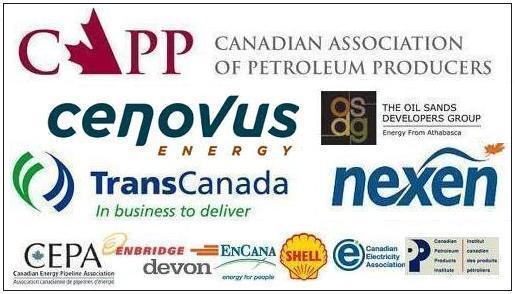
  • $30,000: Canadian Association of Petroleum Producers.


  • $20,000: The Oil Sands Developers Group, Nexen, TransCanada, Cenovus Energy.


  • $10,000: Devon, Canadian Electricity Association, Shell, Encana Natural Gas, Enbridge, Canadian Energy Pipeline Association, Canadian Petroleum Products Institute.

    Referring to the conference, Sierrra Club Executive Director John Bennett said,
    "We have the big oil picking up the tab. Is the Alberta government so broke that it has to do this? It smells bad and sends the wrong message to Canadians."
    Graham Saul from the Climate Action Network said:
    "This money gives them huge access. It looks like the government ministers are in the pockets of the oil industry."
    © 2011, Richard Matthews. All rights reserved.


  • Related Posts
    Ontario Urged to Stay with Green Energy Act
    Canadian Federal Provincial Energy Conference on Resource Exploitation
    Canadian Conservatives Dirty PrioritiesCanada is a World Leader in GHG Emissions
    WWF's Canadian Living Planet Report
    The State of Canada's Environment
    Video: The Alberta Tar Sands Dirty Oil
    Canadian Conservatives Disregard for Canada's Environment
    Lack of Canadian Co-ordination in Efforts to Reduce GHGs
    Canadian Global Warming Denial from the Frontier Centre for Public Policy
    Canadians Support Efforts to Combat Climate Change
    Canadian Government at Odds with the Public on Climate Change
    Conservatives Ignore Canadians While Jeopardizing the Environment and the Economy
    Canadian Conservative Government Rejects Kyoto
    Canada's Government Opposes Kyoto and Hampers Progress at COP16
    World Urges Canada to Do More to Manage Climate Change
    Conservative Budget: No Green for Canada
    Obama's Visit to Canada
    Why Canadian Environment Minister Resigned
    The Impact of a Climate Change Deal on Canada
    A Made in Canada Sustainable World Order

    Obama's Call for an End to Oil Subsidies and Big Oil's Suggestion

    To make cuts in American government spending the President has once again proposed ending oil subsidies. On Wednesday June 29, President Barack Obama, indicated that it reasonable to expect oil and gas companies that “have done so well” in the current economy to give up some breaks to help close federal deficits. “I don’t think that’s real radical,” he said.

    In response to calls to end oil subsidies, Jack Gerard, president of the American Petroleum Institute, told Washington Wire, rather than cutting subsidies or raising taxes on the oil and gas industry, America should increase their exploitation of domestic petroleum resources.

    The industry has been pushing for more production in places such as the Gulf of Mexico and Alaska. Big Oil is seemingly oblivious to the environmental costs. These risks are particularly great as they apply to offshore oil.

    Last summer we witnessed a massive oil spill in the Gulf of Mexico and Alaska has seen its share of devastating oil spills. The 1989, Exxon Valdez spill in Alaska impacted over 1100 miles of non-continuous coastline in Alaska. Despite miles of booms, scores of skimming ships and armies of beach washers, only 14 percent of the oil was ever cleaned up.

    In the 2010 Gulf of Mexico spill, more than 700 million liters of crude oil leaked into the water. Some have suggested that efforts to address the spill have exacerbated the problem. Dispersants used to reduce the size of the oil slick also impacting upon marine ecosystems. A break in a BP-owned pipeline on the North Coast of Alaska spewed 200,000 gallons of oil in March 2006.

    The fact that fossil fuels are the leading cause of climate change make taking advice from Big Oil sort of like asking a thief about security. Its would be a great idea if they did not want to steal from you.

    © 2011, Richard Matthews. All rights reserved.

    Related Post
    Independence Day 2011: Declaration of Freedom from Fossil Fuels

    Republican Gubernatorial Gains and the Clean Energy Economy

    The big loser in the 2010 Gubernatorial elections is America’s clean energy economy. Overall, the Republicans picked up 11 governorships from the Democrats: Iowa, Kansas, Maine, Michigan, New Mexico, Ohio, Oklahoma, Pennsylvania, Tennessee, Wisconsin and Wyoming. The GOP also gained back the Florida governorship. By comparison, the Dems only picked up California, Hawaii and Vermont.

    The race is still officially undecided in Connecticut, although reports indicate that the Republican candidate is ahead, and in Minnesota the winner has yet to be announced, but the Republican candidate is said to be leading.

    The governors of Illinois, New Mexico, Kansas, Florida, Oklahoma, and Wyoming are global warming deniers and conspiracy theorists who are getting ready to lead a crusade against a rational approach to climate change.

    In Iowa, Kansas, Oklahoma, and Wyoming, four Democratic governors who have supported clean energy were replaced by Republicans who are beholden to the old energy economy.

    Republican governors are now virtually unanimous in their dismissal of global warming. They do not recognize the threat posed by climate change, nor do they support clean energy.

    By denying the fact of global warming, Republican governors preclude the need to respond. However, what seems like a clever political strategy may in fact prove to be disastrous. By eschewing clean energy opportunities these governors risk turning their states into economic wastelands.


    Related Posts
    The Foxes in the Henhouse: Republicans in Charge of Climate and Energy Committees
    Republican Gubernatorial Gains and US Carbon Trading Programs
    Republican Gubernatorial Gains and Redistricting
    Republicans' Anti-Science Stance on Global Warming
    Republican Strategy for the 2010 Midterms and Beyond
    Republican Political Finance and the Midterm Elections
    Republicans Undermining Climate Legislation
    Green Stimulus Spending and Republican Opposition
    Environmental Issues in California and 5 Key Senate Races
    The 2010 Midterms and the Fight Against Climate Change
    Deniers Deprived of Misinformation Strategy
    The Dangerous Diversion of Climategate
    The Business of Climate Change Deception
    The New International System: The Role of Government
    What is Wrong with the Right

    Republican Political Finance and the 2010 Midterm Elections

    Outside money has caused a huge disparity between Republicans and Democrats in the run up to the midterm elections. It is clear that money helps candidates win and this year at least 40 Democrats took in less cash than their Republican opponents. What has many concerned is the fact that outside political money is funding Republican hopefuls in campaigns across America.

    Campaign finance is a big issue this election cycle in part because a Supreme Court ruling that removed contribution limits. This year, is the first national election since the Court's decision opened the floodgates enabling companies (primarily the fossil fuel industry) to spend unlimited sums to support candidates who will protect the interests of the old energy economy.

    To help facilitate the influx of money, Republicans and their allies have set up new organizations, nicknamed super PACs, these groups accept and spend unlimited contributions without disclosing their donors.

    The Sunlight foundation, a nonpartisan group that advocates for government transparency, estimates that nearly $100 million in what it calls "dark money" is finding its way into midterm election races. That's about half of all the money from outside groups, and most of it is going to Republicans.

    The Sunlight foundation says Republican-supporting super PACs and other independent groups are outspending those allied with Democrats by nearly $41 million. The Campaign Finance Institute at George Washington University puts the disparity at $63.5 million. They also cite a 73 percent rise in spending since 2008 by independent outside groups.

    Environmental groups also donate money and influence the debate, however, the massive resources of the oil industry dwarf environmental groups. In 2009, the oil industry spent over $175 million lobbying against climate change legislation whereas all environmental groups together spent about 7 percent of that amount or $24 million.

    Another important distinguishing factor of environmental groups lobbying efforts is that they are working to create green jobs, reduce pollution and combat climate change. Republican candidates are taking money from the petrochemical industry who are seeking to protect oil interests at the expense of green jobs and a clean energy economy.

    The Democrat's efforts to pass a disclosure bill this year, ran into a wall of GOP opposition. With all the money flowing to Republican candidates from big oil, it is no wonder they resist transparency. It also helps to explain poll results favoring Republican candidates.

    Americans deserve to know the truth about money that is coming from out of state, particularly money coming from those with a dirty agenda.


    Related Posts
    Koch Spending on Political Influence
    The Kochs War on Industry Oversight and Environmental Regulation
    Koch's Tea Party Republicans and Climate Change Denial
    Koch Industries and the Tea Party's Corporate "Grassroots"
    Republican Strategy for the 2010 Midterms and Beyond
    Republican's Anti-Science Stance on Global Warming
    Republicans Undermining Climate Legislation
    The Tea Party and Republican Obstructionism
    Tea Party Candidates and O'Donnell's Constitution Confusion
    Tea Party's Climate Change Denial
    California's Proposition 23
    What is Wrong with the Right
    Climate Change is a Security Issue
    Environmental Issues in California and 5 Key Senate Races
    The 2010 Midterms and the Fight Against Climate Change
    Election 2010 Midterm Predictions
    Democrat's Chances in the 2010 Midterms
    The Global Work Party and US Midterm Elections
    Health Care Legislation and Implications for the Environment
    Green Stimulus Spending and Republican Opposition
    Van Jones Succumbs to Republican Pressure
    Why We Did Not Get A Binding Agreement At COP15
    Obama Needs the Senate to Succeed on Climate Change
    Deniers Deprived of Misinformation Strategy
    The Dangerous Diversion of Climategate
    How to get Through to Climate Change Deniers
    Sarah Palin: Tea Party Queen but No Friend of Green
    Palin Renews Call for Offshore Oil Exploitation
    Sarah Palin Belongs on Fox Not Discovery
    Palin is No Friend of Green
    Palin Blames Environmentalists for Oil Spill
    Limbaugh Blames the Sierra Club for Oil Spill
    The New International System: The Role of Government