Showing posts with label emissions reduction. Show all posts

Ranking National Climate Action - 2020 Performance Index

The United States and Canada are some of the worst climate performers in the world. None of the countries reviewed in the 2020 Performance Index have demonstrated that they are on a path that is compatible with the goals laid out in the Paris Climate agreement. Sweden leads the group of high-performing countries, as it did in the 2018 and 2019 Indices. The other four top performing countries in the top five are Denmark, Morocco, the UK and Lithuania. The US is in last place. The 2020 Climate Change Performance Index tracks the performance of 57 countries and the EU on greenhouse gas (GHG) emissions, renewable energy, energy use and climate policy. The 2020 Index finds that “no country performs well enough in all index categories to achieve an overall very high rating,” meaning that no country is yet “on a path compatible with the Paris climate targets.” Countries are assessed based on their compatibility with ambitions to keep temperatures from warming beyond 2 degrees Celsius above preindustrial norms.

On GHG emissions, 31 out of 57 high-emitting countries recorded decreasing emissions. Sweden received a very high rating and Egypt received a high rating for its comparatively low level of current GHG per capita emissions, additional emission reductions over recent years and an ambitious 2030 target. The UK is classified as medium for current per capita emissions, but achieved high ratings for the other three GHG emissions indicators, including a high rating for its 2030 GHG emission target. The bottom performers in this category include the Republic of Korea and Saudi Arabia.

Overall, no country received a very high rating for all the renewable energy indicators, which indicates that there is significant room for improvement in mitigating emissions by accelerating deployment of renewable energy. However, the Index states that, “additions of renewable power generation outpaced net installations of fossil fuel and nuclear power”. Sweden, Latvia and Denmark were the top performers in renewable energy. The bottom performers on renewable energy are Malaysia, Iran and the Russian Federation. The report emphasizes that Malaysia has failed to make any improvements in renewable energy, and the Russian Federation has a very low rating for its ambition in the 2030 target. On energy use, Malta, Morocco and Mexico are the top performers. Saudi Arabia, Canada and the Republic of Korea are the bottom three performers.

On climate policy, no country received a very high rating for the category, although Portugal, Finland, Sweden and Norway achieved a very high rating for their international climate policy performance. Portugal ranked first, followed by Finland, recognized for its target to become carbon neutral by 2035 and its ban on burning coal by 2029. Morocco ranked high based on its ambitious 2030 targets. The bottom three performers are Turkey, the US, and Australia.

The Index is prepared by a group of thinktanks comprising the NewClimate Institute, the Climate Action Network and Germanwatch. To read the complete report click here (PDF).

Related
We are Falling Further Behind on Emissions Reduction
Heat Records Tell Us What We Need to Know
You Can't Say You Haven't Been Warned

Video - Senator Markey Calls out Republican Climate Deniers for their Fossil Fuel Advocacy and their Obstructionism on Climate Change


The Democratic Senator for Massachusetts Ed Markey laments the collapse of the Shaheen-Portman energy efficiency bill. Had Republicans not opposed it, it would have cut carbon pollution and created jobs. He explains that the bill collapsed because Republicans tied the vote on Shaheen-Portman to three measures designed to support the fossil fuel industry:

1. Stop EPA rights to cut emissions form power plants
2. Increase exports of natural gas which will increase costs and therefore the use of coal
3. Prevent the Senate from considering global warming pollution controls

Antarctic Sea Ice

Markey referenced the studies which point to the unstoppable melting of the Antarctic sea ice and rising seas. This means cities like Boston, south Florida and New Orleans will be underwater. The world's ice is melting and Republicans are the cause. Markey suggests that the next piece of ice that breaks off of a glacier should be reserved as an island for climate deniers.

Production Tax Credit for the Wind Industry

He goes on to say that despite strong growth in the US wind industry, last year the sector lost 30,000 jobs because Republicans opposed the production tax credit (PTC). As explained by Markey if the oil and gas industry receive 7 billions of tax breaks per year than renewable technologies should as well.

He concluded his remarks by saying, "We need to be sure we are protecting generations to come"

Related Articles
Video - Former Mexican President Blames Republicans for their resistance to Combating Climate Change
Except for Republicans in the House of Representatives Climate Deniers are a Dying Breed in America
Republicans Have Painted Themselves into a Corner on Climate Change
Congressional Inaction on Climate and Energy Legislation in 2013
The US House of Representatives Anti-Environment Voting Record in 2013
House GOP's Climate Denial Circus of Lies
Video - House Hearings on Climate Change from Rep. Mark Takano
Video - House Hearings on Climate Change Opening Remarks
Government Shutdown: Environmental Impacts and Republican Extortion
Republican Controlled Subcommittee on Energy to Hold Hearings on Climate Change
House Republicans' Historic Anti-Environment Efforts in 2011 and 2012
Republicans Need a Serious Policy Review
New Jersey Governor Chris Christie Accepts the Science of Climate Change (Video)
Hurricane Sandy Underscores Republican's Anti-Science Climate Change Denial (Video)
Republicans Shout Down Climate Change Advocate (Video)
Climate Denying Republicans Delay their Convention Due to Extreme Weather
The Stark Partisan Divide on Global Warming
Political "Heroes" and "Villains" on US Air Pollution
Big Oil's Influence on US Politicians
The Ignorant Anti-Environmental Views of the Republicans
The Koch Brother's Ties to GOP's Presidential Candidates
Republicans Vow to Continue Push for Keystone XL
Video: Conservatives Against Republican Denialism
Video: The Republican War on Climate Science
Video: Republicans Anti-Scientific Stance
Republican Cuts Target Green Jobs
Republican Gubernatorial Gains and Redistricting
Republican's Fail in their Bid to Defund the EPA
Republican Assault on the Environment
Connolly Video: Climate Disasters And GOP Denial
Blumenauer Video: 'The Jihad Against Climate Change Continues'
Republicans Undermining Climate Legislation
What is Wrong with the Right
The Business of Climate Change Deception

The US House of Representatives Anti-Environment Voting Record in 2013

A new report from Henry Waxman (D-CA), shows that the Republican controlled House of Representatives voted for anti-environment positions 109 times. The 113th Congress is almost as bad as the 112th Congress which was called "the most anti-environment House of Representatives in history" by Waxman and Ed Markey (D-MA).

The Waxman report shows that House members:
  • Voted 51 times to to protect the interests of the oil and gas industry at the expense of the environment and human health
  • Voted 20 times to weaken the Clean Air Act
  • Voted 20 times to block or hinder federal carbon emissions regulations
  • Voted 27 times to cut clean energy and energy efficiency funding and block clean energy policies,
  • Voted 37 times to weaken the Clean Water Act and other regulatory efforts to improve water quality
The woeful voting record in the House should come as not surprise when you consider just how much money is being funneled to members of Congress from the fossil fuel industry. As reported by Think Progress, 160 representatives from the 113th Congress accepted more than $55.5 million from the fossil fuel industry, and 56 percent of the Republican caucus in 2013′s House of Representatives deny the reality of climate change.

© 2013, Richard Matthews. All rights reserved.

Related Articles
Except for Republicans in the House of Representatives Climate Deniers are a Dying Breed in America
Republicans Have Painted Themselves into a Corner on Climate Change
Congressional Inaction on Climate and Energy Legislation in 2013
House GOP's Climate Denial Circus of Lies
Video - House Hearings on Climate Change from Rep. Mark Takano
Video - House Hearings on Climate Change Opening Remarks
Government Shutdown: Environmental Impacts and Republican Extortion
Republican Controlled Subcommittee on Energy to Hold Hearings on Climate Change
House Republicans' Historic Anti-Environment Efforts in 2011 and 2012
Republicans Need a Serious Policy Review
Hurricane Sandy Underscores Republican's Anti-Science Climate Change Denial (Video)
Romney's Climate Change Ignorance on Display (Video)

Republicans Have Painted Themselves Into a Corner on Climate Change

The Republican position on climate change may drive party support to historic lows in the not too distant future. While most Americans (including supporters of the GOP) think that climate change is real and want the government to act, the majority of Republicans in Congress are science eschewing climate deniers. According to an analysis by the Center for American Progress, 58 percent of Republicans in the current Congress deny the existence of climate change or oppose action to cut greenhouse gas emissions.

Congressman Joe Barton of Texas and Senator Jim Inhofe of Oklahoma are poster boys for the flat earth/Luddites in Congress. They regularly dismiss climate change as a “hoax.” However a new analysis from a Stanford University Social Psychologists makes this position politically untenable. Americans, including Republicans think global warming is real and want the government to act.

“This new report is crystal clear,” said Waxman. “It shows that the vast majority of Americans – whether from red states or blue – understand that climate change is a growing danger. Americans recognize that we have a moral obligation to protect the environment and an economic opportunity to develop the clean energy technologies of the future. Americans are way ahead of Congress in listening to the scientists.”

While Democrats are known for their acknowledgement of a science based understanding of climate change Republicans have forcefully defined themselves as "skeptics." What is most striking about the research is the fact that members of the GOP in Congress are at odds with party supporters. 

According to the Stanford study, it is people's personal experience with extreme weather like heatwaves that is driving them to acknowledge the existence of man-made global warming and support government action to combat it. The GOP's recent hearings on global warming were little more than a climate denial sham, which suggests that many Republicans in the House have yet to feel the heat.

© 2013, Richard Matthews. All rights reserved.


Related Articles
Except for Republicans in the House of Representatives Climate Deniers are a Dying Breed in America
Congressional Inaction on Climate and Energy Legislation in 2013
The US House of Representatives Anti-Environment Voting Record in 2013
House GOP's Climate Denial Circus of Lies
Video - House Hearings on Climate Change from Rep. Mark Takano
Video - House Hearings on Climate Change Opening Remarks
Government Shutdown: Environmental Impacts and Republican Extortion
Republican Controlled Subcommittee on Energy to Hold Hearings on Climate Change
House Republicans' Historic Anti-Environment Efforts in 2011 and 2012

Except for Republican Members of Congress Climate Deniers are a Rare Breed in America

According to the latest research, the vast majority of Americans both Democrat and Republican embrace the veracity of anthropogenic climate change and want the government to do something about it. However, according to an analysis by the Center for American Progress, a solid majority (58 percent) of Republicans in the current Congress deny the existence of climate change or oppose action to cut greenhouse gas emissions.

John Krosniak is a social psychologist senior fellow and Stanford University Professor, his research (pdf) indicates that solid majorities in both blue and red states are worried about climate change. His analysis also says that majorities in both red and blue states want the government to act to reduce global warming causing emissions.

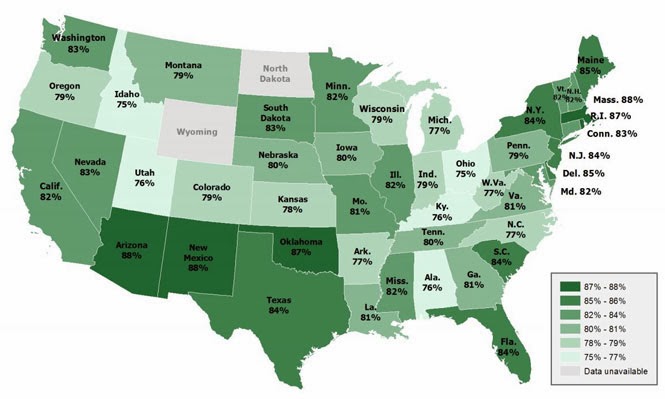
A vast majority of red-state Americans believe climate change is real and at least two-thirds of those want the government to cut greenhouse gases (GHGs). This holds true even in stridently red states like Texas and Oklahoma. More than 80 percent of Oklahomans and Texans accepted that climate change was occurring and 76 percent in both states want the government to act to limit GHGs

Krosnick's analysis comprises more than 10 years worth of poll results in 46 states. Climate deniers were not the majority in any of the states studied.

In every state surveyed for which sufficient data was available:

At least three-quarters of residents are aware that the climate is changing. At least two-thirds want the government to limit GHG emissions from businesses. At least 62 percent want regulations that cut carbon pollution from power plants. At least half want the U.S. to take action to fight climate change, even if other countries do not.

Click here for fact sheets

© 2013, Richard Matthews. All rights reserved.

Related Articles
Republicans Have Painted Themselves into a Corner on Climate Change
Congressional Inaction on Climate and Energy Legislation in 2013
The US House of Representatives Anti-Environment Voting Record in 2013
House GOP's Climate Denial Circus of Lies
Video - House Hearings on Climate Change from Rep. Mark Takano
Video - House Hearings on Climate Change Opening Remarks
Government Shutdown: Environmental Impacts and Republican Extortion
Republican Controlled Subcommittee on Energy to Hold Hearings on Climate Change
House Republicans' Historic Anti-Environment Efforts in 2011 and 2012
Republicans Need a Serious Policy Review

House GOP's Climate Denial Circus of Lies

The Republicans in the House of Representatives staged a climate denial circus on Wednesday December 11. Their so-called “factual” hearing about climate change, invoked the testimony of skeptics concluded that half of scientists think that global warming is a hoax. The actual number in more like 97 percent. They also tried to dismiss any connection between climate change and extreme weather. The Subcommittee on Environment hearing was ironically titled “A Factual Look at the Relationship Between Climate and Weather.”

Much of the lies and misrepresentation came from John Christy, a climate denying professor at the University of Alabama in Huntsville. While the only scientifically factual part of the hearing came from Pennsylvania State University’s Dr. David Titley.

The Lies

As published in the Raw Story, Chairman Lamar Smith (R-TX) asked Professor Christy, if it was really true that “97 percent of climate scientist think that climate change is real.”

“No, not at all,” Christie replied. “The American Meteorological Society, by the way, did do a survey of its professional members and found only 52 percent said that climate change of the past 50 years was due mostly to human kind. So, 52 percent amount is quite small, I think, in terms of confidence.”

“You think the 52 percent is much more credible than the 97 percent?” Smith pressed.

“Oh, yes,” Christie insisted. “It included over a thousand respondents.”

“Fifty-two percent, I don’t think by anybody’s definition, is a consensus, by the way,” Smith noted. “So I would so say that there’s not necessarily a consensus.”

The Truth

Later in the hearing, Rep. Mark Takano (D-CA) asked professor Titley, if he agreed with the witnesses who claimed there was no link between climate change and weather.

“You know, I was almost going to start nodding my head up and down with the other witnesses until I heard that there was no linkage,” Titley said. “I think the scientific consensus is not that there is no linkage, the scientific consensus is ‘we don’t know.’ What we do know, we have a warmer and more moister world.”

“Can you comment on the claim that there have been no increase in extreme weather events?” Takano wondered.

“Just take the basic data, we have had for the last 36 years, since President Ford was in office, above normal temperatures,” Titley observed. “That’s away from the center and they’re getting further and further away. Now if you take each year as kind of its own thing and imagine flipping a coin 36 times and getting heads. I mean, if that’s a fair coin, I want to go to Vegas with you.”

“The odds of that are about 1 in 68 billion,” he added. “To put it another way, there’s a 400 times greater chance that you’re going to win the Powerball [lottery] — which is $400 million, by the way, this week — than getting 36 coins to flip heads in a row.”

“So, I would say that is extreme. And the ice in the Arctic, that’s extreme. We’ve seen geologic changes in less than 10 years.”

A survey published earlier this year the journal Environmental Research Letters looked and the work of 29,000 climate scientists published in nearly 12,000 academic papers and found that 97.1% agreed that human activity was causing climate change.

© 2013, Richard Matthews. All rights reserved.

Related Articles
Except for Republicans in the House of Representatives Climate Deniers are a Dying Breed in America
Republicans Have Painted Themselves into a Corner on Climate Change
Congressional Inaction on Climate and Energy Legislation in 2013
The US House of Representatives Anti-Environment Voting Record in 2013
Video - House Hearings on Climate Change from Rep. Mark Takano
Video - House Hearings on Climate Change Opening Remarks
Government Shutdown: Environmental Impacts and Republican Extortion
Republican Controlled Subcommittee on Energy to Hold Hearings on Climate Change
House Republicans' Historic Anti-Environment Efforts in 2011 and 2012

Video - German Climate Scientist Argues the Merits of a Carbon Tax in Australia

World Population Day and Curbing Co2 Emissions on a Per Capita Basis

Thursday, July 11th, is World Population Day. The issue of population growth is highly contentious as many want to point their fingers at the developing world where we are seeing the largest population increases. This is particularly true of Africa. However, rather than look solely at population increases we need to consider the significantly lower national per capita Co2 emissions profiles of developing nations as compared to developed countries.

Growing population is undeniably a serious environmental issue. The earth has a finite carrying capacity which we are already exceeding. The more people there are on this earth the greater the demands we make on the planet's limited resources.

There are currently 7 billion people on the planet and this is expected to grow to 9 billion people by 2050. The growing population will put even more strain on our finite resources. More people means more demand for water, food, and energy as well as associated increases in waste and emissions.

Even if we use conservative per capita Co2 emissions estimates of 3 tonnes per person per year, we see that 2 billion more people will generate at least 6 billion tonnes of additional annual Co2 emissions.

Much of the increase in emissions can be offset through the expanded use of renewables. Renewable energy generates a tiny fraction of the emissions associated with burning fossil fuels for energy. 

When we look at per capita emissions it is important to acknowledge the massive gulf that separates the developed and developing world. For example, China, is the world leader in total emissions (6018m metric tonnes of Co2) since it overtook the US (5903m metric tonnes of Co2) in 2007. But as assessed on a per capita basis the US generates more than four times China's Co2 emissions on an annual per capita basis (the average American is responsible for 19.8 tonnes per person, while the average Chinese citizen generates 4.6 tonnes).

The discrepancy between developed and developing countries is far worse in other places. The annual per capita Co2 emissions are 16.5 times higher in the US than in India which generates 1.2 tonnes per capita. Even though India's per capita emissions are on the rise, by 2040 the country is expected to have a Co2 emissions profile below 3 tonnes per person.

As the leading continent for population growth Africa is often unfairly singled out. To illustrate this point, the annual US per capita Co2 emission are 66 times higher than in the African country of Kenya which generates 0.3 tonnes per capita.

We are seeing very promising signs of sustainable development in Africa. The tremendous growth of renewable energy in Africa will enable the continent to keep its per capita emissions relatively low. For example, a report from the African Development Bank (AfDB) said that wind power is expected to increase by a factor of 10 over the next few years.

The prodigious growth of renewable energy in Africa and other developing nations is promising. It is clear that we will not be able to reduce global emissions if the developing world follows the same fossil fuel driven path that the developed world has taken.

Renewable energy can enable developing nations to leap frog past fossil fuels that same way they have established wireless communications without going through a stage of hard wired phones and the same way they are adopting electric vehicles without the heavy reliance on fossil fuel powered cars.

While we expect to see a reduction in annual per capita Co2 emissions in the developing world, they are still expected to be significantly higher than in developing nations. It should be obvious that if we are to curb global emission the developed world must significantly reduce their per capita emissions beyond current forecasts. Further, the developed world must assist the developing world with technology transfer and financial support to help them avoid our environmentally ruinous developmental path.

World population is a serious problem, but as we continue to seek an elusive deal on global emissions reductions, we must factor per capita emissions.

For more information on per capita Co2 emissions click here.

© 2013, Richard Matthews. All rights reserved.

Related Posts
Adolescent Pregnancy on World Population Day 2013
Population Growth and Global Food Production
Population Growth is Compounding Climate Change
7 Billion Actions: A Global Movement For All Humanity
Population Growth and Climate Change
Growth in World Population Threatens the Environment
World Population Day 2010: Everyone Counts
Environmental Impact of Overpopulation