Showing posts with label Record. Show all posts

White Paper - Redefining Value: The New Metrics of Sustainable Business

This complimentary report provides a recap of key themes and takeaways from New Metrics '12, in the form of reflections on recent lessons, leading case studies and forthcoming opportunities.

We are seeing rapid shifts in the following three areas:

1. The degree to which citizens trust business
2. The degree to which people care if any individual brand persists,
3. The degree to which society is beginning to hold business accountable for addressing many of the social and environmental challenges we face.

The metrics by which we define and measure value must change if for no other reason than to respond to these shifts.

Nothing can drive faster organizational response to a changing business environment - or facilitate realignment between corporate functions or within value networks - than a shift in the metrics used to track success.

In 2011, Sustainable Brands launched a series of conversations on this topic, both online and via the New Metrics of Sustainable Business Conference. The conference convened again in 2012, and in 2013 there will be a third installment of the annual gathering (for more information see below).

The objective at New Metrics of Sustainable Business Conference has been to bring together thought leaders from business, non-profits and academia to realize three objectives:

1. Understand the rapidly evolving progress towards developing and implementing New Metrics globally
2. Advance the state of the art through focused discussions based on case studies; and
3. Nurture the emergence of new mental models to deliver and benefit from new forms of value.

For more information on New Metrics '13, which will take place on September 24-25 in Philadelphia, click here.

To access the New Metrics complimentary white paper click here.

Related Articles
Evolving Metrics for Corporate Sustainability: Beyond Waste, Water and Energy
Is Sustainability Still Possible?
Ten Sources of Green Supply Chain Information
PPR Home's Sustainability Journey: Innovative Metrics Shed Light
We are on Track for a 6 Degree Rise in Temperature

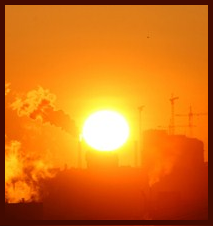
According to a new analysis released on November 5 and reported in the Guardian, the world is on track for "at least six degrees of warming" by the end of the century. The new research was conducted by consultancy giant PwC. Their investigation concluded that we will need a "5.1 per cent annual cut in global emissions per unit of GDP, known as carbon intensity, through to 2050 if the world is to avoid the worst effects of climate change and meet an internationally agreed target of limiting average temperature increases to just two degrees above pre-industrial levels."

The growth of GHG emissions in emerging countries represent one of the biggest challenges to combating climate change. Specifically nations like China, India, Brazil, Mexico, Russia, Indonesia and Turkey, whose cumulative 7.4 percent annual increase in emissions. However emerging nations are not alone, the research indicates that industrialized countries must also accelerate their carbon reduction efforts.

The report concludes that "governments and businesses can no longer assume that a two-degree warming world is the default scenario", and urges greater planning to cope with the disruptive effects that more unpredictable and extreme weather will have on supply chains, long-term assets, and infrastructure, particularly in coastal or low-lying regions.

Meanwhile, businesses in carbon-intensive sectors must also anticipate "invasive regulation" and the possibility of stranded assets, said Jonathan Grant, director of sustainability and climate change at PwC.

"Resilience will become a watchword in the boardroom – to policy responses as well as to the climate," he said. "More radical and disruptive policy reactions in the medium term could lead to high-carbon assets being stranded.

According to National Geographic, a 6 degree rise in temperature will radically change our world.

To avert the worst effects of climate change we must imediately begin to radically reduce emissions. The focus should be on cleaner power generation, energy-efficiency, transport and industry, as well as forest preservation (REDD).

Related Articles
The Dramatic Implications of Melting Arctic Sea Ice
The Safe Upper Limit of Atmospheric Carbon is 350 PPM
Arctic Monitoring Stations Report High Levels of CO2
Melting Arctic Ice is Releasing Massive Amounts of Methane
Debunking CO2 Myths and The Science of Climate Change
Primer on CO2 and Other GHGs
The Green Economy is the Right Solution for our Troubled Times
Action on Climate Change
The Effects of Global Warming
Natural Gas is Not Clean Energy
Whats the Fracking Problem?
Coke and the WWF's CO2 Eating Billboard

Comprehensive Review of Climate Change Science

The evidence for anthropogenic global warming is unassailable. In 2009, 18 scientific groups — including the American Association for the Advancement of Science and the American Meteorological Society — issued a joint statement indicating that human activities are the “primary driver” of climate change. The National Academy of Sciences (the gold standard for objective scientific assessment) have also clearly supported the body of evidence on anthropogenic global warming.

“Some scientific conclusions or theories have been so thoroughly examined and tested, and supported by so many independent observations and results, that their likelihood of subsequently being found to be wrong is vanishingly small. Such conclusions and theories are then regarded as settled facts. This is the case for the conclusions that the Earth system is warming and that much of this warming is due to human activities."

Here are 33 articles, reports and studies that support the existence of anthropogenic climate change:
  1. No scientific body of national or international standing maintains a dissenting opinion on climate change
  2. September 2012 was the Warmest in Recorded History (NOAA)
  3. Strong Body of Evidence for a Changing Climate
  4. American Meteorological Society Corroborates Anthropogenic Climate Change
  5. More Scientific Support for Anthropogenic Climate Change
  6. Science and Pernicious Ignorance of Climate Change Denial
  7. The Fifth Global Environmental Outlook Report
  8. Findings and Solutions in the Living Planet Report 2012
  9. A New Study Indicates We Are Reaching a Tipping Points
  10. Environmental Tipping Points
  11. Climate Change Science
  12. Top Four Climate Studies of 2011
  13. State of the Climate Global Analysis Nov 2011
  14. Interactive Map Reveals Warmer Spring 2012
  15. 2012 is but the Latest Year Marked by Heat and Drought
  16. Heat in the US Northeast and Drought Around the World IN 2012
  17. Temperature Data: 1880 - 2011 (Video)
  18. New NASA Video Graphically Illustrates that the Earth is Warming
  19. Popular Media is Distorting the Facts about Climate
  20. State of the Climate Global Analysis Nov 2011
  21. Debunking CO2 Myths and The Science of Climate Change
  22. Primer on CO2 and other GHGs
  23. Video: Why People are Confused about the Scientific Veracity of Climate Change
  24. Bill McKibben: Global Warming's Terrifying New Math
  25. The Effects of Global Warming
  26. The human fingerprint in global warming
  27. Human activities produce in just 3 to 5 days, the equivalent amount of carbon that volcanoes produce globally each year
  28. Chronological history of atmospheric CO2, showing a massive spike from the Industrial Revolution onwards
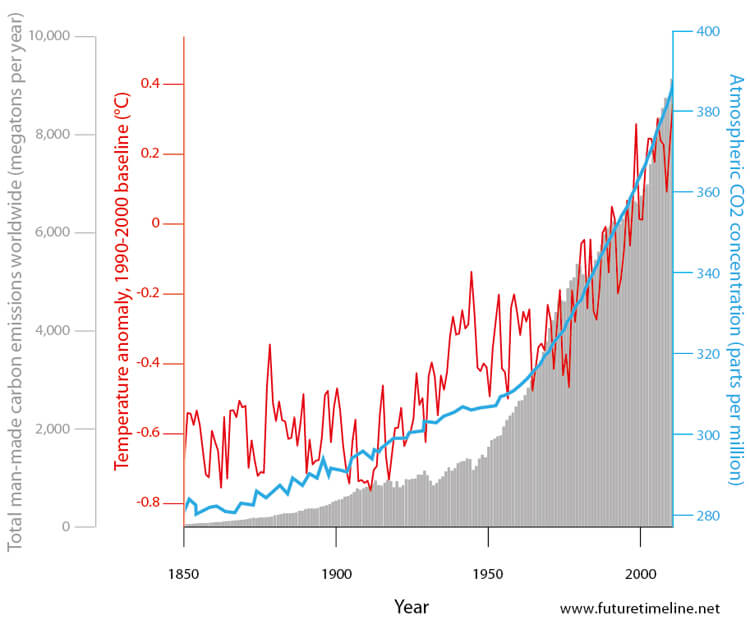
  29. Strong correlation between atmospheric CO2 levels, man-made carbon emissions and the global average temperature
  30. The rapid decline in Arctic sea ice is between 70% and 95% due to man-made global warming
  31. A NASA study reports that changes in solar activity cannot be responsible for the current period of global warming 
  32. 10-year average (2000–2009) global temperature anomaly relative to 1951–1980 mean

© 2012, Richard Matthews. All rights reserved.

September 2012 was the Warmest in Recorded History

A wide range of temperature data indicate that the earth continues to get warmer. September 2012 was tied for the warmest September since the dawn of temperature records. These were the findings of the State of the Climate Global Analysis, September 2012 from the National Oceanic and Atmospheric Administration (NOAA) National Climatic Data Center.

Global Averages

The average combined global land and ocean surface temperature for September 2012 tied with 2005 as the warmest September on record, at 0.67°C (1.21°F) above the 20th century average of 15.0°C (59.0°F). Records began in 1880. The globally-averaged land surface temperature for September 2012 was the third warmest September on record, at 1.02°C (1.84°F) above average. The globally-averaged ocean surface temperature tied with 1997 as the second warmest September on record, at 0.54°C (0.97°F) above average. The average combined global land and ocean surface temperature for January–September 2012 was the eighth warmest such period on record, at 0.57°C (1.03°F) above the 20th century average.

Hungary

Following the second warmest summer (June–August) for Hungary since national records began in 1900, monthly temperatures remained above average across the entire country during September, ranging from about 1.0°–3.5°C (1.8°–6.3°F) above the 1971–2000 average, according to the country's national meteorological service, Országos Meteorológiai Szolgálat.

Australia

Australia experienced its third warmest September since records began in 1950, with the nationally-averaged maximum temperature 1.94°C (3.49°F) above the 1961–1990 average. The minimum temperature was also above average but not quite as extreme as the maximum, at 0.42°C (0.76°F) above the long-term average.

Argentina

According to Argentina's national meterological service, Servicio Meteorológico Nacional, the monthly-averaged daily, maximum, and minimum temperatures were all above normal across Argentina, particularly in the central and northern regions of the country. Record high September minimum temperatures were observed across parts of the midwest.

Japan

As indicated in the land and ocean temperature percentiles map above, Japan observed record warmth during September. According to the Japan Meteorological Agency, the greatest warmth was observed across northern Japan (regions of Hokkaido and Tohuko), which was 3.7°C (6.7°F) above average. It was below average across Okinawa, which had been impacted by Super Typhoons Sanba (middle of the month) and Jelawat (end of the month).

Related Articles
New NASA Video Graphically Illustrates that the Earth is Warming
Popular Media is Distorting the Facts about Climate
Strong Body of Evidence for a Changing Climate
American Meteorological Society Corroborates Anthropogenic Climate Change
More Scientific Support for Anthropogenic Climate Change
A New Study Indicates We Are Reaching a Tipping Points
Environmental Tipping Points
2012 is but the Latest Year Marked by Heat and Drought
Heat in the US Northeast and Drought Around the World
Strong Body of Evidence for a Warming Climate
Interactive Map Reveals Warmer Spring
Temperature Data: 1880 - 2011 (Video)
The Effects of Global Warming
Bill McKibben: Global Warming's Terrifying New Math
Extreme Weather
The Effects of Global Warming
Top Four Climate Studies of 2011
State of the Climate Global Analysis Nov 2011
Bill McKibben: Global Warming's Terrifying New Math
Extreme Weather
Extreme Weather
Extreme Weather and the Costs of Climate
Climate Change Science
The Effects of Global Warming
Top Four Climate Studies of 2011
State of the Climate Global Analysis Nov 2011
Debunking CO2 Myths and The Science of Climate Change
Primer on CO2 and other GHGs
Temperature Data: 1880 - 2011 (Video)
Video: Why People are Confused about the Scientific Veracity of Climate Change
Bill McKibben on Connect the Dots Events
Interactive Map Reveals Warmer Spring
100 Global Activities for Climate Impacts Day
The World “Connects the Dots” Between Extreme Weather & Climate Change
Business and Climate Impacts Day
Bill McKibben on Connect the Dots
Connect the Dots End Fossil Fuel
Extreme Weather
McKibben Attributes Extreme Weather Events to Climate Change
Extreme Weather Makes a Convincing Case for Climate Change
Hurricane Irene and the Staggering Costs of Climate Change
Deadly Tornadoes in Massachusetts
Extreme Weather and the Costs of Climate Change
Floods in the Philipines Underscore the Deadly Toll from Climate Change
The Costs of Global Warming
24 Hours of Reality
Science and Pernicious Ignorance of Climate Change Denial
More Scientific Support for Anthropogenic Climate Change
World Day to Combat Desertification
The Fifth Global Environmental Outlook Report

2012 is but the Latest Year Marked by Heat and Drought

With its heatwaves and drought, the summer of 2012 has been hot. In fact, the Northeast has experienced the hottest period from January to July ever recorded and July 2012 was the hottest month ever in the contiguous US. Although the weather has been balmy this year, extreme heat and drought are not anything new.

According to an EPA report, seven of the top ten warmest years on record for the continental U.S. have occurred since 1990. The frequency of heat waves have also steadily risen since the 1960’s and the percentage of the US population experiencing heat waves has also increased. Perhaps most convincing is the fact that seventeen of the warmest years in recorded history have occurred over the last twenty years and the warmest years on record occurred in the most recent decade.

The summer of 2011 was one of the hottest on record and the summer of 2010 saw record-setting temperatures in more than a dozen nations. There were record-breaking temperatures all around the world in 2010 and a new record was set for the second highest average global temperature over a 12 month period. In 2011, the U.S. experienced widespread record-breaking heat waves and droughts, which along with other extreme weather events, have been linked to climate change.

In 2010, China recorded the second highest temperatures it had ever seen, and India recorded its warmest year ever. Many heat records were also set in the U.S. in 2010. According to NASA, 2010 was tied for the hottest year ever in the U.S. and NASA’s temperature record showed that it was the hottest January to April in recorded U.S. history. In the U.S. there were more than 4000 daily high temperature records that were tied or broken in June. There were also 159 reports of record high temperatures for June and 42 reports of all-time record hottest temperatures.

The Great Russian drought of 2010 prompted fires and destroyed 25 million acres of crops. Thousands died around the globe as many parts of the world suffered under the record-breaking heat. More recently, the Amazon faced its second “hundred-year drought” in the past five years.

Even before 2010, the evidence for a warming trend was building. Researchers have been pointing to a link between weather and climate for decades. Eight years ago, a study published in NatureNews indicated that global warming was partially responsible for the deadly heat wave that scorched Europe in 2003. Hurricane Irene pushed the U.S. yearly record for billion-dollar natural disasters to 10 in 2011, smashing the 2008 record of nine.

The extreme heat and drought we are experiencing in 2012 looks increasingly like the years that preceded it. We may very well be dealing with global weather patterns that have been permanently changed by global warming.

© 2012, Richard Matthews. All rights reserved.

Related Posts
The Heat and Drought of 2012
Bill McKibben: Global Warming's Terrifying New Math
Extreme Weather
Extreme Weather and the Costs of Climate
Climate Change Science
The Effects of Global Warming
Top Four Climate Studies of 2011
State of the Climate Global Analysis Nov 2011
Debunking CO2 Myths and The Science of Climate Change
Primer on CO2 and other GHGs
Temperature Data: 1880 - 2011 (Video)
Video: Why People are Confused about the Scientific Veracity of Climate Change
Bill McKibben on Connect the Dots Events
Interactive Map Reveals Warmer Spring
100 Global Activities for Climate Impacts Day
The World “Connects the Dots” Between Extreme Weather & Climate Change
Business and Climate Impacts Day
Bill McKibben on Connect the Dots
Connect the Dots End Fossil Fuel
Extreme Weather
McKibben Attributes Extreme Weather Events to Climate Change
Extreme Weather Makes a Convincing Case for Climate Change
Hurricane Irene and the Staggering Costs of Climate Change
Deadly Tornadoes in Massachusetts
Tornadoes and Floods Underscore the Costs of Global Warming
Extreme Weather and the Costs of Climate Change
State of the Climate Global Analysis Nov 2011
Floods in the Philipines Underscore the Deadly Toll from Climate Change
The Costs of Global Warming
24 Hours of Reality
Science and Pernicious Ignorance of Climate Change Denial
More Scientific Support for Anthropogenic Climate Change
World Day to Combat Desertification
The Fifth Global Environmental Outlook Report

Heat in the US Northeast and Drought Around the World

Against a backdrop of wildfires and droughts, heat records are being broken across the US but nowhere more than in the Northeast. After a winter with very little snow, people in the Northeast have been subjected to record breaking heat for the first seven months of 2012. The period between July 2011 to July 2012 was also the warmest 12-months in the Northeast ever recorded. The weather is making headlines across the nation with more than half of the country suffering from high temperatures and little rain. The drought is driving up the cost of agricultural commodities and contributing to price volatility, they may even lead to a food crisis. Although it is abnormally dry in the Northeast, they have escaped drought conditions, what they cannot escape is heat.

The Northeast Regional Climate Center at Cornell University reported that July 2012 was the hottest month on record for the contiguous US. The Northeast had the warmest January through July on record. The average temperature in the 12-state region during this period was 49.9 degrees.

All throughout the Northeast there have been single day record breaking heat in July. The climate center reported that in July Washington's Reagan National Airport hit 105 degrees, Baltimore and Newark recorded 104 degrees, Syracuse hit 101, and New York City's LaGuardia Airport also saw temperatures of 101 degrees.

The US is not the only nation suffering from drought, extreme dry spells in China, Africa, Russia, Australia and Western Europe may be suggestive of a permanent change in climate patterns.

Last year was no better, as the summer of 2011 was marked by record heat and drought. Russia lost 13.3 million acres of crops, or about 17 percent of its production. Also in 2011, drought was so severe in the Horn of Africa that it killed 60 percent of Ethiopia’s cattle and 40 percent of its sheep.

If it were not for last year and the year before, this year could be easily dismissed as an anomaly. When you have consistent warming and a string of record breaking years for heat and drought all occurring in the last decade, it looks increasing like this represents a disturbing trend that is here to stay.

© 2012, Richard Matthews. All rights reserved.

Related Posts
2012 is but the Latest Year Marked by Heat and Drought
Bill McKibben: Global Warming's Terrifying New Math
Extreme Weather
Extreme Weather and the Costs of Climate
Climate Change Science
The Effects of Global Warming
Top Four Climate Studies of 2011
State of the Climate Global Analysis Nov 2011
Debunking CO2 Myths and The Science of Climate Change
Primer on CO2 and other GHGs
Temperature Data: 1880 - 2011 (Video)
Video: Why People are Confused about the Scientific Veracity of Climate Change
Bill McKibben on Connect the Dots Events
Interactive Map Reveals Warmer Spring
100 Global Activities for Climate Impacts Day
The World “Connects the Dots” Between Extreme Weather & Climate Change
Business and Climate Impacts Day
Bill McKibben on Connect the Dots
Connect the Dots End Fossil Fuel
Extreme Weather
McKibben Attributes Extreme Weather Events to Climate Change
Extreme Weather Makes a Convincing Case for Climate Change
Hurricane Irene and the Staggering Costs of Climate Change
Deadly Tornadoes in Massachusetts
Tornadoes and Floods Underscore the Costs of Global Warming
Extreme Weather and the Costs of Climate Change
State of the Climate Global Analysis Nov 2011
Floods in the Philipines Underscore the Deadly Toll from Climate Change
The Costs of Global Warming
24 Hours of Reality
Science and Pernicious Ignorance of Climate Change Denial
More Scientific Support for Anthropogenic Climate Change
World Day to Combat Desertification
The Fifth Global Environmental Outlook Report

Video: Lightening Electric Motorcycle Goes Over 200 mph for 18 Cents


Here is a motorcycle that proves you can have radical efficiency and extraordinary performance. In this video you will see just how fast the Lightening electric motorcyle can go (apparently the previous run was even faster at 218.6 mph). This is the first electric motorcycle to go over 200 mph. The black and orange markers on the sides of the track fly by even though they are 1/4 mile apart.

What is most remarkable about this bike is the fact that they used only 18 cents of electricity on this run and were getting the equivalent of over 50 mpg at over 200 mph. The amount of energy in the batteries would allow over 100 miles of range at normal highway speeds and cost about one dollar.

Lightning Motorcycles is the brainchild of Richard Hatfield and a group of Silicon Valley engineers dedicated to the belief that world class performance is compatible with clean tech transportation. At Lightning Motorcycles they believe that choosing to ride an electric motorcycle should not be a compromise. They have honed our understanding of vehicle development as lifetime racers. They seek out competition to refine their technology. The Lightning SuperBike is equally suited to track days, weekend rides on your favorite back roads, or record runs at Bonneville.

In addition to the SuperBike Lightning is producing prototypes of electric commuter bikes, scooters and ATVs.

© 2012, Richard Matthews. All rights reserved.