Showing posts with label manage. Show all posts

Public-Private Wastewater Partnerships

Public-private partnerships involving wastewater are part of an innovative approach to sustainability that delivers results. Wastewater is an overlooked and underutilized resource that delivers results. Businesses, communities, residents, and the environment all stand to benefit from wastewater initiatives. This reduces demand for clean water which is particularly important in areas subject to drought. Corporations are coming to terms with issues related to resource scarcity and increasingly showing leadership in water management.

The three year long drought and resultant water crisis in Cape Town is a clarion call. On May 4th the four-million residents of South Africa's second-largest city will run out of water in what is being called "Day Zero" The availability of water is or will be a major concern for many cities and towns around the world. Some of the big cities that are currently concerned about water shortages include São Paulo, Bangalore, Beijing, Cairo, Jakarta, Moscow, Istanbul, Mexico City, London, Tokyo and Miami.

Corporate America is getting ever more serious about sustainability and water is a major focus of their efforts. The water demands of most businesses make such considersations an indispensable part of sustainability initiatives. This implies that they work alongside the communities in which they are located to collaboratively plan strategies to manage water scarcity. Businesses are cooperating with governments and local resident to develop strategies that mitigate risk. In some cases the private sector may require government incentives to recycle, store and capture water.

Public-private partnerships are one of the most effective ways of addressing water scarcity. Sustainable water management partnerships offer win-win scenarios for both businesses and communities. This benefits the economy, the environment and local residents.

One such partnership can be found in drought-prone North Central Texas. To address the problem of water scarcity businesses are cooperating with local towns to come up with some creative solutions. As reported by Triple Pundit, two cities in Texas are collaborating with a hygiene solutions company to manage their water resources.

A Sealed Air plant in Iowa Park is now using recycled effluent water from the town's wastewater treatment plant. By using abundant wastewater they have reduces their demand for potable water by 40 percent. The water reuse partnership between a Sealed Air plant and the towns of Iowa Park and Wichita Falls will conserve 19 million gallons of drinking water each year.

The idea for this innovative $1.5 million project arose as a consequence of sustained periods of drought in Texas. Effluent water is an ideal solution because it is drought proof and has environmental co-benefits like reducing demand on clean water.

Businesses across the country can benefit from collaborative wastewater projects like the one in Texas. Another form of wastewater, referred to as greywater, is already being used extensively in the beer industry.

The demand for wastewater solutions will continue to grow as water resources become ever more scarce.

Related
Water and the Four Horsemen of the Apocalypse
Recycling or Reclaiming Water: A Sustainable Solution for Industry
World Water Day: Employment and Energy
Water is a Key to Sustainable Development
Water Stewardship Steps: Developing a Water Strategy
Six Innovations for Better Water Management
A Condensed History of Responsible Water Stewardship
WBCSD Report: Building the Business case for Water Valuation
Report - Water Cooperation in Action: Approaches, Tools and Processes
Solutions to the World Water Crisis Requires International Cooperation
The Business of Water Management Requires Collaboration
Water Risk Tool: The Convergence of Business and Conservation
New Tool Helps Companies with Water Risks

Water Scarcity and the Four Horsemen of the Apocalypse

The importance of water cannot be overstated. It is vital to every aspect of our civilization from the survival of our ecosystems down to our own biological needs. It is intertwined with energy and agriculture, both of which are inextricably tied to climate change. On World Water Day we are called to recognize the fundamental importance of this crucial resource. In 1993, the United Nations General Assembly officially designated March 22 as World Water Day. This day is a call to action on behalf of the 1.8 billion people who are at risk of contracting cholera, dysentery, typhoid and polio because they are forced to drink contaminated water. This is the white horse, also called disease, the first of the four horsemen of the apocalypse.

The world water crisis is real. Only about 3 percent of total earth's water is drinkable, the other 97 percent is salt water. Water from lakes, ponds, swamps, streams, rivers and all other surface water make only 0.3 percent of the earth’s fresh water. 68.7 percent of the earth’s fresh water is frozen in glaciers; about 30 percent of earth’s fresh water is ground water.  In response to the shortage of water the world's aquifers are being tapped unsustainably.

Water scarcity also augurs another apocalyptic horseman, the red horse signaling conflict. A 2016 World Bank report finds that water scarcity, exacerbated by climate change, could hinder economic growth, spur migration, and spark conflict. According to the report water scarcity could cost some regions up to 6 percent of their GDP by 2050.

We are already seeing divisions over water. In 2016 the New York Times reported that ever expanding deserts are causing conflicts in China. Similar conflicts occurred during the Brazilian water crisis of 2014, between the people in São Paulo and the residents of Rio de Janeiro. Water is already a weapon of war and it is not hard to imagine a future in which wars will be fought over access to water.

State actors are failing to protect their water.  In 2014 Duke Energy repeatedly dumped coal ash into North Carolina's waterways. The first incident spilled 40,000 tons of toxic coal ash and 27 million gallons of wastewater into the Dan River. In October 2016 North Carolina’s chief epidemiologist, Megan Davies resigned after accusing GOP state lawmakers of purposely misleading the states residents when it comes to the safety of their drinking water.  Republican have already started to gut water protections including regulations preventing the dumping of coal ash into America's waterways. 

This brings us to the third horseman, the black horse of oppression. In the US a dark cloud is descending over America's hard fought water protections. Republicans have already voted to remove regulations protecting streams. Trump has advanced a budget that kills projects to clean up the great lakes and Chesapeake Bay. Even more importantly Trump has vowed to kill the Clean Water Act (also known as the “waters of the U.S. rule”). In particular, he is targeting regulations adopted by the Obama administration to protect wetlands and marshes, the nation’s natural water filters.

Water is central to the interconnected challenges associated with both energy generation and climate change. As such its stewardship is key to resolving some of the central issues of our times. We celebrate water as a staple of life and we work to provide it to those in need. Including safe water in the Sustainable Development Goals (SDGs) is but one example of UN efforts to make water accessible to everyone.

Managing water demands international cooperation.  This includes the involvement of international bodies like the UN and all levels of government. Many corporations have been working on improving their water management practices. Increasingly sophisticated techniques to re-use water have contributed to some recent advances. Appropriately the theme of this year's World Water Day is "wastewater".

In 2015, when CDP first published its Water A list there were eight companies that achieved an ‘A’ rating. In 2016, 25 companies made the A list. While we are seeing progress, there is still a long way to go for corporations to be in a position where they can say they are doing all that they can. Only 25 companies out of 600 earned an "A" from the CDP and only two are based in the US.

The current problems will be exacerbated by growing demand and increasing scarcity. The UN predicts that the global demand for water will exceed supply by 40 percent by 2030. According to the OECD Environmental Outlook to 2050 there will be catastrophic consequences if we do not change our current course. Failure to address pressing water issues will augur the fourth horseman, the pale horse which heralds destruction.

Related
Water is a Key to Sustainable Development
Water Stewardship Steps: Developing a Water Strategy
Six Innovations for Better Water Management
Solutions to Diminishing Ground Water
A Condensed History of Responsible Water Stewardship
Worldwatch Institute: The Looming Threat of Water Scarcity
Video - Water in the Anthropocene
Alarming Facts About Water
Disturbing Water Statistics from the Food Tank

Summary of World Water Week: Events, Ideas and Stories

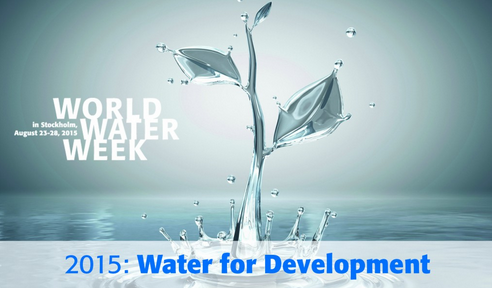
World Water Week was celebrated from August 23 to 28 in Stockholm Sweden.The theme for the 25th anniversary of the event was "Water for Development." More than 3,300 delegates assembled from 130 countries to explore solutions to some of the most urgent water and development challenges.

The problems associated with water are both pressing and ubiquitous with almost 2 billion people lacking access to safe drinking water, and 2.5 billion people who lack access to a proper toilet. Contaminated water kills roughly two million people around the world every year. By 2030, the global population is expected to reach 8.5 billion and the human race could face a 40 percent water shortfall.

Social media figured prominently at the event amplifying the #VoiceofWater. The Twitter hashtag #WWWeek was used 7,000 times everyday, reaching around 1,12 million people over the course of the week.

There were a wide assortment of podcasts, webcasts, videos, workshops, plenaries, sessions, press briefings, exhibition activities, social events, articles, awards and something called SIWASofa which is a cross between a speakers’ corner and interview studio.

Sofa addressed a range of topics, interdisciplinary collaboration and knowledge sharing. Interviewees included high-level representatives from the likes of World Bank, UNDP, Veolia, Sanitation and Water For All, Unilever, Rockefeller Foundation and SIWI.

This year's Stockholm Water Prize Laureate Rajendra Singh (aka "Water man of India"), the 2015 Stockholm Industry Water Award winner was CH2M and the winner of Stockholm Junior Water Prize was Perry Alagappan.

For more information click here.

Best Water Ideas

SIWA's #BestWaterIdeas campaign is designed to increase awareness about the importance of finding solutions to the water crisis. In 2015 Going Vegan was the most popular idea winning 58 percent of the votes. In addition to other environmental impacts meat production is water intense compared to producing other crops. It requires 15,500 litres of water to produce 1 kg beef; this can be contrasted to 180 litres for 1 kg tomatoes and 250 litres for 1 kg potatoes. The virtual water we eat (i.e. the water needed to produce the crops on our plates) constitutes the majority of all water we use, and can be as large as 4000 litres of water/capita/day.

There were over 150 water ideas this year and here are some of the best ideas: Rainwater harvesting, access to tap water, the waterless toilet, sari as a water purifier, rehabilitating wastewater, installing wells close to villages, desalinating ocean water and dams to store water.

For more information click here.

Best Water Stories 

There are literally hundreds of stories that were spawned during World Water Week. This includes how to access clean drinking water, The Water Wars Myth, Water and COP21, water as a human right, local responses to the water crisis, the future of water, water energy and climate, water and development, water and agriculture,

For more information click here.

Next year World Water Week will take place from August 28 to September 2. The theme in 2016 will be: "Water for Sustainable Growth," it will focus on inclusive access to water for everyone.

Related
Water for Development: World Water Week 2015
Water is a Key to Sustainable Development
Climate Change Increases Risks of Water Borne Diseases Contracted by Swimming
Beaches are Facing Environmental and Climate Threats
World Water Week 2014
The 2014 World Water Development Report (fifth edition): Water and Energy
World Water Week 2013: Water Cooperation - Building Partnerships
World Water Day 2013: International Year of Water Cooperation

Water Management is Big Business: Carrots and Sticks

A wide range of companies are responding to the growing demand for responsible water stewardship.  This includes products like software, printing, and decontamination. There are also powerful disincentives that encourage responsible water manage water management.

The number of companies that see the importance of responsible water stewardship has grown by leaps and bounds in recent years. This is due to both opportunities and threats. Those who engage responsible water stewardship stand to benefit from cost savings while those who do not get on board are vulnerable to a wide range of risks. These risks include penalties for failure to comply with their legal responsibilities.

Responsible corporate water efforts run the gamut from sustainable water programs to innovations that diminish water use. Here are some examples of products designed to better manage water and a couple of examples of what can happen when companies fail to do so.

There are a number of software programs that enable companies to collate data so that they may better understand and address their water management issues. The Water Risks Monitizer is a great example of software that helps companies to manage water resources. Another water management software from Aquatic Informatics goes by the title of Aquarius WebPortal 2015.1. This software offers real-time online access to quality assured environmental data and services, including rich statistics, intuitive maps, email alerts, data exporting and live reports.

Companies are also acting to be better water stewards. Kodak has introduced something called Sonora Process Free Plates, which eliminates the need for water in the pringing process. This innovation also eliminates the chemicals and energy traditionally required by processed plates. It does this without sacrificing quality or productivity. To meet the burgeoning demand for this product (66 percent year over year) Kodak opened a new manufacturing line at their Columbus, Georgia facility on August 7, 2015. The Sonora Process Free Plates eliminates the need for processing equipment and this can save the average printer that uses 20,000 square meters of plates almost $100,000 annually. There are now more than 2,700 printers using Sonora Process Free Plates for a variety of applications.

Innovative water treatment processes are also on the rise.  One such process employs an advanced oxidation process (AOP) using TiO2 catalyst and UV light. The process treats water to remove organic and chemical contaminants. known as Keratox, this water decontamination process was developed by atg UV Technology. This process can significantly lower costs and risks when compared to traditional approaches that use ozone and hydrogen peroxide.

There have been numerous examples of companies who pay a penalty for failing to safely address water risks. Earlier this year Arch Coal, one of the largest coal companies in the US, and 14 of its subsidiaries where forced to pay a $2 million civil penalty and conduct comprehensive upgrades to their operations to ensure compliance with the Clean Water Act. The settlement was attributable to the illegal discharge of pollutants.

Pan Am Railways has also been forced to pay penalties for violating the Clean Water Act. The company has agreed to pay a fine of $152,000 to resolve the violations. These fines were levied due to the company's inadequate storm water management. This includes storm water running through debris piles and oil stains. The company also agreed to undertake an Environmental Culture Assessment (ECA) and develop and implement action plans to improve the current environmental culture.

Whether to reap financial benefits or to avoid penalties the business of water management is is a large and growing concern.

Related
A Condensed History of Responsible Water Stewardship
Performance Contracting Offers Water and Energy Savings
Expanded Water Tool Reveals the Actual and Future Water Risks
Free Sustainable Water Management Software for Universities
Responsible Corporate Water Leadership: Beer and Jeans
The 2014 World Water Development Report (fifth edition): Water and Energy
Recycling or Reclaiming Water: A Sustainable Solution for Industry
Water Stewardship Steps: Developing a Water Strategy
Solutions to Diminishing Ground Water
Reducing Water Use in the United States
110 Water Conservation Tips for Businesses and Homes
Water Efficiency: Stopping the Flow from Leaky Pipes
The Carbon Trust's Water Standard
WBCSD Report: Building the Business case for Water Valuation

Expanded Water Tool Reveals the Actual and Future Risks and Costs (Videos)

An expanded version of a tool has just been released that provides actionable information to help businesses manage their water risks. It obvious to everyone, including businesses that water is a finite resource that is in growing demand. It is becoming increasingly evident that water is a strategic asset. Now more than ever businesses want a better understanding of their exposure to water risks. In addition to risk mitigation water is increasingly being understood as a cost saving opportunity. Businesses are also concerned about water scarcity as a constraint to growth. While having the information to craft the right water policy can be instrumental to success, water is currently undervalued and the real price remains elusive.

To ascertain the real value water Ecolab and Trucosthave developed a free tool known as the Water Risk Monetizer. This location specific tool was first introduced in November 2014 and it provides financial valuations of water at any given plant.


This is the first tool to quantify water risks and facilitate informed decision making with actionable information. In this video CEOs Doug Baker (Ecolab) and Richard Mattison (Trucost) discuss why they invented the monitizer and what it does.


Since the initial release last year a new expanded version has become available that accounts for potential profit reductions associated with water scarcity. For more detailed information on how to use the tool watch the full tutorial below.


To access the tool click here.

Related
Free Sustainable Water Management Software for Universities
Water Risk Tool: The Convergence of Business and Conservation
New Tool Helps Companies with Water Risks
GE is Helping Nestle to Save Millions of Gallons of Water
Siemens Water Tool on Facebook
Sustainable Water Purification Technology
New Water Quality Runoff Tool from the USDA

A Brief History of Responsible Water Stewardship at Nestlé

Responsible water management is a critical issue for Nestlé and their stakeholders. In recent years the company has made great strides in water efficiency and stewardship. This is important with more than a third (38 percent) of their factories situated in water-stressed regions.

While Nestlé now claims that it welcomes the growing level of stakeholder interest in water issues this was not always the case. Nestlé now aims "to minimise the impact of our operations on natural water resources and the communities they support." However, these objectives were not always core concerns for the company.

In 2011 social media campaigns helped to encourage Nestlé to adopt more sustainable businesses practices including water stewardship. One year later with the help of GE Nestlé managed to save millions of gallons of water.

Nestlé has been involved with water based efforts in India for almost a decade now. They support initiatives to provide clean drinking water and they are also working on building awareness about water conservation and sustainability. Nestlé has partnered with a number of institutions with expertise in the field of water research and outreach across the country including the Department of Science and Technology, Government of India and the Embassy of Switzerland in India. Together they formed the Science Express, an innovative mobile exhibition mounted on a specially designed train, traveling across India since October 2007.

They also funded a study in partnership with the International Water Management Institute titled, “Measuring the water footprints of milk production: contributions to livelihood benefits and sustainable water use in the Moga District in Punjab" It explored the main factors for groundwater depletion in the Moga district by studying the water footprint for agriculture, and recommends interventions for sustainable irrigation and agriculture. These recommendations are being promoted by Nestlé among the dairy farmers in the region.

Nestlé is one of the first signatories of the pledge drawn up by the World Business Council for Sustainable Development (WBCSD) that commits businesses to upholding the human right to water and sanitation within their operations. The pledge for ‘Water, Sanitation and Hygiene Implementation at the Workplace’ (WASH) challenges companies to provide access to safe water and sanitation, and appropriate facilities to ensure personal hygiene, to employees in all premises in their direct control, within three years of signing.

In 2013 Nestlé launched its water stewardship program that includes efforts to reduce, reuse and recycle water in their operations. The right to water and sanitation is now systematically included in Nestlé's corporate Human Rights Impact Assessment.  Nestlé conducts water resource reviews to help them assess potential impacts to the Right to Water and Sanitation of local communities. Where they deem necessary they take corrective action. As of the end of 2014, 133 factories had undergone a Water Resources Review.

In 2014 Nestlé introduced a global ‘Water Stewardship Master Plan’ at a corporate level, and they started to develop local master plans in key markets which includes documented responsibilities, targets and deadlines.

There are currently more than 376 water-saving projects in Nestlé’s factories which will save around 1.84 million m3 of water. In 2014,  they reduced direct water withdrawals per tonne of product by 6 percent and 37 percent since 2005.

By the end of 2014, they have decreased water withdrawals and improved efficiency (compared to 2013 levels) in 42 percent of these facilities. They improve local water stewardship efforts by conducting Water Resource Reviews across our factory sites, with 18 new reviews carried out this year. WASH considerations are being integrated into the process.

The company has publicly announced the following responsible water stewardship goals for this year and next:

2015

– Reduce direct water withdrawals per tonne of product in every product category to achieve an overall reduction of 40% since 2005.
– Establish and implement detailed guidelines on human rights to water and sanitation due diligence.

2016

– Define water stewardship initiatives and start implementation in five high-priority locations.
– Implement water savings projects in 100% of high-priority manufacturing facilities.
– Carry out 45 new water resources reviews in selected manufacturing facilities, and all greenfield sites.

In addition to their purely water focused initiatives Nestlé now participates in efforts to help others engage sustainability and the company is also among those who were early supporters of the EPA's Clean Power Plan. While there are still reasons why environmental critics challenge Nestlé, no one can deny that they have come a long way in a relatively short span of time.

Related
Water Management is Big Business: Carrots and Sticks
Performance Contracting Offers Water and Energy Savings
Responsible Corporate Water Leadership: Beer and Jeans
The 2014 World Water Development Report (fifth edition): Water and Energy
Recycling or Reclaiming Water: A Sustainable Solution for Industry
World Water Day 2014 Advocacy Guide
Water Stewardship Steps: Developing a Water Strategy
Solutions to Diminishing Ground Water
Reducing Water Use in the United States
110 Water Conservation Tips for Businesses and Homes
Water Efficiency: Stopping the Flow from Leaky Pipes
The Carbon Trust's Water Standard
WBCSD Report: Building the Business case for Water Valuation

Performance Contracting Offers Water and Energy Savings for Schools and Governments

A new report suggests that western public school schools and government facilities can reduce energy and water usage and save vast sums of money by using performance contracting. The western states covered in the report are Arizona, California, Colorado, New Mexico, Nevada, Utah and Wyoming.

Performance Based Contracting is a results-oriented contracting method that grantees a particular outcome. This approach focuses on the outputs, quality, or outcomes that are tied to a contractor's payment. If the contractor fails to meet the contracted objectives the contractor must make up the difference.

According to a study released at the end of July by Western Resource Advocates and McKinstry, there are almost $1 billion worth of savings to be had.

The research specifically said that using performance contracting a total of $859 million can be saved through water management and energy conservation measures.

The report, titled Tapping the Power of the Market: Financial, Energy and Water Savings, and New Revenue Streams through Performance Contracting in the Colorado River Basin States, indicates that together schools and governments in the west could save more than 6 million megawatts of electricity, 4 million cubic feet of natural gas, and 40,000 acre feet of water every year.

The study concludes that the performance contracting model, is well suited to energy and water contracts given out by cities, counties, school districts, and wastewater/water utilities .

This approach is particularly important in the Colorado River Basin which has been plagued by the combination of decreasing water supply and increasing demand. Persistent droughts and growing populations are straining resources to the limit.

Performance contracting can both reduce apparent water loss through customer meter inaccuracies by 461,000 acre-feet per year. It can also provide $593 million in additional revenue per year.

Related
Water Management is Big Business: Carrots and Sticks
A Condensed History of Responsible Water Stewardship
Responsible Corporate Water Leadership: Beer and Jeans
The 2014 World Water Development Report (fifth edition): Water and Energy
Recycling or Reclaiming Water: A Sustainable Solution for Industry
World Water Day 2014 Advocacy Guide
Water Stewardship Steps: Developing a Water Strategy
Solutions to Diminishing Ground Water
Reducing Water Use in the United States
110 Water Conservation Tips for Businesses and Homes
Water Efficiency: Stopping the Flow from Leaky Pipes
The Carbon Trust's Water Standard
WBCSD Report: Building the Business case for Water Valuation

Water is a Key to Sustainable Development

The theme of World Water Week 2015, (August 23-28) is "Water for Development." This year's theme is crucially important issue as water is central to development issues around the world. There can be no sustainable development, nor can we hope to eradicate poverty in the absence of a keen focus on water.

The issue of water is prescient as the Sustainable Development Goals are due to be formally adopted in September.  As explained in a Reuters article, the World Bank says that water management is key to achieving these goals.

Each day almost 1000 children under 5 die from diarrhea caused by contaminated water. One third of all people on earth, or 2.4 billion people do not have access to sanitation.

This already serious problem is destined to get worse as the world's population is expected to top 9 billion people by 2050. This is especially true in Latin America, Sub-Saharan Africa and Southeast Asia where urban centers are growing rapidly. We are expected to face a 40 percent shortfall in water supplies in 15 years due in part to urbanization.

We need to fundamentally rethink how water is managed said Junaid Ahmad, director at the World Bank's water global practice. "We're headed into a perfect storm in which over the next 20 years we will see the demand for water growing significantly, driven by thirsty agriculture, thirsty energy and thirsty cities," Ahmad said at the World Water Conference in Stockholm.

Water is not only a problem in the developing world or for the world's poor, it is a global problem that touches all of us. In 2015 alone the ongoing drought in California cost the state's economy $2.7 billion and nearly 21,000 jobs. Water issues in the developing world are even more serious and problematic.

Food scarcity is directly tied to water scarcity. Water scarcity like climate change is a major cause of stress and conflict. Water is also a weapon of war. It is not an exaggeration to say that the fate of the world hinges on how we manage water, particularly in the developing world.

Related
Water for Development: World Water Week 2015
Alarming Facts About Water
Disturbing Water Statistics from the Food Tank
Worldwatch Institute: The Looming Threat of Water Scarcity
Population Growth and Climate Change will Add to the World Water Crisis
Infographic - Water Consumption in the US and in Developing World
Infographic - Sanitation and Water
Video - Water's role in Post-2015 Development Agenda (UN-Water Chair Michel Jarraud)
Video - World Water Development Report
How Much Water is there on Earth
Video - Water in the Anthropocene