Showing posts with label impact. Show all posts

How Apple Transitioned from Corporate Luddite to Environmental Leader

Companies are showing that change is both possible and profitable. As we stare down the barrel of a dark future companies are acknowledging the emergence of a new reality that forces them to change the way they do business. Embracing sustainability makes sense even for those who were slow off the mark. Apple proves that it is possible to transition from a climate Luddite to a climate leader.

Leading corporations are helping to show the way forward and no company has come further in recent years than Apple. The tech leader has not always been an environmental leader. That changed when Tim Cook was named CEO in 2011. He then had the good sense to hire former EPA administrator Lisa Jackson to be the VP of Environment, Policy, and Social Initiatives. Since then the company has significantly improved their sustainability performance while ameliorating working conditions and transparency.

In the last few years Apple has consistently led Greenpeace Tech Company Rankings and they have showed impressive leadership in recycling, renewables, emissions reduction, waste management and water conservation. Apple has vowed to use only recycled materials thereby ending their reliance on newly mined rare minerals and metals. This not only addresses the demands placed on finite resources it also mitigates against risks associated with supply chain shortages. Harvesting the raw materials they need from the billions of discarded phones and other electronics will also have a beneficial impact on waste management.

Apple gets 100 percent of its energy from renewables. Apple has also encouraged their suppliers to do the same. Apple and its suppliers generated over 2.5 billion kWh of clean energy in 2018. Apple’s 2017 Supplier Responsibility progress report indicated the adoption of renewables by several large suppliers will reduce carbon emissions by 7 million metric tons per year by the end of 2018.

and in its inaugural year their supply chain efficiency program reduced carbon emissions by 13,800 metric tons. In 2016, Apple tripled the number of supplier sites participating in its efficiency program. As of 2017 Apple suppliers had reduced their carbon emissions by 150,000 metric tons.

In 2015 Apple suppliers diverted more than 73,000 metric tons of waste from landfills. In 2016, the company’s suppliers diverted more than 200,000 metric tons of waste from landfills. As reported by Environmental Leader Apple’s 2017 Supplier Responsibility progress report indicates that the company’s suppliers had for the first time achieved 100 percent UL Zero Waste to Landfill validation for all final assembly sites in China. A total of 22 supplier facilities were certified as Zero Waste, including all their iPhone final assembly sites.

All of process chemicals at final assembly facilities were free of  Apple-prohibited substances (Apple has identified a list of hazardous chemicals in their Regulated Substances Specification list). Apple is also working with its suppliers to identify and eliminate the use of these chemicals at its non-final assembly facilities.

Apple reported that its Clean Water Program saved more than 3.8 billion gallons of freshwater in 2016 representing a 35 percent average reuse rate across 86 sites. Since 2013, Apple’s water management program has saved more than 8 billion gallons of freshwater, Apple says.

The average environment assessment score across Apple’s 705 supply chain assessments in 2016 was 87 out of 100. In 2017, the average environment assessment score among the 756 suppliers was 91 out of 100, and the average health and safety assessment score was 90.

Apple is minimizing its impact on the planet while improving the bottom line and reducing risks. They are also earning excellent reputational benefits and reinforcing the ties with their half billion loyal patrons.

Apple may be a latecomer to the sustainability table but this makes an important point with a message for businesses both large and small. Apple's corporate turnaround proves that it is not yet too late to let go of the past and embrace the future of commerce.

Related
Apple Proves its Never too Late to Go Green
Sustainability Pioneers that have Earned a Place in History
The Wave of Corporate Goodness
US Corporate Climate Efforts in 2017 Offer Hope for 2018
Business Action on Climate Change
10 Things Corporations Can Do to Combat Climate Change
Criticisms of Sustainability Offset by Tangible Results
Responsible Business: The Rapid Growth of the B Corps
Business Benefits from Science-Based Climate Action
Sustainability is an Economic Boon not a Liability

Earth Day 2016 is the Most Hopeful Ever

This is an Earth Day unlike any that have preceded it. After almost five decades of grass roots activism, the festivities in 2016 finally have something to celebrate. This year we are driving a stake into the heart of climate pessimism. We are challenging those that doubt our resolve and we are breathing hope into a new climate narrative. 

We are seeing tremendous momentum in renewable energy and corporate sustainability. There is clear evidence that the fossil fuel industry is in decline. The Paris Climate Agreement offers the strongest reason yet to be optimistic this Earth Day. For the first time in history the human race has come together to collectively resolve to take on the greatest threat modern humans have ever known.

Last year was the most important year ever for climate action and 2016 promises to be even better. Although 2015 will be remembered as the year the world woke up and began to address the problem of climate change, the good news is mixed with bad. There were a number of very serious climate and environmental disasters in 2015. For a review of the best and the worst climate stories of 2015 click here.

In 2016 there was more bad news contributing to the urgency of climate action. We have witnessed the death of vast swaths of the Great Barrier Reef drawing attention to the death of coral in oceans all around the world.

We have also seen research suggesting that heat and sea level rise are not the only serious threats to human civilization. In addition to air pollution, we may actually see decreases of atmospheric oxygen attributable to climate change.

Despite these terrifying threats, there are good reasons to be hopeful. Led by US President Barack Obama and Pope Francis, we are seeing climate leadership from some of the most powerful people on the planet.

In Canada a new Liberal government released its budget that has delivered on its green promises. Canada has also partnered with the US on climate action and Arctic protections.

A clear trend is emerging as the economics of climate action are becoming clear. The COP21 climate deal will inevitably result in major policy and regulatory changes. However, it is now up to the business community to realize the ambitious goals set in Paris. The business of sustainability has reached a turning point. There are a number of reasons why corporations are embracing sustainability as never before. In 2016 we are also seeing that green finance has gone mainstream

The best news from 2015 was the successful outcome of COP21. It delivered the Paris Climate Agreement that is being formally signed today at a UN ceremony in New York. Around 150 nations including the world's top two emitters, China and the US will be present to formally sign the deal. 

The agreement is a turning point that has augured a number of optimistic predictions. Perhaps most importantly the agreement augurs a radical shift in energy production which is critical step in addressing the climate crisis. Last year was a transformational year for energy and in 2016 it looks as though it will continue in earnest.

The COP21 deal specifically signals the end of fossil fuels and the dawn of unprecedented growth for renewable energy.  The fossil fuel industry has been exposed. We are already seeing that investments in renewables are eclipsing fossil fuels and we are also seeing how we can address climate change by riding fossil fuels into the ground.

We have reason to be hopeful about renewable energy. We have seen the prodigious growth of renewables in 2015 and there are even higher expectations going forward is 

It is heartening to see that a new understanding is permeating the powerful pressure exerted by market forces supporting the transition away from fossil fuels and towards renewable sources of energy.  We are also seeing ancillary trends that like a new wave of more affordable electric vehicles.

Although the real work is just beginning, the world is coming to the realization the green economy is the right solution for our troubled times.

Related
President Obama's Earth Day Address: Action on Climate Change Cannot Wait (Video)
Earth Day 2015: The Marriage of Economic Growth and Sustainability
The Crucial Significance of Earth Day and Grassroots Environmentalism
Infographic - Saving Energy to Make Everyday Earth Day
The Business of Earth Day Greenwashing
The Historical Roots of Earth Day and its Relevance Today
Earth Day Marketing Mayhem
The Commercialization of Earth Day
Silencing Earth Day Critics
The Business of Earth Day
Earth Day Special: Green Blueprint 

Diminishing Profits Signal the Beginning of the End of Oil

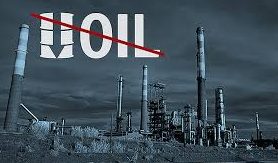
Oil is dying. Low oil prices are erasing profits and setting into motion a death spiral from which fossil fuels will not recover. Big Oil is cutting costs, and scaling back production, this results in smaller returns and diminished investor confidence. The addition of carbon pricing schemes and the elimination of subsidies will ultimately inflate prices and reduce demand.
____________________________

The profits of the big oil companies keep falling along with the price of a barrel of crude. In 2015, the profits of oil behemoths like Shell, Chevron, Exxon Mobil and BP tumbled. Together, these big four saw profits decline by an average of 65 percent last year. These falling margins have a cascade of impacts that are hastening the demise of dirty energy.

Shell

At the beginning of 2014, Royal Dutch Shell’s quarterly earnings for the end of 2013 fell by almost half (48%). This was the third consecutive quarter of disappointing earnings. This was in part due to Shell’s failed multibillion dollar Alaskan drilling program. The situation has continued to deteriorate for the oil giant as Shell’s profits fell by 56 percent in the fourth quarter of 2015. Over the course of the entire year, Shell’s earnings fell by 80 percent compared to 2014. To make matters worse, Standard & Poor's downgraded Shell’s long term credit rating in February and further downgrades have been intimated.

Chevron

In 2015, Chevron saw its profits decline by 40 percent compared to 2014 and the company reported losses in the fourth quarter of last year. Chevron lost $588 million in the last quarter of 2015; during the same period in 2014 the company made a profit of $3.5 billion. This is the first time the company has reported quarterly losses since 2002.

Exxon Mobil

Exxon Mobil saw its quarterly profits decline by 58 percent at the end of 2015 and the company’s profits are down by half compared to the year before. Its exploration and production business lost $538 million in the U.S.

BP

British Petroleum said that its profits fell by 91 percent last year. They recorded a $3.3 billion loss in the fourth quarter of last year and $6.48 billion in losses for the year. Like Shell, the company also kicked off the new year with a long term credit downgrade from Standard & Poor’s.

Macro realities

There is no end in sight to low oil prices and falling share prices. We have not seen a commodity collapse of this magnitude in decades. However, unlike preceding oil crashes, environmental pressures and economic trends make the longer term financial forecast look bleak for fossil fuels.

Oil production continues to outpace demand and more supply is on the way now that the sanctions against Iran have been lifted. The situation is about to get even worse as storage space is nearing capacity.

While many are waiting for oil prices to rebound they may be disappointed. Driven by climate concerns and the declining price of both renewables and energy storage, we are seeing unprecedented interest in non-fossil fuel based energy production from all quarters.

In the longer term, the outcome at COP21 lends credence to the belief that fossil fuels will be subject to a host of headwinds. The fossil fuel industry is also having to deal with a rapidly expanding number of legal challenges, negative public perceptions and disruptions due to protests.

Death spiral

In addition to market pressure associated with low oil prices, producers realize that to bring oil prices up you have to decrease supply (i.e. reduce production). However, decreased production will further diminish returns and this will scare off investors.

Low oil prices have already shut down hundreds of extraction operations. Oil prices are currently about half of what they need to be to make the tar sands and shale oil viable. The exodus had begun even before oil prices fell to their current lows. At the beginning of last year, Shell announced that it was among a number of oil companies that are shelving their tar sands operations. Many are predicting that at least half of all shale oil producers will perish this year. It is not only energy intensive forms of fossil fuels that are at risk, as explained by Jesse Thompson, an economist at the Federal Reserve Bank in Dallas, “at this price range, nothing is safe.”

Big oil is responding to low oil prices and declining profits by slashing capital spending and operating expenses. For example, Exxon has said that it will cut spending by one quarter this year compared to last and BP is expected to cut spending by almost $3.6 billion this year. This translates to less production and exploration. Less exploration means lower reserves and lower reserves sends a powerful message about the future of the industry.

The linkage between lower oil prices and decreased production have set in motion a causal chain of events that does not bode well for the fossil fuel industry. As explained in a New York Times article:

"To assure their futures, oil companies need to add to their reserves to replace production, but with plunging prices, companies are delaying or canceling projects and struggling to add to their reserves."

Reduced earnings are translating to cuts in production. For Shell that means delaying a liquefied natural gas facility in Canada and a deep water oil and gas development in Nigeria.

The combination of less production and low oil prices translates to lower profits which puts downward pressure on the dividends that they can pay out to investors. This in turn, curtails investor interest. While big oil is trying to reassure investors by saying that they will continue to pay big dividends, the situation is untenable.

Maintaining investor interest will be challenging for BP and others, as explained by Biraj Borkhataria, an analyst at RBC Capital Markets in London. He is quoted as saying:

"2016 is likely to be a year of transition for BP with limited ability" to cover its dividend unless oil prices rose substantially.

Michael Hewson, an analyst at CMC Markets puts it this way:

"But with average oil prices still trading at multi-year lows so far this year the question now needs to be asked in how long can BP sustain the dividend at current levels, without an imminent pick up in oil prices."

When investor confidence evaporates, the fate of the fossil fuel industry is sealed.

The position of big oil goes from bad to worse when we factor carbon pricing and an end to subsidies. This will raise the cost of fossil fuels and reduce demand.

Although it will take decades it is clear that we can kill what Bill McKibben has called the immortal zombie of fossil fuels.

Source: Global Warming is Real

Related Articles
Falling oil Prices Make Fossil Fuels a High Risk Investment
Oil is a Bad Investment
Financial Losses Associated with Fossil Fuels
Low Oil Prices Offer an Opportunity to Combat Climate Change
The Upside to Low Oil Prices
Climate Pros and Cons of Low Oil Prices
Falling Oil Prices and a Global Climate Agreement
Cheap Oil Will Not Stop Renewables
Why Oil Prices Matter for Renewable Energy
An Upside to Low Oil Prices?
Video - Why Oil Prices Will Keep Falling

Oil is a Bad Investment

Iinvestors can no longer avoid the realization that their fossil fuel holdings are fraught with risks. While there are many factors at play, the 18 month slide and low price forecasts combine to make the point that investing in oil makes no economic sense.

In the short term China's slowing growth and the glut of oil are driving down the price. The situation will be exacerbated by the lifting of sanctions allowing Iran to sell its oil. High production and lower than expected demand mean that oil prices will continue to fall well into 2016.

Oil has fallen a long way, it has lost 80 percent of its value compared to its high in January 2014 when it was more than $110 a barrel (bbl). When oil slipped below $60/bbl a number of intensive drilling operations from the Arctic to the Canadian tar sands and American shale oil ceased to be profitable. These price declines reduced production but not enough to stop oil's plummeting trajectory.

At the end of 2015 the price oil plunged below $40/bbl. As the new year dawned oil prices continued to slide, they even briefly slipped below $30/bbl. US oil prices fell to $26.55/bbl on January 20th. We have not seen oil prices this low in 14 years and we have not seen an 18th month long slide in more than 60 years. 

According to the Financial Forecast Center the outlook for the next six months suggest that oil will continue to decline, falling to around $25/bbl by the start of the summer.

Although the market will eventually balance out supply and demand, the longer term outlook is still challenging for oil prices. The eia predicts that oil prices could fall to as low as $20/bbl in 2017. The Telegraph reports that some are predicting that oil could go as low as $10/bbl.

Looking even further out the situation for oil may become even more difficult. The COP21 deal sent a powerful message to the markets. The era of oil is coming to an end and as we gear up for the implementation date of the deal in 2020 there will be unprecedented downward pressure on oil prices.

Related Articles
Diminishing Profits Signal the Beginning of the End of Oil
Falling oil Prices Make Fossil Fuels a High Risk Investment
Financial Losses Associated with Fossil Fuels
Low Oil Prices Offer an Opportunity to Combat Climate Change
The Upside to Low Oil Prices
Climate Pros and Cons of Low Oil Prices

Financial Losses Associated with Fossil Fuels

The losses associated with fossil fuels are staggering and it is not just oil producing states and companies that are feeling the heat. Pension funds going long on oil are getting killed as they hope that prices will rebound.

With oil prices around $50 per barrel, the IEA estimates that OPEC states have lost half a trillion dollars a year in revenues since the oil price fell from over $100 a barrel in 2011-2014 to current levels. The declining price of oil is also creating volatility in the stock market and significantly impacting the petro-economies of both Russia and Canada.

As reported by the Star, a new study from the Canadian Centre for Policy Alternatives indicates that fossil fuel holdings in Ontario's five largest pension funds lost a total of $2.4 billion. Here is their review of the amount of money lost due to falling oil and coal prices from June to December 2014:
  • Ontario Teachers’ Pension Plan: $1.77 billion
  • Ontario Municipal Employees Retirement System: $192 million
  • Healthcare of Ontario Pension Plan: $53 million
  • Ontario Pension Plan: $154 million
  • Ontario Public Service Employees Union Pension Trust: $188 million
California pension funds have been decimated by the declining price of fossil fuels. This has caused the state to pass legislation forbidding big pension funds from investing in coal. Others institutions are getting out of fossil fuels altogether. A recent report from consultancy Arabella Advisors found that 430 institutions, including the Canadian Medical Association, have committed to phasing out their fossil-fuel investments.

A Corporate Knights Capital report estimated that the CPPIB has lost $7 billion (US) in value since 2012 due to the decline in the values of carbon intensive industries. Bill & Melinda Gates Foundation Trust Endowment have lost $1.9 billion, and the University of Toronto pension and endowment fund lost $419 million.

More than 100 institutional investors representing $8 trillion in assets have signed the one-year-old Montreal Carbon Pledge. Those that took the pledge have committed to “measure, disclose and reduce portfolio carbon footprints.” Signatories include Addenda Capital, The Co-operators and the United Church.

“If they’re putting money into fossil-fuel stocks, it should be incumbent on managers and trustees to justify why they’re doing that,” said Marc Lee, a senior economist with Policy Alternatives.  

Related
Diminishing Profits Signal the Beginning of the End of Oil
Falling oil Prices Make Fossil Fuels a High Risk Investment
Oil is a Bad Investment
Low Oil Prices Offer an Opportunity to Combat Climate Change
The Upside to Low Oil Prices
Climate Pros and Cons of Low Oil Prices
Falling Oil Prices and a Global Climate Agreement
Cheap Oil Will Not Stop Renewables
Why Oil Prices Matter for Renewable Energy
An Upside to Low Oil Prices?
Video - Why Oil Prices Will Keep Falling

Sustainability in the Apparel Industry and Eco Fashion (Video)

Sustainable apparel and eco-friendly fashion is growing. This type of fashion has a much smaller environmental footprint this includes minimizing waste and eliminating the use of harmful chemicals. For years the clothing industry has been dominated by cheap imports from places like China and India, however, burgeoning consumer awareness about social and environmental issues are pushing brands in more responsible directions.

Nike has been pushed by consumers to become a more sustainable company and Patagonia has made a name for itself by being one of the most responsible and sustainable companies in the world. A host of other brands have also boarded the sustainability train. This includes accessible brands like H&M and North Face, to high end designer brands like Gucci, Calvin Klein and Stella McCartney.

The growth of sustainable apparel has even led to new media outlets focusing exclusively on environmentally friendly fashion trends. One such outlet is called Eco Fashion World (www.ecofashionworld.com). This is the world's essential eco fashion news portal and guide.


Related
10 Reasons Why Patagonia is the World's Most Responsible Company  
Sustainable Green Fashion is Being Buoyed by Growing Consumer Demand
Greenpeace's 5 Step Detox Program for the Fashion Industry
Purtex an Eco-friendly Alternative to Toxic Textiles
List of Hazardous Chemicals Lurking in Your Clothes
Burberry & Primark Vow to Stop Using Toxins in the Manufacturing of Clothes
Growing Eco-Awareness in Clothing Design
Victoria's Secret and Other Clothing Brands Sign on to Greenpeace's Detox Fashion Campaign
Greenpeace's Consumer Powered Pressure Campaigns
Why a Dozen Clothing Giants Have Bowed to Greenpeace
H&M's Sustainability Efforts Now Include Recycling
The Northface Launches a Bold Clothing Recycling Initiative
Puma's Cradle to Cradle Sustainability Leadership
Patagonia May be the World's Most Responsible Company

Sustainability Reporting Attracts Investors and Improves ROI (Video)

Here is a panel discussion designed to improve returns and attract investors. This discussion offers practical insights and helps commercial property owners with reputation management, employee engagement and efficiency. It also increases access to capital. This discussion is ideal for all who own or intend to buy or sell real estate. It is also for property managers, developers, and sustainability professionals.

Moderator: Heather Gadonniex, Director of Sustainable Building and Construction, PE International

Panelists

Helen Gurfel, Executive Director, ULI Greenprint
Gary Holtzer, Senior Managing Director, Hines
Kristen Sullivan, Partner, Deloitte
Dan Winters, Director for North America, Global Real Estate Sustainability Benchmark


Related
Drivers of Green Investment Growth
Why Investors Want More Nonfinancial Information
Adding Value through Sustainability
Investors Showing Leadership on Climate Change
Lucrative Investment Opportunities are Driving the Growth of Sustainability
The Growth of Business Opportunities from Climate Change
Investors are Embracing Green
Factors Driving the Growth of Responsible Investing
Return on Environmentally and Socially Responsible Investments
Prodigious Growth Predicted for the Global Green Economy
Data Shows that Sustainability Pays
Sustainability Offers Better Returns for Investors
Sustainability Offers a Competitive Advantage & Better ROI
Returns on Green Investing
Comprehensive Summary of Sustainability Reporting Guidance
The Future of Integrated Sustainability Reporting
Sustainability Reporting to Minimize Negative Impacts and Increase Positive Benefits
 

Event - Sustainable Investing Conference: Risk Value Impact

The 5th annual Sustainable Investing: Risk, Value, Impact conference will take place May 4th–6th at the Westin Michigan Avenue in Chicago. Participants will learn about new approaches, trends and policy developments while networking with industry leaders.

This event offers a unique opportunity to network with leaders of the sustainable, responsible and impact investing community, and to learn about new approaches, trends and policy developments in the field. The conference will attract representatives of investment management and advisory firms, research firms, financial planners and advisors, broker-dealers, community development institutions and asset owners such as pension funds and foundations, along with policymakers and corporate leaders.

Thought-provoking plenary and breakout sessions will cover a variety of topics including sustainability as a driver of value in private equity, university endowments and climate change, advancing impact investing, major issues in the 2015 proxy season, and responding to the low-carbon energy challenge.

Event sponsors include Cornerstone Capital Group, Northern Trust, Trillium Asset Management, Neuberger Berman, Pax World, Calvert Investments, Bank of America, Bloomberg and RBC. View the full list of sponsors on our conference website.

To secure your place at the conference, visit our online conference registration site today! Our early registration discount ends Friday, April 3. You may also be interested in learning about US SIF Foundation’s live course on the Fundamentals of Sustainable and Responsible Investment.

US SIF is the membership association for professionals,firms, institutions and organizations engaged in sustainable, responsible and impact investing. In addition to other benefits, US SIF members are invited to a day of member-only programming at the conference, including a reception, annual meeting, policy update and working group events. Members also enjoy substantially discounted registration fees.

To see the speakers list and their bios click here. To register click here.

Related
Drivers of Green Investment Growth&
Why Investors Want More Nonfinancial Information
Adding Value through Sustainability
Innovative Solar Energy Financing Instruments
New Sustainability Focused Financial Instruments
The Montreal Pledge: Institutional Investors
Resources for Responsible Investing
Investors know that Fossil Fuels will be Replaced
Big Year for Green Investors & Sustainable Business
The Ceres Climate Declaration 
Report Highlights Investor Action on Climate Change
Investors Support the UN Climate Summit Objectives
Fossil Free Investment Resources 
Investors Showing Leadership on Climate Change 
Lucrative Investment Opportunities are Driving the Growth of Sustainability
The Growth of Business Opportunities from Climate Change