Showing posts with label campaign. Show all posts

Greenpeace Toxics Campaigner John Deans Talks Campaign Strategy

In an interview with Brandchannel, Greenpeace Toxics Campaigner John Deans made it abundantly clear that there is a new highly effective approach that is taking businesses to task for their irresponsible practices. These Greenpeace campaigns are putting the extraordinary power of social media to work for the environment.

“We’re not your grandfather’s Greenpeace anymore," Deans told Brandchannel. "We’re part of a new, building movement with a new set of people who are social media denizens. Brands see it’s not going away and that Greenpeace is communicating directly with their customers."

Deans remarked about how quickly social media messages can be disseminated, “Social media tools have let Greenpeace latch on to the viral nature of online society – and find where people are in order to spark their interest.”

Greenpeace is writing the proverbial book on how to use digital technologies for issues of environmental and social justice. As explained by Brandchannel, "the organization is now a master class in how social media activism can bridge real world physical protests, with a digital call-to-action and sophisticated, cross-channel campaigns giving people to persuade brands to step up and walk their talk."

One of the more powerful aspects of Greenpeace's social media strategy involved they way they co-opt the logos and catch phrases of popular brands.

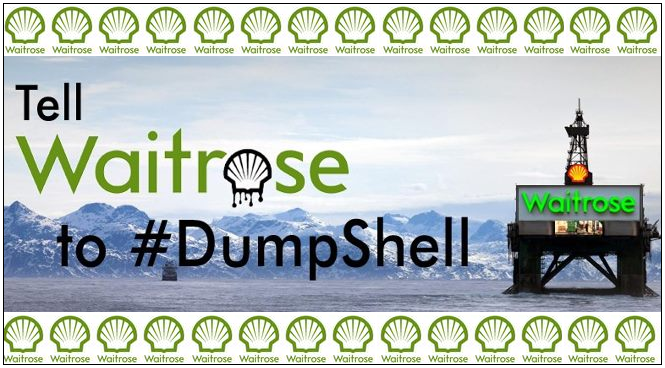
“Companies and brands are major icons for people, prevalent and ingrained through the media. We use their logos and messaging to show the other side of the coin, ‘here’s the dirty secret’ associated with that branding,” Deans said.

Related Articles
Greenpeace's Consumer Powered Pressure Campaigns
Why a Dozen Clothing Giants Have Bowed to Greenpeace
Levi's Bows to Greenpeace Pressure
Greenpeace Succeeds in Forcing Zara to Detox
Greenpeace's Consumer Powered Pressure Campaign Targets Levi's (Video)
ZARA Mannequins Revolt! (Video)
Waitrose Bows to Greenpeace Pressure
Greenpeace Turns 40
Lego and Mattel Bow to Greenpeace Pressure and Eliminate Unsustainable Packaging
Nike and H&M Bow to Greenpeace's Detox Challenge
Social Action Driving Businesses to Adopt Sustainable Practices
Cooperation Between Environmental Organizations and Businesses
Greenpeace and the Revolutionary Power of Social Media Driving Corporate Changes
Social Action Driving Businesses to Adopt Sustainable Practices
Surveys of America's Greenest Brands Suggest that Redemption
Greenpeace Exposes the Koch Brothers
Greenpeace Campaign is Asking Facebook to Defriend Coal
Greenpeace's Ranking of Electronic Companies
Greenpeace's Best Green Electronics
Greenpeace's G20 Checklist
Video: Greenpeace Spoofs Volkswagen's Dark Side

Greenpeace's Consumer Powered Pressure Campaigns

Greenpeace is waging very effective pressure campaigns that reach out directly to customers. Greenpeace encourages their supporters to take direct action and voice their concerns. Greenpeace has come a long way from their beginnings in the early 70s; in addition to protests and demonstrations, they are now using digital technologies to widely disseminate their message. Social media figures prominently in the Greenpeace strategy. These Greenpeace campaigns co-opt the brand message of the companies they are targeting.

These efforts are clearly working as a wide assortment of companies have capitulated to Greenpeace's savvy digital campaigns. Through these campaigns a number of companies have been forced to adopt more responsible business practices. Brands monitor social media as closely as they monitor traditional media, and they cannot ignore the hundreds of thousands of people that like, share, comment on, or promote Greenpeace efforts. By amplifying the voices of ordinary people around the world Greenpeace is sending a powerful message.

This is truly a grassroots initiative as Greenpeace staff and activists all around the world are driving media production all without help from an outside marketing firm. This work is done by ardent foot soldiers who care passionately about the Greenpeace's environmental mission.

In addition to a wide assortment of clothing brands, Greenpeace has succeeded in pressuring a number of other companies including Trader Joe'sLego and Mattel.

Fashion Detox Campaign

On December 5th, Greenpeace launched its “Toxic Threads: Under Wraps” report. They have also posted a video about their Detox campaign and released a Detox Fashion Manifesto. Greenpeace's "Fashion Detox" pressure campaigns are changing the fashion industry one major brand at a time. Thus far a dozen clothing brands have bowed to Greenpeace pressure.

More than 400,000 people have joined the Detox campaign since they re-launched in November, demanding toxic-free fashion and clean water. Fashionistas, activists, designers and bloggers took action on Twitter and Weibo, spreading news about the industry’s toxic addiction and reaching many millions of friends and followers.

These efforts have resulted in changes at some of the biggest brands in the fashion industry. Through Greenpeace efforts these major fashion labels have agreed to reduce their environmental impacts.

Since the campaign started in 2011, the organization has convinced 11 clothing brands to commit to stop releasing toxic chemicals into the environment.

This campaign has succeeded in "detoxing" a dozen of the world's biggest clothing brands including Nike, H&M, Adidas, Puma, M&S, C&A, Li-Ning, Zara, Mango and Esprit and now Levi's.

Familiar brands like Calvin Klein, GAP and Victoria’s Secret are still being targeted by Greenpeace as part of their goal of exposing brands that use hazardous substances.

Levi's Campaign

The Levi’s campaing produced results after just eight days by creating a digital groundswell with more than 210,000 people calling on the company to Detox, and tens of thousands taking action on Facebook and Twitter.

Activists and volunteers also took to the street in over 20 countries to take the message directly to the brand’s customers and to speak with the staff working in their stores, who sent the message back to Levi’s HQ. Over 700 people protested outside Levi’s shop fronts in 80 cities around the world. One of the Greenpeace actions involved a demonstration at Levi headquarters in Mexico. Protestors created a foam river to symbolize the foam created in Mexico's rivers by Levi's toxic effluents.

Greenpeace also hosted a screening of a documentary about a family struggling to hold factories in the region to account for the pollution they are causing, including suppliers of brands like Levi’s.

Greenpeace co-opted Levi's own marketing language with the Twitter hashtags "#GoForth and #Detox!".

Waitrose Campaign

As the campaign against Waitrose demonstrated, company's are being held accountable not only for their own business practices but they are also being taken to task for who they do business with. Waitrose opened two pilot store in shell stations but after only 12 days of Greenpeace protests they were forced to abandon expansion plans.

The Greenpeace campaign targeting Waitrose campaign featured a “social media meltdown,” they garnered 40,000 emails, posted a video spoof on YouTube, and collected hundreds of angry Facebook posts. Over the summer Greenpeace created a social media response team that co-opted Shell's logo and branding. This initiative included a hoax Shell web site, ArcticReady.com, which criticized the company’s plans to drill in the Arctic.

At the London store in Islington they featured a life-size polar bear representing the threat posed to local fauna by Shell's Arctic drilling.

Companies that fail to take responsibility for the pollution created along their entire supply chain are increasingly exposed. The rising tide of people power is changing the face of business and companies are being forced to recognize and act upon these popular consumer driven campaigns.

© 2012, Richard Matthews. All rights reserved.

Related Articles
Why a Dozen Clothing Giants Have Bowed to Greenpeace
Greenpeace Toxics Campaigner John Deans Talks Campaign Strategy
Levi's Bows to Greenpeace Pressure
Greenpeace Succeeds in Forcing Zara to Detox
Greenpeace's Consumer Powered Pressure Campaign Targets Levi's (Video)
ZARA Mannequins Revolt! (Video)
Waitrose Bows to Greenpeace Pressure
Greenpeace Turns 40
Lego and Mattel Bow to Greenpeace Pressure and Eliminate Unsustainable Packaging
Nike and H&M Bow to Greenpeace's Detox Challenge
Social Action Driving Businesses to Adopt Sustainable Practices
Cooperation Between Environmental Organizations and Businesses
Greenpeace and the Revolutionary Power of Social Media Driving Corporate Changes
Social Action Driving Businesses to Adopt Sustainable Practices
Surveys of America's Greenest Brands Suggest that Redemption
Greenpeace Exposes the Koch Brothers
Greenpeace Campaign is Asking Facebook to Defriend Coal
Greenpeace's Ranking of Electronic Companies
Greenpeace's Best Green Electronics
Greenpeace's G20 Checklist
Video: Greenpeace Spoofs Volkswagen's Dark Side

Waitrose Bows to Greenpeace Pressure

In less than 2 weeks Greenpeace succeeded in getting UK supermarket Waitrose to rethink its partnership with Shell. The Greenpeace campaign targeted Waitros' stores in Shell gas stations because of the oil company’s plans to drill in the Arctic. This decision means Waitrose has shelved plans to expand on the number of  stores in Shell gas stations. Waitrose currently has two pilot stores and had planned on adding more in 2013. Yet again this underscores the power of consumer driven campaigns to influence the business practices of major brands.

The partnership between Waitrose and Shell is hypocritical when you consider that Waitrose is a company that had previously worked with Greenpeace to develop its sustainable fishing policies.

Waitrose illustrates just how dangerous it can be for companies who try to show concern for the environment on the one hand while irresponsibly pursuing profits on the other. Greenpeace originally lauded Waitrose for establishing an Arctic Sanctuary and then was forced to criticize the company after it forged a partnership with the dirty energy giant.

© 2012, Richard Matthews. All rights reserved.

Related Articles
Greenpeace's Consumer Powered Pressure Campaigns
Why a Dozen Clothing Giants Have Bowed to Greenpeace
Greenpeace Toxics Campaigner John Deans Talks Campaign Strategy
Levi's Bows to Greenpeace Pressure
Greenpeace Succeeds in Forcing Zara to Detox
Greenpeace's Consumer Powered Pressure Campaign Targets Levi's (Video)
ZARA Mannequins Revolt! (Video)
Greenpeace Turns 40
Lego and Mattel Bow to Greenpeace Pressure and Eliminate Unsustainable Packaging
Nike and H&M Bow to Greenpeace's Detox Challenge
Social Action Driving Businesses to Adopt Sustainable Practices
Cooperation Between Environmental Organizations and Businesses
Greenpeace and the Revolutionary Power of Social Media Driving Corporate Changes
Social Action Driving Businesses to Adopt Sustainable Practices
Surveys of America's Greenest Brands Suggest that Redemption
Greenpeace Exposes the Koch Brothers
Greenpeace Campaign is Asking Facebook to Defriend Coal
Greenpeace's Ranking of Electronic Companies
Greenpeace's Best Green Electronics
Greenpeace's G20 Checklist
Video: Greenpeace Spoofs Volkswagen's Dark Side
Greenpeace's Consumer Powered Pressure Campaign Targets Levi's (Video)

ZARA Mannequins Revolt! (Video)


As part of Greenpeace's global "Detox" campaign, more than 700 people, in over 80 cities, in 20 countries around the world protested, staged street theatre and conducted "mannequin" walk-outs to demand ZARA commit to eliminating the use of all hazardous chemicals throughout its supply chain. The participants, from Bangkok to Buenas Aires, also called on ZARA store managers to forward Greenpeace's Detox demands to their headquarters, after new research found traces of hazardous chemicals in ZARA clothing items, some of which can break down in the environment to become hormone-disrupting or even cancer-causing substances.

To find out more, and to join the campaign demanding fashion without pollution, click here.

Related Articles
Greenpeace's Consumer Powered Pressure Campaigns
Why a Dozen Clothing Giants Have Bowed to Greenpeace
Greenpeace Toxics Campaigner John Deans Talks Campaign Strategy
Levi's Bows to Greenpeace Pressure
Greenpeace Succeeds in Forcing Zara to Detox
Greenpeace's Consumer Powered Pressure Campaign Targets Levi's (Video)
Waitrose Bows to Greenpeace Pressure
Greenpeace Turns 40
Lego and Mattel Bow to Greenpeace Pressure and Eliminate Unsustainable Packaging
Nike and H&M Bow to Greenpeace's Detox Challenge
Social Action Driving Businesses to Adopt Sustainable Practices
Cooperation Between Environmental Organizations and Businesses
Greenpeace and the Revolutionary Power of Social Media Driving Corporate Changes
Social Action Driving Businesses to Adopt Sustainable Practices
Surveys of America's Greenest Brands Suggest that Redemption
Greenpeace Exposes the Koch Brothers
Greenpeace Campaign is Asking Facebook to Defriend Coal
Greenpeace's Ranking of Electronic Companies
Greenpeace's Best Green Electronics
Greenpeace's G20 Checklist
Video: Greenpeace Spoofs Volkswagen's Dark Side

Why a Dozen Clothing Giants Have Bowed to Greenpeace

There are powerful financial incentives that drive corporations to agree to the demands of organizations like Greenpeace. The customers moral concerns can undermine sales and thus it is very directly impacts the bottom line. A dozen clothing brands have now accepted Greenpeace demands to detox and before this there were campaigns directed against KFC, Shell, Mattel and Lego. Through its “Toxic Threads: Under Wraps” report, Greenpeace spurred a global movement that is succeeding in detoxing some of the major players in the clothing industry.

At least twelve clothing companies have decided to heed Greenpeace demands and reduce their environmental impacts including Mango, Esprit, Nike, H&M, Adidas, Puma, M&S, C&A, Li-Ning, Zara and now Levi’s.

This is not only a victory for Greenpeace and the environment it is also a victory for the companies that agree to be detox leaders. This can be a win-win scenario because these campaigns yield real environmental benefit and they help a companies to adopt more sustainable and solvent business practices.  By adopting more responsible business practices they position themselves in a way that improves their competitiveness, enhances their reputation and mitigates against the risks posed by disgruntled consumers and investors.

Why have a dozen major brands acquiesced to Greenpeace demands? The answer is simple, because the benefits of saying "yes" outweighs the costs of saying "no."

However, there is more to this picture than customer loyalty and investor confidence. These actions also have implications beyond the companies being targeted; the repercussions are felt in the wider business community.

In its simplest essence corporations are coming to understand that while there are costs there are also merits to complying with Greenpeace demands. The price of ignoring Greenpeace can prove prohibitive

Resistance to Greenpeace demands poses a very real risk to a corporations bottom line. Companies like Calvin Klein, Gap, and Victoria’s Secret, that continue to resist Greenpeace demands are vulnerable to a consumer backlash.

Greenpeace pressure can be a public relations fiasco for the company being targeted, but by complying with demands to be more environmentally responsible, a company can transform itself into an environmental leader.

Make no mistake about it Greenpeace does use a big stick, but there is a carrot here as well.

© 2012, Richard Matthews. All rights reserved.

Related Articles
Greenpeace's Consumer Powered Pressure Campaigns
Greenpeace Toxics Campaigner John Deans Talks Campaign Strategy
Levi's Bows to Greenpeace Pressure
Greenpeace Succeeds in Forcing Zara to Detox
Greenpeace's Consumer Powered Pressure Campaign Targets Levi's (Video)
ZARA Mannequins Revolt! (Video)
Waitrose Bows to Greenpeace Pressure
Greenpeace Turns 40
Lego and Mattel Bow to Greenpeace Pressure and Eliminate Unsustainable Packaging
Nike and H&M Bow to Greenpeace's Detox Challenge
Social Action Driving Businesses to Adopt Sustainable Practices
Cooperation Between Environmental Organizations and Businesses
Greenpeace and the Revolutionary Power of Social Media Driving Corporate Changes
Social Action Driving Businesses to Adopt Sustainable Practices
Surveys of America's Greenest Brands Suggest that Redemption
Greenpeace Exposes the Koch Brothers
Greenpeace Campaign is Asking Facebook to Defriend Coal
Greenpeace's Ranking of Electronic Companies
Greenpeace's Best Green Electronics
Greenpeace's G20 Checklist
Video: Greenpeace Spoofs Volkswagen's Dark Side

Levi's Bows to Greenpeace Pressure

After a mere 8 days of pressure from Greenpeace, Levi's has agreed to become more environmentally responsible. Greenpeace alleged that Levi’s suppliers are some of the worst water polluters in the Mexican textile industry. The denim behemoth has said it will stop polluting Mexico's rivers and the company further agreed to eliminate the release of all hazardous chemicals in its manufacturing process by 2020.

There have been a number of Greenpeace actions that have encouraged Levi's change of heart. Hundreds protested outside Levi’s shop fronts in 80 cities around the world and in one demonstration at Levi's headquarters in Mexico, Protesters covered the area in foam to symbolize the toxic effluents that Levi's released into the country's rivers.

In a December 12, 2012 document Levi's agreed to eliminate all releases of hazardous chemicals throughout its entire supply chain by 2020. The company has further agree to replace all hazardous chemicals with non-hazardous alternatives.

The company announced that it will begin requiring 15 of its largest suppliers in China, Mexico and elsewhere to disclose pollution data by June 2013, followed by disclosure from 25 more suppliers by the end of 2013. By 2020, it vows to have zero discharge of toxic chemicals from any Levi’s manufacturing facilities.

Although there will be a price to these commitments, there will also be benefits to the company's brand.  The  rapid capitulation of the world’s largest denim brand demonstrates just how fast a company can journey from environmental pariah to eco-leader.

To see Levi's Greenpeace Solution Document (pdf) click here.

© 2012, Richard Matthews. All rights reserved.

Related Articles
Greenpeace's Consumer Powered Pressure Campaigns
Why a Dozen Clothing Giants Have Bowed to Greenpeace
Greenpeace Toxics Campaigner John Deans Talks Campaign Strategy
Greenpeace Succeeds in Forcing Zara to Detox
Greenpeace's Consumer Powered Pressure Campaign Targets Levi's (Video)
ZARA Mannequins Revolt! (Video)
Waitrose Bows to Greenpeace Pressure
Greenpeace Turns 40
Lego and Mattel Bow to Greenpeace Pressure and Eliminate Unsustainable Packaging
Nike and H&M Bow to Greenpeace's Detox Challenge
Social Action Driving Businesses to Adopt Sustainable Practices
Cooperation Between Environmental Organizations and Businesses
Greenpeace and the Revolutionary Power of Social Media Driving Corporate Changes
Social Action Driving Businesses to Adopt Sustainable Practices
Surveys of America's Greenest Brands Suggest that Redemption
Greenpeace Exposes the Koch Brothers
Greenpeace Campaign is Asking Facebook to Defriend Coal
Greenpeace's Ranking of Electronic Companies
Greenpeace's Best Green Electronics
Greenpeace's G20 Checklist
Video: Greenpeace Spoofs Volkswagen's Dark Side

Greenpeace Succeeds in Forcing Zara to Detox

Since 2011 Greenpeace has been asking Zara (a brand within the Inditex group) to eliminate hazardous chemicals from its clothing lines and supply chains. Late in 2012 Zara succumbed to pressure from Greenpeace and decided to address the issue of toxic pollution. Zara finally capitulated after Greenpeace launched an aggressive global campaign targeting the store.

Zara and the seven other brands in the Inditex group (Pull & Bear, Massimo Dutti, Bershka, Stradivarius, Oysho, Zara Home and Uterqüe) is now publicly committed to eliminate all discharge of hazardous chemicals from its supply chain and products by 2020. Zara will immediately begin to phase out some of the worst offending chemicals like PFCs.

Zara is also working on the transparency of its suppliers. By 2013 at least 100 of Zara's suppliers will publicly disclose data about their releases of hazardous chemicals into the environment.

The popularity of this news on social media platforms makes the point that consumers are interested in detoxed fashion. More than 300,000 people signed up to join the campaign to Detox Zara, and on Twitter there were at least 43,800 mentions of Zara and the Detox campaign in the week after the launch. Many tens of thousands of people emailed and tweeted directly to the company for an ambitious Detox commitment.

In addition to staving off all the negative publicity, Zara is now in a position to benefit from being an environmental leader in the fashion industry. Zara joins Nike, Adidas, Puma, H&M, M&S, C&A and Li-Ning all of whom have committed to Detox

Related Articles
Greenpeace's Consumer Powered Pressure Campaigns
Why a Dozen Clothing Giants Have Bowed to Greenpeace
Greenpeace Toxics Campaigner John Deans Talks Campaign Strategy
Levi's Bows to Greenpeace Pressure
Greenpeace's Consumer Powered Pressure Campaign Targets Levi's (Video)
ZARA Mannequins Revolt! (Video)
Waitrose Bows to Greenpeace Pressure
Greenpeace Turns 40
Lego and Mattel Bow to Greenpeace Pressure and Eliminate Unsustainable Packaging
Nike and H&M Bow to Greenpeace's Detox Challenge
Social Action Driving Businesses to Adopt Sustainable Practices
Cooperation Between Environmental Organizations and Businesses
Greenpeace and the Revolutionary Power of Social Media Driving Corporate Changes
Social Action Driving Businesses to Adopt Sustainable Practices
Surveys of America's Greenest Brands Suggest that Redemption
Greenpeace Exposes the Koch Brothers
Greenpeace Campaign is Asking Facebook to Defriend Coal
Greenpeace's Ranking of Electronic Companies
Greenpeace's Best Green Electronics
Greenpeace's G20 Checklist
Video: Greenpeace Spoofs Volkswagen's Dark Side